

Order Total (1 Item Items):
Shipping Destination:

Swanenburch (1 results)
Skip to main search results
Search filters
Product Type
- All Product Types
- Books (No further results match this refinement)
- Magazines & Periodicals (No further results match this refinement)
- Comics (No further results match this refinement)
- Sheet Music (No further results match this refinement)
- Art, Prints & Posters (1)
- Photographs (No further results match this refinement)
- Maps (No further results match this refinement)
- Manuscripts & Paper Collectibles (No further results match this refinement)
Condition Learn more
- New (No further results match this refinement)
- As New, Fine or Near Fine (No further results match this refinement)
- Very Good or Good (1)
- Fair or Poor (No further results match this refinement)
- As Described (No further results match this refinement)
Binding
- All Bindings
- Hardcover (No further results match this refinement)
- Softcover (No further results match this refinement)
Collectible Attributes
- First Edition (No further results match this refinement)
- Signed (No further results match this refinement)
- Dust Jacket (No further results match this refinement)
- Seller-Supplied Images (1)
- Not Print on Demand (1)
Language (1)
Price
- Any Price
- Under US$ 25 (No further results match this refinement)
- US$ 25 to US$ 50 (No further results match this refinement)
- Over US$ 50
Free Shipping
- Free Shipping to U.S.A. (No further results match this refinement)
Seller Location
Seller Rating
-
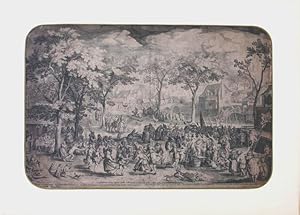
Fiera contadina / Thyades celebrasse feruntur, Haec celebrat festos rustica turba dies. Invigilant poclis, pugnant, Cantantq, vomuntq: Cumq: suo saltat femina quaeq: viro.
Publication Date: 1618
Seller: BOTTEGHINA D'ARTE GALLERIA KÚPROS, Rosignano Solvay, LI, Italy
Seller rating 4 out of 5 stars

Art / Print / Poster
No legatura. Condition: Buono. Amsterdam, 1618. Primo stato. Incisione in rame all'acquaforte e bulino, b/n, cm 44,5 x 67,5 (il foglio), in lastra: 'Amstelodami Joannes Jansonius, DV Boons invent., G. Swanenburch Sculp., Anno 1618', doppio titolo in latino e in tedesco. In un contesto di euforia semplice e popolare, gli abitanti del villaggio sono adunati a festa: una folla danzante o impegnata nei giochi popolari, un tavolo di mangiatori sulla sinistra, un uomo che sta orinando su un muro poco dietro (e che con la faccia rivolta verso il lettore sembra invitarlo a guardare), uomini, donne, bambini e pollami in corsa ovunque; tutta la scena è popolata da una moltitudine di contadini, alcuni dei quali ballano con la testa ribaltata in estasi, altri mangiano e bevono copiosamente. La stampa è un invito alla festa. Ma potrebbe anche voler dare una lettura morale, indicando il comportamento volgare dei popolani dal quale sarebbe bene astenersi, per non mettere a rischio salute e denaro. Questi tipi di scene a soggetto popolare con villaggi in festa erano in voga nel sedicesimo secolo, soprattutto nei Paesi Bassi. Pieter Bruegel il Vecchio (1526 / 30 circa - 1569) fu uno dei primi a realizzare questi soggetti; lo seguirono Jacob Savery (1565/67 - 1603) e David Vinckboons the Elder (1576 1630 / 31) e il soggetto guadagnò terreno. Willem van Swanenburgh, uno dei più validi incisori olandesi del diciassettesimo secolo, fu particolarmente ricco di talento nel rendere sulla lastra l'atmosfera dei disegni accuratamente realizzati e puliti del Vinckboons: egli elabora l'inciso con linee sottili e tratteggi raffinati, enfatizzando le parti in ombra con fitte reti di tratteggi incrociati e disegnando figure illuminate dal sole e il fogliame solo con linee di contorno. Esemplare con margini rifilati (sciupati i laterali), peraltro in buona morsura e in bello stato di conservazione l'inciso. .
