
Tamara Dijkstra (32 results)

- Softcover
Seller: The Compleat Scholar, Rochester, NY, U.S.A.The Compleat Scholar
Contact seller5-star sellerCondition: Used - Very good
US$ 40.00
US$ 5.45 shippingShips within U.S.A.Quantity: 1 available
paperback. Condition: Very Good. No marks or highlighting in the book. Our copy is paperback showing shelf-wear. Corners bumped causing light creasing.

- Softcover
Seller: GreatBookPrices, Columbia, MD, U.S.A.GreatBookPrices
Contact seller5-star sellerCondition: New
US$ 47.35
US$ 2.64 shippingShips within U.S.A.Quantity: 1 available
Condition: New.
- Softcover
- First Edition
Seller: ISD LLC, Bristol, CT, U.S.A.ISD LLC
Contact seller5-star sellerCondition: New
US$ 50.00
Free ShippingShips within U.S.A.Quantity: 2 available
paperback. Condition: New. 1st.

- Softcover
Seller: GreatBookPrices, Columbia, MD, U.S.A.GreatBookPrices
Contact seller5-star sellerCondition: Used - As new
US$ 54.44
US$ 2.64 shippingShips within U.S.A.Quantity: 1 available
Condition: As New. Unread book in perfect condition.
- Softcover
Seller: PBShop.store UK, Fairford, GLOS, United KingdomPBShop.store UK
Contact seller5-star sellerCondition: New
US$ 51.72
US$ 7.86 shippingShips from United Kingdom to U.S.A.Quantity: 1 available
PAP. Condition: New. New Book. Shipped from UK. Established seller since 2000.

- Softcover
Seller: Rarewaves.com USA, London, LONDO, United KingdomRarewaves.com USA
Contact seller5-star sellerCondition: New
US$ 64.54
Free ShippingShips from United Kingdom to U.S.A.Quantity: 1 available
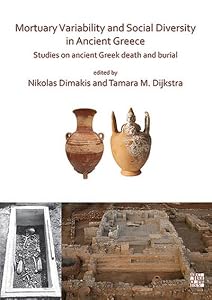
Paperback. Condition: New. Even though, at death, identity and social status may undergo major changes, by studying funerary customs we can greatly gain in the understanding of a community's social structure, distribution of wealth and property, and the degree of flexibility or divisiveness in the apportionment of power. With its great regional diversity and variety of community forms and networks, ancient Greece offers a unique context for exploring, through the burial evidence, how communities developed. Mortuary Variability and Social Diversity in Ancient Greece brings together early career scholars working on funerary customs in Greece from the Early Iron Age to the Roman period. Papers present various thematic and interdisciplinary analysis in which funerary contexts provide insights on individuals, social groups and communities. Themes discussed include issues of territoriality, the reconstruction of social roles of particular groups of people, and the impact that major historical events may have had on the way individuals or specific groups of individuals treated their dead.…
- Softcover
Seller: Ria Christie Collections, Uxbridge, United KingdomRia Christie Collections
Contact seller5-star sellerCondition: New
US$ 55.92
US$ 15.11 shippingShips from United Kingdom to U.S.A.Quantity: 1 available
Condition: New. In English.
- Softcover
Seller: Chiron Media, Wallingford, United KingdomChiron Media
Contact seller5-star sellerCondition: New
US$ 50.17
US$ 20.73 shippingShips from United Kingdom to U.S.A.Quantity: 1 available
Condition: New.
- Softcover
Seller: GreatBookPricesUK, Woodford Green, United KingdomGreatBookPricesUK
Contact seller5-star sellerCondition: New
US$ 51.71
US$ 20.07 shippingShips from United Kingdom to U.S.A.Quantity: 1 available
Condition: New.

- Softcover
Seller: GreatBookPricesUK, Woodford Green, United KingdomGreatBookPricesUK
Contact seller5-star sellerCondition: Used - As new
US$ 57.74
US$ 20.07 shippingShips from United Kingdom to U.S.A.Quantity: 1 available
Condition: As New. Unread book in perfect condition.
- Softcover
Seller: Revaluation Books, Exeter, United KingdomRevaluation Books
Contact seller5-star sellerCondition: New
US$ 61.22
US$ 16.73 shippingShips from United Kingdom to U.S.A.Quantity: 1 available
Paperback. Condition: Brand New. 195 pages. 11.00x8.00x0.50 inches. In Stock.
- Softcover
Seller: THE SAINT BOOKSTORE, Southport, United KingdomTHE SAINT BOOKSTORE
Contact seller5-star sellerCondition: New
US$ 61.20
US$ 24.30 shippingShips from United Kingdom to U.S.A.Quantity: 1 available
Paperback / softback. Condition: New. New copy - Usually dispatched within 3 working days.
- Softcover
Seller: Kennys Bookshop and Art Galleries Ltd., Galway, GY, IrelandKennys Bookshop and Art Galleries Ltd.
Contact seller5-star sellerCondition: New
US$ 82.28
US$ 10.90 shippingShips from Ireland to U.S.A.Quantity: 1 available
Condition: New. 2020. Illustrated. Paperback. . . . . .
- Softcover
Seller: Revaluation Books, Exeter, United KingdomRevaluation Books
Contact seller5-star sellerCondition: New
US$ 81.69
US$ 16.73 shippingShips from United Kingdom to U.S.A.Quantity: 1 available
Paperback. Condition: Brand New. 195 pages. 11.00x8.00x0.50 inches. In Stock.
- Softcover
Seller: Speedyhen, Hertfordshire, United KingdomSpeedyhen
Contact seller5-star sellerCondition: New
US$ 46.40
US$ 54.87 shippingShips from United Kingdom to U.S.A.Quantity: 1 available
Condition: NEW.
- Softcover
Seller: Kennys Bookstore, Olney, MD, U.S.A.Kennys Bookstore
Contact seller5-star sellerCondition: New
US$ 98.20
US$ 10.50 shippingShips within U.S.A.Quantity: 1 available
Condition: New. 2020. Illustrated. Paperback. . . . . . Books ship from the US and Ireland.

- Softcover
Seller: moluna, Greven, Germanymoluna
Contact seller5-star sellerCondition: New
US$ 60.13
US$ 56.19 shippingShips from Germany to U.S.A.Quantity: 1 available
Kartoniert / Broschiert. Condition: New. This volume brings together early career scholars working on funerary customs in Greece from the Early Iron Age to the Roman period. Papers present various thematic and interdisciplinary analysis in which funerary contexts provide insights on individuals, s.
- Softcover
Seller: AHA-BUCH GmbH, Einbeck, GermanyAHA-BUCH GmbH
Contact seller5-star sellerCondition: New
US$ 82.26
US$ 34.98 shippingShips from Germany to U.S.A.Quantity: 1 available
Taschenbuch. Condition: Neu. Neuware - Even though, at death, identity and social status may undergo major changes, by studying funerary customs we can greatly gain in the understanding of a community's social structure, distribution of wealth and property, and the degree of flexibility or divisiveness in the apportionment of power. With its great regional diversity and variety of community forms and networks, ancient Greece offers a unique context for exploring, through the burial evidence, how communities developed. Mortuary Variability and Social Diversity in Ancient Greece brings together early career scholars working on funerary customs in Greece from the Early Iron Age to the Roman period. Papers present various thematic and interdisciplinary analysis in which funerary contexts provide insights on individuals, social groups and communities. Themes discussed include issues of territoriality, the reconstruction of social roles of particular groups of people, and the impact that major historical events may have had on the way individuals or specific groups of individuals treated their dead.…

- Softcover
Seller: Revaluation Books, Exeter, United KingdomRevaluation Books
Contact seller5-star sellerCondition: New
US$ 114.47
US$ 16.73 shippingShips from United Kingdom to U.S.A.Quantity: 2 available
Paperback. Condition: Brand New. 01 edition. 190 pages. 11.00x8.00x0.50 inches. In Stock.

- Softcover
Seller: preigu, Osnabrück, Germanypreigu
Contact seller5-star sellerCondition: New
US$ 67.69
US$ 80.28 shippingShips from Germany to U.S.A.Quantity: 1 available
Taschenbuch. Condition: Neu. Mortuary Variability and Social Diversity in Ancient Greece | Studies on Ancient Greek Death and Burial | Nikolas Dimakis (u. a.) | Taschenbuch | Kartoniert / Broschiert | Englisch | 2020 | Archaeopress | EAN 9781789694420 | Verantwortliche Person für die EU: Libri GmbH, Europaallee 1, 36244 Bad Hersfeld, gpsr[at]libri[dot]de | Anbieter: preigu. …

- Softcover
Seller: Rarewaves.com UK, London, United KingdomRarewaves.com UK
Contact seller5-star sellerCondition: New
US$ 63.10
US$ 86.98 shippingShips from United Kingdom to U.S.A.Quantity: 1 available
Paperback. Condition: New. Even though, at death, identity and social status may undergo major changes, by studying funerary customs we can greatly gain in the understanding of a community's social structure, distribution of wealth and property, and the degree of flexibility or divisiveness in the apportionment of power. With its great regional diversity and variety of community forms and networks, ancient Greece offers a unique context for exploring, through the burial evidence, how communities developed. Mortuary Variability and Social Diversity in Ancient Greece brings together early career scholars working on funerary customs in Greece from the Early Iron Age to the Roman period. Papers present various thematic and interdisciplinary analysis in which funerary contexts provide insights on individuals, social groups and communities. Themes discussed include issues of territoriality, the reconstruction of social roles of particular groups of people, and the impact that major historical events may have had on the way individuals or specific groups of individuals treated their dead.…
- Softcover
Seller: Mispah books, Redhill, SURRE, United KingdomMispah books
Contact seller4-star sellerCondition: New
US$ 238.46
US$ 33.46 shippingShips from United Kingdom to U.S.A.Quantity: 1 available
paperback. Condition: New. NEW. SHIPS FROM MULTIPLE LOCATIONS. book.

- Hardcover
Seller: Revaluation Books, Exeter, United KingdomRevaluation Books
Contact seller5-star sellerCondition: New
US$ 343.39
US$ 16.73 shippingShips from United Kingdom to U.S.A.Quantity: 2 available
Hardcover. Condition: Brand New. 1st edition. 190 pages. 11.25x8.25x0.75 inches. In Stock.

- Softcover
- Print on Demand
Seller: BuchWeltWeit Ludwig Meier e.K., Bergisch Gladbach, GermanyBuchWeltWeit Ludwig Meier e.K.
Contact seller5-star sellerCondition: New
US$ 41.34
US$ 26.38 shippingShips from Germany to U.S.A.Quantity: 1 available
Taschenbuch. Condition: Neu. This item is printed on demand - it takes 3-4 days longer - Neuware -At the beginning of the first century BC Athens was an independent city bound to Rome through a friendship alliance. By the end of the first century AD the city had been incorporated into the Roman province of Achaea. Along with Athenian independence perished the notion of Greek self-rule. The rest of Achaea was ruled by the governor of Macedonia already since 146 BC, but the numerous defections of Greek cities during the first century BC show that Roman rule was not yet viewed as inevitable.In spite of the definitive loss of self-rule this was not a period of decline. Attica and the Peloponnese were special regions because of their legacy as cultural and religious centres of the Mediterranean. Supported by this legacy communities and individuals engaged actively with the increasing presence of Roman rule and its representatives. The archaeological and epigraphic records attest to the continued economic vitality of the region: buildings, statues, and lavish tombs were still being constructed. There is hence need to counterbalance the traditional discourses of weakness on Roman Greece, and to highlight how acts of remembering were employed as resources in this complex political situation.The legacy of Greece defined Greek and Roman responses to the changing relationship. Both parties looked to the past in shaping their interactions, but how this was done varied widely. Sulla fashioned himself after the tyrant-slayers Harmodius and Aristogeiton, while Athenian ephebes evoked the sea-battles of the Persian Wars to fashion their valour. This interdisciplinary volume traces strategies of remembering in city building, funerary culture, festival and association, honorific practices, Greek literature, and political ideology. The variety of these strategies attests to the vitality of the region. In times of transition the past cannot be ignored: actors use what came before, in diverse and complex ways, in order to build the present. ContentsPreface: Relaunching the Publications of the Netherlands Institute at Athens Series Winfred van de Put, director of the Netherlands Institute at AthensIntroductionTamara M. Dijkstra, Inger N.I. Kuin, Muriel Moser, and David WeidgenanntPart I: Building Remembrance1. Roman Greece and the 'Mnemonic Turn'. Some Critical RemarksDimitris Grigoropoulos, Valentina Di Napoli, Vassilis Evangelidis, Francesco Camia, Dylan Rogers and Stavros Vlizos2. Strategies of Remembering in the Creation of a Colonial Society in PatrasTamara M. Dijkstra3. Contending with the Past in Roman Corinth: The Julian BasilicaCatherine de Grazia Vanderpool and Paul D. ScottonPart II: Competing with the Past4. Heritage Societies Private Associations in Roman GreeceBenedikt Eckhardt5. Performing the Past: Salamis, Naval Contests and the Athenian EphebeiaZahra Newby6. Greek Panhellenic Agones in a Roman Colony: Corinth and the Return of the Isthmian GamesLavinia del BassoPart III: Honoring Tradition 7. Heroes of Their Times. Intra-Mural Burials in the Urban Memorial Landscapes of the Roman PeloponneseJohannes Fouquet8. Public Statues as a Strategy of Remembering in Early Imperial MesseneChristopher Dickenson9. Shortages, Remembering and the Construction of Time: Aspects of Greek Honorific Culture (2nd century BC - 1st century AD)David WeidgenanntPart IV: History in Athens10. Anchoring Political Change in Post-Sullan AthensInger N.I. Kuin11. Reused Statues for Roman Friends: The Past as a Political Resource in Roman AthensMuriel Moser12. Strategies of Remembering in Greece under Rome: Some ConclusionsInger N.I. Kuin and Muriel MoserConclusion: Change and Remembering in Roman GreeceI.N.I. Kuin, M. Moser 192 pp. Englisch.…

- Softcover
- Print on Demand
Seller: moluna, Greven, Germanymoluna
Contact seller5-star sellerCondition: New
US$ 36.15
US$ 56.19 shippingShips from Germany to U.S.A.Quantity: Over 20 available
Condition: New. Dieser Artikel ist ein Print on Demand Artikel und wird nach Ihrer Bestellung fuer Sie gedruckt. This interdisciplinary volume traces strategies of remembering in Ancient Greece under Roman rule. Communities and individuals creatively used various modes of remembering and commemoration to adapt to the political and cultural changes of the first century.…

- Softcover
- Print on Demand
Seller: AHA-BUCH GmbH, Einbeck, GermanyAHA-BUCH GmbH
Contact seller5-star sellerCondition: New
US$ 63.25
US$ 34.98 shippingShips from Germany to U.S.A.Quantity: 1 available
Taschenbuch. Condition: Neu. nach der Bestellung gedruckt Neuware - Printed after ordering - At the beginning of the first century BC Athens was an independent city bound to Rome through a friendship alliance. By the end of the first century AD the city had been incorporated into the Roman province of Achaea. Along with Athenian independence perished the notion of Greek self-rule. The rest of Achaea was ruled by the governor of Macedonia already since 146 BC, but the numerous defections of Greek cities during the first century BC show that Roman rule was not yet viewed as inevitable.In spite of the definitive loss of self-rule this was not a period of decline. Attica and the Peloponnese were special regions because of their legacy as cultural and religious centres of the Mediterranean. Supported by this legacy communities and individuals engaged actively with the increasing presence of Roman rule and its representatives. The archaeological and epigraphic records attest to the continued economic vitality of the region: buildings, statues, and lavish tombs were still being constructed. There is hence need to counterbalance the traditional discourses of weakness on Roman Greece, and to highlight how acts of remembering were employed as resources in this complex political situation.The legacy of Greece defined Greek and Roman responses to the changing relationship. Both parties looked to the past in shaping their interactions, but how this was done varied widely. Sulla fashioned himself after the tyrant-slayers Harmodius and Aristogeiton, while Athenian ephebes evoked the sea-battles of the Persian Wars to fashion their valour. This interdisciplinary volume traces strategies of remembering in city building, funerary culture, festival and association, honorific practices, Greek literature, and political ideology. The variety of these strategies attests to the vitality of the region. In times of transition the past cannot be ignored: actors use what came before, in diverse and complex ways, in order to build the present. ContentsPreface: Relaunching the Publications of the Netherlands Institute at Athens Series Winfred van de Put, director of the Netherlands Institute at AthensIntroductionTamara M. Dijkstra, Inger N.I. Kuin, Muriel Moser, and David WeidgenanntPart I: Building Remembrance1. Roman Greece and the 'Mnemonic Turn'. Some Critical RemarksDimitris Grigoropoulos, Valentina Di Napoli, Vassilis Evangelidis, Francesco Camia, Dylan Rogers and Stavros Vlizos2. Strategies of Remembering in the Creation of a Colonial Society in PatrasTamara M. Dijkstra3. Contending with the Past in Roman Corinth: The Julian BasilicaCatherine de Grazia Vanderpool and Paul D. ScottonPart II: Competing with the Past4. Heritage Societies Private Associations in Roman GreeceBenedikt Eckhardt5. Performing the Past: Salamis, Naval Contests and the Athenian EphebeiaZahra Newby6. Greek Panhellenic Agones in a Roman Colony: Corinth and the Return of the Isthmian GamesLavinia del BassoPart III: Honoring Tradition 7. Heroes of Their Times. Intra-Mural Burials in the Urban Memorial Landscapes of the Roman PeloponneseJohannes Fouquet8. Public Statues as a Strategy of Remembering in Early Imperial MesseneChristopher Dickenson9. Shortages, Remembering and the Construction of Time: Aspects of Greek Honorific Culture (2nd century BC - 1st century AD)David WeidgenanntPart IV: History in Athens10. Anchoring Political Change in Post-Sullan AthensInger N.I. Kuin11. Reused Statues for Roman Friends: The Past as a Political Resource in Roman AthensMuriel Moser12. Strategies of Remembering in Greece under Rome: Some ConclusionsInger N.I. Kuin and Muriel MoserConclusion: Change and Remembering in Roman GreeceI.N.I. Kuin, M. Moser.…

- Softcover
- Print on Demand
Seller: buchversandmimpf2000, Emtmannsberg, BAYE, Germanybuchversandmimpf2000
Contact seller5-star sellerCondition: New
US$ 41.34
US$ 68.81 shippingShips from Germany to U.S.A.Quantity: 1 available
Taschenbuch. Condition: Neu. This item is printed on demand - Print on Demand Titel. Neuware -At the beginning of the first century BC Athens was an independent city bound to Rome through a friendship alliance. By the end of the first century AD the city had been incorporated into the Roman province of Achaea. Along with Athenian independence perished the notion of Greek self-rule. The rest of Achaea was ruled by the governor of Macedonia already since 146 BC, but the numerous defections of Greek cities during the first century BC show that Roman rule was not yet viewed as inevitable.In spite of the definitive loss of self-rule this was not a period of decline. Attica and the Peloponnese were special regions because of their legacy as cultural and religious centres of the Mediterranean. Supported by this legacy communities and individuals engaged actively with the increasing presence of Roman rule and its representatives. The archaeological and epigraphic records attest to the continued economic vitality of the region: buildings, statues, and lavish tombs were still being constructed. There is hence need to counterbalance the traditional discourses of weakness on Roman Greece, and to highlight how acts of remembering were employed as resources in this complex political situation.The legacy of Greece defined Greek and Roman responses to the changing relationship. Both parties looked to the past in shaping their interactions, but how this was done varied widely. Sulla fashioned himself after the tyrant-slayers Harmodius and Aristogeiton, while Athenian ephebes evoked the sea-battles of the Persian Wars to fashion their valour. This interdisciplinary volume traces strategies of remembering in city building, funerary culture, festival and association, honorific practices, Greek literature, and political ideology. The variety of these strategies attests to the vitality of the region. In times of transition the past cannot be ignored: actors use what came before, in diverse and complex ways, in order to build the present.ContentsPreface: Relaunching the Publications of the Netherlands Institute at Athens SeriesWinfred van de Put, director of the Netherlands Institute at AthensIntroductionTamara M. Dijkstra, Inger N.I. Kuin, Muriel Moser, and David WeidgenanntPart I: Building Remembrance1. Roman Greece and the ¿Mnemonic Turn¿. Some Critical RemarksDimitris Grigoropoulos, Valentina Di Napoli, Vassilis Evangelidis, Francesco Camia, Dylan Rogers and Stavros Vlizos2. Strategies of Remembering in the Creation of a Colonial Society in PatrasTamara M. Dijkstra3. Contending with the Past in Roman Corinth: The Julian BasilicaCatherine de Grazia Vanderpool and Paul D. ScottonPart II: Competing with the Past4. Heritage Societies Private Associations in Roman GreeceBenedikt Eckhardt5. Performing the Past: Salamis, Naval Contests and the Athenian EphebeiaZahra Newby6. Greek Panhellenic Agones in a Roman Colony: Corinth and the Return of the Isthmian GamesLavinia del BassoPart III: Honoring Tradition7. Heroes of Their Times. Intra-Mural Burials in the Urban Memorial Landscapes of the Roman PeloponneseJohannes Fouquet8. Public Statues as a Strategy of Remembering in Early Imperial MesseneChristopher Dickenson9. Shortages, Remembering and the Construction of Time: Aspects of Greek Honorific Culture (2nd century BC ¿ 1st century AD)David WeidgenanntPart IV: History in Athens10. Anchoring Political Change in Post-Sullan AthensInger N.I. Kuin11. Reused Statues for Roman Friends: The Past as a Political Resource in Roman AthensMuriel Moser12. Strategies of Remembering in Greece under Rome: Some ConclusionsInger N.I. Kuin and Muriel MoserConclusion: Change and Remembering in Roman GreeceI.N.I. Kuin, M. MoserBooks on Demand GmbH, Überseering 33, 22297 Hamburg 192 pp. Englisch.…

- Hardcover
- Print on Demand
Seller: BuchWeltWeit Ludwig Meier e.K., Bergisch Gladbach, GermanyBuchWeltWeit Ludwig Meier e.K.
Contact seller5-star sellerCondition: New
US$ 118.13
US$ 26.38 shippingShips from Germany to U.S.A.Quantity: 2 available
Buch. Condition: Neu. This item is printed on demand - it takes 3-4 days longer - Neuware -At the beginning of the first century BC Athens was an independent city bound to Rome through a friendship alliance. By the end of the first century AD the city had been incorporated into the Roman province of Achaea. Along with Athenian independence perished the notion of Greek self-rule. The rest of Achaea was ruled by the governor of Macedonia already since 146 BC, but the numerous defections of Greek cities during the first century BC show that Roman rule was not yet viewed as inevitable.In spite of the definitive loss of self-rule this was not a period of decline. Attica and the Peloponnese were special regions because of their legacy as cultural and religious centres of the Mediterranean. Supported by this legacy communities and individuals engaged actively with the increasing presence of Roman rule and its representatives. The archaeological and epigraphic records attest to the continued economic vitality of the region: buildings, statues, and lavish tombs were still being constructed. There is hence need to counterbalance the traditional discourses of weakness on Roman Greece, and to highlight how acts of remembering were employed as resources in this complex political situation.The legacy of Greece defined Greek and Roman responses to the changing relationship. Both parties looked to the past in shaping their interactions, but how this was done varied widely. Sulla fashioned himself after the tyrant-slayers Harmodius and Aristogeiton, while Athenian ephebes evoked the sea-battles of the Persian Wars to fashion their valour. This interdisciplinary volume traces strategies of remembering in city building, funerary culture, festival and association, honorific practices, Greek literature, and political ideology. The variety of these strategies attests to the vitality of the region. In times of transition the past cannot be ignored: actors use what came before, in diverse and complex ways, in order to build the present.ContentsPreface: Relaunching the Publications of the Netherlands Institute at Athens SeriesWinfred van de Put, director of the Netherlands Institute at AthensIntroductionTamara M. Dijkstra, Inger N.I. Kuin, Muriel Moser, and David WeidgenanntPart I: Building Remembrance1. Roman Greece and the 'Mnemonic Turn'. Some Critical RemarksDimitris Grigoropoulos, Valentina Di Napoli, Vassilis Evangelidis, Francesco Camia, Dylan Rogers and Stavros Vlizos2. Strategies of Remembering in the Creation of a Colonial Society in PatrasTamara M. Dijkstra3. Contending with the Past in Roman Corinth: The Julian BasilicaCatherine de Grazia Vanderpool and Paul D. ScottonPart II: Competing with the Past4. Heritage Societies Private Associations in Roman GreeceBenedikt Eckhardt5. Performing the Past: Salamis, Naval Contests and the Athenian EphebeiaZahra Newby6. Greek Panhellenic Agones in a Roman Colony: Corinth and the Return of the Isthmian GamesLavinia del BassoPart III: Honoring Tradition7. Heroes of Their Times. Intra-Mural Burials in the Urban Memorial Landscapes of the Roman PeloponneseJohannes Fouquet8. Public Statues as a Strategy of Remembering in Early Imperial MesseneChristopher Dickenson9. Shortages, Remembering and the Construction of Time: Aspects of Greek Honorific Culture (2nd century BC - 1st century AD)David WeidgenanntPart IV: History in Athens10. Anchoring Political Change in Post-Sullan AthensInger N.I. Kuin11. Reused Statues for Roman Friends: The Past as a Political Resource in Roman AthensMuriel Moser12. Strategies of Remembering in Greece under Rome: Some ConclusionsInger N.I. Kuin and Muriel MoserConclusion: Change and Remembering in Roman GreeceI.N.I. Kuin, M. Moser 192 pp. Englisch.…

- Hardcover
- Print on Demand
Seller: moluna, Greven, Germanymoluna
Contact seller5-star sellerCondition: New
US$ 93.42
US$ 56.19 shippingShips from Germany to U.S.A.Quantity: Over 20 available
Condition: New. Dieser Artikel ist ein Print on Demand Artikel und wird nach Ihrer Bestellung fuer Sie gedruckt. This interdisciplinary volume traces strategies of remembering in Ancient Greece under Roman rule. Communities and individuals creatively used various modes of remembering and commemoration to adapt to the political and cultural changes of the first century.…

- Hardcover
- Print on Demand
Seller: preigu, Osnabrück, Germanypreigu
Contact seller5-star sellerCondition: New
US$ 96.92
US$ 80.28 shippingShips from Germany to U.S.A.Quantity: 5 available
Buch. Condition: Neu. Strategies of Remembering in Greece under Rome (100 BC - 100 AD) | Tamara M. Dijkstra (u. a.) | Buch | Publications of the Netherlands Institute at Athens VI | 192 S. | Englisch | 2017 | Sidestone Press | EAN 9789088904813 | Verantwortliche Person für die EU: BoD - Books on Demand, In de Tarpen 42, 22848 Norderstedt, info[at]bod[dot]de | Anbieter: preigu Print on Demand.…


