
Translated Hooper (11 results)

Published by Textile Book Service 1963
- Hardcover
Seller: Peter L. Masi - books, MONTAGUE, U.S.A.Peter L. Masi - books
Contact seller4-star sellerCondition: Used - Good
US$ 10.00
US$ 5.35 shippingShips within U.S.A.Quantity: 1 available
Add to basketHardcover. Condition: Used - Good. Textile Book Service, New York, English translation first published 1963. 217 pages. 10 x 6.25", hardcover, no dj. No dj, library marks, text clean, tight, G/none.
Gesta Romanorum; Or, Entertaining Moral Stories: Invented by the Monks As a Fire-Side Recreation, and Commonly Applied in Their Discourses from the Pulpit . Tr. from the Latin, with Preliminary Observations and Copious Notes
Swan, Charles Rev. (translated) ; Hooper, Wynnard (Revised and Corrected)
Published by George Bell and Sons, London 1877
- Hardcover
- First Edition
Seller: Peace of Mind Bookstore, Tulsa, U.S.A.Peace of Mind Bookstore
Contact seller5-star sellerCondition: Used - Good
US$ 20.00
US$ 4.95 shippingShips within U.S.A.Quantity: 1 available
Add to basketHardcover. Condition: Good. First Edition. This is a hardcover book with green cloth covered boards. Gilded titling on spine. Has sticker from bookstore on front end page. Former library book with expected markings and wear. May have labels, stamps, attached pockets, etc. Has damaged hinge. Gesta Romanorum, Or, Entertaining Mora…l Stories: Invented by the Monks as a Fire-side Reacreation and Commonly Applied in Their Discourses from the Pulpit Whence the Most Celebrated of Our Own Poets and Others, from the Earliest Times, Have Extracted Their Plots. Professional book dealer since 1975. All orders are processed promptly and packaged with the utmost care. Satisfaction guaranteed. ; 8vo 8" - 9" tall; 425 pages.
Cato and Varro De Re Rustica Marcus Porcius Cato on Agriculture and Marcus Terentius Varro on Agriculture
Cato, Marcus Porcius; Marcus Terentius Varro, translated by William Davis Hooper
Published by Harvard University Press, Cambridge, MA 1967
- Hardcover
Seller: Liberty Book Shop, Avis, U.S.A.Liberty Book Shop
Contact seller4-star sellerCondition: Used - Very good
US$ 20.00
US$ 5.95 shippingShips within U.S.A.Quantity: 1 available
Add to basketHardcover. Condition: Very Good. Dust Jacket Condition: Very Good. Red cloth, slight edge rubbing, light age toning of page edges. In edge rubbed DJ. Now protected in a mylar jacket. ; Loeb Classical Library #283; 12mo 7" - 7½" tall; 543 pages.
Published by Harvard University Press, Cambridge, Massachussets 2006
- Hardcover
Seller: Karol Krysik Books ABAC/ILAB, IOBA, PBFA, Toronto, CanadaKarol Krysik Books ABAC/ILAB, IOBA, PBFA
Contact seller5-star sellerCondition: Used - Very good
US$ 22.16
US$ 18.00 shippingShips from Canada to U.S.A.Quantity: 1 available
Add to basketHardcover. Condition: Very Good. Dust Jacket Condition: Very Good. 2006 reprint. Nice clean volume in a sunned dust jacket, else like new and unread. Loeb Classical Library.
 More images
Published by London; Printed for J. Robson; and Richardson and Urquhart, 1768, 1768
- Hardcover
Seller: BRIMSTONES, Lewes, United KingdomBRIMSTONES
Contact seller5-star sellerCondition: Used - Good
US$ 34.34
US$ 26.67 shippingShips from United Kingdom to U.S.A.Quantity: 1 available
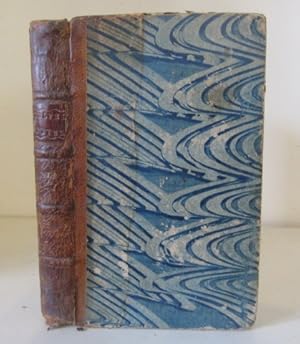
Add to basketCondition: Good. hardback, 12mo, vi,(12),256pp, pages browning and some page corners creaased, binding sound,no inscriptions, marbled boards and quarter leather, edges rubbed, spine edge starting to crack, Good condition. Vol. 1 only.
 More images
Published by Dodd, Mead & Company, New York 1877
- Hardcover
Seller: First Class Used Books, Forsyth, U.S.A.First Class Used Books
Contact seller5-star sellerCondition: Used - Poor
US$ 100.00
US$ 2.80 shippingShips within U.S.A.Quantity: 1 available
Add to basketHard Cover. Condition: Poor. No Jacket. 451 pages. Foxing throughout the book. previous owner's name stamp inside front cover.There is no other writing in the book. There are no loose pages. Wear to the corners. Shelf wear. Wear top and bottom of spine. Light wear edges of the spine. Size: 8vo - over 7¾" - 9¾" tall.
A Treatise on Man, His Intellectual Faculties and His Education Volumes 1 & 2
Helvetius M. Translated from the French with Additional Notes, By W. Hooper, M.D.
Published by Printed By B. Law, Ave-Maria- Lane and G. Robinson, Pater-Noster-Row, London 1777
- Hardcover
Seller: Ann Open Book, Lansing, U.S.A.Ann Open Book
Contact seller5-star sellerCondition: Used - Fair
US$ 150.00
US$ 5.00 shippingShips within U.S.A.Quantity: 1 available
Add to basketLeather. Condition: Fair. No Jacket. Mixed bindings. Vol.1 boards have the leather missing.A little larger than Vol.2. Owners name written inside on title page in Vol.1.
Published by Printed for S. Hooper, London 1776
- Hardcover
Seller: Ray Boas, Bookseller - Established 1980, Walpole, U.S.A.Ray Boas, Bookseller - Established 1980
Contact seller5-star sellerHC. 129pp with; "LETTER FROM M. GESSNER to M. FUSLIN, Author of the History of the Swiss Painters, on Landscape Painting." and, "THE TWO FRIENDS OF BOURBON, A MORAL TALE. BY M. DIDEROT." Raised bands on leather spine, some rubbing to spine and edges of boards. very good, 3/4 leather (hardcover) (slight bow to boards), teg. coppe…rplate engravings (illustrator).
Gesta Romanorum; Or, Entertaining Moral Stories: Invented by the Monks As a Fire-Side Recreation, and Commonly Applied in Their Discourses from the Pulpit . Tr. from the Latin, with Preliminary Observations and Copious Notes.
Swan, Charles Rev. (translated) ; Hooper, Wynnard (Revised and Corrected) ; Theodore Woodman Gore (bookplate illustrated by Edwin H. Blashfield)
Published by George Bell and Sons 1877
- Hardcover
- Signed
Seller: TotalitarianMedia, Los Angeles, U.S.A.TotalitarianMedia
Contact seller4-star sellerCondition: Used - Good
US$ 300.00
US$ 6.00 shippingShips within U.S.A.Quantity: 1 available
Add to basketHardcover. Condition: Good. No Jacket. Gesta Romanorum; Or, Entertaining Moral Stories: Invented by the Monks As a Fire-Side Recreation, and Commonly Applied in Their Discourses from the Pulpit . Tr. from the Latin, with Preliminary Observations and Copious Notes. Swan, Charles Rev. (translated) ; Hooper, Wynnard (Revised and Co…rrected) George Bell and Sons, London, 1877. 425p. + book catalogue. hardcover no dust jacket, boards lightly bumped/scuffed, binding tight, text clean/unmarked, NOT xlib, binding threads visiblefront gutter, front endpapers (book catalogue) loose, Theodore Woodman Gore bookplate illustrated by Edwin H. Blashfield inside front board, SIGNED/DATED BY GOR HALF-TITLE PAGE 300.00. Signed by Illustrator(s).
Published by S. Hooper. Printed by George Robinson, London 1776
- First Edition
Seller: White Fox Rare Books and Antiques, ABAA/ILAB, New York, U.S.A.White Fox Rare Books and Antiques, ABAA/ILAB
Contact seller4-star sellerCondition: Used - Very good
US$ 175.00
US$ 7.00 shippingShips within U.S.A.Quantity: 1 available
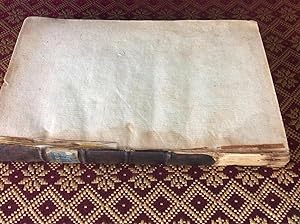
Add to basketFull Morocco. Condition: Very Good. First English Edition. 4to. 129 pp. With eight copper engraved plates, in addition to copper engraved vignettes and illustrations on text pages. Leaves are thick and could be regarded as of a thin card. Considerable age toning to the leaves, in addition to heavy-ish offsetting of the illustrat…ions, whether the plates or the smaller illustrations and decoration.
 More images
Published by W. Wilson, Dublin 1772
- First Edition
Seller: Boojum and Snark Books, Kanab, U.S.A.Boojum and Snark Books
Contact seller5-star sellerCondition: Used - Good
US$ 1,500.00
US$ 8.00 shippingShips within U.S.A.Quantity: 1 available
Add to basketNo Binding. Condition: Good. No Jacket. 1st Edition. An exceedingly rare imprint of this utopian novel, first published in French in 1771. This edition was published in Dublin in 1772, and cannot be found in OCLC (the first edition in English is listed in OCLC as a London imprint in 1772: 2 vol. G. Robinson). This is a utopian n…ovel set in the year 2440. Book block only, lacking boards, but majority of leather spine strip still present, with raised bands; binding of book block still sound. 6 3/8 x 4 inches, 184 pp. Mild dampstaing near spine. Otherwise, pages clean. This is volume 1 only (but volume 2 is available to read online (h t t p s : / / a r c h i v e . o r g /details/memoirsofyeartwo02merc --- without the spaces). Rare indeed. "Mercier's L'An 2440, rêve s'il en fut jamais (literally, "The Year 2440: A Dream If Ever There Was One"; translated into English as Memoirs of the Year Two Thousand Five Hundred [sic]; and into German as Das Jahr zwey tausend vier hundert und vierzig: Ein Traum aller Träume) is a utopian novel set in the year 2440. An extremely popular work (it went through twenty-five editions after its first appearance in 1770), the work describes the adventures of an unnamed man, who, after engaging in a heated discussion with a philosopher friend about the injustices of Paris, falls asleep and finds himself in a Paris of the future. Darnton writes that "despite its self-proclaimed character of fantasy.L'An 2440 demanded to be read as a serious guidebook to the future. It offered an astonishing new perspective: the future as a fait accompli and the present as a distant past. Who could resist the temptation to participate in such a thought experiment? And once engaged in it, who could fail to see that it exposed the rottenness of the society before his eyes, the Paris of the eighteenth century?" Mercier's hero notes everything that catches his fancy in this futuristic Paris. Public space and the justice system have been reorganized. Its citizens' garb is comfortable and practical. Hospitals are effective and based on science. There are no monks, priests, prostitutes, beggars, dancing masters (i.e. teachers), pastry chefs, standing armies, slavery, arbitrary arrest, taxes, guilds, foreign trade, coffee, tea or tobacco and all useless and immoral previously-written literature has been destroyed. Mercier's future is not wholly utopian. The extremes of wealth and poverty have been abolished; nevertheless, the poor still exist. There is little economic development and the population of France has increased only by 50%." (1722RO089).


