
Trianon Press (29 results)
 More images
- Hardcover
Seller: John Windle Antiquarian Bookseller, ABAA, San Francisco, CA, U.S.A.John Windle Antiquarian Bookseller, ABAA
Contact seller4-star sellerdj. New York and Paris: The Orion Press with The Trianon Press, 1964. 4to, [103] pp. With 32 color plates. Original cloth, dust-jacket slightly browned and with some markings, cloth marked and slightly sunned at edges. Very good. ß Trade edition of 1964 Trianon Press facsimile.

- Softcover
Seller: John Windle Antiquarian Bookseller, ABAA, San Francisco, CA, U.S.A.John Windle Antiquarian Bookseller, ABAA
Contact seller4-star sellerParis: Trianon Press, 1964. 4to, 56 pp., with a frontispiece and 15 color plates. Original color-printed wrappers covered in mylar, some browning to wrappers, sale slip from Bridge Books slipped in. ß The original 1964 catalogue. Bentley, BB, 688.
- Softcover
Seller: John Windle Antiquarian Bookseller, ABAA, San Francisco, CA, U.S.A.John Windle Antiquarian Bookseller, ABAA
Contact seller4-star sellerParis: Trianon Press, 1964. 4to, 56 pp., with a frontispiece and 15 color plates. Original color-printed wrappers covered in mylar. Wrappers slightly browned and curled; very good. ß The original 1964 catalogue. Bentley, BB, 688.

- Hardcover
Seller: John Windle Antiquarian Bookseller, ABAA, San Francisco, CA, U.S.A.John Windle Antiquarian Bookseller, ABAA
Contact seller4-star sellerdj. New York and Paris: The Orion Press with The Trianon Press, 1964. 4to, [103] pp. With 32 color plates. Original cloth, dust-jacket slightly browned, with mylar cover. Very good. ß Trade edition of 1964 Trianon Press facsimile.
 More images
Language: French
Published by Éditions Artistiques et Documentaires, Trianon Press, Grey Falcon Press, Paris, London, New York 1948
- Hardcover
- First Edition
Seller: Joseph Burridge Books, Dagenham, United KingdomJoseph Burridge Books
Contact seller5-star sellerCondition: Used - Very good
US$ 75.95
US$ 36.20 shippingShips from United Kingdom to U.S.A.Quantity: 1 available
Hardcover. Condition: Very Good. 1st Edition. 28 pages, 4 unnumbered pages,1 frontispiece, 37 unnumbered leaves of plates (some mounted, some folded) : illustrations (some color), plans, portraits ; 41 cm. Notes: Issued in portfolio "Cet ouvrage tiré a 900 exemplaires numerotés a été achevé d'imprimer le 1ᵉʳ novembe 1948 sur les… presses de l'Imprimerie la Ruche (A. et P. Jarach) les planches ont été reproduites par les procédés Daniel Jacomet à Paris. Exemplaire Nᵒ 108"--Colophon.
Published by The Trianon Press 1975
- Hardcover
Seller: LiLi - La Liberté des Livres, CANEJAN, , FranceLiLi - La Liberté des Livres
Contact seller5-star sellerCondition: Used - Good
US$ 56.74
US$ 75.23 shippingShips from France to U.S.A.Quantity: 1 available
Couverture rigide. Condition: Satisfaisant. The Trianon Press (illustrator).

Published by printed in Paris at the Trianon Press for the William Blake Trust, London 1972
- Hardcover
Seller: SOPHIE SCHNEIDEMAN RARE BOOKS, ABA, ILAB, LONDON, , United KingdomSOPHIE SCHNEIDEMAN RARE BOOKS, ABA, ILAB
Contact seller5-star sellerCondition: Used
US$ 441.88
US$ 34.86 shippingShips from United Kingdom to U.S.A.Quantity: 1 available
Letter L of 26 copies reserved for the Trustees of the William Blake Trust and teh Publishers. 21 plates - 20 plates reproduced by colour collotype with water-color washes by hand through stencil, and one engraving. 2 vols., 4to and small 4to., quarter brown morocco with marbled paper covered boards, in original marbled paper co…vered slipcase. A very good copy. The text is a clear statement of Blake's beliefs regarding the nature of man. The full book only came to light in 1953 and this is the first reproduction of the text. Such maxims are included as "Man's desires are limited by his perceptions, none can desire what he has not perciev'd (sic)" and "If any could desire what he is incapable of possessing despair must be his eternal lot".

Published by Trianon Press, London 1973
- Hardcover
Seller: SOPHIE SCHNEIDEMAN RARE BOOKS, ABA, ILAB, LONDON, , United KingdomSOPHIE SCHNEIDEMAN RARE BOOKS, ABA, ILAB
Contact seller5-star sellerCondition: Used
US$ 448.79
US$ 34.86 shippingShips from United Kingdom to U.S.A.Quantity: 1 available
No.243 of 808 copies. 4to, 6 colour facsimile plates reproduced in Paris at the Trianon Press using the collotype and hand-stencil process, one black and white illustration plus 5 pp. of commentary by Geoffrey Keynes. 4to., original quarter dark blue morocco, marbled paper covered boards, in the original marbled paper covered sl…ipcase. A very good, bright copy. Booklabel of Elaine Klemen. A facsimile of the only known copy of The Book of Ahania which was owned by Lessing Rosenwald. The original frontispiece was supplied for this facsimile by its owner Geoffrey Keynes. The Book of Ahania continues the story of the Book of Urizen. As Keynes writes: "Ahania, the feminine Emanation of Urizen, signifies Pleasure in Blake's system.the poem begins with.a new character Fuzon who.signifies Passion.Fuzon attacks Urizen.with a fiery globe.Urizen was sorely wounded in the loins [and].in his agony at losing his source of pleasure, he seized on Ahania, calling her Sin.Urizen seeks vengeance on Fuzon, creating in the process the Serpent of Materialism".

Published by Printed at the Trianon Press for the Trustees of The William Blake Trust, London 1976
- Hardcover
Seller: SOPHIE SCHNEIDEMAN RARE BOOKS, ABA, ILAB, LONDON, , United KingdomSOPHIE SCHNEIDEMAN RARE BOOKS, ABA, ILAB
Contact seller5-star sellerCondition: Used
US$ 483.31
US$ 34.86 shippingShips from United Kingdom to U.S.A.Quantity: 1 available
No. 156 of 480 ordinary copies, in addition there were 32 deluxe copies and 26 copies for the Trustees and publishers. 5 colour facsimile plates made using the collotype and hand-stencil process at the Trianon Press in Paris. Printed on Arches pure rag paper to match the paper used by Blake. 4to., quarter brown morocco, marbled…paper boards in a marbled paper covered slipcase. Very good. The companion volume to the Book of Ahania, printed by Blake in Lambeth in 1795. A facsimile of the only known copy of The Book of Los in the British Museum. In his commentary, Geoffrey Keynes writes: "the philosophic message of this small book is hidden in apocalyptic verbiage calculated to puzzle Blake's small audience. Blake seems to have sensed this obscurity as soon as it was completed and, as far as is known, he never made another copy.or referred to it." Bookplate of Alexander Stone on front pastedown.
 More images
Published by Trianon Press, Paris 1966
- Softcover
- Signed
Seller: Heritage Book Shop, ABAA, Beverly Hills, CA, U.S.A.Heritage Book Shop, ABAA
Contact seller5-star sellerillustrator]. SHAHN, Ben. TRIANON PRESS. Haggadah for Passover. Copied and Illustrated by Ben Shahn. Paris: Trianon Press, 1966. Full Description: SHAHN, Ben, [illustrator]. Haggadah for Passover. Copied and Illustrated by Ben Shahn. Paris: Trianon Press, 1966. Limited edition. One of 292 copies signed by the artist, this being…number 100. Large folio (15 1/2 x 12 inches; 395 x 305 mm). [xxiv], 135 pp. Illustrations and text by Ben Shahn. Pictorial borders and some illustrations in color. Signed by Shahn on the double-page lithograph. Printed on pure rag Arches Vergé paper especially manufactured to match the paper used by the artist. Text in both Hebrew and English. Unsewn as issued in original glassine covered stiff wrappers. Wrappers lettered in gilt. The lightest amount of foxing to the first few leaves. Still a fine, beautiful copy. Housed in the publisher's original clasped, silk-lined parchment box. Publisher's box with the usual minor natural toning, otherwise fine. From Shahn's introduction: "The making of this book has proceeded much more in the manner of a painting perhaps, than of a proper book. It reflects my memoirs of the Passover in my father's house. It reflects my early impressions and feelings; the images that were always invoked in my fancy by the majestic and meaningful ritual." "The most elaborate of Shahn's deluxe books were his Ecclesiastes, published in two editions in 1965 and 1966 and his Haggadah, published in 1966. The later included twelve Haggadah illustrations he had executed in 1931, which had never been published, plus ten new drawings and a full color title page and frontispiece. Shahn dedicated his 1966 Haggadah- the service of narrative and prayer that accompanies the ritual meal inaugurating he Jewish Passover feast-to his father Joshus Hessel Shahn." (Ben Shahn, Pohl, pg 30). HBS 69553. $3,500. SHAHN, Ben; TRIANON PRESS (illustrator). Signed.

Published by printed in Paris at the Trianon Press for the William Blake Trust, London 1972
- Softcover
Seller: SOPHIE SCHNEIDEMAN RARE BOOKS, ABA, ILAB, LONDON, , United KingdomSOPHIE SCHNEIDEMAN RARE BOOKS, ABA, ILAB
Contact seller5-star sellerCondition: Used
US$ 1,035.67
US$ 34.86 shippingShips from United Kingdom to U.S.A.Quantity: 1 available
No. VI of 50 de luxe copies. 21 plates - 20 plates reproduced by colour collotype with water-color washes by hand through stencil, and one engraving; together with a set of plates showing progressive stages of the collotype and hand stencil process with guide sheet and stencil. Edition de luxe, limited to 50 copies with addition…al proof sheets, progressive plates and original stencil, etc. 2 vols., 4to and small 4to., full brown morocco, in original marbled paper covered slipcase. Near fine, prospectus inserted loose. The text is a clear statement of Blake's beliefs regarding the nature of man. The full book only came to light in 1953 and this is the first reproduction of the text. Such maxims are included as "Man's desires are limited by his perceptions, none can desire what he has not perciev'd (sic)" and "If any could desire what he is incapable of possessing despair must be his eternal lot".
 More images
Published by The Calouste Gulbenkian Foundation through Trianon Press, France 1959
- First Edition
Seller: Oak Knoll Books, ABAA, ILAB, NEW CASTLE, DE, U.S.A.Oak Knoll Books, ABAA, ILAB
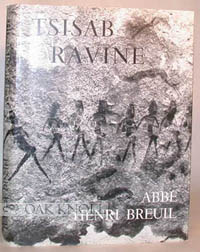
Contact seller5-star sellercardboard slipcase. folio. cardboard slipcase. variously paginated. First edition, limited to 1000 copies. The Tsisab Ravine in the Brandberg Mountain range of South-West Africa, which is the site of the famous 'White Lady of the Brandberg," is also the site of a great number of painted rock shelters clustered together nearby. T…his volume is the outcome of the labors of Abbe Breuil and his companions who camped in the Tsisab Ravine in 1947 and again in 1948 in order to study the sites and to take tracings directly from the rock face. The Abbe's color copies are reproduced by the collotype and hand-stencil process in 77 plates, including one double-page, and are documented by 50 photographs reproduced in monochrome collotype, including two double-page photo-montages. It also includes introductory and topographical material, as well as a detailed description of the plates with the collaboration of Mary E. Boyle, Dr. E. R. Scherz and R. G. Strey. Trianon Press (illustrator).
 More images
- Hardcover
- Signed
Seller: Maggs Bros. Ltd ABA, ILAB, PBFA, London, United KingdomMaggs Bros. Ltd ABA, ILAB, PBFA
Contact seller5-star sellerCondition: Used
US$ 186.42
US$ 36.20 shippingShips from United Kingdom to U.S.A.Quantity: 1 available
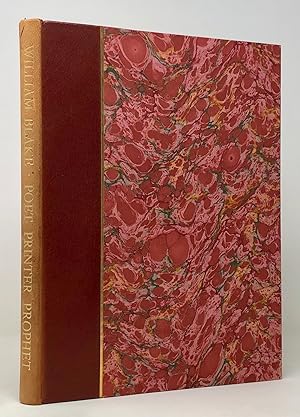
by Geoffrey Keynes. Printed in colour. One of 525 copies signed by Keynes. 4to., original morocco-backed marbled boards, slipcase. London and Paris, the Trianon Press. Spine faded, otherwise fine.
 More images
Published by Trianon Press, London 1977
Seller: Whitmore Rare Books, Inc. -- ABAA, ILAB, Pasadena, CA, U.S.A.Whitmore Rare Books, Inc. -- ABAA, ILAB
Contact seller5-star sellerCondition: Used - Fine
US$ 350.00
US$ 20.00 shippingShips within U.S.A.Quantity: 1 available
Condition: Fine. First thus. Limited edition, number 135 of 600 numbered copies, out of a total edition of 662 copies. A Fine copy. Quarto (11 3/8 x 8 1/4 in; 290 x 210 mm). 154 p. Ten color plates. Original quarter brown morocco over cloth boards. In the original cloth slipcase. A singular collection of all portraits and relate…d sketches of Blake, his wife, and places they lived, by a range of artists to get at the character of the artist. "This compilation of portraits was a departure for the Trianon Press, which had previously focused on facsimiles of Blake's illuminated books and designs. But with a text by Blake scholar Geoffrey Keynes, who contributed commentary to the other facsimiles, it continued Trianon's incomparable record of bringing all aspects of Blake's work and life to light" (Union College). Fine.
 More images
Published by Trianon Press, London 1970
Seller: Whitmore Rare Books, Inc. -- ABAA, ILAB, Pasadena, CA, U.S.A.Whitmore Rare Books, Inc. -- ABAA, ILAB
Contact seller5-star sellerCondition: Used - Fine
US$ 350.00
US$ 20.00 shippingShips within U.S.A.Quantity: 1 available
Condition: Fine. First thus. Limited edition, number 9 of 600 numbered copies, out of a total edition of 662 copies. A Fine copy. Quarto (11 3/4 x 9 in; 298 x 230 mm). (28) pp. Ten color plates. Original quarter green morocco over marbled boards. In the original marbled board slipcase. "Through aphoristic declarations and accomp…anying emblem-like designs, Blake argues for the essential unity of all religions as expressions of the "Poetic Genius" within all human beings." (The William Blake Archive). Blake first etched the work in c. 1788, returned to it in 1795, and again in 1818. In this edition, the plates were reproduced by the Trianon Press (France) using the collotype process, with some water-color washes added by hand. The editorial matter was printed by the Imprimerie Darantiere, Dijon, and binding was by Engel, Malakoff, and the hand-made slip-case by Adine, Paris. With a description and bibliographical history by Blake scholar Geoffrey Keynes. Fine.
 More images
- Hardcover
Seller: John Windle Antiquarian Bookseller, ABAA, San Francisco, CA, U.S.A.John Windle Antiquarian Bookseller, ABAA
Contact seller4-star sellerLondon: Trianon Press, 1972. 3 volumes, folio, with 116 color facsimile leaves reproduced by collotype and hand-stencil color, the text of the poems reproduced from copper-plate with 3 additional printings to reproduce Blake s pencillings and the tone of the paper. Marbled boards, morocco backstrips, slipcases, a fine set as iss…ued. ß Edition limited to 518 copies in all (including 100 copies for Paul Mellon personally) of which 12 copies were a super de luxe issue in three volumes with extra material, 36 copies were a de luxe issue also with extra material but in sheets unbound,18 copies were hors commerce (contents unrecorded), and 352 copies either bound in 3 volumes in slipcases, or as a single set of the loose sheets in a box. This is copy #125. The 116 water-color illustrations to Thomas Gray's poems are among Blake's major achievements as an illustrator. They were commissioned in 1797 by Blake's friend, the sculptor John Flaxman, as a gift for his wife Ann, to whom Blake addressed the poem that ends the series. The commission may have been inspired by the Flaxmans' seeing Blake's water-color designs to Edward Young's Night Thoughts, begun in 1795. The Gray illustrations follow the same basic format. Blake cut windows in large sheets of the same type of Whatman paper used for the Night Thoughts illustrations and mounted in these windows the texts of Gray's poems from a 1790 octavo edition published by John Murray, leaving out some prefatory materials, fly-titles, the notes, and the 7 engraved illustrations. Blake then drew and colored his designs surrounding the letterpress texts. On blank versos near the beginning of each poem, and in one case on a separate piece of paper pasted over letterpress text, Blake inscribed with pen and ink either titles for each design or quotations from the poem to indicate the passage illustrated. On most text pages, Blake also drew a pencil cross left of the first line of the illustrated passage. He numbered most leaves consecutively in pen and ink, beginning a new sequence for each of the 13 poems. Blake conceived of his work as an illustrated book, rather than a series of unbound designs, as indicated by his offsetting Gray's texts above and to the right (left on versos) from the middle of each leaf then the convention for all letterpress books. Although listed by William Michael Rossetti in his catalogue of Blake's drawings and paintings, published in the 1863 and 1880 editions of Alexander Gilchrist's Life of William Blake, the Gray illustrations were virtually unknown until their rediscovery by Herbert Grierson in 1919. The Trianon Press reproductions are recognized as the finest examples of the art of facsimile reproduction; working from the originals in Paul Mellon s collection, each leaf is faithfully hand-colored through stencils to achieve an astonishing exactitude. The Times Literary Supplement stated that nothing like these books had ever been printed before and that it was highly unlikely that they could be printed again. Bentley, Blake Books, 385.

- Hardcover
Seller: John Windle Antiquarian Bookseller, ABAA, San Francisco, CA, U.S.A.John Windle Antiquarian Bookseller, ABAA
Contact seller4-star sellerLondon: Trianon Press, 1972. Folio, with 116 color facsimile leaves reproduced by collotype and hand-stencil color, the text of the poems reproduced from copper-plate with 3 additional printings to reproduce Blake s pencillings and the tone of the paper. Original sheets, marbled boards, morocco backstrip lettered in gilt,quarter… brown morocco box. ß Edition limited to 518 copies in all (including 100 copies for Paul Mellon personally) of which 12 copies were a super de luxe issue in three volumes with extra material, 36 copies were a de luxe issue also with extra material but in sheets unbound,18 copies were hors commerce (contents unrecorded), and 352 copies either bound in 3 volumes in slipcases, or as a single set of the loose sheets in a box. This is copy 387. The 116 water-color illustrations to Thomas Gray's poems are among Blake's major achievements as an illustrator. They were commissioned in 1797 by Blake's friend, the sculptor John Flaxman, as a gift for his wife Ann, to whom Blake addressed the poem that ends the series. The commission may have been inspired by the Flaxmans' seeing Blake's water-color designs to Edward Young's Night Thoughts, begun in 1795. The Gray illustrations follow the same basic format. Blake cut windows in large sheets of the same type of Whatman paper used for the Night Thoughts illustrations and mounted in these windows the texts of Gray's poems from a 1790 octavo edition published by John Murray, leaving out some prefatory materials, fly-titles, the notes, and the 7 engraved illustrations. Blake then drew and colored his designs surrounding the letterpress texts. On blank versos near the beginning of each poem, and in one case on a separate piece of paper pasted over letterpress text, Blake inscribed with pen and ink either titles for each design or quotations from the poem to indicate the passage illustrated. On most text pages, Blake also drew a pencil cross left of the first line of the illustrated passage. He numbered most leaves consecutively in pen and ink, beginning a new sequence for each of the 13 poems. Blake conceived of his work as an illustrated book, rather than a series of unbound designs, as indicated by his offsetting Gray's texts above and to the right (left on versos) from the middle of each leaf then the convention for all letterpress books. Although listed by William Michael Rossetti in his catalogue of Blake's drawings and paintings, published in the 1863 and 1880 editions of Alexander Gilchrist's Life of William Blake, the Gray illustrations were virtually unknown until their rediscovery by Herbert Grierson in 1919. The Trianon Press reproductions are recognized as the finest examples of the art of facsimile reproduction; working from the originals in Paul Mellon s collection, each leaf is faithfully hand-colored through stencils to achieve an astonishing exactitude. The Times Literary Supplement stated that nothing like these books had ever been printed before and that it was highly unlikely that they could be printed again. Bentley, Blake Books, 385.
- Hardcover
Seller: John Windle Antiquarian Bookseller, ABAA, San Francisco, CA, U.S.A.John Windle Antiquarian Bookseller, ABAA
Contact seller4-star sellerLondon: Trianon Press, [1951]. 4to, (6), ix text, and 100 color plates. Original blue cloth, folding box repaired, very good. ß Limited to 516 copies, this is #351. The first of the magnificent series of facsimiles by the Trianon Press of Blake s illuminated books, edited by Geoffrey Keynes. Bentley, Blake Books, 78. Butlin note…d in the Blake Quarterly: The long list of color facsimiles produced by the Trianon Press under Arnold Fawcus for the William Blake Trust were above all objects of beauty, recreating as near to perfection as possible Blake s original achievements. .
- Hardcover
- Signed
Seller: John Windle Antiquarian Bookseller, ABAA, San Francisco, CA, U.S.A.John Windle Antiquarian Bookseller, ABAA
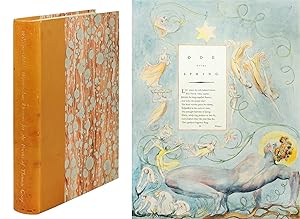
Contact seller4-star sellerLondon: Trianon Press, 1971. Small folio, 72 pages, with 16 color facsimile leaves, suites of progressive plates, and 116 monochrome illustrations. Marbled boards, morocco backstrip, slipcase. Signed by Keynes. A fine copy as issued. ß Limited to 28 copies so inscribed and signed by Geoffrey Keynes (this particular volume is lab…eled no. 2). This is the de luxe edition of the trade version of the Gray issued by the Trianon Press in 1972 using 8-color printing. Although the three-volume folio edition is a magnificent piece of book making, this version is more accessible and easier to use and enjoy, and the quality of the color printing is Trianon Press at its best. The 116 water-color illustrations to Thomas Gray's poems are among Blake's major achievements as an illustrator. They were commissioned in 1797 by Blake's friend, the sculptor John Flaxman, as a gift for his wife Ann, to whom Blake addressed the poem that ends the series. The commission may have been inspired by the Flaxmans' seeing Blake's water-color designs to Edward Young's Night Thoughts, begun in 1795. The Gray illustrations follow the same basic format. Blake cut windows in large sheets of the same type of Whatman paper used for the Night Thoughts illustrations and mounted in these windows the texts of Gray's poems from a 1790 octavo edition published by John Murray, leaving out some prefatory materials, fly-titles, the notes, and the 7 engraved illustrations. Blake then drew and colored his designs surrounding the letterpress texts. On blank versos near the beginning of each poem, and in one case on a separate piece of paper pasted over letterpress text, Blake inscribed with pen and ink either titles for each design or quotations from the poem to indicate the passage illustrated. On most text pages, Blake also drew a pencil cross left of the first line of the illustrated passage. He numbered most leaves consecutively in pen and ink, beginning a new sequence for each of the 13 poems. Blake conceived of his work as an illustrated book, rather than a series of unbound designs, as indicated by his offsetting Gray's texts above and to the right (left on versos) from the middle of each leaf then the convention for all letterpress books. Although listed by William Michael Rossetti in his catalogue of Blake's drawings and paintings, published in the 1863 and 1880 editions of Alexander Gilchrist's Life of William Blake, the Gray illustrations were virtually unknown until their rediscovery by Herbert Grierson in 1919. The Trianon Press reproductions are recognized as the finest examples of the art of facsimile reproduction; working from the originals in Paul Mellon s collection, each leaf is faithfully hand-colored through stencils to achieve an astonishing exactitude. The Times Literary Supplement stated that nothing like these books had ever been printed before and that it was highly unlikely that they could be printed again. Bentley, Blake Books, 385. Signed.
- Hardcover
Seller: John Windle Antiquarian Bookseller, ABAA, San Francisco, CA, U.S.A.John Windle Antiquarian Bookseller, ABAA
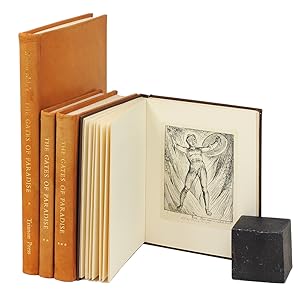
Contact seller4-star sellerLondon: Trianon Press, 1968. 4 vols., 8vo and 12mo, Vol. I (8vo), [i-vii]-viii, 50, (4) pp., Vol. II (12mo), [2] pp., 22 plates, Vol. III [4] pp., 31 plates, Vol. IV (12mo), [2] pp., 10 plates, negative and copper plate. Original tan morocco, (volume 4 in brown cloth, as issued), cloth slipcase, gilt lettering to backstrips of a…ll three volumes. Backstrips slightly flaked. ß Copy #14, with the first three volumes bound in morocco. From an edition of 726 total copies including 700 numbered 1 to 700, of which the first 50 have additional material and are in a special binding, and 26 reserved copies lettered A-Z. Volume I is an introductory volume, followed by three volumes of plates. In about 1818 Blake revised?For Children: The Gates of Paradise, giving the work the new title of?For the Sexes: The Gates of Paradise?and adding three new text plates at the end (Plates 19-21). All twenty-one plates are intaglio etchings/engravings. Plates 19-20 contain brief interpretive statements keyed by number to the preceding design plates. The final plate is addressed to Satan as the God of This [fallen] World. (Blake Archive). Bentley, BB, 48.

Published by printed in Paris at the Trianon Press for the Trustees of the William Blake Trust, London 1974
Seller: SOPHIE SCHNEIDEMAN RARE BOOKS, ABA, ILAB, LONDON, , United KingdomSOPHIE SCHNEIDEMAN RARE BOOKS, ABA, ILAB
Contact seller5-star sellerCondition: Used
US$ 1,933.24
US$ 34.86 shippingShips from United Kingdom to U.S.A.Quantity: 1 available
Limited to 32 deluxe copies with extra material, proofs, stencil etc. 25 colour plates printed using the collotype and hand-stencil method, 8 proofs, and commentary by Geoffrey Keynes at the end, 8 colour facsimile trial proofs, 12 pages of text plus an extra suite of 14 states of plate C & D with a matching guide-sheet and poch…oir stencil. Folio, original full brown morocco, in the original morocco edged marbled paper covered slipcase. Very slight fading to spine, otherwise extremely good. The longest of Blake's prophetic books which tells of the fall of Albion, Blake's embodiment of man, or the Western World. Six copies were printed between 1820 & 1827 and a further 4 copies were printed posthumously. This is the facsimile of Lord Cunliffe's copy (copy B) and Kerrison Preston's proofs; the colouring differs markedly from the Stirling copy which was the first Trianon Press Blake facsimile published in 1950.
 More images
Seller: John Windle Antiquarian Bookseller, ABAA, San Francisco, CA, U.S.A.John Windle Antiquarian Bookseller, ABAA
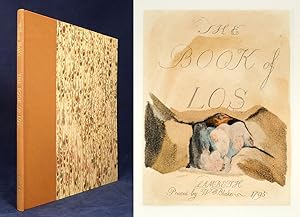
Contact seller4-star sellerLondon: Trianon Press, 1976. 4to, 5 color plates and commentary. Quarter brown morocco, slipcase. A fine copy. ß Regular copy #166. Limited to 538 copies including 32 de luxe copies numbered I-XXXII, 480 regular copies numbered 1-480, and 26 copies lettered A-Z reserved for the Trustees of the William Blake Trust and the publish…ers. Bentley, BBS, p. 62. The Book of Los is the companion volume to the Book of Ahania. The poem opens with a lamentation by Eno aged Mother over the loss of Edenic pleasures through Urizenic error and the world it creates. The narrative then centers on Los s anguished responses to that world, including his transformation of the void into matter and his binding of Urizen. The five plates of?The Book of Los?were etched in intaglio and printed in 1795. There is only one complete copy (A, British Museum), plus a separate impression of Plate 4. The designs on Plates 1-3 and 5 were color printed from the surfaces of copperplates bearing only etched outlines of the pictorial motifs. (The Blake Archive) (6288).

Seller: John Windle Antiquarian Bookseller, ABAA, San Francisco, CA, U.S.A.John Windle Antiquarian Bookseller, ABAA
Contact seller4-star sellerLondon: Trianon Press: 1977. 4to, 155 pp., 51 plates. Original quarter brown morocco, slipcase. Fine as issued. ß Limited to 562 copies. This is copy 67. The definitive work on all known portraits of Mr. and Mrs. Blake. Not in Bentley BB or supplement.
 More images
Seller: John Windle Antiquarian Bookseller, ABAA, San Francisco, CA, U.S.A.John Windle Antiquarian Bookseller, ABAA
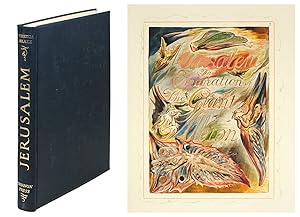
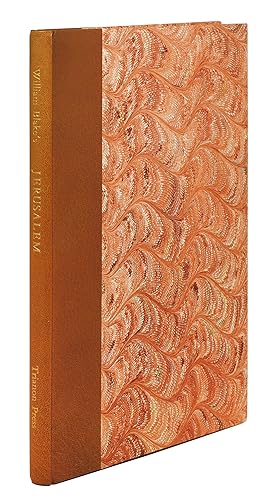
Contact seller4-star sellerLondon: Trianon Press, 1974. Folio, 25 color plates, 8 proofs, and commentary at the end. Original quarter brown morocco, slipcase, fine. ß Limited to 500 copies, of which this is No. 289. Jerusalem is the longest of Blake's prophetic books and tells of the fall of Albion, Blake's embodiment of man, or the Western World. This is… the facsimile of Lord Cunliffe s copy and Kerrison Preston s proofs; the coloring differs markedly from the Stirling copy also published in facsimile by Trianon. The long list of color facsimiles produced by the Trianon Press under Arnold Fawcus for the William Blake Trust were above all objects of beauty, recreating as near to perfection as possible Blake s original achievements. (Martin Butlin) Bentley, Blake Books, A82.
 More images
Seller: John Windle Antiquarian Bookseller, ABAA, San Francisco, CA, U.S.A.John Windle Antiquarian Bookseller, ABAA
Contact seller4-star sellerLondon: Trianon Press, 1974. Folio, 25 color plates, 8 proofs, and commentary at the end, eight color facsimile trial proofs, twelve pages of text plus an extra suite of fourteen states of plate B, collotype proofs, and a matching guide-sheet and stencil. Original full brown morocco, slipcase. As new. ß De luxe copy #XXVI of 32…with extra material, proofs, stencil etc. Limited to 558 copies including 32 de luxe copies numbered I-XXXII, 500 regular copies number 1-500, and 26 regular copies lettered A-Z reserved for the Trustees of the William Blake Trust and the publishers. This is a combined facsimile of Lord Cunliffe s copy (copy B) and Kerrison Preston s proofs; the coloring differs markedly from the Stirling copy (copy E) which was the first Trianon Press Blake facsimile published in 1951 (see above). Jerusalem is the longest of Blake's prophetic books and tells of the fall of Albion, Blake's embodiment of man, or the Western World. Bentley, BB, A82.

Seller: John Windle Antiquarian Bookseller, ABAA, San Francisco, CA, U.S.A.John Windle Antiquarian Bookseller, ABAA
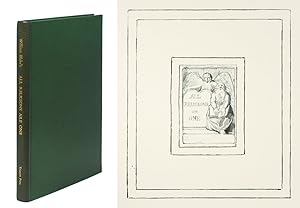
Contact seller4-star sellerLondon: Trianon Press, 1970. 4to, 10 facsimile leaves and 5 pp. of commentary. Original full green morocco, backstrip slightly faded as usual, slipcase. ß Edition de luxe, this being copy h.c. ii, limited to 36 copies specially bound with extra suites of the plates, of an edition in all of 662 copies. Bentley, Blake Books, 5. Al…l Religions are One (c. 1788) is a small tractate, perhaps Blake s first experiment in his illuminated printing, [it] exists in only one copy. It affirms that the Imagination is the true man . and thus early Blake had completed his revolutionary theory of the nature of man and proclaimed the unity of all true religions. ((Damon, Blake Dictionary).

- Signed
Seller: John Windle Antiquarian Bookseller, ABAA, San Francisco, CA, U.S.A.John Windle Antiquarian Bookseller, ABAA
Contact seller4-star sellerLondon: Trianon Press: 1977. 4to, 155 pp., 51 plates. Original full brown morocco, slipcase. A fine copy. ß #5 of 36 de luxe copies signed by Keynes, of a total edition of 562 copies. The definitive work about (and reproducing) all known portraits of Mr. and Mrs. Blake. Not in G.E. Bentley's Blake Books or its supplement. Signed….
Seller: John Windle Antiquarian Bookseller, ABAA, San Francisco, CA, U.S.A.John Windle Antiquarian Bookseller, ABAA
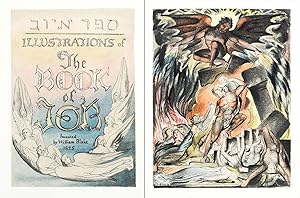
Contact seller4-star sellerParis: Trianon Press for the Blake Trust, 1987. 22 separate plates, approx. 15.75 x 12.25 inches (30 x 31 cm) each, printed in color on Arches, housed in a tri-fold paper folder. Very good condition. ß The New Zealand Set are careful watercolor copies of the central designs of the original engravings, produced by the circle of J…ohn Linnell, presented here in faithful facsimile. Butlin noted in the Blake Quarterly: The long list of color facsimiles produced by the Trianon Press under Arnold Fawcus for the William Blake Trust were above all objects of beauty, recreating as near to perfection as possible Blake s original achievements. .
Seller: John Windle Antiquarian Bookseller, ABAA, San Francisco, CA, U.S.A.John Windle Antiquarian Bookseller, ABAA
Contact seller4-star sellerLondon: Trianon Press, 1970. 4to, with 10 facsimile leaves, 5 pp. commentary by Sir Geoffrey Keynes, plus 32 pp. of the progressive collotype printings. Full green morocco, near fine with green marbled slipcase. ß Copy III of 36 de luxe copies. The total edition was of 662 copies including 36 de luxe copies numbered I-XXXVI, 600… regular copies numbered 1-600, and 26 copies lettered A-Z reserved for the trustees of the William Blake Trust and the publishers. Bentley, Blake Books, 5. All Religions are One (c. 1788) is a small tractate, perhaps Blake s first experiment in his illuminated printing, [it] exists in only one copy. It affirms that the Imagination is the true man . and thus early Blake had completed his revolutionary theory of the nature of man and proclaimed the unity of all true religions. (Damon, Blake Dictionary).


