Order Total (1 Item Items):
Shipping Destination:

Tzair (7 results)
Author:
tzair
Refine with Advanced Search
Skip to main search results
Search filters
Product Type
- All Product Types
- Books (7)
- Magazines & Periodicals (No further results match this refinement)
- Comics (No further results match this refinement)
- Sheet Music (No further results match this refinement)
- Art, Prints & Posters (No further results match this refinement)
- Photographs (No further results match this refinement)
- Maps (No further results match this refinement)
- Manuscripts & Paper Collectibles (No further results match this refinement)
Condition Learn more
- New (No further results match this refinement)
- As New, Fine or Near Fine (No further results match this refinement)
- Very Good or Good (6)
- Fair or Poor (No further results match this refinement)
- As Described (1)
Binding
Collectible Attributes
- First Edition (No further results match this refinement)
- Signed (No further results match this refinement)
- Dust Jacket (No further results match this refinement)
- Seller-Supplied Images (2)
- Not Print on Demand (7)
Language (2)
Price
- Any Price
- Under US$ 25
- US$ 25 to US$ 50
- Over US$ 50 (No further results match this refinement)
Free Shipping
- Free Shipping to U.S.A. (No further results match this refinement)
Seller Location
Seller Rating
-

Be-sha'are Tsiyon: kovets ma'amarim be-inyene Erets Yisra'el veha-Tsiyoniyut.
Published by New York, 1936
Seller: Henry Hollander, Bookseller, Los Angeles, CA, U.S.A.
Seller rating 4 out of 5 stars

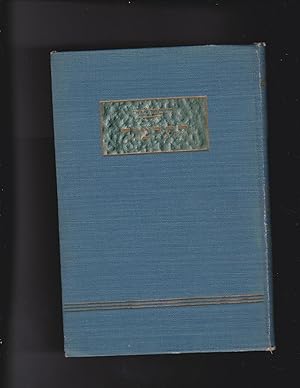
Hardbound. Condition: Good. Octavo, blue cloth with the lettering scuffed off, xvi, 352 pp. Text is in Hebrew.
-
Masekhet zikhronot: partsufim ve-ha'arakhot/ Book of Memoirs: Portraits and Appraisals. 1. Sages of Odessa. 2. Personalities and Scribes.
Published by The Jubilee Committee, New York, 1945
Seller: Henry Hollander, Bookseller, Los Angeles, CA, U.S.A.
Seller rating 4 out of 5 stars
Hardbound. Condition: Very Good. Octavo, brown cloth with gold lettering, 312 pp., index, b/w photos Text is in Hebrew.
-
Kitsur HaTalmud Masekhet Brakhot min Talmud Bavli im beur meforat umaspik al yeshod mada'i. Mahadura Khadasha [=New Edition]
Language: Hebrew
Published by Va'ad Hayovel, New York, 1946
Soft cover. Condition: Very Good. In Hebrew. 97 pages. 222 x 150 mm. Rabbi Haim Tchernowitz (Chaim)(pen name: Rav Za'ir) (1871 Sebesh (district of Vitebsk), Russia -1949 New York) was a talmudic scholar and Hebrew author. He obtained semikhah from Isaac Elchanan Spektor of Kovno in 1896. Moving to Odessa the following year, he founded his own yeshivah, eventually transforming it into a rabbinical seminary (1907) which attracted many students from the Jewish intelligentsia in Russia, including Hayyim Nahman Bialik and Joseph Klausner. Tchernowitz's ambition was to combine traditional study with modern research in order to rejuvenate Jewish learning. His pseudonym Rav Za'ir (young rabbi) reflects his aims. Tchernowitz received a Ph.D. from the University of Wuerzburg in 1914. Settling in the United States in 1923, he taught Talmud at the Jewish Institute of Religion in New York. Tchernowitz's writings may be classified under two headings: scholarly and publicistic. His first scholarly article appeared in Ha-Shilo'ah 3 (1898), entitled, "Ha-Sanegoryah be-Vattei Dinin shel Yisrael." He subsequently published studies on the codes of literature preceding R. Joseph Caro, "Le-Toledot ha-Shulhan Arukh ve-Hitpashetuto" (Ha-Shilo'ah, 4 (1898); 5 (1899); 6 (1899)). In a more popular vein he wrote a series of general articles on the Talmud, "Ha-Talmud" (Ha-Shilo'ah, 7 (1901); 8 (1901-2); 10 (1902)), His first books were methodological studies aimed at modernizing the teaching of Talmud: Shi'urim be-Talmud (2 vols., 1903), on Bava Kamma, and Ki??ur ha-Talmud (vol. 1, 1919; vol. 2, 1922). Tchernowitz's primary interest was to produce a full historical account of the development of the halakhah. Although he did not discount the works of his predecessors, I.H. Weiss and I. Halevy, he thought that they neglected the long era preceding the late Second Temple period and that they overlooked sociological, ideological, and political factors. His concern was to present the halakhah not in its final crystallization but in its development beginning in pre-Mosaic times. His Toledot ha-Halakhah (4 vols., 1935-50) covers the period up to the destruction of the Second Temple, and Toledot ha-Posekim (3 vols., 1946-47) deals with the post-talmudic, geonic, and medieval periods. These works are widely used by students of the history of Jewish law. As a publicist, Tchernowitz showed deep interest in the Zionist movement and in contemporary Jewish problems. He published articles and essays, many of them controversial and polemic, in scores of Hebrew and Yiddish periodicals which appeared later in book form: Be-Sha'arei Ziyyon (1937). Hevlei Ge'ullah (1949) is a collection of his essays on the struggle for Jewish political independence. In 1940 Tchernowitz founded the Hebrew monthly Bitzaron in New York, which he edited until his death. Toward the close of his life he published a series of vivid autobiographical articles in Bitzaron, post-humously issued under the title Pirkei Hayyim (1954). His Masekhet Zikhronot (1945) is a collection of essays on Mendele Mokher Seforim, Ahad Ha-Am, Bialik, and other well-known personalities with whom he associated during the early stages of his career.
-
Hardcover. Condition: Good. No Jacket. In Hebrew. (4), 114 pages. 218 x 162 mm. Hinges reinforced. Pages yellowed. Rabbi Haim Tchernowitz (Chaim)(pen name: Rav Za'ir) (1871 Sebesh (district of Vitebsk), Russia -1949 New York) was a talmudic scholar and Hebrew author. He obtained semikhah from Isaac Elchanan Spektor of Kovno in 1896. Moving to Odessa the following year, he founded his own yeshivah, eventually transforming it into a rabbinical seminary (1907) which attracted many students from the Jewish intelligentsia in Russia, including Hayyim Nahman Bialik and Joseph Klausner. Tchernowitz's ambition was to combine traditional study with modern research in order to rejuvenate Jewish learning. His pseudonym Rav Za'ir (young rabbi) reflects his aims. Tchernowitz received a Ph.D. from the University of Wuerzburg in 1914. Settling in the United States in 1923, he taught Talmud at the Jewish Institute of Religion in New York. Tchernowitz's writings may be classified under two headings: scholarly and publicistic. His first scholarly article appeared in Ha-Shilo'ah 3 (1898), entitled, "Ha-Sanegoryah be-Vattei Dinin shel Yisrael." He subsequently published studies on the codes of literature preceding R. Joseph Caro, "Le-Toledot ha-Shulhan Arukh ve-Hitpashetuto" (Ha-Shilo'ah, 4 (1898); 5 (1899); 6 (1899)). In a more popular vein he wrote a series of general articles on the Talmud, "Ha-Talmud" (Ha-Shilo'ah, 7 (1901); 8 (1901-2); 10 (1902)), His first books were methodological studies aimed at modernizing the teaching of Talmud: Shi'urim be-Talmud (2 vols., 1903), on Bava Kamma, and Ki??ur ha-Talmud (vol. 1, 1919; vol. 2, 1922). Tchernowitz's primary interest was to produce a full historical account of the development of the halakhah. Although he did not discount the works of his predecessors, I.H. Weiss and I. Halevy, he thought that they neglected the long era preceding the late Second Temple period and that they overlooked sociological, ideological, and political factors. His concern was to present the halakhah not in its final crystallization but in its development beginning in pre-Mosaic times. His Toledot ha-Halakhah (4 vols., 1935-50) covers the period up to the destruction of the Second Temple, and Toledot ha-Posekim (3 vols., 1946-47) deals with the post-talmudic, geonic, and medieval periods. These works are widely used by students of the history of Jewish law. As a publicist, Tchernowitz showed deep interest in the Zionist movement and in contemporary Jewish problems. He published articles and essays, many of them controversial and polemic, in scores of Hebrew and Yiddish periodicals which appeared later in book form: Be-Sha'arei Ziyyon (1937). Hevlei Ge'ullah (1949) is a collection of his essays on the struggle for Jewish political independence. In 1940 Tchernowitz founded the Hebrew monthly Bitzaron in New York, which he edited until his death. Toward the close of his life he published a series of vivid autobiographical articles in Bitzaron, post-humously issued under the title Pirkei Hayyim (1954). His Masekhet Zikhronot (1945) is a collection of essays on Mendele Mokher Seforim, Ahad Ha-Am, Bialik, and other well-known personalities with whom he associated during the early stages of his career.
-
Hevle Ge'ulah: Kovets Ma'amarim al ha-Ma'avek li-Tekumat Medinat Yisr'ael/ Travail of Redemption: Essays on the Struggle for the Establishment of Israel.
Published by The Jubilee Committee, New York, 1949
Seller: Henry Hollander, Bookseller, Los Angeles, CA, U.S.A.
Seller rating 4 out of 5 stars
Hardbound. Condition: Very Good. Octavo, blue cloth with gold lettering, 378 pp. Text is in Hebrew.
-
Travail of Redemption Essays on the Struggle for the Establishment of the Israel
Published by Jubilee Committee, 1949
Seller: Schoen Books, South Deerfield, MA, U.S.A.
Association Member: SNEAB
Seller rating 2 out of 5 stars

Condition: Good condition. Location:246 368 pages, in Hebrew 246.
-
Songs of struggle. 31 songs. Published by Hechalutz-Hatzair.
Seller: Antiquariaat Rashi, Gorinchem, Netherlands
Seller rating 5 out of 5 stars

Brooklyn, n.d., Or. wrps., 66 pp. Illustrated. In good condition. * Songs in Hebrew, with English translation, musical notes and Hebrew transcription. From the contents: ''This collection of songs is presented to the Zionist youth movements, the Hebrew and Jewish schools, and to all the lovers of Hebrew songs of Israel. It's aim is to express the spirit of the Yishuv in it's readiness for pioneering and for military sacrifices, and the faith of generations in the redemption of Israel in its homeland.''.


![Seller image for Kitsur HaTalmud Masekhet Brakhot min Talmud Bavli im beur meforat umaspik al yeshod mada'i. Mahadura Khadasha [=New Edition] for sale by Meir Turner](https://pictures.abebooks.com/inventory/md/md14535483699.jpg)