
Will Lundy (6 results)

- Hardcover
- Signed
Seller: Best Books And Antiques, Chandler, TX, U.S.A.Best Books And Antiques
Contact seller4-star sellerCondition: Used - As new
US$ 59.99
US$ 4.99 shippingShips within U.S.A.Quantity: 1 available
Hardcover. Condition: As New. No Jacket. Signed by author Will Lundy on front blank end paper. This is a beautiful HARD copy with a blue leather like cover. Updated and re-released July 2005. References the web site for the 44th bomber group at the bottom of each page. 454 pages. (BR) Shelf 204. Signed by Author(s).

Published by Will Lundy 1987
- Hardcover
- First Edition
Seller: John Hopkinson - Bookseller, Cremona, AB, CanadaJohn Hopkinson - Bookseller
Contact seller5-star sellerCondition: Used - Very good
US$ 100.00
US$ 28.00 shippingShips from Canada to U.S.A.Quantity: 1 available
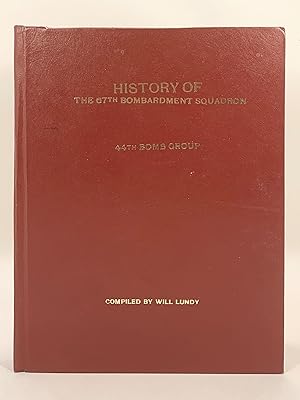
Hardcover. Condition: Very Good. No Jacket. 1st Edition. private library liquidation maroon cloth with silver lettering as new unread.
 More images
Published by Walt Disney Productions ? 1987
- Hardcover
- Signed
Seller: Old New York Book Shop, ABAA, Atlanta, GA, U.S.A.Old New York Book Shop, ABAA
Contact seller5-star sellerCondition: Used - Good
US$ 175.00
US$ 4.75 shippingShips within U.S.A.Quantity: 1 available
Hardcover. Condition: Good. Later printing. 357p quarto, illustrated. Inner hinge cracked due to poor quality of publisher's choice. But otherwise a good copy in maroon boards, gilt title on front cover. Laid in is a long 39 line typed letter from the author concerning information related to the book.
Published by Banner Books
- Hardcover
Seller: Antiquariaat Looijestijn, Rotterdam, NetherlandsAntiquariaat Looijestijn
Contact seller5-star sellerCondition: Used
US$ 178.79
US$ 28.93 shippingShips from Netherlands to U.S.A.Quantity: 1 available
1987. vi, 402 pp. Hardcover with gilt lettering. Bookblock minimally discolored. Very rare! Pictures on request.
Published by Green Harbor Publications [assisted in the publication], Marshfield, Massachusetts 2005
- Hardcover
- First Edition
- Signed
Seller: Ground Zero Books, Ltd., Silver Spring, MD, U.S.A.Ground Zero Books, Ltd.
Contact seller5-star sellerCondition: Used - Good
US$ 875.00
US$ 5.00 shippingShips within U.S.A.Quantity: 1 available
Hardcover. Condition: Good. The format is approximately 8.5 inches by 11 inches. 454 pages. Illustrations. Tabular data. Summary of Crewmen casualties. Summary of Aircraft Incidents. Detail of Aircraft Incidents. Index of Names. No dust jacket present. Signed author statement on the fep. The statement reads Thanks for your compl…eted tour of duty with the 506th Sqn, a command pilot as well. Will Lundy. Orange highlighting noted on pages 85, 254 and 255. During World War II, the 44th Bombardment Group was the first B-24 Liberator heavy bombardment group of VIII Bomber Command stationed in England. Colonel Leon W. Johnson, while commander of the 44th Bombardment Group, was awarded the Medal of Honor for his actions during the Ploesti Raid on 1 August 1943. The 44th Bomb Group Roll of Honor is one of the most remarkable documents of World War II. It was produced by Will Lundy, a ground crewman for the 44th Bomb Group. He took on the task of identifying what happened to every 44th Bomb Group man who died during the war. He expanded this admirable goal with another hefty task: identifying all of those wounded or taken prisoner. In 1987 after many years of work, Will Lundy's 44th Bomb Group Roll of Honor was published. An updated and revised version was completed in 2005 and a limited-run, hard-cover edition was produced with the help of Green Harbor Publications. It quickly sold out. Here is how Lundy (in the Foreword to The 44th Bomb Group Roll of Honor) describes it: As a ground crewman in the 67th Squadron for most of the time the 44th Bomb Group was at war in England, I watched most of the 44th Bomb Group planes, heavily laden with bombs, ammunition, fuel, and crewmen take off, headed for action against the enemy. I was there, too, when the formations returned, too often learning that not all of them came back. The emotions were always present; at times elated with a successful attack, but upset when one aborted and very depressed when we had losses. If I had worked on a plane that was missing, I, along with my crew buddies, felt a personal responsibility for the loss. There was always that nagging doubt inside us that I seldom ever voiced that asked, "Could I have been responsible for this loss? Could I, or should I, have done something that would have brought this plane and crew back? Are these crewmen now dead because I failed them?" Several of these brave men were close and personal buddies making the situation worse. But those questions were never answered during the war. The Germans didn't say, of course, and our men that survived to become prisoners, could not say. Evadees did return occasionally, but I saw only a very few. When that terrible war in Europe finally ended, the Group was quickly ordered back to the U.S. to prepare for the final assault on Japan. But once in the U.S. the 44th BG was demobilized, we were split up, and reassigned. Nothing was available to me and I assume most of us, so those burning questions were never answered. Instead, they were pushed back deep inside, but not forgotten." The 44th Bombardment Group was one of the relatively small number of Eighth Air Force bomber units to fly the B-24 Liberator throughout the war in Europe. The unit had been formed at the start of 1941, training with the B-24. After a short period operating as a combined training unit and anti-submarine patrol unit, the 44th began to prepare for the move to Europe in August 1942, and by October had reached Shipdham, Norfolk. This would remain the units main base from then until the end of the war in Europe, although a number of detachments would serve elsewhere. The 44th began operations in November 1942, attacking targets across much of occupied Europe, reaching as far as Romania and Sicily, as well as attacking targets in Germany. The first detachment was made in June 1943, when a large part of the group moved to North Africa, to support the invasion of Sicily. While there the unit took part in Operation Tidal Wave (1 August 1943), the low-level att.
Published by Will Lundy 1984
- Hardcover
- Signed
Seller: Ground Zero Books, Ltd., Silver Spring, MD, U.S.A.Ground Zero Books, Ltd.
Contact seller5-star sellerCondition: Used - Very good
US$ 1,250.00
US$ 5.00 shippingShips within U.S.A.Quantity: 1 available
Hardcover. Condition: Very good. The format is approximately 8.5 inches by 11 inches. [14] 355 pages. Tabular Data. Illustrations. Map Leather-like decorative binding. Originally published in 1982. The documentary of the 67th Squadron - as well as the 66th, 68th and 506th - has as its source the actual records of the 44th B. G.…as provided on microfilm by the Albert F. Simpson Historical Research Center, USAF, Maxwell AFB, Alabama. Author Lundy included some of his own recollections and experiences. He has referenced an incident reported by Martin Bowman and articles that appeared in "Stars ad Stripes". Red circles at pages 219, 225-227 noted. A few other red marks observed. Will Lundy, a ground crewman for the 44th Bomb Group. Lundy, who did in 2006, wrote: As a ground crewman in the 67th Squadron for most of the time the 44th Bomb Group was at war in England, I watched most of the 44th Bomb Group planes, heavily laden with bombs, ammunition, fuel, and crewmen take off, headed for action against the enemy. I was there, too, when the formations returned, too often learning that not all of them came back. The emotions were always present; at times elated with a successful attack, but upset when one aborted and very depressed when we had losses. If I had worked on a plane that was missing, I, along with my crew buddies, felt a personal responsibility for the loss. Somel of these men were close and personal buddies making the situation worse. But those questions were never answered during the war and once in the U.S. the 44th BG was demobilized, we were split up, and reassigned with no answers. The squadron was first activated in January 1941 as the 67th Bombardment Squadron at MacDill Field, Florida as one of the original squadrons of the 44th Bombardment Group. The squadron was equipped with Consolidated B-24 Liberators. Following the Japanese attack on Pearl Harbor, the squadron began to participate in antisubmarine patrols. Although the squadron briefly became an Operational Training Unit in February 1942, it began intensive training for deployment to the European Theater of Operations in July. Deployed to the European Theater of Operations, it was assigned to VIII Bomber Command in England during the summer of 1942. One of the first B-24 Liberator units assigned to the ETO, the squadron was engaged in very long range strategic bombardment missions over Occupied Europe and Nazi Germany, attacking strategic targets in France, Belgium, the Netherlands and Germany. Among the targets attacked were submarine installations, industrial establishments, airfields, harbors and shipyards. A detachment deployed to the Ninth Air Force in Algeria in June 1943 to help facilitate the Allied invasion of Sicily by bombing airfields and marshaling yards in Italy. The detachment also participated in the low-level raid on the Ploe ti oil fields in Romania on 1 August 1943. Most of the detachment returned to England at the end of August, however some crews and aircraft remained in the Mediterranean Theater of Operations (MTO) and flew very long range attacks over Italy, Romania, Austria and Sicily and supported Allied ground forces in Sicily as well as attacking Axis forces in Italy. The squadron also supported the Salerno landing. All aircraft and personnel returned to England in October. The squadron returned to VIII Bomber Command operations and supported the Allied Invasion of France in June 1944 by attacking strongpoints in the beachhead area and transportation targets behind the front line. The group aided the Caen offensive and the Saint-Lô breakthrough in July. It dropped food, ammunition and other supplies to troops engaged in the airborne attack on the Netherlands in September. It attacked enemy targets during the Battle of the Bulge between December 1944 and January 1945, by striking bridges, tunnels, rail and road junctions and communications in the battle area. The squadron attacked airfields and transportation in support of the Western Allied Invasion of Germany, an. Graphic/illustration on title page was copyrighted (illustrator).

