
Xit (5 results)

Published by Dalhart Pub Co, Dalhart 1940
- Softcover
Seller: Gene W. Baade, Books on the West, Renton, WA, U.S.A.Gene W. Baade, Books on the West
Contact seller5-star sellerCondition: Used - Good
US$ 27.30
US$ 4.99 shippingShips within U.S.A.Quantity: 1 available
Soft cover. Condition: Good. First Thus. Original issue. 4to pictorial wraps. 88pp. Illus. Ads. Published in Dalhart, Texas. The XIT was once considered (around 1886) the largest ranch in the world, and it was fenced. The land was acquired by a Chicago syndicate in exchange for paying for the new Texas State Capitol building. Th…e ranch, composed of 10 units, lay along the western border of the Texas Panhandle shared with New Mexico and the western end of the Oklahoma Panhandle. Its fame and history was written by J. Evetts Haley. Good copy, actually vg. Wonderful short pieces biographical and otherwise, photos of old ranchers and cowboys, and great regional/local ads.
 More images
Published by Oxmoor House Inc., Birmingham 1975
- Hardcover
Seller: Orb's Community Bookshop, Huntly, , United KingdomOrb's Community Bookshop
Contact seller5-star sellerCondition: Used - Very good
US$ 22.11
US$ 16.70 shippingShips from United Kingdom to U.S.A.Quantity: 1 available
Hardcover. Condition: Very Good. Dust Jacket Condition: Good. By Caleb Pirtle and the Texas Cowboy Association; Jack Bryant, Clay Dahlberg, George Kovach, Bob Moline, Don Ray, Mark Storm, Jim Thomas, Jim Ward, Tom Warren, Kenneth Wyatt. Beautifully illustrated throughout. Pages are clean. Some scuffing to dust jacket top and bot…tom, plus light stains, but otherwise DJ is in good condition. XIT (illustrator).

Published by Vanity Fair, London 1910
- Softcover
Seller: St Marys Books And Prints, Stamford, , United KingdomSt Marys Books And Prints
Contact seller4-star sellerCondition: Used
US$ 16.58
US$ 27.70 shippingShips from United Kingdom to U.S.A.Quantity: 1 available
soft. Original Vanity Fair Supplement John Porter 1910 measuring approximately 40x 27cm Closed tear to the top and base of the print Overall a good copy. book.
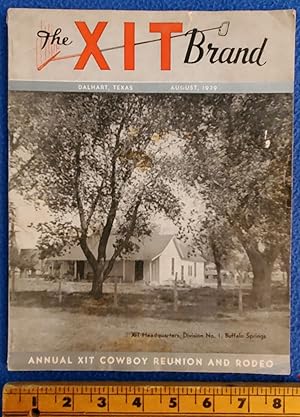
Published by Dalhart Pub Co, Dalhart 1939
- Softcover
Seller: Gene W. Baade, Books on the West, Renton, WA, U.S.A.Gene W. Baade, Books on the West
Contact seller5-star sellerCondition: Used - Very good
US$ 107.62
US$ 4.99 shippingShips within U.S.A.Quantity: 1 available
Soft cover. Condition: Very Good. First Thus. Original issue. 4to pictorial wraps showing XIT Headquarters, Division No. 1, Buffalo Springs. 99pp. Illus. Ads. Published in Dalhart, Texas. The XIT was once considered (around 1886) the largest ranch in the world, and it was fenced. The land was acquired by a Chicago syndicate in e…xchange for paying for the new Texas State Capitol building. The ranch, composed of 10 units, lay along the western border of the Texas Panhandle shared with New Mexico and the western end of the Oklahoma Panhandle. It's fame and history was written by J. Evetts Haley. Very good copy with a couple of short tears to the cover edges and mild soiling / aging. Wonderful short pieces biographical and otherwise, photos of old ranchers and cowboys, and great regional/local ads.

HM King Edward VII; The Pacificator of Europe. Issue 2167. (First edition before the bound volumes.)
Published by London: Vanity Fair. 1910
- Art Print
Seller: Wittenborn Art Books, San Francisco, CA, U.S.A.Wittenborn Art Books
Contact seller5-star sellerCondition: Used - Good
US$ 125.00
US$ 10.00 shippingShips within U.S.A.Quantity: 1 available
Condition: Good. Original colour lithograph. (15 x 9.6 inches). Very Good. Minor toning on top edge, not affecting image. Mounted on board. Dated 12 May 1910. Scarce.Edward VII (Albert Edward; 9 November 1841 - 6 May 1910) was King of the United Kingdom and the British Dominions and Emperor of India from 22 January 1901 until hi…s death in 1910. The eldest son of Queen Victoria and Prince Albert of Saxe-Coburg and Gotha, Edward was related to royalty throughout Europe. Before his accession to the throne, he was heir apparent and held the title of Prince of Wales for longer than any of his predecessors. During the long reign of his mother, he was largely excluded from political power, and came to personify the fashionable, leisured elite. He travelled throughout Britain performing ceremonial public duties, and represented Britain on visits abroad. His tours of North America in 1860 and the Indian subcontinent in 1875 were popular successes, but despite public approval his reputation as a playboy prince soured his relationship with his mother. As king, Edward played a role in the modernisation of the British Home Fleet and the reorganisation of the British Army after the Second Boer War. He reinstituted traditional ceremonies as public displays and broadened the range of people with whom royalty socialised. He fostered good relations between Britain and other European countries, especially France, for which he was popularly called "Peacemaker", but his relationship with his nephew, the German Emperor Wilhelm II, was poor. The Edwardian era, which covered Edward's reign and was named after him, coincided with the start of a new century and heralded significant changes in technology and society, including steam turbine propulsion and the rise of socialism. He died in 1910 in the midst of a constitutional crisis that was resolved the following year by the Parliament Act 1911, which restricted the power of the unelected House of Lords.


