Order Total (1 Item Items):
Shipping Destination:

Yorkshire Dialect Bindings (1 results)
Skip to main search results
Search filters
Product Type
- All Product Types
- Books (1)
- Magazines & Periodicals (No further results match this refinement)
- Comics (No further results match this refinement)
- Sheet Music (No further results match this refinement)
- Art, Prints & Posters (No further results match this refinement)
- Photographs (No further results match this refinement)
- Maps (No further results match this refinement)
- Manuscripts & Paper Collectibles (No further results match this refinement)
Condition Learn more
- New (No further results match this refinement)
- As New, Fine or Near Fine (No further results match this refinement)
- Very Good or Good (No further results match this refinement)
- Fair or Poor (No further results match this refinement)
- As Described (1)
Binding
- All Bindings
- Hardcover (No further results match this refinement)
- Softcover (No further results match this refinement)
Collectible Attributes
- First Edition (No further results match this refinement)
- Signed (No further results match this refinement)
- Dust Jacket (No further results match this refinement)
- Seller-Supplied Images (1)
- Not Print on Demand (1)
Language (1)
Price
- Any Price
- Under US$ 25 (No further results match this refinement)
- US$ 25 to US$ 50 (No further results match this refinement)
- Over US$ 50
Free Shipping
- Free Shipping to U.S.A. (No further results match this refinement)
Seller Location
Seller Rating
-
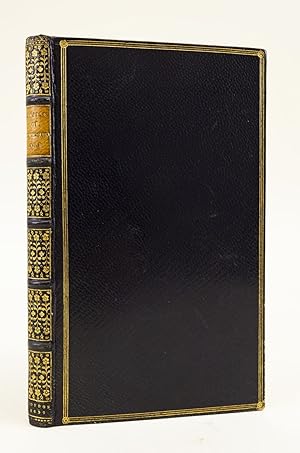
THE PRAISE OF YORK-SHIRE ALE, WHEREIN IS ENUMERATED SEVERAL SORTS OF DRINK, WITH A DISCRIPTION OF THE HUMORS OF MOST SORTS OF DRUNCKARDS. TO WHICH IS ADDED, A YORK-SHIRE DIALOGUE . . . WITH THE ADDITION OF SOME OBSERVATIONS, OF THE DIALECT . . . IN THE EAST RYDING
Published by J. White for Francis Hildyard, York, 1697
Seller: Phillip J. Pirages Rare Books (ABAA), McMinnville, OR, U.S.A.
Seller rating 3 out of 5 stars

Third Edition. 157 x 92 mm. (6 1/4 x 3 5/8"). 2 p.l., 124 pp. Dark blue crushed morocco by Charles Lewis (rear flyleaf with early owner's ink notation to this effect, giving 1831 as the date of the binding), covers bordered by three gilt rules, raised bands, spine compartments with rows of gilt flowers, tan morocco label, gilt-rolled turn-ins, marbled endpapers, all edges gilt. Front pastedown with engraved armorial bookplate of William Gott; 1906 article reporting on a sale at Sotheby's, mentioning this volume specifically, laid in at front; rear flyleaf with ink note: "Hibberts sale. 1829 / binding by C. Lewis 1831." Wing M-1810; ESTC R19511. Very slight signs of wear to leather, but the attractive binding extremely well preserved and very pleasing. Leaves apparently lightly pressed, some foxing and browning to the title page, occasional minor foxing elsewhere, small repairs to worming on upper corner and head edge of A2, but still a clean and fresh copy internally. First printed in 1685, this is a book with two very different parts, the first being a rowdy and amusing poem on Yorkshire ales, and the second a much more serious and important linguistic work on the Yorkshire dialect--both offered here in a binding by a prominent English craftsman. Scion of a landed county family and author of well-regarded legal treatises, attorney George Meriton (1634-1711) began to create a record of the Yorkshire dialect in 1683, when he published "A York-shire Dialogue in its Pure Natural Dialect." A second edition was printed in 1685, prefaced by the poem "The Praise of York-shire Ale" and with the addition of a pioneering dialect glossary. Our third edition includes more dialogues in the York dialect. According to linguist Martyn Wakelin, Meriton's work is still "of the utmost value to our knowledge of late 17th century northern phonology." In addition, the work was influential in encouraging others to document regional dialects in Britain. This is an uncommonly seen item. The son of a Hanoverian immigrant, Charles Lewis (1786-1836) was apprenticed to Henry Walther at 14, and obtained his freedom in 1807. He set up a shop in Scotland Yard, had other addresses in the Strand, before establishing himself in Duke Street, St. James, in 1817. By 1823 he was employing 21 journeymen, a number of whom are illustrated in a watercolor of the bindery reproduced in Middleton's "A History of English Craft Bookbinding Technique" (p. 349). Lewis was patronized by the great collectors of the day, including William Beckford, who favored him above all others. In a letter to the bookseller George Clarke written in 1831--the year our binding was done--Beckford declared: "Lewis was, and is, and I hope will continue to be, the first artist in this line that Europe can boast of." Our tasteful binding is a fine and well-preserved example of his work. The provenance here is significant. The first known owner of our volume was the outstanding book collector George Hibbert, F.R.S. (1757-1837), Member of Parliament, wealthy shipowner, and one of the earliest members of the Roxburghe Club (elected 1816). This copy of Meriton is almost certainly lot #4914 in the "Catalogue of the Library of George Hibbert, Esq., of Portland Place" (London, 1829), p. 267. Historian David Hancock in Oxford DNB characterized Hibbert as "a renowned collector of paintings, sculpture, and books." Afterwards, the volume was in the collection of Yorkshire bibliophile and industrialist William Gott (1797-1863), who "built up a magnificent collection of rare books." (University of Leeds Library website) The laid-in article at the front referring to a Sotheby's sale in the early 20th century must refer to a third distinguished owner and a second vigorous bibliophile of the Gott dynasty of Yorkshire-born collectors, William's son John Gott (1830-1906), Bishop of Truro.Two years after the Bishop's death, his library was sold by Sotheby's in a "Catalogue of the Choice Library of Valuable and Rare Printed Books an.