

Order Total (1 Item Items):
Shipping Destination:

Visual Jockey (53 results)
Keywords:
visual jockey
Refine with Advanced Search
Skip to main search results
Search filters
Product Type
- All Product Types
- Books (50)
- Magazines & Periodicals (No further results match this refinement)
- Comics (No further results match this refinement)
- Sheet Music (No further results match this refinement)
- Art, Prints & Posters (1)
- Photographs (2)
- Maps (No further results match this refinement)
- Manuscripts & Paper Collectibles (No further results match this refinement)
Condition Learn more
Binding
Collectible Attributes
Language (4)
Free Shipping
Seller Location
Seller Rating
-

Totally Wired: The Rise and Fall of the Music Press
Language: English
Published by Thames & Hudson Ltd, United Kingdom, London, 2023
ISBN 10: 0500297460 ISBN 13: 9780500297469
Seller: WorldofBooks, Goring-By-Sea, WS, United Kingdom
Seller rating 5 out of 5 stars

Paperback. Condition: Very Good. A raucous yet reflective look back at the evolution of the music press and the passionate rock and pop journalists who defined the music of the 20th century. Totally Wired is the definitive story of the music press on both sides of the Atlantic, tracing its rise and fall from humble beginnings nearly 100 years ago. Along the way, this potent creative breeding ground for scores of writers, publishers, photographers, designers and music-makers tested the very limits of journalistic endeavour and influenced the wider worlds of film, media and pop. Focusing on developments from the 1950s to the 2000s, a period that witnessed rock n roll, mod, the Summer of Love, glam, punk, pop, reggae, dance music, R&B and hip-hop, Paul Gorman chronicles the stories of individual magazines from their Tin Pan Alley beginnings and the countercultural foundation of Rolling Stone and the underground press. He explores the 1970s heyday of NME, Melody Maker and Sounds plus such punk-rock publications as Sniffin Glue and Temporary Hoarding; tracks the emergence of dedicated monthlies Q, The Face and Mojo as well as dance-culture independents like Boys Own and Jockey Slut; and spotlights feminist and Riot Grrrl zines Ben Is Dead and Girlfrenzy along with the rise of media by and for people of colour, from Black Music and Black Echoes in the 1970s to The Source, Vibe and XXL in the 1990s. Evoking the music presss kaleidoscopic visual identities, Totally Wired is illustrated with rare and legendary magazine artwork throughout. Painting a complete picture of the scene, Gorman discusses the role played by such writers as Lester Bangs, Charles Shaar Murray and Nick Kent in the development of the careers of, among others, David Bowie, the Clash and Led Zeppelin. He also tackles the entrenched sexism and racism faced by women and those from marginalized communities by highlighting publications and individuals whose contributions have been unfairly overlooked. The resulting narrative, containing stories of unbound talent, blind ambition and sometimes bitter rivalry, makes Totally Wired a riveting and roller-coaster read. The book has been read, but is in excellent condition. Pages are intact and not marred by notes or highlighting. The spine remains undamaged.
-

Horses (Looking At Paintings)
Seller: The Anthropologists Closet, West Des Moines, IA, U.S.A.
Seller rating 5 out of 5 stars
Paperback. Condition: New. New oversized softcover in glossy printed wraps. Pages are clean and free of marks or underlining. (8.5 x 0.25 x 11 inches) Includes a glossary, index, and art prints. 48 pp. Fast shipping in a secure book box mailer with tracking. Looking At Paintings is a series of books designed to present many different painters' views of a single subject. Here is a visual feast of paintings, each of which shows us something about what great artists see when they paint. In Horses, Peggy Roalf leads readers on a personal gallery tour of nineteen favorite paintings of horses. From the work of an unknown prehistoric artist to Raphael, Frederic Remington, Bill Traylor, and others, each artist's vision and interpretation of the horse is unique. Some immortalize the strength and power that results from the partnership formed between horse and jockey and a warrior and his mount as shown in Edouard Manet's Races at Longchamp and Remington's Blanket Signal. Others, such as Benjamin Marshall's Favorite Chestnut Hunter of Lady Frances Stephen, celebrate the animals' sheer physical beauty and the intense love their owners felt for them. To see through the eyes of many of the world's greatest painters is to see with the imagination as well. Horses in the Looking At Paintings series is a book that inspires young readers to observe their world and to use their imagination to see like a painter.
-

Hardcover. Condition: new. Hardcover. Images of blackness have become important in our understanding of the modern world because they reflect and shape the way black people are perceived and represented. In Black Meme Legacy Russell explores the role of these images in the construction of black identity and visual culture, from the early days of film and photography to the digital age. The first ever film was a black jockey riding a horse in 1887. The very first screen kiss was between two black actors in Lime Kiln Day, 1913. Black Meme also explores lynching postcards that were common in the 1920s, the image of Emmot Till's body in the casket and Trayvon's hoodie, the grainy video of Rodney King and the gloss of Michael Jackson' Thriller, Diamond Reynolds's Facebook live recording of her boyfriend's killing by the police, and Beyonce's Formation.Legacy Russell, the award winning author of Glitch Feminism, explores the power of these tokens and argues that without the contributions of black people, digital culture would not exist in its current form. A history of Black imagery that recasts our understanding of visual culture and technology Shipping may be from multiple locations in the US or from the UK, depending on stock availability.
-

Totally Wired (Paperback)
Language: English
Published by Thames & Hudson Ltd, London, 2023
ISBN 10: 0500297460 ISBN 13: 9780500297469
Paperback. Condition: new. Paperback. A raucous yet reflective look back at the evolution of the music press and the passionate rock and pop journalists who defined the music of the 20th century. Totally Wired is the definitive story of the music press on both sides of the Atlantic, tracing its rise and fall from humble beginnings nearly 100 years ago. Along the way, this potent creative breeding ground for scores of writers, publishers, photographers, designers and music-makers tested the very limits of journalistic endeavour and influenced the wider worlds of film, media and pop. Focusing on developments from the 1950s to the 2000s, a period that witnessed rock 'n' roll, mod, the Summer of Love, glam, punk, pop, reggae, dance music, R&B and hip-hop, Paul Gorman chronicles the stories of individual magazines from their Tin Pan Alley beginnings and the countercultural foundation of Rolling Stone and the underground press. He explores the 1970s heyday of NME, Melody Maker and Sounds plus such punk-rock publications as Sniffin' Glue and Temporary Hoarding; tracks the emergence of dedicated monthlies Q, The Face and Mojo as well as dance-culture independents like Boy's Own and Jockey Slut; and spotlights feminist and Riot Grrrl 'zines Ben Is Dead and Girlfrenzy along with the rise of media by and for people of colour, from Black Music and Black Echoes in the 1970s to The Source, Vibe and XXL in the 1990s. Evoking the music press's kaleidoscopic visual identities, Totally Wired is illustrated with rare and legendary magazine artwork throughout. Painting a complete picture of the scene, Gorman discusses the role played by such writers as Lester Bangs, Charles Shaar Murray and Nick Kent in the development of the careers of, among others, David Bowie, the Clash and Led Zeppelin. He also tackles the entrenched sexism and racism faced by women and those from marginalized communities by highlighting publications and individuals whose contributions have been unfairly overlooked. The resulting narrative, containing stories of unbound talent, blind ambition and sometimes bitter rivalry, makes Totally Wired a riveting and roller-coaster read. Shipping may be from multiple locations in the US or from the UK, depending on stock availability.
-

China Visual Arts Gallery: Jockey Club (Chinese edition)
Published by Beijing : China Workers Publishing House, 2000
ISBN 10: 7500823444 ISBN 13: 9787500823445
Condition: Good. Paperback, illustrated with numerous colour photographs, 4to.
-
JUAN CARLOS CASTAGNINO. Jockey Club de Tucumán, Temporada Cultural 1981. 19 de setiembre al 11 de octubre de 1981
Published by Jockey Club de Tucumán, San Miguel de Tucumán, Argentina, 1981
Seller: Buenos Aires Libros, Buenos Aires, BA, Argentina
Seller rating 5 out of 5 stars
Rústica con broches. Condition: Buen estado. Catálogo sin paginar, aprox. 10 pgs. Ilustrado en b/n. [Libro en Español / Book in Spanish].
-

paperback. Condition: New. Language:Chinese.Pages Number: 32 Publisher: China Workers Press Pub . Date: 20.
-

Encuadernación de tapa blanda. Condition: Nuevo. 2ª Edición. En él se dan conocimientos básicos pero muy útiles sobre proyectores de vídeo, cámaras, iluminación, control DMX, video mapping. Así como de software como Adobe After Effects, Cinema 4D, Resolume, ArKaos, Sunlite Todo a nivel muy sencillo y básico pero que se hace necesario para tener una buena base si después se decide ampliar conocimientos en cualquiera de los campos que el libro abarca. Además, el autor comparte vídeos que acompañan a las explicaciones del libro y diversos tutoriales de los diferentes software. SOBRE EL AUTOR: Christian Le Freak (Christian García Ortiz) es un profesional del sector, así como un profesor especialista precisamente en el módulo que da título al libro. Tras estudiar multitud de cursos sobre audiovisuales y sonido, comenzó a trabajar en discotecas, diferentes pistas de baile y todo tipo de fiestas como Disc-Jockey. Este trabajo le lleva a ser contratado como Video-Jockey oficial en una de las macrodiscotecas más importantes del país, como es EIBISÍ. Y la profesionalidad demostrada le lleva a ser contratado como docente especialista de la misma materia en el Instituto de Educación Secundaria Mare de Deu de la Mercè, centro público de Formación Profesional con gran cantidad de alumnado, en la familia de Imagen y Sonido. Tras su trabajo como docente, se le da la oportunidad de mostrar su experiencia y conocimientos profesionales en este libro.
-

Totally Wired (Paperback)
Language: English
Published by Thames & Hudson Ltd, London, 2023
ISBN 10: 0500297460 ISBN 13: 9780500297469
Paperback. Condition: new. Paperback. A raucous yet reflective look back at the evolution of the music press and the passionate rock and pop journalists who defined the music of the 20th century. Totally Wired is the definitive story of the music press on both sides of the Atlantic, tracing its rise and fall from humble beginnings nearly 100 years ago. Along the way, this potent creative breeding ground for scores of writers, publishers, photographers, designers and music-makers tested the very limits of journalistic endeavour and influenced the wider worlds of film, media and pop. Focusing on developments from the 1950s to the 2000s, a period that witnessed rock 'n' roll, mod, the Summer of Love, glam, punk, pop, reggae, dance music, R&B and hip-hop, Paul Gorman chronicles the stories of individual magazines from their Tin Pan Alley beginnings and the countercultural foundation of Rolling Stone and the underground press. He explores the 1970s heyday of NME, Melody Maker and Sounds plus such punk-rock publications as Sniffin' Glue and Temporary Hoarding; tracks the emergence of dedicated monthlies Q, The Face and Mojo as well as dance-culture independents like Boy's Own and Jockey Slut; and spotlights feminist and Riot Grrrl 'zines Ben Is Dead and Girlfrenzy along with the rise of media by and for people of colour, from Black Music and Black Echoes in the 1970s to The Source, Vibe and XXL in the 1990s. Evoking the music press's kaleidoscopic visual identities, Totally Wired is illustrated with rare and legendary magazine artwork throughout. Painting a complete picture of the scene, Gorman discusses the role played by such writers as Lester Bangs, Charles Shaar Murray and Nick Kent in the development of the careers of, among others, David Bowie, the Clash and Led Zeppelin. He also tackles the entrenched sexism and racism faced by women and those from marginalized communities by highlighting publications and individuals whose contributions have been unfairly overlooked. The resulting narrative, containing stories of unbound talent, blind ambition and sometimes bitter rivalry, makes Totally Wired a riveting and roller-coaster read. Shipping may be from our Sydney, NSW warehouse or from our UK or US warehouse, depending on stock availability.
-
Hardcover. Condition: new. Hardcover. Images of blackness have become important in our understanding of the modern world because they reflect and shape the way black people are perceived and represented. In Black Meme Legacy Russell explores the role of these images in the construction of black identity and visual culture, from the early days of film and photography to the digital age. The first ever film was a black jockey riding a horse in 1887. The very first screen kiss was between two black actors in Lime Kiln Day, 1913. Black Meme also explores lynching postcards that were common in the 1920s, the image of Emmot Till's body in the casket and Trayvon's hoodie, the grainy video of Rodney King and the gloss of Michael Jackson' Thriller, Diamond Reynolds's Facebook live recording of her boyfriend's killing by the police, and Beyonce's Formation.Legacy Russell, the award winning author of Glitch Feminism, explores the power of these tokens and argues that without the contributions of black people, digital culture would not exist in its current form. A history of Black imagery that recasts our understanding of visual culture and technology Shipping may be from our Sydney, NSW warehouse or from our UK or US warehouse, depending on stock availability.
-
US$ 23.66
US$ 50.03 shipping
Ships from United Kingdom to U.S.A.Quantity: 1 available
Add to basketHardcover. Condition: new. Hardcover. Images of blackness have become important in our understanding of the modern world because they reflect and shape the way black people are perceived and represented. In Black Meme Legacy Russell explores the role of these images in the construction of black identity and visual culture, from the early days of film and photography to the digital age.The first ever film was a black jockey riding a horse in 1887. The very first screen kiss was between two black actors in Lime Kiln Day, 1913. Black Meme also explores lynching postcards that were common in the 1920s, the image of Emmot Till's body in the casket and Trayvon's hoodie, the grainy video of Rodney King and the gloss of Michael Jackson' Thriller, Diamond Reynolds's Facebook live recording of her boyfriend's killing by the police, and Beyonce's Formation.Legacy Russell, the award winning author of Glitch Feminism, explores the power of these tokens and argues that without the contributions of black people, digital culture would not exist in its current form. A history of Black imagery that recasts our understanding of visual culture and technology Shipping may be from our UK warehouse or from our Australian or US warehouses, depending on stock availability.
-
Encuadernación de tapa dura. Condition: Muy bien. Dust Jacket Condition: Muy bien. El artista coreano David Chong Lee viajó en 1992 a San Francisco a estudiar arte y a ejercer una de sus pasiones: Disc Jockey. Como fruto de esa experiencia surge este libro, una colección de cuadros que recogen su experiencia underground en San Francisco, interpretaciones personales de la vida en esta ciudad y diversos collages y comentarios sobre la condición humana. El libro incluye un Dvd realizado por el artista y 32 postales-collage.
-
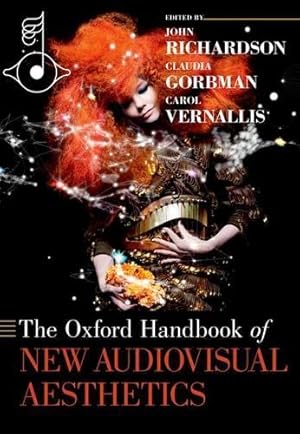
The Oxford Handbook of New Audiovisual Aesthetics
Book 12 of 51: Oxford HandbooksLanguage: English
Published by Oxford University Press Inc, US, 2015
ISBN 10: 0190244593 ISBN 13: 9780190244590
Seller: Rarewaves.com USA, London, LONDO, United Kingdom
Seller rating 5 out of 5 stars
US$ 83.06
Free Shipping
Ships from United Kingdom to U.S.A.Quantity: Over 20 available
Add to basketPaperback. Condition: New. This handbook offers new ways to read the audiovisual. In the media landscapes of today, conglomerates jockey for primacy and the internet increasingly places media in the hands of individuals-producing the range of phenomena from movie blockbuster to YouTube aesthetics. Media forms and genres are proliferating and interpenetrating, from movies, music and other entertainments streaming on computers and iPods to video games and wireless phones. The audiovisual environment of everyday life, too-from street to stadium to classroom-would at times be hardly recognizable to the mid-twentieth-century subject. The Oxford Handbook of New Audiovisual Aesthetics provides powerful ways to understand these changes.Earlier approaches tended to consider sound and music as secondary to image and narrative. These remained popular even as practices from theater, cinema and television migrated across media. However, the traversal, or "remediation," from one medium to another has also provided practitioners and audiences the chance to rewrite the rules of the audiovisual contract. Whether viewed from the vantage of televised mainstream culture, the Hollywood film industry, the cinematic avant-garde, or the participatory discourses of "cyberspace," audiovisual expression has changed dramatically. The book provides a definitive cross-section of current ways of thinking about sound and image. Its authors-leading scholars and promising younger ones, audiovisual practitioners and non-academic writers (both mainstream and independent)- open the discussion on audiovisual aesthetics in new directions. Our contributors come from fields including film, visual arts, new media, cultural theory, and sound and music studies, and they draw variously from economic, political, institutional, psychoanalytic, genre-based, auteurist, internationalist, reception-focused, technological, and cultural approaches to questions concerning today's sound and image. All consider the aural dimension, and what Michel Chion calls "audio-vision:" the sensory and semiotic result of sound placed with vision, an encounter greater than their sum.
-

K - I - L - L FM 100 : Music to Die for
Language: English
Published by Author Solutions Inc Jul 2010, 2010
ISBN 10: 1449703283 ISBN 13: 9781449703288
Buch. Condition: Neu. Neuware - Disc jockey Carter 'The Cart-Man' Jackson has been climbing the stairway to heaven-keeping his life as simple as possible by living from one song to the next. He had the world by the tail, coming from a family of power, prestige, and politics. until he let it all go.Killer Queen is burning up the highway to hell-terrorizing a town, in her crimson-red stilettos, by holding random men at gunpoint. She had nothing, except a dad who abused her. and now she has nothing to lose.K-I-L-L FM 100 is the visual soundtrack of two opposing lives colliding head-on at a destined radio station. As Killer Queen puts the DJ under the gun during his night shift, she begins to question who the real hostage is, as she confronts the demons of her past. And as the DJ shines his light into her darkened world, a few shadows of his own begin to loom from his closet. When the lane narrows on this solitary stretch of highway, both captor and captive realize that something's got to give. Someone's got to go. Closing in fast on this dead-end drive, two souls discover that their lives are not so different; each has lived under a mask, and each is in dire need of genuine love.A full-throttle storyline, injected with one of the most unique twists ever unleashedK-I-L-L FM 100 is the thriller that reads like a soundtrack.There's a time for everything under heaven. Killer Queen knows there's a time to kill.
-

Hokane - Book and CD
Published by Aki Tsuyuko, 2006
Seller: Rons Bookshop (Canberra, Australia), Canberra, ACT, Australia
Seller rating 5 out of 5 stars
First Edition
Hardcover. Condition: Near Fine. No Jacket. 1st Edition. Hokane is a collection of musical and visual short stories, written, performed, and drawn by Aki Tsuyuko. This is the first in a series of limited edition CD and book pairings from Thrill Jockey.
-

CATALOGO DE LA EXPOSICION DE PINTURA INGLESA SIGLOS XVIII Y XIX. Museo Nacional de Bellas Artes - Museo Nacional de Arte Decorativo, Jockey Club y Colecciones particulares de Buenos Aires
Published by Amigos del Arte, Buenos Aires, 1938
Seller: Buenos Aires Libros, Buenos Aires, BA, Argentina
Seller rating 5 out of 5 stars
Rústica. Condition: Buen estado. Catálogo ilustrado con láminas en b/n. Sin paginar, aprox. 50 pgs. [Libro en Español / Book in Spanish] === ARTE - CATALOGOS ===.
-
The Oxford Handbook of New Audiovisual Aesthetics
Book 12 of 51: Oxford HandbooksLanguage: English
Published by Oxford University Press Inc, US, 2015
ISBN 10: 0190244593 ISBN 13: 9780190244590
US$ 79.31
US$ 87.89 shipping
Ships from United Kingdom to U.S.A.Quantity: Over 20 available
Add to basketPaperback. Condition: New. This handbook offers new ways to read the audiovisual. In the media landscapes of today, conglomerates jockey for primacy and the internet increasingly places media in the hands of individuals-producing the range of phenomena from movie blockbuster to YouTube aesthetics. Media forms and genres are proliferating and interpenetrating, from movies, music and other entertainments streaming on computers and iPods to video games and wireless phones. The audiovisual environment of everyday life, too-from street to stadium to classroom-would at times be hardly recognizable to the mid-twentieth-century subject. The Oxford Handbook of New Audiovisual Aesthetics provides powerful ways to understand these changes.Earlier approaches tended to consider sound and music as secondary to image and narrative. These remained popular even as practices from theater, cinema and television migrated across media. However, the traversal, or "remediation," from one medium to another has also provided practitioners and audiences the chance to rewrite the rules of the audiovisual contract. Whether viewed from the vantage of televised mainstream culture, the Hollywood film industry, the cinematic avant-garde, or the participatory discourses of "cyberspace," audiovisual expression has changed dramatically. The book provides a definitive cross-section of current ways of thinking about sound and image. Its authors-leading scholars and promising younger ones, audiovisual practitioners and non-academic writers (both mainstream and independent)- open the discussion on audiovisual aesthetics in new directions. Our contributors come from fields including film, visual arts, new media, cultural theory, and sound and music studies, and they draw variously from economic, political, institutional, psychoanalytic, genre-based, auteurist, internationalist, reception-focused, technological, and cultural approaches to questions concerning today's sound and image. All consider the aural dimension, and what Michel Chion calls "audio-vision:" the sensory and semiotic result of sound placed with vision, an encounter greater than their sum.
-
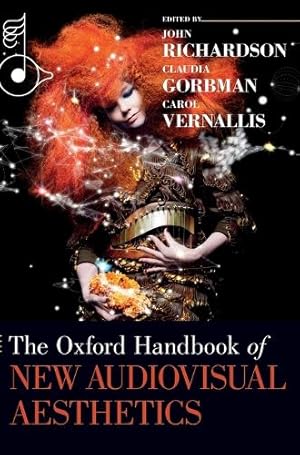
The Oxford Handbook of New Audiovisual Aesthetics
Book 12 of 51: Oxford HandbooksLanguage: English
Published by Oxford University Press Inc, US, 2013
ISBN 10: 0199733864 ISBN 13: 9780199733866
Seller: Rarewaves.com USA, London, LONDO, United Kingdom
Seller rating 5 out of 5 stars
US$ 263.65
Free Shipping
Ships from United Kingdom to U.S.A.Quantity: Over 20 available
Add to basketHardback. Condition: New. This handbook offers new ways to read the audiovisual. In the media landscapes of today, conglomerates jockey for primacy and the internet increasingly places media in the hands of individuals-producing the range of phenomena from movie blockbuster to YouTube aesthetics. Media forms and genres are proliferating and interpenetrating, from movies, music and other entertainments streaming on computers and iPods to video games and wireless phones. The audiovisual environment of everyday life, too-from street to stadium to classroom-would at times be hardly recognizable to the mid-twentieth-century subject. The Oxford Handbook of New Audiovisual Aesthetics provides powerful ways to understand these changes.Earlier approaches tended to consider sound and music as secondary to image and narrative. These remained popular even as practices from theater, cinema and television migrated across media. However, the traversal, or "remediation," from one medium to another has also provided practitioners and audiences the chance to rewrite the rules of the audiovisual contract. Whether viewed from the vantage of televised mainstream culture, the Hollywood film industry, the cinematic avant-garde, or the participatory discourses of "cyberspace," audiovisual expression has changed dramatically. The book provides a definitive cross-section of current ways of thinking about sound and image. Its authors-leading scholars and promising younger ones, audiovisual practitioners and non-academic writers (both mainstream and independent)- open the discussion on audiovisual aesthetics in new directions. Our contributors come from fields including film, visual arts, new media, cultural theory, and sound and music studies, and they draw variously from economic, political, institutional, psychoanalytic, genre-based, auteurist, internationalist, reception-focused, technological, and cultural approaches to questions concerning today's sound and image. All consider the aural dimension, and what Michel Chion calls "audio-vision:" the sensory and semiotic result of sound placed with vision, an encounter greater than their sum.
-

The Oxford Handbook of New Audiovisual Aesthetics
Book 12 of 51: Oxford HandbooksLanguage: English
Published by Oxford University Press Inc, US, 2013
ISBN 10: 0199733864 ISBN 13: 9780199733866
US$ 255.26
US$ 87.89 shipping
Ships from United Kingdom to U.S.A.Quantity: Over 20 available
Add to basketHardback. Condition: New. This handbook offers new ways to read the audiovisual. In the media landscapes of today, conglomerates jockey for primacy and the internet increasingly places media in the hands of individuals-producing the range of phenomena from movie blockbuster to YouTube aesthetics. Media forms and genres are proliferating and interpenetrating, from movies, music and other entertainments streaming on computers and iPods to video games and wireless phones. The audiovisual environment of everyday life, too-from street to stadium to classroom-would at times be hardly recognizable to the mid-twentieth-century subject. The Oxford Handbook of New Audiovisual Aesthetics provides powerful ways to understand these changes.Earlier approaches tended to consider sound and music as secondary to image and narrative. These remained popular even as practices from theater, cinema and television migrated across media. However, the traversal, or "remediation," from one medium to another has also provided practitioners and audiences the chance to rewrite the rules of the audiovisual contract. Whether viewed from the vantage of televised mainstream culture, the Hollywood film industry, the cinematic avant-garde, or the participatory discourses of "cyberspace," audiovisual expression has changed dramatically. The book provides a definitive cross-section of current ways of thinking about sound and image. Its authors-leading scholars and promising younger ones, audiovisual practitioners and non-academic writers (both mainstream and independent)- open the discussion on audiovisual aesthetics in new directions. Our contributors come from fields including film, visual arts, new media, cultural theory, and sound and music studies, and they draw variously from economic, political, institutional, psychoanalytic, genre-based, auteurist, internationalist, reception-focused, technological, and cultural approaches to questions concerning today's sound and image. All consider the aural dimension, and what Michel Chion calls "audio-vision:" the sensory and semiotic result of sound placed with vision, an encounter greater than their sum.
-
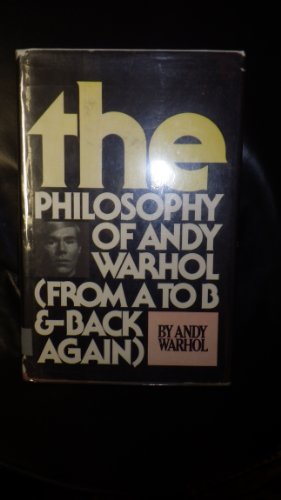
The Philosophy of Andy Warhol; (From A to B and Back Again)
Language: English
Published by Harcourt Brace Jovanovich, New York, 1975
ISBN 10: 0151890501 ISBN 13: 9780151890507
Seller: Ground Zero Books, Ltd., Silver Spring, MD, U.S.A.
Seller rating 5 out of 5 stars
First Edition Signed
Hardcover. Condition: Very good. Dust Jacket Condition: Good. Philippe Halsman (Jacket photograph) (illustrator). First Edition [stated]. [14], 241, [1] pages. DJ has some wear, soiling, and edge tear. Signed on half-title page with some bleed through to the title page. Signature has been authenticated and comes with a Letter of Authenticity from JSA [James Spence Authentication] Certification Number XX34894. A loosely formed autobiography by Andy Warhol, told with his trademark blend of irony and detachment. In The Philosophy of Andy Warhol, which, with the subtitle "(From A to B and Back Again)," is less a memoir than a collection of riffs and reflections. He talks about love, sex, food, beauty, fame, work, money, and success; about New York, America, and his childhood in McKeesport, Pennsylvania; about his good times and bad in New York, the explosion of his career in the sixties, and his life among celebrities. Andy Warhol (born Andrew Warhola; August 6, 1928 - February 22, 1987) was an American artist, film director, and producer who was a leading figure in the visual art movement known as pop art. His works explore the relationship between artistic expression, advertising, and celebrity culture that flourished by the 1960s, and span a variety of media, including painting, silkscreening, photography, film, and sculpture. Some of his best known works include the silkscreen paintings Campbell's Soup Cans (1962) and Marilyn Diptych (1962), the experimental films Empire (1964) and Chelsea Girls (1966), and the multimedia events known as the Exploding Plastic Inevitable (1966-67). He authored numerous books, including The Philosophy of Andy Warhol and Popism: The Warhol Sixties. The book is an assemblage of self-consciously ironic "quotable quotes" about love, beauty, fame, work, sex, time, death, economics, success, and art, among other topics, by the "Prince of Pop". Warhol signed two book contracts in 1974 with Harcourt, one for The Philosophy and the second for a biography of Paulette Goddard, which was never completed. The Philosophy was ghostwritten by Warhol's frequent collaborator, Pat Hackett, and Interview magazine editor Bob Colacello. Much of the material is drawn from taped interviews Hackett did with Warhol specifically for the book, and also from conversations Warhol had taped between himself and Colacello and Brigid Berlin. Warhol promoted the book in September 1975 on a nine-city U.S. book tour, followed by stops in Italy, France, and England. Derived from a Kirkus review: Warhol's immense immersion into the trivia of his life (by way of a tape-recorder he calls his "wife") is undeniably, hypnotically enjoyable. It makes no difference that Warhol seems, or really is, emotionally frozen at fourteen years old. His mind-book is a repository of ideas that may well survive the century -- an indispensable bag of what it's like to spend a crammed Saturday afternoon in Macy's, Woolworth's and Gimbel's shopping for fifteen pairs of jockey shorts and eight pairs of Supphose (all navy). Warhol is his own greatest straight man, with a Buster Keaton deadpan in his far-outness and no sense of put-on. He really believes in himself, his "nothingness," his insecurity, his shopping bags full of candy. He deliberately surrounds himself with love's cast-offs so that he won't be exposed to any real feelings that might make him nervous; he has incredibly long phone talks full of insane minutiae; he plays four TVs at once in his bedroom. This book is the real Warhol -- it wasn't ghosted, but it has benefited from a "redactor's" editing, thank heaven. And it's quotable: "I have a Fantasy about Money: I'm walking down the street and I hear somebody say -- in a whisper -- 'There goes the richest person in the world' . . . Money is my MOOD . . . I don't feel like I get germs when I hold money. . . When I pass my hand over money, it becomes perfectly clean to me." Or, "sex is nostalgia for sex," and "being born is like being kidnapped. And then sold into slavery." Bravura passages of Campbell's soup cans.
-
The Philosophy of Andy Warhol; (From A to B and Back Again)
Language: English
Published by Harcourt Brace Jovanovich, New York, 1975
ISBN 10: 0151890501 ISBN 13: 9780151890507
Seller: Ground Zero Books, Ltd., Silver Spring, MD, U.S.A.
Seller rating 5 out of 5 stars
First Edition Signed
Hardcover. Condition: Very good. Dust Jacket Condition: Very good. Philippe Halsman (Jacket photograph) (illustrator). First Edition [stated]. [14], 241, [1] pages. Signed on half-title page with some bleed through to the title page. Signature has been authenticated by comparison with a nearly identical signature on another copy of Philosophy, found on the Internet, signed in approximately the same page location. A loosely formed autobiography by Andy Warhol, told with his trademark blend of irony and detachment. In The Philosophy of Andy Warhol, which, with the subtitle "(From A to B and Back Again)," is less a memoir than a collection of riffs and reflections. He talks about love, sex, food, beauty, fame, work, money, and success; about New York, America, and his childhood in McKeesport, Pennsylvania; about his good times and bad in New York, the explosion of his career in the sixties, and his life among celebrities. Andy Warhol (born Andrew Warhola; August 6, 1928 February 22, 1987) was an American artist, film director, and producer who was a leading figure in the visual art movement known as pop art. His works explore the relationship between artistic expression, advertising, and celebrity culture that flourished by the 1960s, and span a variety of media, including painting, silkscreening, photography, film, and sculpture. Some of his best known works include the silkscreen paintings Campbell's Soup Cans (1962) and Marilyn Diptych (1962), the experimental films Empire (1964) and Chelsea Girls (1966), and the multimedia events known as the Exploding Plastic Inevitable (196667). He authored numerous books, including The Philosophy of Andy Warhol and Popism: The Warhol Sixties. The book is an assemblage of self-consciously ironic "quotable quotes" about love, beauty, fame, work, sex, time, death, economics, success, and art, among other topics, by the "Prince of Pop". Warhol signed two book contracts in 1974 with Harcourt, one for The Philosophy and the second for a biography of Paulette Goddard, which was never completed. The Philosophy was ghostwritten by Warhol's frequent collaborator, Pat Hackett, and Interview magazine editor Bob Colacello. Much of the material is drawn from taped interviews Hackett did with Warhol specifically for the book, and also from conversations Warhol had taped between himself and Colacello and Brigid Berlin. Warhol promoted the book in September 1975 on a nine-city U.S. book tour, followed by stops in Italy, France, and England. Derived from a Kirkus review: Warhol's immense immersion into the trivia of his life (by way of a tape-recorder he calls his "wife") is undeniably, hypnotically enjoyable. It makes no difference that Warhol seems, or really is, emotionally frozen at fourteen years old. His mind-book is a repository of ideas that may well survive the century -- an indispensable bag of what it's like to spend a crammed Saturday afternoon in Macy's, Woolworth's and Gimbel's shopping for fifteen pairs of jockey shorts and eight pairs of Supphose (all navy). Warhol is his own greatest straight man, with a Buster Keaton deadpan in his far-outness and no sense of put-on. He really believes in himself, his "nothingness," his insecurity, his shopping bags full of candy. He deliberately surrounds himself with love's cast-offs so that he won't be exposed to any real feelings that might make him nervous; he has incredibly long phone talks full of insane minutiae; he plays four TVs at once in his bedroom. This book is the real Warhol -- it wasn't ghosted, but it has benefited from a "redactor's" editing, thank heaven. And it's quotable: "I have a Fantasy about Money: I'm walking down the street and I hear somebody say -- in a whisper -- 'There goes the richest person in the world' . . . Money is my MOOD . . . I don't feel like I get germs when I hold money. . . When I pass my hand over money, it becomes perfectly clean to me." Or, "sex is nostalgia for sex," and "being born is like being kidnapped. And then sold into slavery." Bravura passages of Campbell's soup cans.
-

Diskothek
Published by Books LLC, Reference Series Aug 2013, 2013
ISBN 10: 1158795149 ISBN 13: 9781158795147
Seller: buchversandmimpf2000, Emtmannsberg, BAYE, Germany
Seller rating 5 out of 5 stars
Taschenbuch. Condition: Neu. Neuware -Quelle: Wikipedia. Seiten: 53. Kapitel: República Cromañón, Lightjockey, Monte, Palladium, Be bop, Schrannenhalle, The Roxy Club, Studio 54, Alabama-Depot, CBGB, Molotow, Flex, Cabaret Fledermaus, Dorian Gray, U4, Star-Club, Front, Mega-Park, StuBu, Hyde Park, Paramount Park, Megamix, Moritzbastei, Aladin Music Hall, Hafenbar, Chez Régine, Amnesia, Stammheim, Mojo Club, Visual Jockey, Drops SuperDisco, Club Passim, Lexington Queen, Batschkapp, P1, Oxa, JAM Dancehall, Airport, MAD, Lichtorgel, Xenon, Omen, Privilege, Conrad Sohm, Russendisko, Space, Pratersauna, Pacha, Sinkkasten, German Disco Award, Fac 51 Haçienda, Cavern Club, Lila Eule, Submaster, Zoo Tübingen, Kettel-Club, Perkins Park, Golden Pudel Club, Viper Room, Uebel & Gefährlich, Trinity, Borderline, Ost Klub, X-Tra, Kontorhaus Leder-Schüler, Miniscule of Sound, Grünspan, Mach 1, 708 Club. Auszug: Eine Diskothek (auch kurz Disko oder Disco, umgangssprachlich auch Disse genannt) ist ein Gastronomiebetrieb, in dem regelmäßig, vor allem an den Wochenenden, Tanzveranstaltungen stattfinden. Die Tanzmusik wird in der Regel nicht live aufgeführt. Stattdessen wird sie von Disc-Jockeys (kurz: ¿DJs¿) über große Lautsprecheranlagen mit Hilfe verschiedener Tonträger eingespielt. Viele Diskotheken bezeichnen sich nach englischsprachigem Vorbild als ¿Club¿ oder ¿Klub¿. In Discos treffen sich vor allem junge Leute zum Tanzen, aber auch zur Anbahnung und Pflege sozialer Kontakte sowie zum Konsum legaler und illegaler Drogen. Diskothek Der Ausdruck ¿Diskothek¿ (von griech. Discos ¿Scheibe¿ und ¿Theke¿ ¿Behältnis, Kasten, Kiste¿, franz. discothèque Analogbildung zu Bibliothek) bezeichnete ursprünglich eine Sammlung von Tonträgern wie Schallplatten, Tonbänder, Kassetten, CDs. In der Hörfunk-Studiotechnik wurde der Begriff auch auf Studiopulte mit Plattenspielern übertragen, an denen der Moderator während der Sendung die Schallplatten selbst auflegen konnte. Heute bezeichnet der Begriff Diskothek in der Regel eine feste gastronomische Einrichtung, in deren Mittelpunkt zwei Elemente stehen: das Spielen von Musik von der Platte oder anderen Tonträgern und das Tanzen. Die Musik wird üblicherweise von einem DJ aufgelegt oder gemischt. Darüber hinaus besteht meist ein Barbetrieb. Neben festen Disco-Lokalen wird auch eine einzelne, von Privatpersonen oder Vereinen organisierte Tanzveranstaltung, etwa in einem Mehrzweckraum oder Festzelt, gelegentlich als ¿Discö bezeichnet (¿Zeltdiscö, ¿Feuerwehrdiscö). Solche Veranstaltungen werden üblicherweise nur an einem Wochenende, einem Abend oder doch zumindest in großen zeitlichen Abständen durchgeführt. Die Bezeichnung ¿Discö bezieht sich auch auf Räume, die für eine regelmäßige oder auch nur gelegentliche Durchführung von Tanzpartys hergerichtet worden sind, aber auch für andere Zwecke verwendet werden können. Solche Discoräume findet maBooks on Demand GmbH, Überseering 33, 22297 Hamburg 54 pp. Deutsch.
-

Bühnentechnik
Published by Books LLC, Reference Series Nov 2011, 2011
ISBN 10: 1158784708 ISBN 13: 9781158784707
Seller: buchversandmimpf2000, Emtmannsberg, BAYE, Germany
Seller rating 5 out of 5 stars
Taschenbuch. Condition: Neu. Neuware -Quelle: Wikipedia. Seiten: 63. Kapitel: Bühnenmaschinerie, Klebeband, Farbfilter, Mikrofonierung, DMX, Papiertheater, Lightjockey, Lichtsteuerung, Waterscreen, Lasershow, Moving Head, Aufnahmebereich, Scanner, Multicore, Aufschießen einer Leine, Steuersignal, Phantomspeisung, Bühnenmaler, Drehbühne, Nebelmaschine, Theatrum mundi, Bühnenprospekt, Traverse, DIN 56905, Backline, Theaterdonner, Zug, Watergraphic, Visual Jockey, Adolf Linnebach, Handkonterzug, PowerCon, Drumriser, Vorhang, Bühnenmeister, Lichtrichtung, Orchestergraben, Proszenium, Lichtgestalter, Rigger, Abbildungsbereich, Beleuchtungskonzept, Verwandlung, Front of House, Landescheinwerfer, Schnürboden, Mobile Bühne, Sofitte, Hazer, Stagebox, Versenkung, Hubpodium, Gasse, Optogate, Oberbühne, Nebelfluid, Bauprobe, Wagnervorhang, Mediensteuerung, Periakten, Bühneneffekt, Hyposkenion, Geräuschkulisse, Unterbühne, Multipin. Auszug: Die Bühnenmaschinerie bezeichnet technische und mechanische Hilfsmittel, die für eine Theateraufführung eingesetzt werden. Theatermaschinen im ursprünglichen Sinn dienten dazu, um durch Laufwerke, Trommeln und Seilwinden Versatzstücke aus der Versenkung emporsteigen oder in diese verschwinden zu lassen (aus den sog. charonischen Treppen), um Schiffe bei hohem Seegang zu zeigen, Drachen Feuer schnauben, Wasserfälle fließen und Wolken ziehen zu lassen, aber auch um Brandopfer auf Altären darzubringen. Figuren konnten mittels einer Flugmaschine fliegen oder himmlische Erscheinungen als ¿Deus ex machinä (mit Hilfe der Mechane, ein Kran mit dem der deus ex machina auf die Szene herabstürzte) vom Himmel herabsteigen. Bühnenmaschinen dienten aber auch zur rein mechanischen Bewegung des Vorhangs, der Prospekte, der Kulissen und der Sofitten. Bei der Windmaschine wurde grobes Leinenzeug über ein Holzrad mit Kurbel gespannt, drehte man das Rad, rieb es sich am Stoff und erzeugte das Geräusch eines heulenden Sturms. Die Regenmaschine war nach ähnlichem Prinzip eine mit Erbsen oder kleinen Steinen gefüllte rotierende Trommel. Die Donnermaschine war eine Vorrichtung zum Nachahmen des Donners. Sie befand sich in den Theatern der Griechen und Römer, die sie Bronteion (Bronteum) nannten, hinter der Bühne und bestand aus einem ehernen Kessel, in den aus Schläuchen Steine geschüttet wurden, wodurch ein donnerähnliches Getöse entstand. Gegenwärtig bedient man sich dazu entweder einer Art Pauke oder eines langen, schräg gestellten Holzschlauches, durch den man Steine hinabrollen lässt, die an innen angebrachten Leisten aufschlagen, endlich auch schwerer, auf eckigen Rädern ruhender Wagen, die auf dem Schnürboden auf eigens dazu hergerichteten Bahnen hin- und hergefahren werden. Für die Versenkung wurde früher eine Klappe geöffnet, der Teufel etwa stellte sich auf die dem Bühnenboden ähnelnde Fahrstuhlklappe im Keller und Helfer luden Steingewichte auf eine Zugvorrichtung. Wenn das GewBooks on Demand GmbH, Überseering 33, 22297 Hamburg 63 pp. Deutsch.
-
Frank Maieu : 'art-jockey'. [tekst NED-FR-ENG]
Seller: SomeThingz. Books etcetera., Averbode, Belgium
Seller rating 5 out of 5 stars
Antwerpen Vrienden van de Zwarte Panter 2002 Softcover, 167pp., 24x22,5cm., rijkelijk geïllustr. in kleur en z/w. / richly illustr. in colour and b/w., in zeer goede staat (omslag met lichte gebruikssporen) / in very good condition (covers with light traces of use). ISBN 9789080388864. Art-jockey biedt een rijk geïllustreerde monografie van de Belgische kunstenaar Frank Maieu, waarin zijn artistieke traject, esthetische principes en maatschappelijke reflecties centraal staan. Door middel van essays, gesprekken en beeldmateriaal wordt inzicht gegeven in zijn multidisciplinaire werk als schilder, tekenaar en keramist. De bijdrage van auteurs als Willem Elias en Wannes Van de Velde plaatst Maieu's oeuvre in relatie tot kunsthistorische stromingen zoals de Nieuwe Zakelijkheid en benadrukt zijn kritische houding ten opzichte van kunst en maatschappij. Het boek belicht thema's als ironie, omgekeerde wereldbeelden en de rol van de kunstenaar als 'art-jockey' die verschillende kunstvormen en visies met elkaar combineert. / Art-jockey presents a richly illustrated monograph on Belgian artist Frank Maieu, focusing on his artistic career, aesthetic principles and social reflections. Essays, interviews and visual material provide insight into his multidisciplinary work as a painter, draughtsman and ceramist. Contributions from authors such as Willem Elias and Wannes Van de Velde place Maieu's oeuvre in relation to art-historical movements such as New Objectivity and emphasise his critical attitude towards art and society. The book highlights themes such as irony, inverted worldviews and the role of the artist as an ?art jockey? who combines different art forms and visions.
-

Arthur Coventry
Published by The World, London, 2019
Seller: Clive A. Burden Ltd., Chalfont St. Giles, BUCKS, United Kingdom
Seller rating 5 out of 5 stars
Signed
US$ 69.64
US$ 29.95 shipping
Ships from United Kingdom to U.S.A.Quantity: 1 available
Add to basketNo binding. 350 x 205 mm., coloured lithograph, some very light foxing otherwise in good condition. Arthur Coventry (1852-1925) was a noted jockey who began his horse racing career in 1874. His first win was on The Baby at Worcester shortly after, a name by which he would become well known. Retiring in 1890 he became a Jockey Club starter. The artist is Sir Leslie Ward, who signed famously as Spy, and is more famous for his contributions to the Vanity Fair Magazine. History of CaricatureSome of the very earliest caricatures were undertaken by the great Leonardo da Vinci who actively sought people with deformities to use as models. A caricature is made to project more of the person than can be seen in a traditional portrait. One of the next great practitioners was Gian Lorenzo Bernini who was popular amongst the papal court of Rome. The word itself is derived from the Italian "caricare" which means "to load", meaning that the artist puts into his work as much meaning as possible beyond the pure image.Caricatures however reached a zenith during the late eighteenth century in Britain with great artists like William Hogarth (1697-1764), James Gillray (1757-1811), Thomas Rowlandson (1756-1827) and George Cruickshank (1853-1904). It was the explosion of literacy in the early Victorian period which set the scene for a subtle change from the purely visual caricature to one complimented by literary wit. There was a corresponding huge expansion of newspapers, journals and periodicals. Savory states that in 1859 alone one thousand five hundred new periodicals were introduced in London! This growth was fuelled further by the National Education Act of 1870. Another great influence of the resurgence of caricature under 'Vanity Fair' was the increasing availability of photography. This encouraged a visual image which could record features in a way that a camera could not.The World'The World' was a weekly paper founded by Edmund Hodgson Yates (1831-94) and E. C. Grenville Murray (1824-81). First issued in July 1874, within six months Yates bought Murray out and took control. Right from the beginning the idea had been to issue caricatures. Leslie Ward (1851-1922) was approached but on the advice of Ward's father who wanted him to pursue more serious portraiture, showed little interest. Yates dropped the idea entirely. It was a society paper and counted amongst its contributors George Bernard Shaw, James Whistler and Oscar Wilde. Following his death in 1894 two of his sons continued it. In 1900 they flirted with caricatures, publishing a series of eight by Max Beerbohm as a Christmas supplement. In 1905 Alfred Harmsworth acquired the paper for £14,000. A further Christmas number was published in 1909, a double page by 'Spy', the famous artists Leslie Ward. A month later a regular series were issued. A total of 68 were published through April 2011. 'Spy' was the major contributing artist but others included 'SEM' George Goursat and 'EMU'. It met with indifferent success and no doubt encouraged by the events of the First World War finally folded in 1920. Dictionary of National Biography; Ward, Leslie. (1915). Forty Years of "Spy".
-

Veranstaltungstechnik
Published by Books LLC, Reference Series Nov 2011, 2011
ISBN 10: 1158883943 ISBN 13: 9781158883943
Seller: buchversandmimpf2000, Emtmannsberg, BAYE, Germany
Seller rating 5 out of 5 stars
Taschenbuch. Condition: Neu. Neuware -Quelle: Wikipedia. Seiten: 135. Kapitel: Bühnentechnik, Lichttechnik, V-Lambda-Kurve, Lichtstrom, Leuchtdichte, Bajonettverschluss, Photometer, Bühnenmaschinerie, Lampensockel, Klebeband, Vorschaltgerät, Farbfilter, Straßenbahnsignale in Deutschland, Geschichte der Beleuchtung, Mikrofonierung, DMX, Papiertheater, Gasbeleuchtung, Illumination, Stroboskop, Fachkraft für Veranstaltungstechnik, Dochtschere, Lightjockey, Lichtsteuerung, Dreamachine, Waterscreen, Dimmer, Lasershow, Moving Head, Stroboskopeffekt, Aufnahmebereich, Scanner, Hintergrundbeleuchtung, Edison-Richardson-Effekt, Multicore, Aufschießen einer Leine, Ventuz, PAR-Scheinwerfer, Leuchtreklame, Phasenanschnittsteuerung, Steuersignal, Farbwiedergabeindex, Digital Addressable Lighting Interface, Phantomspeisung, Altlampen-Recycling, Bühnenmaler, Drehbühne, Nebelmaschine, Theatrum mundi, Lichtmast, Bühnenprospekt, Lichtausbeute, Traverse, Sonnensimulator, DIN 56905, Farbwechsler, Backline, Theaterdonner, Zug, Watergraphic, Visual Jockey, Adolf Linnebach, Handkonterzug, PowerCon, Drumriser, Vorhang, Reflektorfolie, Orbiter, Farbort, Farbvalenz, Lichtorgel, Applike, Bühnenmeister, Normenausschuss Veranstaltungstechnik, Bild und Film, Lichtzeiger, Perlschnur, Lichtrichtung, Abblenden, Phantomlicht, Dedolight, Orchestergraben, Proszenium, Submaster, Procon Multimedia, Lampenschirm, Lichtgestalter, Tandemschaltung, Spiegelkugel, Rigger, Abbildungsbereich, LHGL-Wanne, Beleuchtungskonzept, Verwandlung, Front of House, Landescheinwerfer, Lauflichtprogrammierung, Elektrisches Licht, Schnürboden, Handzähler, Dämmerungsschalter, Mobile Bühne, Pre Heat, Sofitte, Hazer, Nachtdesign, Lichtleistung, Stagebox, Versenkung, Verkehrsschildkröte, Lampist, Hubpodium, Gasse, Optogate, Stroboskopblitz, Operafolie, Oberbühne, Nebelfluid, Bauprobe, Merger, Duoschaltung, Wagnervorhang, Torblende, Isoluxdiagramm, Leuchtwinkel, Moving-Lights, Mediensteuerung, Periakten, Bühneneffekt, Bildhelligkeit, Photometrisches Strahlungsäquivalent, Solid State Lighting, Hyposkenion, Geräuschkulisse, Belichtung, Vollspektrumlicht, United States Institute for Theatre Technology, Unterbühne, Multipin. Auszug: Ein Photometer oder Fotometer ist ein Instrument zur Messung photometrischer Größen, z. B. der Leuchtdichte (Einheit: cd/m ) oder Lichtstärke (Einheit: cd). In der Astronomie wird es zur Helligkeitsmessung der Himmelskörper eingesetzt. In der Analytischen Chemie dient es zur Bestimmung von Konzentrationen in Lösungen (Lambert-Beer¿sches Gesetz). In der Fotografie wird das Photometer als Belichtungsmesser eingesetzt. Dabei steht beim Photometer die Untersuchung einer Lichtquelle oder einer reflektierenden Fläche im Vordergrund, wohingegen mit dem Luxmeter gemessen wird wie hell es am Messpunkt ist (unabhängig von Ausdehnung und Richtung der Lichtquelle). Luxmeter werden beispielsweise zur Messung der Beleuchtungsstärke an Arbeitsplätzen oder Strassenbeleuchtungen eingesetzt. Mit Luxmetern wird der einfallenden Lichtstroms F pro Flächeneinheit in der Einheit lux (früher phot) erfasst. Als Messzelle dient beim Luxmeter häufig eine Silicium-Photodiode. Bei einigen Geräten dient die Messzelle auch gleichzeitig zur Energieversorgung, so dass diese Geräte ohne zusätzliche Energiequelle funktionieren. Luxmeter mit externer Messzelle Photometer haben Genauigkeiten von einigen Prozent bis weit unter ein Prozent (entspricht 0,01 Größenklassen). Helligkeitsschätzungen mit dem Auge nach der Stufenmethode von Friedrich Argelande.Books on Demand GmbH, Überseering 33, 22297 Hamburg 135 pp. Deutsch.
-

Musikberuf
Language: German
Published by Books LLC, Reference Series Dez 2020, 2020
ISBN 10: 115919114X ISBN 13: 9781159191146
Seller: buchversandmimpf2000, Emtmannsberg, BAYE, Germany
Seller rating 5 out of 5 stars
Taschenbuch. Condition: Neu. Neuware -Quelle: Wikipedia. Seiten: 99. Kapitel: Musiker, Komponist, Liedermacher, Pianist, DJ, Organist, Dirigent, Liste von Musikberufen, Bratschist, Kantor, Gitarrist, Liste von Librettisten, Geigenbauer, Barde, Chorleitung, Drehorgelspieler, Liedtexter, Musikproduzent, Tonmeister, Tontechniker, Pianolist, Volkssänger, Arrangeur, Studiomusiker, Metallblasinstrumentenmacher, Spielmann, Italienische Liedermacher, Kirchenmusiker, Liedbegleiter, Roadie, Musikdozent, Korrepetitor, Multiinstrumentalist, Hofkapellmeister, Singer-Songwriter, Toningenieur, Musikkritiker, Goze, Holzblasinstrumentenmacher, Geiger, Konzertmeister, Sackpfeifer, Klavierbauer, Stagehand, Tambourmajor, Stadtpfeifer, Musikdirektor, Kirchenmusikdirektor, Musikalienhändler, Kitharöde, Leadgitarrist, Chasan, Witold Rowicki, Musikfachhändler, Musikfachschule, Rhythmusgitarrist, Kunstpfeifer, Kopist, Director musices, Zupfinstrumentenmacher, Rigger, Bandleader, Posaunist, Stimmführer, Künstlerischer Leiter, Gastmusiker, Tuttist, Landeskirchenmusikwart, Vorspieler, Akyn, Ballettrepetitor, Kammermusiker, Trompeter, Succentor, Hautboist, Kammervirtuose, Studienleiter. Auszug: In dieser Liste von Librettisten stehen bekannte internationale Vertreter ihres Berufes mit ihren Werken. Ein Librettist ist der Autor eines Librettos. Er kann dafür einen eigenen Handlungsverlauf entwickeln oder von vorhandenen Stoffen und Texten ausgehen. Die eigenständige dramaturgische und literarische Qualität librettistischer Arbeit wurde erst in jüngerer Zeit von der Theater-, Literatur- und Musikwissenschaft gewürdigt; das entsprechende interdisziplinäre Forschungsgebiet heißt ¿Librettologie¿. Libretti für Georg Friedrich Händel, Christoph Willibald Gluck, Wolfgang Amadeus Mozart und zahlreiche andere Komponisten Als DJ (englisch ) wird jemand bezeichnet, der auf Tonträgern gespeicherte Musik in einer individuellen Auswahl vor Publikum abspielt. Im deutschen Sprachraum werden weibliche DJs oft auch DJane oder seltener She-DJ genannt. Trotz gleicher Aussprache und Etymologie unterscheidet sich DJ vom jamaikanischen Deejay. Etymologisch verwandt ist der Begriff ¿DJ¿ darüber hinaus mit Light Jockey (LJ), Visual Jockey (VJ) und Video Jockey (VJ) , die die eng mit einer DJ-Performance verbundenen Tätigkeiten visueller Unterstützung bezeichnen. Discjockey (DJ), auch Disk Jockey oder Diskjockey (englisch disc = Scheibe, umgangssprachlich: Schallplatte; jockey = Jockey, Handlanger), ursprünglich Bezeichnung für einen Rundfunkmoderator, der im Radio Tonträger präsentiert. Der Begriff wurde im Rahmen des Top40-Radio in den USA ab 1940 geprägt (siehe: Airplay), dehnte sich später durch Verlagerung auf andere Medien auch auf Fernsehmoderatoren und Diskothekenansager aus. Bereits Weihnachten 1906 kam bei der ersten Radioübertragung an der amerikanischen Ostküste eine Schellackplatte zum Einsatz. Als erster Vollzeit-DJ gilt Elman B. Meyers in New York (1911), als erster Star-DJ ebendort Martin Block (um 1935). Radio-Discjockeys wie Alan Freed verhalfen um 1951 dem Rock & Roll zum Durchbruch. Freeds illegale Aktivitäten waren es, die die Anfälligkeit der MusikindustriBooks on Demand GmbH, Überseering 33, 22297 Hamburg 100 pp. Deutsch.
-

Visual Jockeying
Language: German
Published by AV Akademikerverlag Jan 2013, 2013
ISBN 10: 3639462157 ISBN 13: 9783639462159
Seller: buchversandmimpf2000, Emtmannsberg, BAYE, Germany
Seller rating 5 out of 5 stars
Taschenbuch. Condition: Neu. Neuware -Viel ist zu sehen, wenig zu hören ¿ so könnte in einem Satz die heutige VJ-Szene beschrieben werden. Denn in nahezu jedem Club, bei jeder Großveranstaltung, in jedem multimedialen Kontext laufen inzwischen Formen der VJ-Kultur. Wofür aber steht dieses ¿VJ¿, das überall zu sehen sein soll VJ steht für Visual Jockey. Er ist das Äquivalent zum bekannteren Disk Jockey. Mit dem Unterschied, dass der Video Jockey Videos ¿auflegt¿ und nicht Musik. Es wird ein Überblick über die Verbindung von Musik und Video, die historische Entwicklung sowie die Wiener VJ-Kultur und Szene gegeben.VDM Verlag, Dudweiler Landstraße 99, 66123 Saarbrücken 152 pp. Deutsch.
-
Twentysix Gasoline Stations [*SIGNED*]
Published by A National Excelsior Publication 1962 [1963], [Los Angeles], 1962
Seller: ReadInk, ABAA/IOBA, Los Angeles, CA, U.S.A.
Association Member: ABAA ILAB IOBA
Seller rating 5 out of 5 stars
First Edition Signed
Softcover. Condition: Poor. First Edition. [externally in pretty bad shape (see images and notes), with part of the front cover torn (or eaten) away, and general overall soiling and discoloration; the binding, however, is intact, and the internals are perfectly OK]. (B&W photographs) Here, my friends, we have that most lamentable and problematic of objects: a unique and highly collectable item that we must honestly acknowledge is in distinctly uncollectable condition -- the very sort of thing that the overworked verbal shrug "it is what it is" was coined to describe. And yet -- and yet -- there's no denying that it IS a thing, and quite a thing at that: an INSCRIBED copy of the FIRST printing of renowned artist Ed Ruscha's iconic first book, published under his own imprint in a numbered edition of just 400 copies (this being No. 87). The work itself is not "rare" -- there was a second edition (500 copies, 1967) and a third (a whopping 3,000 copies, 1969) -- and if your only ambition is to own a "nice" copy of this famous and influential work, well, heck, you might not even have to spend yourself into the four figures, and you'll still be one-up on the Library of Congress, which famously and politely rejected and returned the copy that Ed himself sent them in 1963, and to this day does not own a copy of any edition. (A not-too-subtle lack of respect for the 1960s L.A. art scene at play, maybe?) Anyway, those later printings are also "what they are" -- but THIS copy, for all its manifest depredations, is in a very rarefied class, having been INSCRIBED and SIGNED by the artist/author/photographer (in the year of publication, no less), as follows: "For / Sonny / From / Ed / 1963." The inscription has been authenticated by Mr. Ruscha himself, in an email exchange with our consignor in the Fall of 2022; a printed copy of these emails will be provided along with the book. Unfortunately, though, he couldn't recall, almost 60 years after the fact, who this "Sonny" was. It's fun to speculate that the inscribee might have been one of the notable Sonnys of American History -- Bono, Barger, Tufts, Jurgensen, and Liston come readily to mind -- but lacking any hard evidence, that's just a whole lotta wishful thinking. (And anyway, "Sonny" is about as common and all-American a nickname as you can find: even my little Nebraska hometown, population 900-something, had three or four Sonnys.) I have my own theory (although that's all it is), based on a comment of Ruscha's in a 1965 interview: "I showed the first book to a gasoline station attendant. He was amused." So I think that "Sonny" might well have been just such a pump jockey -- maybe even that very one -- possibly at one of the artist's regular fill-'er-up stops at the L.A. end of the California-to-Oklahoma journey that his book photographically traces. He might have been one of the Sons at the "Brown & Sons" APCO station in Oklahoma City, or maybe the guy who checked Ed's oil at the station that he depicted in his famous 1963 painting "Standard Station, Amarillo, Texas" (subsequently rendered as a widely-distributed print). Or -- to really play out the art-world fantasy -- maybe Sonny was the day-shift man at the famous "Double Standard" station, at the five-way intersection on the western edge of West Hollywood, that Dennis Hopper so memorably photographed (also circa 1963) -- which would make Ed's painting and Dennis's photo visual second cousins (or something like that). This is all wildly conjectural, of course -- but look at the poor little thing! Can we easily dismiss the idea that this shamefully mishandled copy of "Twentysix Gasoline Stations" might well have been stored IN a gas station for a few decades, possibly fallen behind an oil drum or lost beneath a pile of greasy rags? Maybe our man Sonny got fed up with the gas-pumping racket, stuffed his handful of belongings into a beat-up cardboard suitcase, lit out for Hawaii (where this copy was discovered by our consignor), and lived happily ever after as a surf-riding beach bum. It's unlikely that we'll ever know for sure, but you have to admit that none of these riffs are outside the realm of possibility. (It might as well be noted, too, that not a hell of a lot of copies of the first edition appear to have been signed at all; of the handful that have sold at auction in the last few decades -- at prices higher than we're asking here -- none have borne any authorial scribbling.) Better still, if you take possession of this unique copy, you will also assume custody of The Mystery of Sonny. If you can uncover the backstory, bully for you; but if not, you can just take my approach and make up your own. So to come full circle: "it is what it is" -- which is, in any event, a miracle of survival.
-
The World (Complete set of caricatures)
Published by Amalgamated Press, London, 1900
Seller: Clive A. Burden Ltd., Chalfont St. Giles, BUCKS, United Kingdom
Seller rating 5 out of 5 stars
US$ 4,108.73
US$ 29.95 shipping
Ships from United Kingdom to U.S.A.Quantity: 1 available
Add to basketNo binding. Condition: Very Good. 370 x 255 mm., portfolio of 68 single and 1 double-page chromolithographic caricatures. History of CaricatureSome of the very earliest caricatures were undertaken by the great Leonardo da Vinci who actively sought people with deformities to use as models. A caricature is made to project more of the person than can be seen in a traditional portrait. One of the next great practitioners was Gian Lorenzo Bernini who was popular amongst the papal court of Rome. The word itself is derived from the Italian "caricare" which means "to load", meaning that the artist puts into his work as much meaning as possible beyond the pure image.Caricatures however reached a zenith during the late eighteenth century in Britain with great artists like William Hogarth (1697-1764), James Gillray (1757-1811), Thomas Rowlandson (1756-1827) and George Cruickshank (1853-1904). It was the explosion of literacy in the early Victorian period which set the scene for a subtle change from the purely visual caricature to one complimented by literary wit. There was a corresponding huge expansion of newspapers, journals and periodicals. Savory states that in 1859 alone one thousand five hundred new periodicals were introduced in London! This growth was fuelled further by the National Education Act of 1870. Another great influence of the resurgence of caricature under 'Vanity Fair' was the increasing availability of photography. This encouraged a visual image which could record features in a way that a camera could not.The World'The World' was a weekly paper founded by Edmund Hodgson Yates (1831-94) and E. C. Grenville Murray (1824-81). First issued in July 1874, within six months Yates bought Murray out and took control. Right from the beginning the idea had been to issue caricatures. Leslie Ward (1851-1922) was approached but on the advice of Ward's father who wanted him to pursue more serious portraiture, showed little interest. Yates dropped the idea entirely. It was a society paper and counted amongst its contributors George Bernard Shaw, James Whistler and Oscar Wilde. Following his death in 1894 two of his sons continued it. In 1900 they flirted with caricatures, publishing a series of eight by Max Beerbohm as a Christmas supplement. In 1905 Alfred Harmsworth acquired the paper for £14,000. A further Christmas number was published in 1909, a double page by 'Spy', the famous artists Leslie Ward. A month later a regular series were issued. A total of 68 were published through April 2011. 'Spy' was the major contributing artist but others included 'SEM' George Goursat and 'EMU'. It met with indifferent success and no doubt encouraged by the events of the First World War finally folded in 1920.Of those published notable individuals included:David Lloyd George (playing golf)Captain R N ScottHerbert Randall (Jockey)McKinnon & Williams (Rowing)Prince of WalesJ R Mason (Cricket)Riversdale Grenfell (Polo)Charles S RollsSir Herbert Beerbohm TreeGeorge Hamilton D'Oyly Lyon (Rugby)Theodore RooseveltDictionary of National Biography; Ward, Leslie. (1915). Forty Years of "Spy".



![Seller image for Frank Maieu : 'art-jockey'. [tekst NED-FR-ENG] for sale by SomeThingz. Books etcetera.](https://pictures.abebooks.com/inventory/md/md32360234921.jpg)
![Seller image for Twentysix Gasoline Stations [*SIGNED*] for sale by ReadInk, ABAA/IOBA](https://pictures.abebooks.com/inventory/md/md31432233618.jpg)
