Order Total (1 Item Items):
Shipping Destination:

Alexander Calder, Signed (17 results)
Skip to main search results
Search filters
Product Type
- All Product Types
- Books (9)
- Magazines & Periodicals (No further results match this refinement)
- Comics (No further results match this refinement)
- Sheet Music (No further results match this refinement)
- Art, Prints & Posters (5)
- Photographs (No further results match this refinement)
- Maps (No further results match this refinement)
- Manuscripts & Paper Collectibles (3)
Condition Learn more
- New (No further results match this refinement)
- As New, Fine or Near Fine (6)
- Very Good or Good (1)
- Fair or Poor (No further results match this refinement)
- As Described (10)
Binding
Collectible Attributes
Language (3)
Price
- Any Price
- Under US$ 25 (No further results match this refinement)
- US$ 25 to US$ 50
- Over US$ 50
Free Shipping
- Free Shipping to U.S.A. (No further results match this refinement)
Seller Location
Seller Rating
-

Alexander Calder
Published by Cambridge University Press 1993, 1993
Seller: Hard to Find Books NZ (Internet) Ltd., Dunedin, OTAGO, New Zealand
Association Member: IOBA
Seller rating 5 out of 5 stars

Signed
Large quarto, cream cloth boards with gilt lettering to spine, blue eps, xvi + 302pp, illus, VG+ (inscribed & signed by author) in d/w, VG+ (moderate fading to spine).
-

Pedro E. Guerrero: A Photographer's Journey with Frank Lloyd Wright, Alexander Calder, and Louise Nevelson
Language: English
Published by Princeton Architectural Press, 2006
ISBN 10: 1568985908 ISBN 13: 9781568985909
First Edition Signed
hardcover. Condition: Like New. First Edition. Guerrero signed (title page no inscription) first edition first printing in as new condition in like jacket. Please email for photos. Larger books or sets may require additional shipping charges. Books sent via US Postal. Signed by Photographer.
-
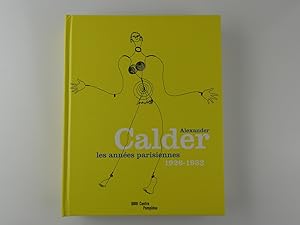
Alexander Calder, les années parisiennes 1926-1933
Published by Centre Georges Pompidou Service Commercial, 200,, Paris,
Seller: Librairie Christian Chaboud, Bruxelles, Belgium
Seller rating 5 out of 5 stars
Signed
in-4, cartonnage éditeur, 420 pages. Très bon état. ON JOINT : Alain Jouffroy : Calder, l'impossible réalisé. Envoi autographe signé au critique d'art Jean-Dominique Rey.
-
Hardcover with dustjacket, 192 pages, very good condition except dustjacket has small tears at top and bottom edge; no internal marks. Book designed by Alexy Brodovitch. Foreign shipping may be extra.
-

A Bestiary. Compiled by Richard Wilbur, illustrated by Alexander Calder.
Published by Pantheon Books., 1955
Signed
US$ 276.36
US$ 29.51 shipping
Ships from United Kingdom to U.S.A.Quantity: 1 available
Add to basketpp. (vi), 74, (4). Illustrated with 56 letterpress printed wire form drawings of animals and human nudes by Calder, accompanied by Wilbur's literary selections.One of 750 hand-numbered copies on uncut Curtis Rag paper, signed by Wilbur and Calder in the colophon. Original silver-gilt stamped cloth; card slipcase with pasted-down title label. Some wear to edges of slipcase, otherwise good.
-
Autograph Signed Postcard - Alexander Calder to Selden Rodman
Published by No publisher 2 Jan, 1930
Seller: Finecopy, Westbury, WILTS, United Kingdom
Association Member: ABA ILAB PBFA
Seller rating 5 out of 5 stars
First Edition Signed
US$ 304.00
US$ 36.22 shipping
Ships from United Kingdom to U.S.A.Quantity: 1 available
Add to basketNo Binding. Condition: Fine. No Jacket. First Edition. Autograph letter signed "Sandy" to verso of postcard of the Cathedral of Mexico City, addressed to Seldon Rodman (writer, poet) Calder explains to his correspondent who is in Cuernavaca that they are staying at the Hotel Majestic and states in part `My sister arrives in 5 days. Could we 3 take a little trips with you, or is that too numerous? If not, will come later?Ä ¥Franked, excellent. Signed by Author.
-

Inspiration Alexander Calder Inspiration Original Signed Color Lithograph, Numbered 72/125 Kennedy Galleries New York 1969
Published by Kennedy Galleries, New York, 1969
Seller: Antiquariat Reinhold Berg eK Inh. R.Berg, Regensburg, Germany
Seller rating 5 out of 5 stars
Signed
Original color lithograph by Alexander Calder, signed in pencil and numbered 72/125. Published by Kennedy Galleries, New York, 1969. Sheet: 67.6 × 52.5 cm (26.5 × 20.75 in). An energetic abstract composition in yellow, blue and red a joyful, collector-favourite Calder in pristine condition. Alexander Calder (1898 Lawnton, Pennsylvania 1976 New York) transformed 20th-century art with his invention of the kinetic 'mobile' and the monumental painted steel 'stabile'. Internationally celebrated for his wit, colour, and sense of movement, Calder was equally at home in graphic art, producing lithographs that translate the essence of his sculptures onto paper with directness and charm.'Inspiration' (1969) belongs to the same Kennedy Galleries series as 'Circles', published in New York in a limited edition of 125, each hand-signed in pencil by the artist. The composition presents biomorphic yellow, blue and red forms in dynamic equilibrium a visual language Calder had perfected over decades of international exhibition and public commission. Sheet size: 67.6 × 52.5 cm. In excellent condition. 67.6 x 52,5 cm (26.5 x 20,75 inches).
-

Circles Alexander Calder Circles Original Signed Color Lithograph, Numbered 20/125 Kennedy Galleries New York 1969
Published by Kennedy Galleries, New York, 1969
Seller: Antiquariat Reinhold Berg eK Inh. R.Berg, Regensburg, Germany
Seller rating 5 out of 5 stars
Signed
Original color lithograph by Alexander Calder, signed in pencil and numbered 20/125. Published by Kennedy Galleries, New York, 1969. Sheet: 67.6 × 52.5 cm (26.5 × 20.75 in). A vibrant abstract composition of floating circles in red, blue and black quintessential Calder, full of the joyful energy of his celebrated mobiles. Alexander Calder (1898 Lawnton, Pennsylvania 1976 New York) is one of the most beloved and recognisable American artists of the 20th century. His invention of the kinetic sculpture the 'mobile' brought movement and spontaneity into fine art and earned him an international reputation matched by few of his contemporaries.Calder's lithographs of the late 1960s distil the same exuberant spirit as his large-scale sculptures: bold primary colours, biomorphic shapes, and a sense of joyful balance. 'Circles' (1969) was published by Kennedy Galleries, New York, in a limited edition of 125, each example hand-signed in pencil. With its dynamic interplay of red, blue and black circles on a white ground, the print exemplifies Calder's mastery of colour and form and is among the most accessible entry points into his graphic oeuvre. Sheet size: 67.6 × 52.5 cm. In excellent condition. 67.6 x 52,5 cm (26.5 x 20,75 inches).
-

Lettre d'Alexander Calder à Alex Liberman, pilier de Condé Nast
Signed
1 lettre autographe signée 1 p. In-4 5 août 1970 Stylo à bille bleu. Pliures centrales Lettre d'Alexander Calder, adressée à Alex Liberman. En anglais. "Dear Alex, I like the cover of your catalogue. Could you make so postcards of it ? I'll buy 1,000 or 50 if you will [.]". Alexander Semeonovitch Libermandit Alex Liberman (1912-1999)artisteet éditeur de presse américain, fut un pilierdes éditions Condé Nast durant trente-deux ans, essentiellement à la direction artistique du magazine Vogue. Sculpteur américain.
-
CALDER Alexander : Musée Toulouse Lautrec, Albi
Language: French
Seller: BENTOM FINE ARTS, Soisy-sous-Montmorency, France
Seller rating 5 out of 5 stars
Art / Print / Poster Signed
Condition: Tres bon. CALDER Alexander (illustrator). Alexander CALDER (1898-1976) - Albi Affiche en lithographie originale en couleurs - Signée dans la planche - Sur papier affiche 60 x 90 cm (c. 24 x 35 inches) - Imprimée dans les Ateliers Arte/Maeght (Paris, France) Excellent état INFORMATION : Editée à l'occasion de l'exposition de CALDER au Musée Toulouse-Lautrec d'Albi en 1971.
-
CALDER Alexander : Exposition Maeght 1974
Language: French
Seller: BENTOM FINE ARTS, Soisy-sous-Montmorency, France
Seller rating 5 out of 5 stars
Art / Print / Poster Signed
Condition: Tres bon. CALDER Alexander (illustrator). Alexander CALDER (1898-1976) - Exposition Maeght 1974 Lithographie originale en couleurs - Signée dans la planche du monogramme de l'artiste - Sur papier affiche 56 x 77 cm (c. 22 x 30 inches) - Imprimée dans les Ateliers Arte/Maeght (Paris, France) - Excellent état INFORMATION : Editée à l'occasion de l'exposition de l'artiste à la Galerie Maeght en 1974.
-
CALDER Alexander : Pour le Vietnam
Language: French
Seller: BENTOM FINE ARTS, Soisy-sous-Montmorency, France
Seller rating 5 out of 5 stars
Art / Print / Poster Signed
Condition: Tres bon. CALDER Alexander (illustrator). Alexander CALDER (1898-1976) - Pour le Vietnam Lithographie originale en couleurs - Signée dans la planche - Sur papier affiche 44 x 75 cm (c. 17 x 30 inches) - Imprimée dans les Ateliers Arte/Maeght (Paris, France) en 1967 Très bon état, petits défauts de manipulation.
-
Alexander Calder - Lithograph - L Arbre asymétrique - 1972
Publication Date: 1972
Art / Print / Poster Signed
US$ 1,153.74
US$ 83.46 shipping
Ships from Switzerland to U.S.A.Quantity: 1 available
Add to basketKein Einband. Condition: Sehr gut. Original lithograph - L Arbre asymétrique - by Alexander Calder, created in 1972. This vibrant composition exemplifies Calders mastery of bold color, playful form, and rhythmic balance. Executed as a color lithograph on fine Arches wove paper with watermark, the sheet is signed and dated in the plate by Calder. Sheet size: 81 × 58 cm - L Arbre asymétrique - is a striking example of Calders graphic work, combining dynamic abstract figures in red, blue, yellow, and orange with his unmistakable sense of balance and joy. Alexander Calder (1898-1976), one of the most influential American artists of the 20th century, is celebrated as the inventor of the mobile and for his pioneering contributions to kinetic and abstract art. His oeuvre spans sculpture, painting, drawings, prints, and monumental public works, characterized by bold colors, simplified organic shapes, and a playful exploration of movement and balance. Calder?s works are held in major museum collections worldwide, including The Museum of Modern Art (New York), Tate Modern (London), and Centre Pompidou (Paris). Moon and Star captures Calder?s ability to distill universal symbols into striking visual forms, combining simplicity with a timeless sense of wonder. *** Handmade framingoptions are available to enhance the artworks presentation and preservation, ensuring it remains a timeless showpiece in any collection. *** Worldwide deliveryis also offered, providing a seamless acquisition process for international buyers. *** For further details regarding pricing, handmade framing, and global delivery options,pleasecontact us today.
-
Original signed and numbered lithograph by Alexander Calder. 1970.
Publication Date: 1970
Seller: Marninart, Inc (ABAA - ILAB), Reston, VA, U.S.A.
Seller rating 5 out of 5 stars
Art / Print / Poster Signed
No Binding. Condition: Very Good. Limited Edition. "Untitled" from the portfolio El Circulo de Piedra 1970. One of 125 copies, signed and numbered in pencil by the artist. Unframed and in original folder. 22 2/5 × 17 7/10 in. Signed by Illustrator(s).
-
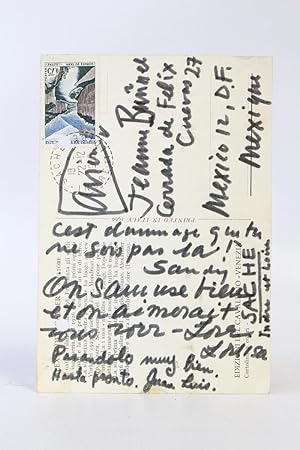
Carte postale autographe signée d'Alexander Calder et Juan Luis Buñuel adressée à Jeanne Rucar épouse Buñuel
Publication Date: 1966
Seller: Librairie Le Feu Follet, Paris, France
Association Member: ILAB
Seller rating 5 out of 5 stars
Manuscript / Paper Collectible First Edition Signed
autre. (Saché) 22 décembre 1966 | 14.70 x 10.40 cm | une carte postale | Carte postale autographe signée d'Alexander Calder et de Juan Luis Buñuel à Jeanne Buñuel, rédigée en français au feutre noir. Tampon postal de Saché (Indre-et-Loire). Adresse mexicaine de Jeanne Buñuel. Carte perforée en tête de deux trous. Photographie de l'atelier de Calder à Saché au recto de la carte. Provenance : archives de la famille Buñuel. En 1939, Luis Buñuel, qui venait de recevoir une proposition de travail à Hollywood, décide, avec femme et enfant, de quitter la situation chaotique de l'Europe pour vivre l'American Dream. Les Buñuel, désargentés, transitent d'abord quelques mois par New York où ils vivent dans des conditions précaires. Luis Buñuel se voit contraint de demander à Dali - son ami de longue date en exil avec Gala dans ces mêmes années - de lui prêter de l'argent. Il essuie un violent refus qui met fin à l'amitié des deux hommes. C'est alors Calder, que Luis a peut-être déjà rencontré à Paris dans les années 1920, qui accueille toute la famille dans son appartement de l'Upper Side. Juan Luis Buñuel, filleul de l'artiste, suppose que son intérêt pour la sculpture a commencé à la même période : « Quand Dali dit à mon père qu'il ne lui prêterait pas d'argent, il l'a contacté [Calder]. Il nous a offert sa maison et nous avons vécu au côté de sa famille pendant quelque temps. Je ne m'en rappelle que vaguement, mais c'est alors que j'ai commencé à m'intéresser à la sculpture et il m'a encouragé. » (Anton Castro, Juan Luis una entrevista). En dépit de la distance géographique qui les séparera, Alexander Calder demeurera un ami de la famille Buñuel. La relation entre l'artiste et le cinéaste est cependant presque totalement absente des biographies et cette correspondance est un rare témoignage du lien profond entre le sculpteur et la famille Buñuel. | [ENGLISH DESCRIPTION FOLLOWS] Handwritten signed postcard from Alexander Calder and Juan Luis Buñuel to Jeanne Buñuel née RucarN. p. [Saché] December 22th 1966, 14,7 x 10,4 cm, one postcardHandwritten signed postcard from Alexander Calder and Juan Luis Buñuel to Jeanne Buñuel, written in French in black felt-tip. Saché postmark (Indre-et-Loire). Jeanne Buñuel's address in Mexico. Card perforated with two holes at the top. Photograph of Calder's studio in Saché on the front of the card. Provenance: Buñuel family archives.In 1939, Luis Buñuel, who had just received an offer to work in Hollywood, decided, with his wife and child, to leave the chaotic situation in Europe to go and live the American Dream. The penniless Buñuels initially spent a few precarious months living in New York. Luis Buñuel found himself forced to ask Dalihis longstanding friend in exile, along with Gala, during these yearsto lend him some money.His request was refused in no uncertain terms, putting an end to the two men's friendship. Thus it was Calder, whom Luis had perhaps already met in Paris in the 1920s, who put the whole family up in his Upper Side apartment. Juan Luis Buñuel, the artist's godson, sensed that his interest in sculpture began in this same period: "When Dali told my father he would not lend him any money, he contacted him [Calder]. He offered his house to us and we lived with his family for a time. I can only vaguely remember it, but it was then that I started to become interested in sculpture and he encouraged me" (Anton Casto, Juan Luis una entrevista). Despite the geographical distance that would come to separate them, Alexander Calder would remain a friend of the Buñuel family. The relationship between the artist and the film-maker is, however, almost entirely absent from the biographies, and this correspondence is a rare testimony to the profound connection between the sculptor and the Buñuel family. *.
-
Carte postale autographe signée d'Alexander Calder à Juan Luis Buñuel
Publication Date: 1956
Seller: Librairie Le Feu Follet, Paris, France
Association Member: ILAB
Seller rating 5 out of 5 stars
Manuscript / Paper Collectible First Edition Signed
autre. (Saché) 29 décembre 1956 | 14.70 x 10.40 cm | une carte postale | Carte postale autographe signée d'Alexander Calder à Juan Luis Buñuel, rédigée en anglais au stylo bille et au feutre bleu. Tampon postal de Saché (Indre-et-Loire). Adresse parisienne de Juan Luis Buñuel. Carte perforée en tête de deux trous. Photographie d'un stabile de Calder au recto de la carte. Provenance : archives de la famille Buñuel. En 1939, Luis Buñuel, qui venait de recevoir une proposition de travail à Hollywood, décide, avec femme et enfant, de quitter la situation chaotique de l'Europe pour vivre l'American Dream. Les Buñuel, désargentés, transitent d'abord quelques mois par New York où ils vivent dans des conditions précaires. Luis Buñuel se voit contraint de demander à Dali - son ami de longue date en exil avec Gala dans ces mêmes années - de lui prêter de l'argent. Il essuie un violent refus qui met fin à l'amitié des deux hommes. C'est alors Calder, que Luis a peut-être déjà rencontré à Paris dans les années 1920, qui accueille toute la famille dans son appartement de l'Upper Side. Juan Luis Buñuel, filleul de l'artiste, suppose que son intérêt pour la sculpture a commencé à la même période : « Quand Dali dit à mon père qu'il ne lui prêterait pas d'argent, il l'a contacté [Calder]. Il nous a offert sa maison et nous avons vécu au côté de sa famille pendant quelque temps. Je ne m'en rappelle que vaguement, mais c'est alors que j'ai commencé à m'intéresser à la sculpture et il m'a encouragé. » (Anton Castro, Juan Luis una entrevista). En dépit de la distance géographique qui les séparera, Alexander Calder demeurera un ami de la famille Buñuel. La relation entre l'artiste et le cinéaste est cependant presque totalement absente des biographies et cette correspondance est un rare témoignage du lien profond entre le sculpteur et la famille Buñuel. | [ENGLISH DESCRIPTION FOLLOWS] Handwritten signed postcard from Alexander Calder to Juan Luis BuñuelN. p. [Saché] December 29th 1956, 14,7 x 10,4 cm, one postcardHandwritten signed postcard from Alexander Calder to Juan Luis Buñuel, written in English in ballpoint pen and blue felt-tip. Saché postmark (Indre-et-Loire). Paris address of Juan Luis Buñuel. Card perforated with two holes at the top. Photograph of one of Calder's stabiles on the front. Provenance: Buñuel family archives. In 1939, Luis Buñuel, who had just received an offer to work in Hollywood, decided, with his wife and child, to leave the chaotic situation in Europe to go and live the American Dream. The penniless Buñuels initially spent a few precarious months living in New York. Luis Buñuel found himself forced to ask Dalihis longstanding friend in exile, along with Gala, during these yearsto lend him some money. His request was refused in no uncertain terms, putting an end to the two men's friendship. Thus it was Calder, whom Luis had perhaps already met in Paris in the 1920s, who put the whole family up in his Upper Side apartment. Juan Luis Buñuel, the artist's godson, sensed that his interest in sculpture began in this same period: "When Dali told my father he would not lend him any money, he contacted him [Calder]. He offered his house to us and we lived with his family for a time. I can only vaguely remember it, but it was then that I started to become interested in sculpture and he encouraged me" (Anton Casto, Juan Luis una entrevista). Despite the geographical distance that would come to separate them, Alexander Calder would remain a friend of the Buñuel family. The relationship between the artist and the film-maker is, however, almost entirely absent from the biographies, and this correspondence is a rare testimony to the profound connection between the sculptor and the Buñuel family. *.
-
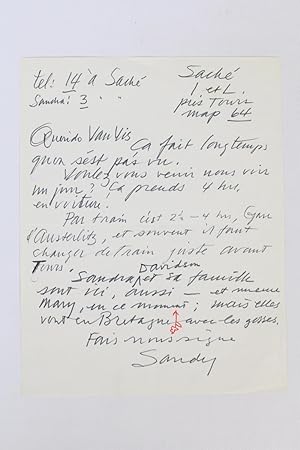
Lettre autographe signée d'Alexander Calder à Juan Luis Buñuel
Publication Date: 1953
Seller: Librairie Le Feu Follet, Paris, France
Association Member: ILAB
Seller rating 5 out of 5 stars
Manuscript / Paper Collectible First Edition Signed
Pas de couverture. (Saché) s. d. [circa 1953] | 21 x 26.80 cm | une page sur un feuillet | Lettre autographe signée d'Alexander Calder à Juan Luis Buñuel, rédigée en français au feutre noir. Lettre perforée de deux trous en marge gauche. Coordonnées téléphoniques de Calder en haut à gauche, ainsi que plusieurs indications d'itinéraire pour se rendre à Saché à droite. Petit signe au feutre rouge en fin de lettre. Deux corrections et ajouts de la main de Calder. Provenance : archives de la famille Buñuel. En 1939, Luis Buñuel, qui venait de recevoir une proposition de travail à Hollywood, décide, avec femme et enfant, de quitter la situation chaotique de l'Europe pour vivre l'American Dream. Les Buñuel, désargentés, transitent d'abord quelques mois par New York où ils vivent dans des conditions précaires. Luis Buñuel se voit contraint de demander à Dali - son ami de longue date en exil avec Gala dans ces mêmes années - de lui prêter de l'argent. Il essuie un violent refus qui met fin à l'amitié des deux hommes. C'est alors Calder, que Luis a peut-être déjà rencontré à Paris dans les années 1920, qui accueille toute la famille dans son appartement de l'Upper Side. Juan Luis Buñuel, filleul de l'artiste, suppose que son intérêt pour la sculpture a commencé à la même période : « Quand Dali dit à mon père qu'il ne lui prêterait pas d'argent, il l'a contacté [Calder]. Il nous a offert sa maison et nous avons vécu au côté de sa famille pendant quelque temps. Je ne m'en rappelle que vaguement, mais c'est alors que j'ai commencé à m'intéresser à la sculpture et il m'a encouragé. » (Anton Castro, Juan Luis una entrevista). En dépit de la distance géographique qui les séparera, Alexander Calder demeurera un ami de la famille Buñuel. La relation entre l'artiste et le cinéaste est cependant presque totalement absente des biographies et cette correspondance est un rare témoignage du lien profond entre le sculpteur et la famille Buñuel. | [ENGLISH DESCRIPTION FOLLOWS] Handwritten signed letter from Alexander Calder to Juan Luis BuñuelN. p. [Saché] n. d. [ca. 1953], 21 x 26,8 cm, one page on one leafHandwritten signed letter from Alexander Calder to Juan Luis Buñuel, written in French in black felt-tip. Letter perforated with two holes in the left-hand margin. Calder's telephone number in top left-hand corner, a few directions to get to Saché in right-hand corner. Small sign in red felt-tip at the end of the letter. Two corrections and additions in Calder's hand. Provenance: Buñuel family archives. In 1939, Luis Buñuel, who had just received an offer to work in Hollywood, decided, with his wife and child, to leave the chaotic situation in Europe to go and live the American Dream. The penniless Buñuels initially spent a few precarious months living in New York. Luis Buñuel found himself forced to ask Dalihis longstanding friend in exile, along with Gala, during these yearsto lend him some money. His request was refused in no uncertain terms, putting an end to the two men's friendship. Thus it was Calder, whom Luis had perhaps already met in Paris in the 1920s, who put the whole family up in his Upper Side apartment. Juan Luis Buñuel, the artist's godson, sensed that his interest in sculpture began in this same period: "When Dali told my father he would not lend him any money, he contacted him [Calder]. He offered his house to us and we lived with his family for a time. I can only vaguely remember it, but it was then that I started to become interested in sculpture and he encouraged me" (Anton Casto, Juan Luis una entrevista).Despite the geographical distance that would come to separate them, Alexander Calder would remain a friend of the Buñuel family. The relationship between the artist and the film-maker is, however, almost entirely absent from the biographies, and this correspondence is a rare testimony to the profound connection between the sculptor and the Buñuel family. *.