
Charles Boyer: Signed (14 results)
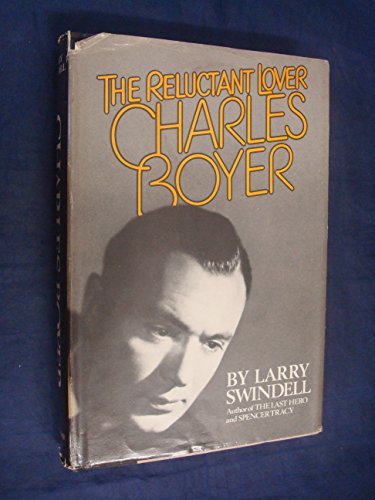
- Hardcover
- First Edition
- Signed
Seller: Twinwillow Books, Los Alamitos, CA, U.S.A.Twinwillow Books
Contact seller5-star sellerCondition: Used - Near fine
US$ 75.00
US$ 7.00 shippingShips within U.S.A.Quantity: 1 available
Hardcover. Condition: Near Fine. Dust Jacket Condition: Very Good. 1st Edition. Inscribed by author on Title page in black pen, "For Bebe and Bob with love and good fellowship Larry Swindell Moraga California 10/26/2000" First edition stated. 5 3/4 x 8 1/2 Book; binding tight, boards straight and clean; minor soiling to top edge… else text free of marks, appears barely read. Dust jacket ($15.95) has mild chipping with small paper loss to spine and flap fold ends with six short and 1" closed tears to edges. Color sharp. Under archival quality mylar cover. Several photographs. Photos upon request. Packed well and shipped in a sturdy box. Inscribed by Author(s).

PAT PATERSON (1910-78 U.S.A.) englische Schauspielerin, verheiratet mit Charles Boyer
PAT PATERSON (1910-78 U.S.A.) englische Schauspielerin, verheiratet mit Charles Boyer
- Signed
- Manuscript
Seller: Herbst-Auktionen, Detmold, GermanyHerbst-Auktionen
Contact seller4-star sellerCondition: Used
US$ 41.02
US$ 9.67 shippingShips from Germany to U.S.A.Quantity: 1 available
Postkarte der Paramount Studios, Hollywood mit U. in Tinte signiert , Los Angeles 25.2.1936- an einen Fan in Johannesburg / Südafrika mit der Bitte um Verständnis, daß Fotos von ihr Geld kosten (mit Preisliste).

Language: English
Published by Los Angeles 1946
- Signed
Seller: Kaaterskill Books, ABAA/ILAB, East Jewett, NY, U.S.A.Kaaterskill Books, ABAA/ILAB
Contact seller5-star sellerAll are type letters signed. The first four are from RKO Radio Pictures, Inc. The last is from The Play's The Thing Productions, an independent unit within RKO Studios. 1. Boyer, Charles: CONFIRMATION OF AGREEMENT FOR THE SERVICES OF CHARLES BOYER, IN PREPARATION FOR THE FRENCH VERSION OF "LOVE AFFAIR" [WITH] PHOTOGRAPH OF BOYER…. Los Angeles: 1939. [1 pp.] + 1 photograph. 1 b/w photo. 8.5 x 11 inches. Dated May 10th, 1939 to French-American actor Charles Boyer (1899-1978) , c/o Feldman-Blum Corporation. The letter is a confirmation of agreement made between Boyer and RKO, ".dated May 3, 1939, with reference to the rendition of your services in connection with the preparation of a French version of the photoplay 'Love Affair.'" As per the agreement, Boyer will be compensated $15,000, and if his time exceeds the allotted two weeks, he will receive $1,250 per day. Very good, torn through text along top margin. Letter accompanied by 1936 photograph of Boyer, taken by Ted Allan. Charles Boyer (1899-1978) enjoyed a long and prolific film career, from 1920 through 1976, which included both American and French productions, and earned him four Oscar nominations for Best Actor. Among his most notable roles are: "The Garden of Allah" (1936); "Algiers" (1938), "Love Affair" (1939),; and "Gaslight "(1944). 2. Russell, Rosalind. RKO RADIO PICTURES REQUESTS ROSALIND RUSSELL'S CONSENT TO USE A BODY DOUBLE FOR "SISTER KENNY." Los Angeles: 1946. [1 pp.]. 8.5 x 11 inches. Dated January 29th, 1946 to actress Rosalind Russell (1907-1976), requesting her consent for the use of a body double for "Sister Kenny." "We have advised you that we desire to use a 'double' for you in connection with certain long shots for which we intend to photograph for use of backgrounds for the main title cards for our motion picture now entitled 'Sister Kenny.' Such long shots will show Mr. Alexander Knox and you riding through open country in a buggy at a fairly fast speed. We hereby request your consent to the use of such 'double' in your stead." Signed by Russell, and by RKO Radio Pictures, Inc. Assistant Secretary. Very good, few marginal tears, one pencil marking, stamped as received on verso. Russell's role in "Sister Kenny' earned her a nomination for both an Academy Award for Best Actress, and a Golden Globe for Best Actress in a Leading Role, with her having won the latter. Throughout her career, Russell won five Golden Globes and had been nominated for four Academy Awards. Her other notable roles include those from 'His Girl Friday' (1940) ; 'Auntie Mame' (1958) ; and 'Gypsy' (1962). 3. Bainter, Fay: FAY BAINTER INFORMED OF HER TERMINATION FROM "VIVACIOUS LADY," DUE TO JAMES STEWART'S ILLNESS HALTING PRODUCTION. Los Angeles: 1937. Los Angeles: 8.5 x 11 inches. Dated May 5th, 1937, on letterhead from RKO Radio Pictures, Inc to Fay Bainter (1893-1968), informing her of her termination from the film "Vivacious Lady." The "motion picture photoplay tentatively entitled 'Vivacious Lady' has been suspended and postponed on April 27, 1937 by reason of the illness by Jimmy Stewart, a member of the cast . and do hereby elect, to terminate your employment under our agreement." Signed by Bainter and by RKO Radio Pictures, Inc. Vice-President. Very good, edge worn, few marginal tears, one pencil marking. After four days of filming "Vivacious Lady" headliner James Stewart fell ill, and production had stalled until December. At that time, Bainter had been replaced by Beulah Bondi, and the film was released in 1938. Formerly a Broadway actress, Fay Bainter made her film debut in 'This Side of Heaven' (1934). In 1938, she won the Academy Award for Best Supporting Actress for 'Jezebel.' Her other notable roles include those from 'White Banners' (1938) ; 'Our Town' (1940) ; and 'The Children's Hour' (1961). 4. Hasso, Signe: CONFIRMATION OF AGREEMENT BETWEEN SIGNE HASSO AND RKO RADIO PICTURES, INC. Los Angeles: 1940. [1 pp.]. 8.5 x 11 inches. Letter from RKO Radio Pictures, dated.

Published by Universal Pictures, Universal City 1940
- Signed
- Photo
Seller: Royal Books, Inc., ABAA, Baltimore, MD, U.S.A.Royal Books, Inc., ABAA
Contact seller5-star sellerVintage publicity photograph of French-American actor Charles Boyer, 1940. Universal Pictures stamp on the verso. In 1942, Boyer signed a three-year contract with Universal. His work with the studio resulted in one of the roles for which he is best remembered today, as the villainous Gregory Anton in "Gaslight" (1944), opposite…Ingrid Bergman. From the archive of noted Hollywood still photographer Ray Jones. Born in Wisconsin on January 1, 1901, Jones worked for Paramount Pictures in the early 1930s, and went on to be the head of the still photography department at Universal Pictures in 1935, where he worked well into the 1950s. 8 x 10 inches. Near Fine.
Published by Paris Au Sans Pareil 1930 1930
- Softcover
- First Edition
- Signed
Seller: James Pepper Rare Books, Inc., ABAA, Santa Barbara, CA, U.S.A.James Pepper Rare Books, Inc., ABAA
Contact seller5-star sellerFirst Edition. Signed and inscribed by the author, Claude Roger-Marx to French-American actor Charles Boyer. Inscribed in French: ÒA Charles Boyer, qui sait quÕil nÕest de vraie grandeur que dans la simplicite. A Charles Boyer sans lequel Simili nÕont pas ete Simili. Avec lÕamitie affectueuse et lÕadmiration de Claude R.M.Ó The…translation: ÒTo Charles Boyer, who knows that true greatness lies only in simplicity. To Charles Boyer, without whom Simili has not been Simili. With fond friendship and admiration, Claude R.M.Ó From a total edition of 280 numbered copies, this is one of 225 printed on fine Lafuma wove paper. Paperbound in original printed wrappers, entirely uncut and unopened. Quarto, 6 3/4Ó x 8 1/2Ó. Illustrated with seven original drypoints by Pierre Bonnard. Very good plus to near fine copy enclosed in a custom clamshell box. Charles Boyer starred in the original 1924 Paris premiere of the play and obviously formed a close bond with the author Claude Roger-Marx. Boyer earned a degree in philosophy at the Sorbonne before turning to a career as an actor. His first big Hollywood break was a very small part of a chauffeur to Jean Harlow in Red-Headed Woman (1932), and he went on to appear in a French adaptation of Liliom directed by the great Fritz Lang. This lead to other memorable roles in such classic films as Private Worlds, Shanghai, The Garden of Allah, All This and Heaven Too, Gaslight, Algiers, Fanny, Cluny Brown, Arch of Triumph, The First Legion, Conquest, Around the World in Eighty Days, Barefoot in the Park, etc. He was nominated for four Best Actor Oscars for his work in Conquest (1937)Algiers (1938), Gaslight (1944), Fanny (1961), and in 1943 he received an Honorary Oscar Certificate for his progressive cultural achievement in establishing the French Research Foundation in Los Angeles as a source of reference. In 1950, he appeared on Broadway in one of his most notable roles, that of Don Juan, in a dramatic reading of the third act of George Bernard Shaw's Man and Superman (popularly known as ÔDon Juan in HellÕ), and in 1952, he won a Special Tony Award for that performance. He also enjoyed success on the small screen, appearing in Four Star Playhouse (1952-1956), on the rather short-lived but critically acclaimed series, The Rogues, with David Niven and Gig Young, and in a favorite episode of I Love Lucy entitled ÔLucy Meets Charles Boyer.Õ.
 More images
Published by J.R.P.R. 1930
- First Edition
- Signed
- Art Print
Seller: Librairie Le Feu Follet, Paris, FranceLibrairie Le Feu Follet
Contact seller5-star sellerAssociation member: ILAB
Condition: Used
US$ 67.98
US$ 34.14 shippingShips from France to U.S.A.Quantity: 1 available
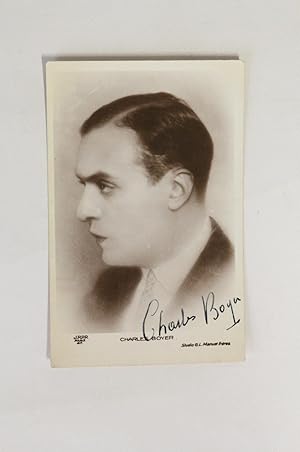
Pas de couverture. J.R.P.R. | (Paris) s. d. [circa 1930] | 9.50 x 14 cm | une feuille verso | Carte postale photographique représentant l'acteur Charles Boyer, de profil, prise dans le studio Gaston et Lucien Manuel frères (actif de 1913 à 1939). Bel exemplaire. Signature manuscrite de Charles Boyer en dessous de son portrait. |… [ENGLISH DESCRIPTION FOLLOWS] Photographic postcard representing Charles Boyer profile taken in the studio Gaston and Lucien Manuel brothers (active from 1913 to 1939). Nice copy. Handwritten signature of Charles Boyer below his portrait. *.
 More images
- Hardcover
- Signed
Seller: pages volantes, PARIS, AUTRE, Francepages volantes
Contact seller5-star sellerCondition: Used
US$ 82.05
US$ 22.76 shippingShips from France to U.S.A.Quantity: 1 available
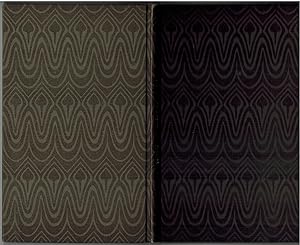
P., Perrin, 1897, In-12, cartonnage gris à motifs , titre dorée sur le dos, couverture conservée, 34 pp. Reliure signée E. Carayon. Livres.

Nocturnes. Illustrations originales de André Hofer. ( Un des 700 exemplaires, numérotés sur vélin du marais, avec belle dédicace de Charles Boyer ).
( Illustrés Modernes - Fantastique ) - Claude Boyer - André Hofer.
- Softcover
- First Edition
- Signed
Seller: Librairie Victor Sevilla, Paris, FranceLibrairie Victor Sevilla
Contact seller5-star sellerCondition: Used
US$ 128.93
US$ 39.83 shippingShips from France to U.S.A.Quantity: 1 available
Paris, Librairie Arthème Fayard 1949. In-8 broché de 209 pages au format 21,5 x 14 cm. Couverture avec titre imprimé. Dos carré. Plats et intérieur frais. Livre glissé sous joli emboîtage de protection. Curieux roman fantastique par Claude Boyer accompagnés d'illustrations originales, de bandeaux et lettrines, bicolores, par And…ré Hofer. Un des 700 exemplaires, numérotés sur numérotés sur vélin du marais ( n° 122 ). Edition originale en superbe état général, proche du parfait. Exemplaire enrichi d'un belle dédicace autographe, signée de Charles Boyer, à son cousin Charles Gervais, membre de la famille du groupe agroalimentaire français.
 More images
Published by N.p., N.p. 1966
- Signed
- Manuscript
Seller: Royal Books, Inc., ABAA, Baltimore, MD, U.S.A.Royal Books, Inc., ABAA
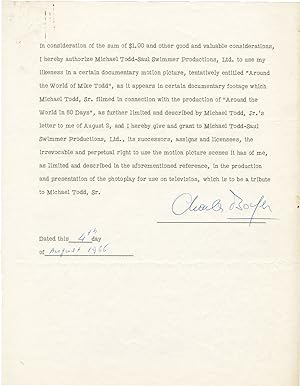
Contact seller5-star sellerTyped letter from producer Michael Todd Jr. to actor Charles Boyer, dated August 2, 1966, regarding Todd's 1967 television documentary film "Around the World of Mike Todd," and production contract SIGNED by Boyer, dated August 4, 1966. Todd's letter addresses his wish to use behind-the-scenes footage of Boyer shot during the pro…duction of "Around the World in Eighty Days" (1956), and describes his plans for the documentary. Enclosed with the letter is an additional copy of the contract, not signed by Boyer, along with a copy of a previous letter from Todd to Boyer dated April 20, 1965. The documentary examines the making of producer Michael Todd's "Around the World in 80 Days," winner of the Academy Award for Best Picture in 1956. 8.5 x 11 inches. Near Fine. Signed.
Published by New York 1952
- Signed
Seller: Argosy Book Store, ABAA, ILAB, New York, NY, U.S.A.Argosy Book Store, ABAA, ILAB
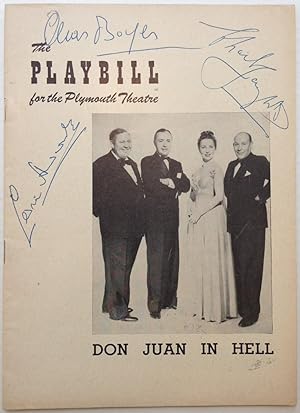
Contact seller5-star sellerpamphlet. Very scarce signed Playbill featuring "The First Drama Quartette," a loose ensemble of friends consisting of Charles Laughton, Charles Boyer, Cedric Hardwicke, and Agnes Moorehead, appearing in the 1952 Broadway production of Bernard Shaw's "Don Juan in Hell" at the Plymouth Theatre. Signing on the cover (next to a fan…tastic photo) are Laughton, Boyer, and Hardwicke. Moorehead's autograph is absent. Near fine condition.
 More images
Language: French
- Signed
- Manuscript
Seller: Wimbauer Buchversand, Hagen, NRW, GermanyWimbauer Buchversand
Contact seller5-star sellerCondition: Used - Very good
US$ 117.21
US$ 17.07 shippingShips from Germany to U.S.A.Quantity: 1 available
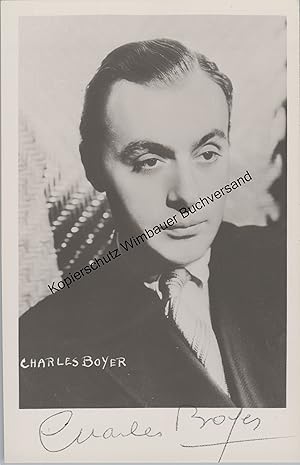
Echtfoto. Condition: Gut. Schwarzweissfoto in Postkartenformat von Charles Boyer bildseitig mit schwarzem Kuli signiert /// Autogramm Autograph signiert signed signee /// Charles Boyer (* 28. August 1899 in Figeac, Frankreich; ? 26. August 1978 in Phoenix, Arizona) war ein französischer Schauspieler. Den Höhepunkt seiner Karrier…e erlebte er in den 1930er und 1940er Jahren in Hollywood, als er in Liebesfilmen häufig den Leading Man spielte. Im Laufe seiner Karriere erhielt Boyer vier Oscar-Nominierungen als bester Hauptdarsteller; bei der Oscarverleihung 1943 wurde er für sein Engagement im Zweiten Weltkrieg mit einem Ehrenoscar ausgezeichnet. Boyer brach sein Studium der Philosophie an der Sorbonne ab, um das Pariser Konservatorium zu besuchen, und begann anschließend seine Schauspielkarriere am Theater. Bereits 1920 debütierte er in dem Film L?homme du large und wurde rasch ein bekannter Darsteller romantischer Helden. Im Jahre 1929 ging er nach Hollywood und wirkte in zahlreichen Versionenfilmen mit, darunter in den französischen Fassungen von The Trial of Mary Dugan und Hölle hinter Gittern. Insgesamt blieb seine Popularität jedoch hinter der seines Landsmannes Maurice Chevalier zurück. 1932 spielte er neben Jean Harlow eine kleine Rolle in Feuerkopf und kehrte kurz danach nach Frankreich zurück. Nach seinem großen Erfolg in Liliom ging er 1934 wieder nach Amerika und spielte neben Stars wie Loretta Young (Caravan), Katharine Hepburn (Break of Hearts) und Marlene Dietrich (Der Garten Allahs). Zwischenzeitlich hatte er in Frankreich unter der Regie von Anatole Litvak als Kronprinz Rudolf neben Danielle Darrieux in Mayerling seinen bis dahin größten Erfolg. Er drehte danach hauptsächlich in Amerika, so neben Claudette Colbert in Tovarich, mit Jean Arthur unter der Regie von Frank Borzage in Und ewig siegt die Liebe und als Napoleon neben Greta Garbo in Maria Walewska. Sein Auftritt in Algiers, einer Neuverfilmung des französischen Films Pépé le Moko, mit dem er als neuer romantischer Liebhaber lanciert werden sollte, litt jedoch unter der Anwesenheit von Hedy Lamarr, die in einer Nebenrolle ihr amerikanisches Debüt gab und Boyer die Show stahl. Angekündigt als ?schönste Frau der Welt? verursachte Lamarr einen Modetrend, indem sie brünett zur Modehaarfarbe der späten 1930er machte. Zeit seines Lebens hing Boyer der angebliche Satz ?Come with me to the Casbah!? nach, obwohl er ihn tatsächlich niemals im Film gesagt hatte. In den Folgejahren etablierte sich Boyer als Darsteller in Liebesfilmen. Besonders seine Auftritte neben Irene Dunne in Ruhelose Liebe von 1939 und Bette Davis in Hölle, wo ist dein Sieg aus dem Folgejahr trugen ihm Anerkennung seitens der Kritiker ein. Insgesamt dreimal war er neben Margaret Sullavan zu sehen, darunter 1941 in Seitenstraße. Eine Abkehr von den bisherigen Rollen war der Auftritt in Mitchell Leisens Das goldene Tor, der ihn 1941 als Gigolo einsetzte, der Olivia de Havilland als unbedarfte junge Lehrerin emotional ausnutzt, um ein Visum für die USA zu bekommen. Ungleich integrer war sein Charakter im Film Liebesleid, der auf einem populären Buch basierte und in dem er unter der Regie von Edmund Goulding eine tragische Beziehung mit Joan Fontaine eingeht. In dem Film Das Haus der Lady Alquist versuchte er 1944, Ingrid Bergman in den Wahnsinn zu treiben, um an die Juwelen ihrer Tante zu gelangen. Dies brachte ihm seine vierte Oscarnominierung als bester Hauptdarsteller ein. Mit Irene Dunne war er im selben Jahr wieder in Modell wider Willen zu sehen. 1946 spielte er in Ernst Lubitschs Spätwerk Cluny Brown auf Freiersfüßen einen tschechischen Exilanten, der sich in eine von Jennifer Jones verkörperte Klempnerin verliebt. Im Jahre 1948 spielte er mit Ingrid Bergman die Hauptrollen in Triumphbogen, einer aufwendigen Verfilmung des Romans Arc de Triomphe von Erich Maria Remarque, die aber weder Kritiker noch Publikum recht überzeugen konnte. Ab den späten 1940er Jahren verlegte sich Boyer hauptsächlich auf Charakterrollen in F.
- Signed
Seller: NUDEL BOOKS, New York, NY, U.S.A.NUDEL BOOKS
Contact seller4-star sellerCondition: Used - Very good
US$ 150.00
US$ 7.00 shippingShips within U.S.A.Quantity: 1 available
No Binding. Condition: Very Good. 5 by 7 early photo by G.I. Manuel Freres.SIGNED. Signed by Author(s).
CHARLES BOYER (1899-1978) französischer Schauspieler, Ehrenoscar 1943 / french actor
CHARLES BOYER (1899-1978) französischer Schauspieler, Ehrenoscar 1943 / french actor
- Signed
- Manuscript
Seller: Herbst-Auktionen, Detmold, GermanyHerbst-Auktionen
Contact seller4-star sellerCondition: Used
US$ 287.17
US$ 9.67 shippingShips from Germany to U.S.A.Quantity: 1 available
Beschäftigungsvertrag des berühmten Franzosen für die U.S.A, $ 5O.000, mit eigenhändiger Unterschrift signiert, L.A., 8.12.1941 - RARITÄT ! (Original contract signed) (dito : Frühe Fotoporträtpostkarte (mit Zigarette) in Tinte mit Empfehlung eigenhändig signiert Euro 145,-).
 More images
- First Edition
- Signed
- Manuscript
Seller: Librairie Le Feu Follet, Paris, FranceLibrairie Le Feu Follet
Contact seller5-star sellerAssociation member: ILAB
Condition: Used
US$ 12,131.54
US$ 34.14 shippingShips from France to U.S.A.Quantity: 1 available
Pas de couverture. Paris 25 Juin 1854 | 11.50 x 18.50 cm | une page recto-verso | Lettre autographe, datée du 25 Juin 1854, et signée de deux pages de Charles Baudelaire à Philoxène Boyer, qu'il surnomme "mon cher Lyrique", dans laquelle il s'excuse d'avoir manqué un rendez-vous avec lui, lui avoue son impécuniosité et lui rend…compte des efforts déployés par Léontine B., une intrigante qui finira par compromettre Philoxène Boyer en raison de ses dettes, pour assister à une fête à laquelle elle n'est pas conviée et qui en retire une certaine jalousie : "Vous présumez bien, mon cher Lyrique, qu'il a fallu hier quelque chose de grave pour que j'aie manqué ce rendez-vous. Voici ce que je vous aurais dit : 1 - mon argent n'est pas venu ; mais il viendra. / 2 - Léontine s'entête. Je suis persuadé que je me suis très bien acquitté de ma commission de confiance. Je suis revenu à la charge trois fois. Quand enfin j'ai pu lui expliquer soigneusement que cette fête était familiale, secrète, que Boyer lui-même était censé l'ignorer, - elle m'a répondu : Eh bien, ce n'est plus un secret puisque je le sais." Enfin, tout en reconnaissant à Léontine "un tour d'esprit très original" et bien que l'attitude de cette encombrante intrigante : ". vous cause de l'inquiétude et je le comprends.", Charles Baudelaire plaide pour l'indulgence et la clémence : "puisqu'elle s'entête si fièrement je vous engagerais à laisser courir l'évènement. Ce n'est après tout que l'hommage d'un esprit étourdi." | [ENGLISH DESCRIPTION FOLLOWS] Handwritten letter dated and signed by Charles Baudelaire to Philoxène Boyer concerning the intriguing Léontine B. Paris 25 Juin 1854 | 11.5 x 18.5 cm | one page recto-verso Handwritten two-page letter, dated 25 June 1854, and signed by Charles Baudelaire to Philoxène Boyer, whom he calls «my dear Lyrique,» in which he apologises for having missed a meeting with him, he confesses his impecuniosity to him and reports to him on the efforts made by Léontine B., an intriguing person who will end up compromising Philoxène Boyer because of his debts, to attend a party to which she is not invited and which holds a certain jealousy: «You surely assume my dear Lyrique, that yesterday something serious happened for me to have missed this meeting. Here is what I would have told you: 1 my money has not come; but it will come. / 2 Léontine is obstinate. I am convinced that I have fulfilled my confidence mission very well. I came back three times. When I finally could explain to her carefully that this party was for family, secret, that Boyer himself was supposed to ignore it, she replied: Well it's no longer a secret since I know.» Finally, while recognising Léontine as «a very original turn of mind» and although the attitude of this troublesome scheme: «causes you worry and I understand.,» Charles Baudelaire pleads for indulgence and leniency: «since she persists so proudly, I would urge you to let the event run. It is after all only the homage of a dizzy mind.» *.


