Order Total (1 Item Items):
Shipping Destination:

Consult, Signed (10 results)
Skip to main search results
Search filters
Product Type
- All Product Types
- Books (6)
- Magazines & Periodicals (No further results match this refinement)
- Comics (No further results match this refinement)
- Sheet Music (No further results match this refinement)
- Art, Prints & Posters (1)
- Photographs (No further results match this refinement)
- Maps (No further results match this refinement)
- Manuscripts & Paper Collectibles (3)
Condition Learn more
- New (No further results match this refinement)
- As New, Fine or Near Fine (1)
- Very Good or Good (3)
- Fair or Poor (1)
- As Described (5)
Binding
Collectible Attributes
Language (2)
Free Shipping
- Free Shipping to U.S.A. (No further results match this refinement)
Seller Location
Seller Rating
-

LINIE 4. Die neue Straßenbahn für Bremens Bürger. Hrsg.: Consult Team Bremen. Redaktion: Ingo Teschke, Andreas Mausolf, Jens A. Kraft u. Wilhelm Esmann.
Language: German
Published by Bremen, Hauschild, 1998., 1998
ISBN 10: 3931785793 ISBN 13: 9783931785796
Seller: Bojara & Bojara-Kellinghaus OHG, Osnabrück, Germany
Seller rating 5 out of 5 stars

Signed
Gr.-8°. Mit zahlr. (tls. farb.) Abb. u. Ill. 104 S. Farb. ill. OPbd. - Gutes Ex. * Mit großer hands. sign. Widmung aller Mitglieder d. Redaktionsteams a. Vorsatz. 1.
-
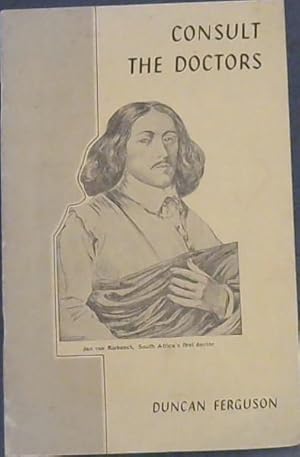
Softcover. Condition: Very Good. The wraps are still in a good condition, except for some minor creasing at the back and other age related marks. There is an author's inscription within the front wrap. This pamphlet is internally clean and tightly bound. Complete with 12 pages.[B.K.]. Our orders are shipped using tracked courier delivery services. Signed.
-

Consult and Advise: A History of the National Joint Council of the Public Service of Canada, 1944-1974
Published by Industrial Relations Centre, Queen's University, Kingston, Ontario, 1975
Seller: Riverwash Books (IOBA), Prescott, ON, Canada
Association Member: IOBA
Seller rating 4 out of 5 stars

First Edition Signed
Cloth. Condition: Very Good+. Dust Jacket Condition: Very Good+. First Edition. 209 pp. Jacket edges worn, small tear to upper rear edge. Prev owner's name stamped on title page. Inscribed and dated by author on title page. A look at the evolution and role of the National Joint Council and its' approach to solving various public service issues.; 8vo - over 7¾" - 9¾" tall; Signed by Author.
-
![Seller image for Arbeitslosigkeit und Jugend. Die Diskussion in den Fachzeitschriften der Weimarer Republik. [= BBJ Consult Materialien, 9] for sale by Antiquariat hinter der Stadtmauer](https://pictures.abebooks.com/inventory/md/md31470560689.jpg)
Arbeitslosigkeit und Jugend. Die Diskussion in den Fachzeitschriften der Weimarer Republik. [= BBJ Consult Materialien, 9]
Seller: Antiquariat hinter der Stadtmauer, Hann. Münden, Germany
Seller rating 5 out of 5 stars
Signed
Softcover/Paperback. Condition: Sehr gut. 359 S., 21x15 cm OBroschur, kart. Vom Autor auf Titel signiert. Einige s/w Ill. Kanten leicht berieben/bestoßen, Besitzereintrag auf Deckelinnenseite; noch sehr gutes Exemplar. Sprache: Deutsch Gewicht in Gramm: 450.
-

[Anthony Shepherd, Plumian Professor of Astronomy at Cambridge, after whom his friend Captain Cook named a group of islands.] Autograph Letter Signed, asking the recipient to consult 'the Arundelian Mss' with regard to Burnham Rectory in Norfolk.
Published by 1 May Maddox Street London, 1767
Seller: Richard M. Ford Ltd, London, United Kingdom
Seller rating 5 out of 5 stars
Manuscript / Paper Collectible Signed
US$ 124.28
US$ 6.03 shipping
Ships from United Kingdom to U.S.A.Quantity: 1 available
Add to basketSee his entry in the Oxford DNB, which notes his unpopularity at his college Christ's, which terminated his fellowship in 1783. According to Fanny Burney he was 'dullness itself'. 1p, 12mo. In good condition, on lightly aged and browned paper. Folded for postage. Signed 'A. Shephard Plume's Profr. / Camb.' The recipient is not named. The letter, which relates to a lawsuit begun two years previously (and which, according to the Oxford DNB 'dragged on until 1805'), begins: 'Sir, / I should be much obliged to you for consulting the Arundelian Mss to see if you find any thing amongst them relating to the Priory of Cokesford in Norfolk and its claim on the Rectory of Burnham in the same county.' He will call on the recipient shortly, 'to know the result of your searches'.
-
[Thomas Hughes, author of 'Tom Brown's Schooldays'.] Autograph Letter Signed to Sir Spencer Ponsonby of the Lord Chamberlain's Office, introducing 'Mr. Selway', whom he advises him to consult about proposals for a theatre in Surrey Gardens.
Published by 19 March No place, 1872
Seller: Richard M. Ford Ltd, London, United Kingdom
Seller rating 5 out of 5 stars
Manuscript / Paper Collectible Signed
US$ 303.80
US$ 6.03 shipping
Ships from United Kingdom to U.S.A.Quantity: 1 available
Add to basketSee his entry in the Oxford DNB. In good condition, lightly aged. On first leaf of a bifolium of wove paper. Folded for postage. Signed 'Tho. Hughes'. Begins: 'My dear Ponsonby / Let me introduce the bearer, Mr. Selway, [i.e. William Robbins Selway (c.1822-1893) of Walworth] who was vice Chairman of my Committee in Lambeth, & is one of the most influential & trustworthy men in the South of London'. Selway wishes to see Ponsonby 'about a building in the Surrey Gardens which certain persons are proposing to convert into a Theatre'. He ends by endorsing Selway: 'You can't get better counsel on the subject'.
-

1700s English Letter to a Parisian Physician Seeking a Medical Consult for Two Patients
Published by Paris, France
Seller: Katz Fine Manuscripts Inc., Cochrane, AB, Canada
Seller rating 5 out of 5 stars
Manuscript / Paper Collectible Signed
Ephemera. Condition: Fair. Dust Jacket Condition: No Dust Jacket. On offer is a fine example of a letter to a French doctor in Paris requesting his assistance. The letter is written in English. The author was on F. Cary to a Dr. Bourre in Paris. In his letter, Cary mentions two women by name a Mrs Giffard and a Mrs. Cary. The latter may or may not have been related to or married to the author. Cary mentions that the women as suffering from serious nose bleeds. He makes reference to an unnamed doctor who has seen them and written a report which was apparently enclosed with the letter. He requests Bourre to examine them. An excerpt of the letter follows: .I have nothing more to add than that Mrs. Giffard tho frequently appearing ill never makes any complaint and it is with difficulty that she will own that anything is the matter owing I believe to the difficulty nervous people have of explaining what they feel. After you have looked this over I should be very glad to see you. I leave Paris early on Thursday morning For a social historian, this is an excellent example of the polite correspondence and requests that can pass to or between professionals in 18th Century France. For a collector of medical memorabilia, this would be an excellent addition to a collection or library. This letter is comprised of a single sheet measuring 9.0 inches by 15.0 inches and folded to create four 9 inch x 7.5 inch pages. The Letter is written on the front page. The back page is the address block and the inner 2 pages are blank. The letter was folded several times and sealed with red wax. The letter shows some discolouring a a little wear around some edges. The handwriting is copperplate and legible; Letters; 9"x15"; 1 pages; Signed by Author.
-

Newly Inaugurated New York Governor Theodore Roosevelt, For His First Inaugural Address in 1898, Will Consult With ?Advocates of Woman Suffrage? (Initially he avoided the issue but after the consultation stated here, did include a reference in his address)
Seller: The Raab Collection, Ardmore, PA, U.S.A.
Association Member: ABAA ILAB PADA
Seller rating 4 out of 5 stars
Signed
He had a long history of promoting women?s rights, this at a time when most politicians opposed it?He wrote, ?There is very much concerning the legislation for women about which I should like to consult with the advocates of woman suffrage.?Theodore Roosevelt was a strong supporter of women's rights. He advocated for it early in his career and made it a key part of his 1912 Progressive Party platform. TR thus became the first nominee of a major party to support women's suffrage.But his support for women?s rights began way before then. When he was a senior at Harvard, he read a thesis at the 1880 Harvard commencement ceremony - ?Practicality of Giving Men and Women Equal Rights,? - in which he advocated equal rights for women, including the fact that they shouldn't have to change their names when they get married. ?The man should have no more right over the person or property of his wife than she has over the person or property of her husband,? he said, a radical opinion at the time. Then when he was in the New York State Assembly, he introduced a bill for corporal punishment for wife beaters, in other words, an equality of blows. As police commissioner of New York, he introduced women to executive and other positions in the New York City Police Department.Fresh off his heroics with the Rough Riders in the Spanish-American War, Roosevelt was elected governor of New York on November 8, 1898. On December 2, 1898, as governor-elect, he addressed the New England Society in New York City, delivering a speech emphasizing a blend of morality and practicality, and the strength found in the Puritan legacy, highlighting his vision for strong, principled leadership as he transitioned to state politics. On that same day, also TR responded to a letter from Marcia Chase Powell, apparently asking him to include something in his inaugural address about women?s rights. Chase Powell was Secretary of the House of Refuge for Women in Hudson, New York, which sought humane forms of rehabilitation for women.At the time, the legislature was considering issues that included the expansion of women?s rights in education governance (notably school suffrage and eligibility for school offices), reforms to married women?s property and earnings laws, labor protections for women in factories and retail employment, and proposals for limited or municipal voting rights that stopped short of full constitutional suffrage.Typed letter signed, with additions in his hand, Oyster Bay, N.Y., December 2, 1898, to Marcia Chase Powell, stating that he wanted to consult with advocates of women?s suffrage. ?I thank you heartily, but I intend to put into my message only what relates to live issues at the moment. There is very much concerning the legislation for women about which I should like to consult with the advocates of woman suffrage.?Both Susan B. Anthony and Elizabeth Cady Stanton were residents of New York, and may well have been among those he intended to consult. He did, in the inaugural address on January 2, 1899, include a statement of his support for women?s rights.This is the only letter of Theodore Rosevelt we have ever seen on the topic of women's rights. We obtained it directly from the family of the recipient and it has never before been offered for sale.In 1912, in TR?s Progressive Party, women were given equal rights in a big way. His presidential nomination was seconded by Jane Addams. The Progressive Party even ensured that women would be represented on the national committee. Roosevelt championed women's right to vote, encouraging them to exercise it as a duty, and worked for suffrage legislation in New York, believing women's participation was vital for democracy, even pushing for them to own property and enter professions decades before the 19th Amendment.
-
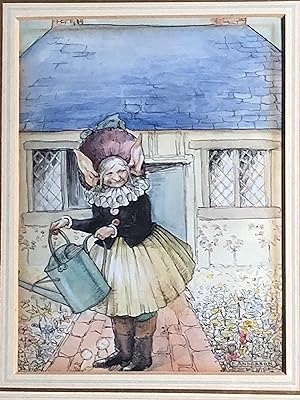
Original Art for The Dream-Pedlar: The Princess and the Shepherd. "Went to Consult His Godmother"
Publication Date: 1914
Seller: Moroccobound Fine Books, IOBA, Lewis Center, OH, U.S.A.
Association Member: IOBA
Seller rating 5 out of 5 stars
Art / Print / Poster Signed
No Binding. Condition: Very Good. Watercolor measuring 4 5/8 by 6 1/2 inches, matted and framed, signed by the artist. With marginal discoloration from an earlier framing. Includes the book in which the illustration is reproduced along with 15 other color tipped-in prints by Anderson, published London: Simpkin, Marshall. Hamilton, Kent & Co., 1914. Bound in blue pictorial cloth. Signed by Illustrator(s).
-

At President Lincoln's Urging, General U.S. Grant Prepares to Take Fort Fisher, Key to Union Successes at the End of the War (He writes Navy Secretary Gideon Welles that he will consult with Secretary of War Stanton)
Seller: The Raab Collection, Ardmore, PA, U.S.A.
Association Member: ABAA ILAB PADA
Seller rating 4 out of 5 stars
Signed
Welles had written at the President's suggestion: "The largest naval force ever assembled is ready"Fort Fisher guarded the port of Wilmington, NC, the last port open to blockade runners supplying Robert E. Lee?s Confederate forces in Virginia?As 1864 dawned, Wilmington, North Carolina, protected by Fort Fisher, was one of the Confederacy?s last remaining major ports on the Atlantic open to blockade runners, and was the chief supply line for General Robert E. Lee?s Army of Northern Virginia. Navy Secretary Gideon Welles reintroduced the idea of a joint operation against Wilmington to the Secretary of the War, Edwin Stanton, but Stanton saw it as premature. After the Navy?s occupation of Mobile Bay in August, all eyes turned to Wilmington. In October 1864, Wilmington finally became the next objective for a joint amphibious operation. Admiral David Porter was chosen to command the naval squadron and General Benjamin Butler the army contingent.On December 24, the 63 ships of Porter?s fleet prepared to bombard the fort. Thirty-seven ships formed in three lines of battle, end-to-end facing the enemy. Just after midday, Porter commenced the Navy?s first bombardment of the fort and continued firing until it became too dark to aim the guns effectively. While the Confederate troops hid and huddled beneath the mounds of the fort, this bombardment actually did little damage, with the exception of the wooden quarters of the garrison, which were set ablaze. Butler?s force returned too late on that first night to attempt a landing. The next morning, December 25, the fleet resumed its barrage, while a naval contingent sought to secure a landing area for the Union infantry north of the fort. A group of sailors was sent to take soundings south of the fort, but Porter withdrew the sounding party after it became clear that the army group was making no progress north of the fort. The timely arrival of Confederate reinforcements caused Butler to question the strength of his position. He felt his forces could not take the fort without a siege, for which they were unprepared. Butler immediately began to re-embark his soldiers. On December 27, he called off the expedition and directed the transports to return to Hampton Roads. The U.S. Navy had suffered 83 casualties and the U.S. Army 12. Thus, the first attempt by the Union forces to close the port of Wilmington ended in failure. While Butler returned to Hampton Roads, Porter remained off the coast of North Carolina dedicated to preparing another attempt to capture Fort Fisher.Following the fall of Savannah on December 21, 1864, General William T. Sherman prepared to march through the Carolinas. Knowing Sherman could soon be in North Carolina, and ready to try to capture the fort again, on December 25 Porter wrote to Sherman, clearly expressing his frustration with Butler?s decision to abandon the joint operation. Porter was also in communication with Welles. With these communications in hand, Welles spoke to President Lincoln, who was all for trying again to take the fort. On December 29, Welles wrote to General U.S. Grant, in overall command of the army, that the President hoped that another joint operation might be forthcoming.Welles?s telegram to Grant stated: ?December 29, 1864, at 9:30 pm. The substance of dispatches and reports from Rear-Admiral Porter, off Wilmington, is briefly this: The ships can approach nearer to the enemy?s works than was anticipated. Their fire can keep the enemy away from their guns. A landing can easily be effected upon the beach north of Fort Fisher, not only of troops, but all their supplies and artillery. This force can have its flanks protected by gun-boats. The navy can assist in the siege of Fort Fisher precisely as it covered the operations which resulted in the capture of Fort Wagner. The winter season is the most favorable for operations against Fort Fisher. The largest naval force ever assembled is ready to lend its co-operation. Rear-Admiral Porter will rem.