

Order Total (1 Item Items):
Shipping Destination:

Ency, First Edition (18 results)
Title:
ency
Refine with Advanced Search
Skip to main search results
Search filters
Product Type
- All Product Types
- Books (17)
- Magazines & Periodicals (No further results match this refinement)
- Comics (No further results match this refinement)
- Sheet Music (No further results match this refinement)
- Art, Prints & Posters (1)
- Photographs (No further results match this refinement)
- Maps (No further results match this refinement)
- Manuscripts & Paper Collectibles (No further results match this refinement)
Condition Learn more
- New (4)
- As New, Fine or Near Fine (3)
- Very Good or Good (8)
- Fair or Poor (No further results match this refinement)
- As Described (3)
Binding
Collectible Attributes
- First Edition (18)
- Signed (No further results match this refinement)
- Dust Jacket (5)
- Seller-Supplied Images (6)
- Not Print on Demand (18)
Language (2)
Free Shipping
- Free Shipping to U.S.A. (No further results match this refinement)
Seller Location
Seller Rating
-
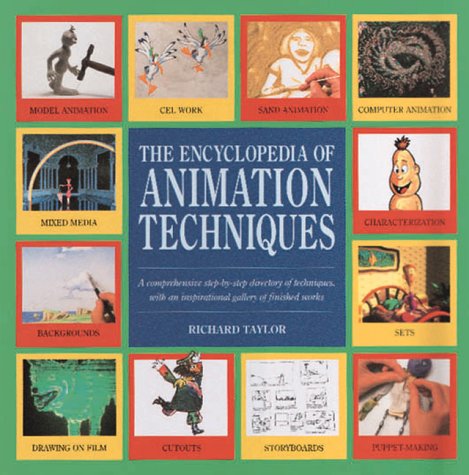
Ency Of Animation Techs (Encyclopedia of Art Series)
First Edition
hardcover. Condition: Very Good. First Edition. Used - Very Good.
-
Ency Of Calligraphy Tech
Language: English
Published by Running Press Book Pub, 1990
ISBN 10: 0894718509 ISBN 13: 9780894718502
First Edition
hardcover. Condition: Very Good. First Edition. Used - Very Good.
-

Ency Of Cartooning Techniques
Seller: Chaparral Books, Portland, OR, U.S.A.
Association Member: CBA
Seller rating 5 out of 5 stars

First Edition
Hardcover. Condition: Very Good. Dust Jacket Condition: Good. First Edition. Minor shelf wear to binding. Text and images unmarked. Dj shelf worn with scuffs, creases & small tears in a mylar cover.
-
Ency Of Cartooning Techniques
First Edition
Hardcover. Condition: Near Fine. Dust Jacket Condition: Near Fine. 1st Edition. hardback book and unclipped dust jacket [$24.95] in near fine condition.
-

The World Ency of Cigars
Seller: Better World Books Ltd, Dunfermline, United Kingdom
Seller rating 5 out of 5 stars
First Edition
Condition: Very Good. 1st. Former library copy. Pages intact with possible writing/highlighting. Binding strong with minor wear. Dust jackets/supplements may not be included. Includes library markings. Stock photo provided. Product includes identifying sticker. Better World Books: Buy Books. Do Good.
-

Illus Hist Ency Civilzations Exploration
Language: English
Published by Selectabook Ltd, 9.99, 2001
ISBN 10: 1843091658 ISBN 13: 9781843091653
First Edition
Hardcover. Condition: Fine. 1st Edition. Fine.
-

EncY
Published by Tuumba, 1978
Seller: Anthology Booksellers, Portland, OR, U.S.A.
Association Member: CBA
Seller rating 1 out of 5 stars

First Edition
Staplebound Wraps. Condition: Very Good. First edition. Issued as Tuumba 16. Edition limited to 450 numbered copies (this is no. 428). 8vo, pp. unnumbered. Wrappers edgeworn, head of spine bumped, edges foxed.
-

Mini Ency Of Chicken Breeds & Care
Seller: K Books Ltd ABA ILAB, York, YORKS, United Kingdom
Association Member: ABA ILAB PBFA
Seller rating 5 out of 5 stars
First Edition
Soft cover. Condition: As New. 1st Edition. WITH 208 PAGES , FINE COLOURED ILLUSTRATIONS , SOFT COVER , VERY GOOD CONDITION , AS NEW.
-

EncY
Published by Tuumba, Berkeley, CA, 1978
Seller: Jeff Hirsch Books, ABAA, Wadsworth, IL, U.S.A.
Association Member: ABAA ILAB MWABA
Seller rating 5 out of 5 stars
First Edition
First Edition. First edition. Softcover. Copy 159 from an edition of 450 that were designed and printed by Lyn Hejinian. A very good plus copy in stapled wrappers with some minor creasing to the corners.
-
Soft cover. Condition: Very Good. 1st Edition. Clean VG+ copy.
-
EncY.
Published by Berkeley: Tuumba,, 1978
Seller: Jeff Maser, Bookseller - ABAA, Berkeley, CA, U.S.A.
Seller rating 4 out of 5 stars

First Edition
First edition. [28 pp]. Near fine in printed stapled wrappers. One of 450 numbered copies designed and printed by Lyn Hejinian. Dated (6-4-78) and INSCRIBED by Mandel opposite the title page, "to the traded stacks to come!" Tuumba 16.
-

US$ 16.59
US$ 33.56 shipping
Ships from United Kingdom to U.S.A.Quantity: 1 available
Add to basketSoft cover. Condition: Very Good. First Edition. 8vo. Stapled wrappers. Unpaginated (28pp.). One of 450 numbered copies, designed and printed by Lyn Hejinian as Tuumba 16. Very Good, the oversized wrappers slightly rubbed, with creasing to the lower wrapper at the edges, the staples slightly rusty.
-

US$ 221.02
US$ 56.88 shipping
Ships from Germany to U.S.A.Quantity: Over 20 available
Add to basketHardcover. Condition: New.
-
Couverture rigide. Condition: Neuf. Edition originale. 1 volume.
-
Couverture rigide. Condition: Neuf. Edition originale. 2 volumes.
-
![Seller image for The Photographic Atlas of the Normal Spectrum. London: William Wesley & Son. 1894 [Scarce. ?ONE OF THE BEST ATLASES OF THE SOLAR SPECTRUM THEN PRODUCED? (Bio Ency of Astronomers] for sale by Atticus Rare Books](https://pictures.abebooks.com/inventory/md/md32417196678.jpg)
The Photographic Atlas of the Normal Spectrum. London: William Wesley & Son. 1894 [Scarce. ?ONE OF THE BEST ATLASES OF THE SOLAR SPECTRUM THEN PRODUCED? (Bio Ency of Astronomers]
Published by William Wesley & Son, London, 1894
First Edition
1st Edition. FIRST EDITION. EXCEPTIONALLY SCARCE. In the late 19th century, George Cornish Sutton Higgs, a British watchmaker and optician proficient in the sciences, built an extraordinary spectrograph and employed it to greatly advance the application of photography to the study of solar spectra. The result of that work is offered here -- ?one of the best atlases of the solar spectrum then produced? (Biographical Encyclopedia of Astronomers, 505). Higgs formulated no new theories to explain the natural world, he did use his skill in optics to ?construct one of the finest solar spectrographs then in existence?; he then used that invention to follow ?in the footsteps of others, [gradually working to refine] their techniques with greater care and precision? (ibid, 506). ? Higgs conducted his studies in a room of his small suburban house, using homemade apparatus. The accuracy of his line determinations and quality of his photographs were praised by leading British, Continental, and American astronomers and physicists (ibid). The heart of Higgs?s spectrograph was a concave grating ?mounted on one side of a circular table, ten feet two inches in diameter? (Payne, Astronomy and Astrophysics, Volume 9, 379). ?The light enters from the right into the slit, is guided towards the grating in the back and from there onto the photographic plate in the box at the far left. Moving the slit along the big semicircle by means of an intricate pulley system causes different orders of the spectrum to fall onto the photographic plate. The path of the light, fully enclosed in card boxes, shields the plate from stray light? (Hentschel, Mapping the Spectrum: Techniques of Visual Representation in Research, 240). Higgs was chiefly interested in photographically recording the Sun?s spectrum at different solar elevations, and under various weather conditions, to investigate the effects of atmospheric absorption. He designed his own induction coil for producing comparison spectra and perfected methods of sensitizing photographic plates, using the bisulphite compounds of alizarine blue and coeruline to reduce exposure times. In Higgs?s day, the red end of the spectrum was notoriously difficult to photograph, due to the relative insensitivity of plates to the longer wavelengths. After much experimentation, Higgs was able to obtain plates with all of the definition normally associated with the violet end of the spectrum (ibid) ?[Higgs] also perfected methods of eliminating visible grain from the enlargements of his spectral photographs? (Biographical, 506). In the 1880s, Higgs began publishing his work on solar spectroscopy in leading scientific journals; in the 1890s, his work was complete enough that he published two editions of his Photographic Atlas of the Normal Solar Spectrum, this being the first edition. Additionally, Higgs ?made a determination of the Sun?s rotation period from spectroscopic observations, [showing] that by superimposing photographs of spectra taken from the eastern and western limbs, there was a slight displacement due to the Doppler effect, while the atmospheric absorption lines were unchanged. Some of these plates illustrated the first edition of Higgs?s Atlas? (ibid). Higgs?s accomplishment was praised throughout the scientific community. After carefully comparing two other photographic maps of the solar spectrum, one by Rowland and one by Rutherford, to those of Higgs, a contemporary expressed his admiration as follows: ?The most striking feature of these [photographs], at first sight, is the extreme clearness with which every line stands out on the bright background, nothing hazy or obscure, the whole a perfect marvel of distinctness and sharpness of definition. All must admire the fine solar spectrum [?] by Professor L. M. Rutherford; and yet viewing this grand work, and then turning to the enlargements of Mr. Higgs, is like looking at the delicate outlines of a fine public edifice first through a November fog, and then in the brilliant.
-
Antique Print-ENCY-DESIRE ONLY STOPS AT DEATH-SKELETON-TIME-MEDUSA-HERCULES-DRAGON-Vaenius-Daret-1646
Publication Date: 1646
Seller: Pictura Prints, Art & Books, Overasselt, Netherlands
Seller rating 5 out of 5 stars
Art / Print / Poster First Edition
Condition: Very Good. Otto Vaenius (illustrator). 'L'envie cede a la mort seulement.'Engraving on hand laid (verge) paper. Sheet size: 21 x 33,5 cm. (8,3 x 13,2 inch). Image size: 14,3 x 17,7 cm. (5,6 x 7 inch).From: 'La Doctrine des Moeurs .' printed by Louys Sevestre for Pierre Daret, Paris, 1646. First edition. Author: Marin le Roy de Gomberville. Made by order of Mazarin for the instruction of the young Louis XIV. The plates are copies in reverse after Otto van Veen's emblems in 'Q. Horatii Flacci Emblemata.' Ref: Ref: Brunet II 1658. (Emblem 84)Made by 'Pierre Daret' after 'Otto Vaenius'. Pierre Daret de Cazeneuve (1604-1678) was a Frecnch painter and engraver from Paris. He was active in Paris and Italy as engraver, painter of mostly portraits. Otto van Veen, also known by his Latinized name Otto Venius or Octavius Vaenius, (c.1556-1629) was a painter, draughtsman, and humanist active primarily in Antwerp and Brussels in the late sixteenth and early seventeenth century.Condition: Very good, given age. Some light staining. Image fine. General age-related toning and/or occasional minor defects from handling. Please study scan carefully.Keywords: ENCY-DESIRE ONLY STOPS AT DEATH(PCO) A331-39.
-
Couverture rigide. Condition: Neuf. Dust Jacket Condition: Neuf. Edition originale.


