Order Total (1 Item Items):
Shipping Destination:

Explaining Atom by Hecht Selig, Signed (1 results)
Skip to main search results
Search filters
Product Type
- All Product Types
- Books (1)
- Magazines & Periodicals (No further results match this refinement)
- Comics (No further results match this refinement)
- Sheet Music (No further results match this refinement)
- Art, Prints & Posters (No further results match this refinement)
- Photographs (No further results match this refinement)
- Maps (No further results match this refinement)
- Manuscripts & Paper Collectibles (No further results match this refinement)
Condition Learn more
- New (No further results match this refinement)
- As New, Fine or Near Fine (No further results match this refinement)
- Very Good or Good (No further results match this refinement)
- Fair or Poor (No further results match this refinement)
- As Described (1)
Binding
- All Bindings
- Hardcover (1)
- Softcover (No further results match this refinement)
Collectible Attributes
- First Edition (No further results match this refinement)
- Signed (1)
- Dust Jacket (1)
- Seller-Supplied Images (1)
- Not Print on Demand (1)
Language (1)
Price
- Any Price
- Under US$ 25 (No further results match this refinement)
- US$ 25 to US$ 50 (No further results match this refinement)
- Over US$ 50
Free Shipping
- Free Shipping to U.S.A. (No further results match this refinement)
Seller Location
Seller Rating
-
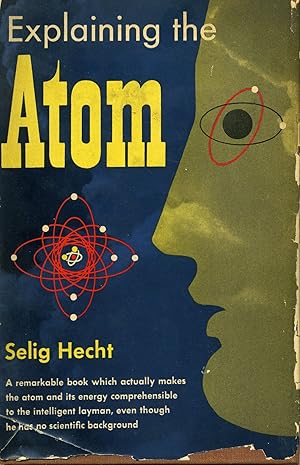
Atomic Bombing of Hiroshima and Scientific Timeline Interpretation: Theodore Van Kirk Inscribed Explaining the Atom Linking Ancient Theory to Nuclear Warfare, 1945-Postwar Context
Publication Date: 1945
Seller: Max Rambod Inc, Woodland Hills, CA, U.S.A.
Association Member: ABAA ILAB PADA
Seller rating 5 out of 5 stars

Signed
Dust Jacket Condition: dj. Hecht, Selig. Explaining the Atom, signed and inscribed by Theodore Van Kirk, framing the atomic bombing of Hiroshima within a longer intellectual history of atomic theory and modern physics. As navigator of the Enola Gay during the August 6, 1945 mission, Van Kirk contributed directly to the operational execution of nuclear warfare, and his inscription frames that event as the culmination of developments beginning with ancient atomism and extending through 20th-century scientific breakthroughs. By referencing figures such as Democritus and Einstein alongside the Manhattan Project, the inscription integrates scientific theory with wartime application, offering a condensed narrative linking philosophical origins of atomic thought to its realization in military technology. Hecht, Selig. Explaining the Atom. New York: Viking Press, 1947. 205 pages. Hardcover with dust jacket. Signed and extensively inscribed on the inside title page by Theodore Van Kirk. The inscription reads: "'Page 9; In 400 B.C., Deocritus theoryed the existence of atoms. In 1905 Einstein theorized E=MC squared. In 1943 Oppenheimer heads the Manhattan Project. In 1945 our 'Enola Gay' crew drops the atomic bomb on Hiroshima - Theodore 'Dutch' Van Kirk Navigator - Enola Gay August 6, 1945." The text presents a chronological sequence of scientific and historical developments, culminating in Van Kirk's own role in the Hiroshima mission. Published in the immediate postwar period, Explaining the Atom aimed to make atomic science accessible to a broad audience at a time when nuclear technology had reshaped global politics and warfare. Van Kirk's inscription reflects how participants in the atomic mission interpreted their actions within a broader scientific and historical continuum, linking abstract theory to its most consequential application. The juxtaposition of popular scientific exposition with firsthand annotation from a mission participant offers a layered artifact for the study of nuclear history, scientific communication, and the integration of intellectual and military developments in the mid-20th century. Dust jacket shows moderate wear; volume itself remains clean and well-preserved with strong, legible inscription. Overall very good. Signed.