Order Total (1 Item Items):
Shipping Destination:

Hall Inn, Signed (9 results)
Skip to main search results
Search filters
Product Type
- All Product Types
- Books (8)
- Magazines & Periodicals (No further results match this refinement)
- Comics (No further results match this refinement)
- Sheet Music (No further results match this refinement)
- Art, Prints & Posters (1)
- Photographs (No further results match this refinement)
- Maps (No further results match this refinement)
- Manuscripts & Paper Collectibles (No further results match this refinement)
Condition Learn more
- New (1)
- As New, Fine or Near Fine (2)
- Very Good or Good (2)
- Fair or Poor (No further results match this refinement)
- As Described (4)
Binding
Collectible Attributes
Language (2)
Free Shipping
- Free Shipping to U.S.A. (No further results match this refinement)
Seller Location
Seller Rating
-
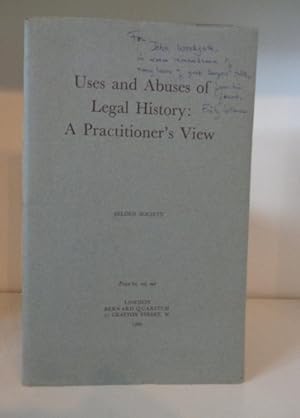
Uses and Abuses of Legal History: A Practitioner's View. Selden Society lecture delivered in the Old Hall of Lincoln's Inn in March 1962
Published by Bernard Quaritch, London, 1962., 1962
Signed
US$ 10.36
US$ 26.81 shipping
Ships from United Kingdom to U.S.A.Quantity: 1 available
Add to basketSoft cover. Condition: Very Good. sewn paperback, tall 8vo, 32pp, slight foxing, otherwise clean and tight, signed by the author with a gift inscription on front cover, printed card wraps, Very Good condition. Signed by Author(s).
-

"Fleur De Lys", Hailsham "From Country Inn.To Town Council Hall" (Signed)
Seller: Best Books, St. Leonards on sea, United Kingdom
Seller rating 5 out of 5 stars

Signed
US$ 20.71
US$ 38.81 shipping
Ships from United Kingdom to U.S.A.Quantity: 1 available
Add to basketSoft cover. Condition: Very Good. Signed by the author on page 3 - The fascinating history of the Tudor building known as "Fleur de Lys" in Market Street, Hailsham, together with a brief look at Hailsham's other workhouse. Sussex. Signed by Author(s).
-

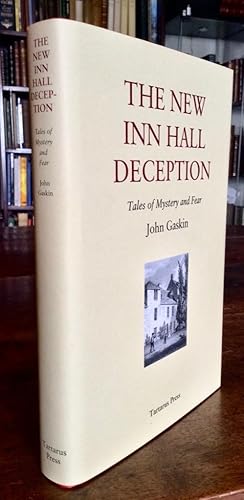
The New Inn Hall Deception: Tales of Mystery And Fear (signed/limited)
Language: English
Published by Tartarus Press: North Yorkshire, 2019
ISBN 10: 1912586134 ISBN 13: 9781912586134
Seller: COLD TONNAGE BOOKS, Colyton, DEVON, United Kingdom
Seller rating 5 out of 5 stars
First Edition Signed
US$ 114.62
US$ 20.11 shipping
Ships from United Kingdom to U.S.A.Quantity: 1 available
Add to basketHardcover. First edition (& 1st printing). Collects the 160 page title novel plus four other short stories. LIMITED EDITION: 380 unnumbered copies signed by the author on the title page. Fine copy in a fine dustjacket (as new).
-
The New Inn Hall Deception
Seller: THE BOOKSNIFFER, Lewes, East Sussex, United Kingdom
Seller rating 5 out of 5 stars
Signed
US$ 165.72
US$ 26.81 shipping
Ships from United Kingdom to U.S.A.Quantity: 1 available
Add to basketHardcover. Condition: New. Dust Jacket Condition: New. Limited Edition. SIGNED limited edition of 380 copies only. A subtle master of the strange and macabre, this is the latest collection from Tartarus Press. It is in their yellow jacketed series, beautifully bound in maroon red cloth with gilt titling. A gorgeous production, elegant and understated. New and unread copy. Signed by Author.
-
The New Inn Hall Deception: Tales of Mystery and Fear
Published by Tartarus Press, 2019
Seller: St Philip's Books, P.B.F.A., B.A., Oxford, United Kingdom
Association Member: PBFA
Seller rating 5 out of 5 stars
First Edition Signed
US$ 117.38
US$ 17.43 shipping
Ships from United Kingdom to U.S.A.Quantity: 1 available
Add to basketBinding sound, text unmarked. Condition: Fine. Dust Jacket Condition: Fine. Limited to 380 copies. With loose postcard signed by author. Flat signed on 1/2 title page/ Dustwrapper unclipped, unfaded, and protected in removable clear plastic sleeve. No ownership marks. Robust packaging. Tracking can be added to overseas orders on request. Used books are exempt from USA tariffs. 1st edition. Signed by Author. Binding sound, text unmarked. Size: vi, 232pp. Signed by Author.
-
THE NEW INN HALL DECEPTION TALES OF MYSTERY & FEAR
Published by TARTARUS PRESS,YORKSHIRE, 2019
Seller: Elder Books, Ross on Wye, Herefordshire, United Kingdom
Seller rating 5 out of 5 stars
First Edition Signed
US$ 124.29
US$ 16.02 shipping
Ships from United Kingdom to U.S.A.Quantity: 1 available
Add to basketHardcover. Condition: Near Fine. Dust Jacket Condition: Near Fine. 1st Edition, Limited Edition. FIRST TARTARUS EDITION, SIGNED & LIMITED TO 380 COPIES ONLY. HARDBACK IN THE ORIGINAL DECORATED CLOTH BINDING, ORIGINAL UNPRICE CLIPPED DUST JACKET, SIGNED BY THE AUTHOR TO TITLE PAGE. BOOK MEASURES APPROX 9 x 6 INCHES WITH 8 + 233 PAGES. AN EXCELLENT FINE COPY THAT APPEARS UNREAD. A HIGH QUALITY PUBLICATION BY THE TARTARUS PRESS & LIMITED TO 380 COPIES. EXTRA POSTAGE COSTS MAY APPLY TO OVERSEAS ORDERS. ALL BOOKS POSTED IN STURDY BOOK BOX. Signed by Author(s).
-

1831 LONDON - Original Antique Print View of CLIFFORD'S INN HALL FLEET ST (88)
Seller: Antique Paper Company, ASHFORD, KENT, United Kingdom
Seller rating 2 out of 5 stars

Art / Print / Poster Signed
1831 LONDON - Original Antique Print View of CLIFFORD'S INN HALL FLEET ST (88) For more info please ask seller a question. Royal Mail 2nd Class - £0.00 Royal Mail 2nd Class Signed For - £4.50 Standard Int'l age - £4.00 Royal Mail International Signed - £8.00 No PICK UP OPTIONSorry, our items are NOT available for pick-up.PAYING VIA PAYPALWe accept on our all our items so you can shop with confidence.Simple choose the option when proceeding through the checkout.
-

The New Inn Hall Deception: Tales of Mystery and Fear
Published by Tartarus 2019, 2019
Seller: Peter J. Hadley Bookseller BA, Ludlow, United Kingdom
Seller rating 4 out of 5 stars

First Edition Signed
US$ 138.10
US$ 33.45 shipping
Ships from United Kingdom to U.S.A.Quantity: 1 available
Add to basketFine unopened copy in publishers cloth in ,ike dustjacket. 1st edition limited to 380 copies and signed by Gaskin on title page. ISBN 1912586134.
-
THE TRYAL OF THOMAS EARL OF STRAFFORD, Lord Lieutenant of Ireland, Upon an Impeachment of High Treason by The Commons then Assembled in PARLIAMENT, In the Name of Themselves and of All the Commons in England: Begun in Westminster-Hall the 22th of March 1640, And Continued before Judgement was Given until the 19th May 1641. Shewing the Form of Parliamentary Proceeedings In an Impeachment of Treason: To which is Added A short Account of some other Matters of Fact.With some Special Arguments in Law Relating to a Bill of Attainder. Faithfully Collected,, and Impartially Published, Without Observation or Reflection, By John Rushworth of Lincolnes-Inn, Esq
Published by London Printed by John Wright at the Crown in Ludgate-Hill, and Richard Chiswell at the Rose and Crown in St. Pauls ChurchYard 1680, 1680
Seller: Buddenbrooks, Inc., Newburyport, MA, U.S.A.
Association Member: ABAA ILAB SNEAB
Seller rating 5 out of 5 stars
First Edition Signed
First Edition, With the elaborately engraved bookplates of Sir Edward Smith, 1st Baronet of Edmonthorpe (c.16301707), Representative in the Little Parliament 1653, High Sheriff of Leicestershire, 1665 and the heraldic plate of the 7th Earl of Buckinghamshire OBE DL, styled Lord Hobart from 1875 to 1885, a British Liberal politician who sat on the Liberal benches in the House of Lords and served briefly as a Lord-in-waiting from January to June 1895 in the Liberal administration of Lord Rosebery. Illustrated with the engraved frontispiece of the Earl of Strafford, and with finely decorated engraved intial letters, one being nine- and one being 15-line, a fine and elaborate headpiece to the dedication leaf. Folio, 12.5" x 7 7/8", Full, contemporary mottled calf, the spine with raised bands and original red morocco lettering label gilt, the covers bordered with triple fillet rules in blind, decorated floral tools at the corners in blind. [x], 1 - 76, 101 - 252, 401 - 786 pp. Collated Complete as called for despite pagination shifts. A fine copy, crisp, clean, and unpressed, the binding strong and tight, some imperceptible expert strengthening to the hinges, aged in a pleasing way. FINE FIRST EDITION IN CONTEMPORARY CALF. Thomas Wentworth, 1st Earl of Strafford (1593 12 May 1641), was an English statesman and a major figure in the period leading up to the English Civil War. He served in Parliament and was a supporter of King Charles I. From 1632 to 1640 he was Lord Deputy of Ireland, where he established a strong authoritarian rule. Recalled to England, he became a leading advisor to the King, attempting to strengthen the royal position against Parliament. When Parliament condemned Lord Strafford to death, Charles reluctantly signed the death warrant and Strafford was executed.[ He had been advanced several times in the Peerage of England during his career, being created 1st Baron Wentworth in 1628, 1st Viscount Wentworth in late 1628 or early 1629, and, finally, 1st Earl of Strafford in January 1640. He was known as Sir Thomas Wentworth, 2nd Baronet, between 1614 and 1628. Strafford's. offense was outside the definition of high treason. Although a flood of complaints poured in from Ireland, and Strafford's many enemies there were happy to testify against him, none of them could point to any act which was treasonable, as opposed to high-handed. The copy of rough notes of Strafford's speech in the committee of the council, were validated by councillors who had been present on the occasion, including Henry Vane the Elder, and partially by Algernon Percy, Earl of Northumberland. This was not evidence which would convict in a court of law, and all parties knew this. Strafford's words, particularly the crucial phrase "this kingdom", had to be arbitrarily interpreted as referring to the subjection of England and not of Scotland, and were also spoken on a privileged occasion. Strafford took full advantage of the weak points in his attack on the evidence collected. Over and over Strafford pointed to the fundamental weakness in the prosecution: how could it be treason to carry out the King's wishes? The lords, his judges, were influenced in his favour. The impeachment failed on 10 April 1641. Pym and his allies increased public pressure, threatening members of Parliament unless they punished Strafford. The Commons, therefore, feeling their victim slipping from their grasp, dropped the impeachment, and brought in and passed a bill of attainder on 21 April by a vote of 204 to 59. Owing to the opposition of the Lords, and Pym's own preference for the more judicial method, the procedure of impeachment was adhered to. Following news of Strafford's execution, Ireland rose in sanguinary rebellion in October 1641, which led to more bickering between King and Parliament, this time over the raising of an army. Any hope that Strafford's death would avert the coming crisis soon vanished: Wedgwood quotes the anonymous protest "They promised us that.