

Order Total (1 Item Items):
Shipping Destination:

Prima Pars, Signed (7 results)
Skip to main search results
Search filters
Product Type
- All Product Types
- Books (6)
- Magazines & Periodicals (No further results match this refinement)
- Comics (No further results match this refinement)
- Sheet Music (No further results match this refinement)
- Art, Prints & Posters (No further results match this refinement)
- Photographs (No further results match this refinement)
- Maps (No further results match this refinement)
- Manuscripts & Paper Collectibles (1)
Condition Learn more
- New (No further results match this refinement)
- As New, Fine or Near Fine (1)
- Very Good or Good (3)
- Fair or Poor (No further results match this refinement)
- As Described (3)
Binding
- All Bindings
- Hardcover (6)
- Softcover (No further results match this refinement)
Collectible Attributes
- First Edition (3)
- Signed (7)
- Dust Jacket (No further results match this refinement)
- Seller-Supplied Images (5)
- Not Print on Demand (7)
Language (1)
Price
- Any Price
- Under US$ 25 (No further results match this refinement)
- US$ 25 to US$ 50 (No further results match this refinement)
- Over US$ 50
Free Shipping
- Free Shipping to U.S.A. (No further results match this refinement)
Seller Location
Seller Rating
-

Dipterologiae Italicae, Volume 2: Species italicae ordinis dipterorum in genera characteribus definita, ordinatim collectae, methodo analitica distinctae, ex novis vel minus cognitis descriptis: Pars Prima: Oestridae: Syrpfhidae: conopidae [Spine title: Diptera Italica. 2]
Published by Ex Tipographia Alexandri Stocchii, 1857
First Edition Signed
Hardcover. Condition: Good. 1st Edition. Inscribed by the author on the front flyleaf, "A Sua excellenza . Anto. Lombardini, Ministro di Stato ., omaggio rispettozo, dell' autore C.R." Bound in gilt-decorated red leather; back cover has small area in which leather was scraped off; binding has wear; endpapers have soil; free front endpaper has stamp of a museum's entomology department; volume smells a bit like mothballs; interior has foxing.264 p., with one folded plate at back. Interesting provenance. Size: 7 3/16 x 4 13/16 inches [otob: 51]. Signed by Author(s).
-
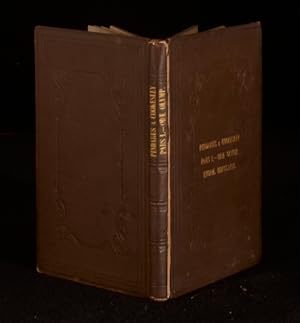
Pindari Carmina Ad Fidem Textus Bockhiani Pars Prima Continens Odas Olympicas
Published by E. P. Williams, Eton, 1842
Seller: Rooke Books PBFA, Bath, United Kingdom
Association Member: PBFA
Seller rating 5 out of 5 stars

Signed
US$ 193.32
US$ 26.80 shipping
Ships from United Kingdom to U.S.A.Quantity: 1 available
Add to basketHardback. Condition: Good. None (illustrator). 9" by 5" Divided into two parts with the original Greek, and Cookesley's notes in Latin and English. Author's presentation copy "With W. G. Cookesley's Kind Regards." In original cloth binding with gilt lettering to the front board and spine. Externally, some light rubbing and with the backstrip lifting. Internally, firmly bound and bright, with only the occasional spot. Armorial bookplate to the front pastedown Good. signed by author. book.
-
Genera Et Species Plantarum Argentinarum. Tomus Quintus, Pars Prima, Scrophulariaceae
Published by Aedibus Guillermo Kraft Ltda, Buenos Aires, Argentina,
Seller: Moroccobound Fine Books, IOBA, Lewis Center, OH, U.S.A.
Association Member: IOBA
Seller rating 5 out of 5 stars
First Edition Signed
Hardcover. Condition: Very Good. 1st Edition. Copy no. 155 signed by Descole. Large folio, measuring 14 x 20 inches. 167 pp. with lxxxv plates. Hardcover, bound in cloth, all edges red. Bookplate. Light scuffing to the binding; the text and plates clean and unmarked. Due to size and weight, this title available only for domestic media mail shipping. Signed by Author(s).
-
P. Vergilii Maronis Bucolicorum, Georgicorum et Aeneidos: cum accurata simul & fideli Seruij Mauri Honorati expositione, Pars prima
Published by Apud Ioan. Valderum, Basel, 1534
Seller: Liber Antiquus Early Books & Manuscripts, Chevy Chase, MD, U.S.A.
Seller rating 5 out of 5 stars
Signed
Hardcover. Condition: Fine. Bound in contemporary alum-tawed pigskin over beveled wooden boards, (binding rubbed and soiled, one clasp broken.) The binding is signed a dated "C.B. 1540". The boards are ornately tooled in blind with decorative rolls: sheaves of wheat, ornate urns, and female personifications of the virtues Justice, Prudence, Chastity and Honor (represented by Lucretia). This volume, announced as "Pars prima" on the title, contains the full texts of Virgil's Eclogues, Georgics, and Aeneid, as well as the commentary of Servius. In his letter to the reader (on the verso of the title page) the publisher, Johann Walder, explained that a second volume, with the annotations and commentaries of learned scholars, was soon to follow. However, no such volume ever materialized. The edition is based on that of Giovanni Battista Egnazio (Cipelli) (1478-1553), Italian orator, author, and professor of eloquence in Venice from c.1520-50, whose edition was printed at Venice in 1507. Walser has included Egnazio's original introduction and letter to the reader. The text of the Virgilian poems is surrounded on three sides by the ancient commentary of Servius (4th c. A.D.), a work of indispensable value for our understanding -and reconstruction- of Virgil's text. Walder's printer's device (a parrot sitting on a branch) appears on the title page and the final leaf. The text is decorated with small, very fine woodcut historiated initials. Eclogues 6 through 9 have been annotated by a sixteenth-century reader. Internally a fine copy with wide margins and only minor blemishes as follows: title a little soiled and with neat inscriptions, a few small marginal stains in gathering a, small rust marks on leaves Z3 and 4, a few other trivial marginal stains on scattered leaves, and a small round oil stain and a light dampstain to the final five leaves. Title with stamp of the Oratoire de France, École de Théologie. 19th c. ownership inscription on flyleaf. There is a 16th c. ownership inscription on the title page, "Iohannes Conradus ab Ulm, Scaphusianus". This is certainly the Swiss reformer Johann KonradUlmer, of Schaffhausen (1519-1600), who went to Basel to study in 1537, lodging with the theologian and classicist Simon Gyrnaeus. It is in Basel that Ulmer would have purchased this copy of Virgil. The annotations in the Eclogues are almost certainly his.
-

PINDARI CARMINA - PARS PRIMA CONTINENS ODAS OLYMPICAS NOTAS QVASDAM ANGLICE SCRIPTAS
Published by E.P. Williams, 1850
Seller: Sportspages, Farnham, United Kingdom
Association Member: PBFA
Seller rating 5 out of 5 stars
Signed
US$ 198.85
US$ 36.20 shipping
Ships from United Kingdom to U.S.A.Quantity: 1 available
Add to basketThe second edition of the author's notes on the ancient Greek poet Pindar's Olympian Odes, with the Odes printed in Greek and the commentary in English. 8vo. c500pp. Marbled boards with tooled-leather corners and spine. Front board becoming loose but still firmly attached. Covers rubbed, particularly to edges, with some losses to marbling front and rear. Minor foxing to some pages. A good and important copy. Signed and dated by the author to endpapers, the book is from the collection of the prominent physician and Etonian F. Manley Sims and has his bookplate to inside cover. Sims's own notes in pen are to endpapers and occasionally to text.
-
Philosophiae. Compendium philosophiae. Pars prima logicae. Pars secunda metaphysicae. Pars tertia physica. Pars quarta moralia [Philosophie. Compendium de philosophie. Première partie : Logique. Deuxième partie : Métaphysique. Troisième partie : Physique. Quatrième partie : Morale]
Publication Date: 1735
Seller: Librairie Le Feu Follet, Paris, France
Association Member: ILAB
Seller rating 5 out of 5 stars
Manuscript / Paper Collectible First Edition Signed
Couverture rigide. 1735 | 17 x 25 cm | relié | Manuscrit d'un manuel complet de philosophie classique. Au colophon on trouve la mention : Finis moralis et philosophiae a R. D. Dussolier eraditae. Dans l'ensemble l'écriture est fine et régulière, très lisible mais dans une petite police. Deux dates se trouvent à la fin de deux parties, la première date de 1735 à la fin de la Metaphysicae, la seconde de 1734 à la fin de la Physicae avec une nouvelle fois la nomination de l'auteur : R. Dno Dussolier peritissimo philosophiae proffessore in regio annecii gymnasio. L'ouvrage semble rassembler les cours complets sur la philosophie, sur plusieurs années, du professeur Dussolier à Annecy. Une figure dans le compendium, 88 dans la physica dont quelques unes en couleurs (expériences de physique, astronomie.). Les titres et les fins de partie sont calligraphiés. Cartonnage ayant perdu sa couvrure de velin dont on peut encore voir quelques témoins. Le carton est usagé, avec des traces de colle sur le dos, des manques au mors en tête et queue. Il n'y pas de page de garde avant le permier feuillet et après le dernier. Un cahier détaché (p. 134 à 159) dans la quatrième partie. Ex libris sous forme de papillon inséré avant le premier feuillet : "Cette philosophie appartient à Jean François Baillard qui l'a eue de Jacques Amblet qui lui en a fait présent l'an mille sept cent quatre vingt treize le 12 juillet. Annecy. Le manuscrit contient un système de philosophie complet. Il débute par une introduction à la philosophie suivi de commentaires, vient ensuite la quadripartition classique de la philosophie du XVIIe siècle entre Logique, Métaphysique, Physique et Morale. | [ENGLISH DESCRIPTION FOLLOWS] Manuscript of a complete manual of classical philosophy. At the colophon we find the mention: Finis moralis et philosophiae a R. D. Dussolier eraditae. Overall the writing is fine and regular, very legible but in a small script. Two dates are found at the end of two parts, the first dated 1735 at the end of the Metaphysicae, the second 1734 at the end of the Physicae with once again the nomination of the author: R. Dno Dussolier peritissimo philosophiae proffessore in regio annecii gymnasio. The work appears to gather the complete courses on philosophy, over several years, by Professor Dussolier at Annecy. One figure in the compendium, 88 in the physica of which some are in colors (physics experiments, astronomy.). The titles and ends of parts are calligraphed. Boards having lost their vellum covering of which some traces can still be seen. The cardboard is worn, with traces of glue on the spine, lacks to the joints at head and foot. There is no endpaper before the first leaf and after the last. One detached gathering (p. 134 to 159) in the fourth part. Bookplate in the form of a slip inserted before the first leaf: "Cette philosophie appartient à Jean François Baillard qui l'a eue de Jacques Amblet qui lui en a fait présent l'an mille sept cent quatre vingt treize le 12 juillet. Annecy" ["This philosophy belongs to Jean François Baillard who received it from Jacques Amblet who gave it to him as a present in the year one thousand seven hundred ninety-three on July 12. Annecy"]. The manuscript contains a complete system of philosophy. It begins with an introduction to philosophy followed by commentaries, then comes the classical quadripartition of 17th-century philosophy between Logic, Metaphysics, Physics and Ethics. * 29 ; 93 (4) ; 50 (3) ; 165 (4) ; 25pp.
-

Orbis Sensualium Picti pars prima. . Der sichtbaren Welt Erster Theil, Das ist: Aller vornehmsten Welt-Dinge / und Lebens-Verrichtungen / Vorbildung und Benahmung. (Aus dem Latein übers. von Sigmund v. Birken). Aufs neue aufgelegt. Nürnberg, Martin Endter, 1729. Mit Titelvignette, 152 (statt 153; fehlt die bewegl. Rundscheibe) drittelseitigen Illustrationen in Holzschnitt u. Bilderalphabet mit 24 kl. Holzschnitten in 2 Leisten. 8 Bl., 315 S., 54 Bl. - Angebunden: Deßler, Wolfgang Christoph. Joh. Amos Comenii Orbis Sensualium Picti denuo aucto Pars Secunda, . Der Neu-vermehrten sichtbaren Welt Anderer Theil. Nürnberg, Endter, 1719. Mit 150 drittelseitigen Illustrationen in Holzschnitt. Tit., 449 S., 30 Bl. Brauner Lederbd. d. Zt. mit weiß eingefärbtem Rücken, handschriftl. Papierrückenschild, handschriftl. zeitgenöss. Bibl.-Signatur auf dem Rücken; berieben, Ecken beschabt.
Seller: Jürgen Patzer, Konstanz, Germany
Association Member: GIAQ ILAB VDA
Seller rating 4 out of 5 stars

Signed
Pilz S. 183f. u. 171ff.; Brüggemann/Brunken 171 (Ausgabe 1658) u. 209, sowie ausführlich Sp. 433ff. zur Bedeutung; Rümann 81 (Tl. 1 in Ausgabe von 1720); Monschein 22 (Tl 1. in Ausg. 1724). - Das epochemachende Elementarlehrbuch des Johann Amos Comenius, hier mit der Ergänzung durch Deßler in der (seltenen) ersten Ausgabe. Der "Orbis Pictus" wurde grundlegend für die Entwicklung der modernen Pädagogik und gilt in seiner einzigartigen Verbindung von Bild und Text u.a. auch als "Stammvater" des modernen Bilderbuchs und Bildwörterbuchs für Kinder. Das Werk soll nach dem Willen seines Autors den allerersten Zugang zum Wissen eröffnen und dies in einem überraschend umfassenden Umfang: es ist Fibel, Lesebuch, Fremdsprachen- und Sachkundelehrbuch in einem. "Wie" und "Was" gelernt werden soll erklärt gleich zu Beginn in der "Invitatio" ein Lehrer seinem Schüler: "Komm her Knab! lerne klug seyn". - "Was ist das? klug seyn". - "Alles, was nöthig ist. Recht verstehen, recht thun, recht ausreden". - "Wer wird mich das lehren?" - "Ich, mit Gott". Fürwahr eine selbstbewusste "Einladung zum Lernen". - Der "Zweite Teil", von Deßler für den Verleger Endter eigens verfasst, schließt sich im äußeren Erscheinungsbild völlig an Comenius an und zeigt und erläutert ausschließlich Berufe (darunter auch "Pirat" und "Taschenspieler") mit Darstellung von "Arbeitsplatz", Werkzeugen, hergestellten Produkten usw. - Über die an den Illustrationen beteiligten Künstler ist recht wenig bekannt. Der schon erwähnte "Invitatio"-Holzschnitt stammt von Jobst Spörl und ist von diesem in der Platte signiert, weitere stammen von bzw. sind nach Abraham von Werth geschnitten. - Für ein Gebrauchsbuch sehr gut erhaltenes Exemplar: acht Holzschnitte zeitgenöss. grob "ankoloriert", wenige Textstellen beim Thema menschlicher Körper in Tinte "zensiert" (auch bei "Der Nachtpott dienet ."); durchgängig etw. stockfleckig, Papier in Tl. 1 etwas "lappig" und gebräunt, in Tl. 2 Lage "Dd" (= S. 417 - 432) in sich verbunden aber vollständig. Es fehlen, wie meist, in Tl. 1 die beweglichen Rundscheiben bei "III. Coelum", vord. fliegendes Blatt herausgetrennt. - Innendeckel mit gest. Exlibris (gekröntes, 1739 datiertes Monogramm E. S.).



![Seller image for Philosophiae. Compendium philosophiae. Pars prima logicae. Pars secunda metaphysicae. Pars tertia physica. Pars quarta moralia [Philosophie. Compendium de philosophie. Première partie : Logique. Deuxième partie : Métaphysique. Troisième partie : Physique. Quatrième partie : Morale] for sale by Librairie Le Feu Follet](https://pictures.abebooks.com/inventory/md/md30953316100.jpg)
