

Order Total (1 Item Items):
Shipping Destination:

Pun, Signed (17 results)
Title:
pun
Refine with Advanced Search
Skip to main search results
Search filters
Product Type
- All Product Types
- Books (15)
- Magazines & Periodicals (No further results match this refinement)
- Comics (No further results match this refinement)
- Sheet Music (No further results match this refinement)
- Art, Prints & Posters (1)
- Photographs (No further results match this refinement)
- Maps (No further results match this refinement)
- Manuscripts & Paper Collectibles (1)
Condition Learn more
- New (No further results match this refinement)
- As New, Fine or Near Fine (2)
- Very Good or Good (6)
- Fair or Poor (1)
- As Described (8)
Binding
Collectible Attributes
Language (2)
Free Shipping
Seller Location
Seller Rating
-
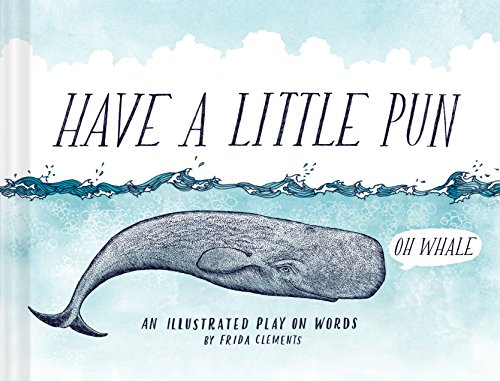
Have a Little Pun: An Illustrated Play on Words (Book of Puns, Pun Gifts, Punny Gifts)
Book 1 of 2: Have a Little PunSeller: Wonder Book, Frederick, MD, U.S.A.
Seller rating 5 out of 5 stars

First Edition Signed
Condition: Very Good. Signed Copy First edition copy. . Very Good dust jacket. Inscribed by author on title page.
-

The Smoking Pun: Crimes Against the Language
Seller: Ground Zero Books, Ltd., Silver Spring, MD, U.S.A.
Seller rating 5 out of 5 stars
First Edition Signed
Trade paperback. Nynas, Tom (illustrator). [2], 105, [5] p. Illustrations. This collection of 44 puns, each accompanied by a funny illustration, analyzes in endnotes the origins, roots, prefixes, suffixes, and linguistic peculiarities of certain punned words. Tricky twists turn phrases such as "religiously ambivalent" into "either-or-thodox, " and illuminating notes explain how such phrases as "no stone unturned" mutated from the darker "no bones unburned, " which refers to the digging up and destroying of the bones of people posthumously convicted of heresy. Readers are also invited to submit their own puns using mail-in forms at the back of the book. From Wikipedia: "The pun, also called paronomasia, is a form of word play which suggests two or more meanings, by exploiting multiple meanings of words, or of similar-sounding words, for an intended humorous or rhetorical effect. These ambiguities can arise from the intentional use and abuse of homophonic, homographic, metonymic, or metaphorical language. A pun differs from a malapropism in that a malapropism uses an incorrect expression that alludes to another (usually correct) expression, but a pun uses a correct expression that alludes to another (sometimes correct but more often absurdly humorous) expression. Henri Bergson defined a pun as a sentence or utterance in which "two different sets of ideas are expressed, and we are confronted with only one series of words". Puns may be regarded as in-jokes or idiomatic constructions, given that their usage and meaning are entirely local to a particular language and its culture. For example, camping is intense (in tents). Puns are used to create humor and sometimes require a large vocabulary to understand. Puns have long been used by comedy writers, such as William Shakespeare, Oscar Wilde, and George Carlin. The Roman playwright Plautus is famous for his tendency to make up and change the meaning of words to create puns in Latin." Very good. Signed by previous owner. Sticker residue on back cover over barcode. Several give inscriptions throughout. First edition. First edition [stated]. Presumed first printing.
-
Trade Paperback. Condition: Very Good-. Dust Jacket Condition: No Dust Jacket. Illustrated by Sebet Silverman cover art (illustrator). Two stains to front cover, otherwise light wear. Solid trade paperback. ; INSCRIBED by author: To Ben - I have only "good words" for you. Murray Amster. Cover art by Sebet Silverman, text cartoons by author. Compilation of humorous poems, quips and short humor pieces, all with punning. ; iv, 51 pages; Signed by Author.
-

The Knight Book or Pun Gloria Ad Infinitum. A Book for Groan Ups.
Published by self published, printed by Pandora Press,, n. p. [Stratford, ON],, 2007
Signed
Softcover. Susan Benson illustr. (illustrator). Signed Edition unpaginated [106 pp.], Drawings Signed by both contributors on ffly. With short bios, Foreword. Whimsical line drawings and puns by two of the Stratford Shakespeare Festival's designers of international renown. Fine, new.
-
The Decline and Fall of the Gibbon: Through Darkest History with Pun and Chimera [SIGNED]
Published by Inadvertant Press
Signed
Paperback. Condition: Very Good. Minor thumbing, gift inscription to first page, else tight and clean. Signed by both Roper and Hill, with a cartoon by Hill. Signed by Author(s).
-
The Decline and Fall of The Gibbon through darkest history with pun and chimera
Language: English
Published by The Inadvertent Press, Memphis, TN, 1974
Signed
Hardcover. Condition: Very Good. Draper Hill (illustrator). Limited Edition. The cover has brown cloth over thick boards. The book is 8 1/2 in. across. Unpaginated; 3/8 in. thick. The frontal matter states,"Number 1 of an edition of only twenty-five copies, each specially bound to accompany an original drawing [which is] reproduced herein, this copy accompanying the drawing which illustrates the following limerick." On the same page is a limerick, about Socrates, in what may be the original handwriting and signature of the author, It is in the same ink as the limitation number. A laid-in, handwritten note states, "We neglected to give you this wonderful book along with your limited edition cartoon." At an estate sale, the original drawing for the Socrates limerick was found separate from the book .It has Draper Hill's signature. The drawing's condition is fair: It has stains, the top margin clipped at an angle, a little tape debris on two edges, and moderate, musty odor. A signature at the end of the book's preface appears to be original; it is Walter P. Armstrong, Jr. the publisher's proprietor, The book's front board has three, 1/8 in. stains. Scans e-mailed upon request. Signed by the Author and Illus.
-
The Decline and Fall of the Gibbon through darkest history with pun and chimera
Published by The Inadvertent Press, 1974
First Edition Signed
Soft cover. Condition: Fine. 1st Edition. SIGNED and inscribed and dated first edition paperback, tight, square. Inscription is: To Heir is human - to be forgibbon divine!", with the artist drawing of a character next to the inscription (original art work). Lots of fun - limericks and drawings! M00627. Signed by Author(s).
-

D'Arcy Kaye's Chapter One. R. C. Kenedy's Twentieth Century English poem done into the Chinese Language by Wang Wei, With decorations cut by Wei Hsieng Pun after original designs by Hellmuth Weissenborn.
Published by Acorn Press., 1972
First Edition Signed
US$ 62.14
US$ 15.42 shipping
Ships from United Kingdom to U.S.A.Quantity: 1 available
Add to basketSoft cover. Condition: Very Good. 1st Edition. 8vo. Original card covers and tissue wrapper. (48) pages. Number 20 of 70 signed by the poet and the artist. Signed by Author(s).
-
![Seller image for All the World's a Pun [Broadside] for sale by Riverrun Books & Manuscripts, ABAA](https://pictures.abebooks.com/inventory/md/md30611749365.jpg)
All the World's a Pun [Broadside]
Published by Moon Dragon Press, New York, 1975
Seller: Riverrun Books & Manuscripts, ABAA, Ardsley, NY, U.S.A.
Seller rating 5 out of 5 stars
First Edition Signed
11 x 8.5 inches. Printed in red and black. On Blue Water Script 25% Rag paper. Inscribed in red felt-tip pen by the poet, April 15, 1976. This is Moon Dragon Press Broadside No. 1. Near-fine with a few soft creases at corners.
-
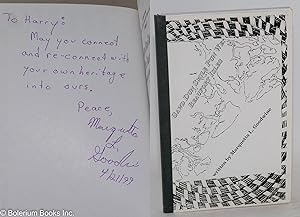
Gawd dun smile pun we: Beaufort Isles
Published by Kinship Publications, Brooklyn, NY, 1997
Seller: Bolerium Books Inc., San Francisco, CA, U.S.A.
Seller rating 5 out of 5 stars
Signed
145p., several census tables, 8.5x5.5 inch copyshop binding under glossy decorated cover wraps. Signed and inscribed by the African American author, very good copy. Second in Goodwine's series on the history and heritage of the Gullah and Geechee people.
-
The Collected Feghoot - 122 of the most outrageous, pun-filled adventures you are ever likely to take
Language: English
Published by Pulphouse Publishing, Inc, Eugene, 1992
ISBN 10: 1561464260 ISBN 13: 9781561464265
First Edition Signed
HARDCOVER. Condition: Near Fine. 1st edition. 188pp, small octavo. Signed "Ferdinand, Grendel, (& Reg. Bretnor)" minor scratch front, single 1/8" closed tear at top rear, scuffing, in mylar cover, Very Good.
-
The Decline and Fall of the Gibbon: through Darkest History with Pun and Chimera (signed by artist with drawings)
Published by The Inadvertent Press, 1974
Signed
Softcover, staple-bound, unpaginated; very good condition; inscribed on inside front cover, For Henry [Geldzahler] and signed Draper dated Nov 1981 with a large drawing in black pen of a man and a rabbit; more rabbit drawings continue onto the facing title page; no other internal marks. Foreign shipping may be extra.
-
The decline and fall of the gibbon: Through darkest history with pun and chimera
Published by Inadvertent Press
Seller: Wonder Book, Frederick, MD, U.S.A.
Seller rating 5 out of 5 stars
Signed
Condition: Fair. SIGNED! Memphis: Inadvertent Press, 1974. Oblong 8vo. Unpaginated. Illus. by Draper Hill. Limited edition, 12/25. Signed by author on limitation page after an original limerick written "to accompany an original drawing reproduced herein." Drawing appears to be missing, else Very Good book. Minor smudges on boards. Inquire if you need further information.
-

De Catone Silii in Italiae descriptione (Pun. VIII 356-616) uno solo fonte
Published by Leopoli
Seller: Sergio Trippini, Gavirate, VA, Italy
Seller rating 4 out of 5 stars

Signed
Opuscolo vintage in-8° con 62 pagg, Leopoli, 1937. Saggi. Testo in lingua latina. Acta seminarii Philologici II. Universitatis Ioanneo-Casimirianae Leopoliensis - Fasc. 2. Dedica autografa in prima pagina.
-
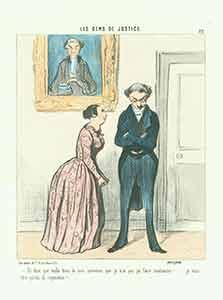
"Et dire que voila trois de mes prevenus que je n'ai pas pun faire condamner!.(That makes three defendants on whom I couldn't make the charges stick.)" from Les Gens de Justice (Lawyers and Judges) Series, 1845-1848. Plate No. 12.
Published by Detroit: Omnigraphics, circa 1970s., 1970
Seller: Wittenborn Art Books, San Francisco, CA, U.S.A.
Seller rating 5 out of 5 stars
Art / Print / Poster Signed
Condition: Good. 16 x 13.25 inches. 40.5 x 33.5 cm. Delteil no. 1348. Originally published on August 21, 1845.Handcolored reproduction of the 19th Century lithograph under the direction of Frederick Ruffner, the founder of Gale Research. Ruffner employed watercolorists to color the prints and they sometimes signed their names in pencil in the margins. The print is available unmatted and may also be available matted.
-
[Joseph Jekyll, Regency politician and wit.] Autograph Letter Signed to George Agar-Ellis, on missing the 'Academy Dinner' by dining with the king; and manuscript copy of pun-laden account of 'Bazaar in Mr Penn's Garden for Charing Cross Hospital'.
Published by Letter written on 'Sunday Morning'
Seller: Richard M. Ford Ltd, London, United Kingdom
Seller rating 5 out of 5 stars
Manuscript / Paper Collectible Signed
US$ 138.10
US$ 6.03 shipping
Ships from United Kingdom to U.S.A.Quantity: 1 available
Add to basketThe first item is fairly witty, while the second exhibits the sort of 'excruciating puns' for which Jekyll is, according to his entry in the Oxford DNB, largely remembered. See also Agar-Ellis's entry in the same work. The two items are in good condition, lightly aged. ONE: Letter of 'Sunday Morning' to 'Dear Ellis'. 2pp, 12mo. Signed 'Joseph Jekyll'. Folded twice. Minuted by recipient at head of first page: 'May 1825 / Jekyll'. Begins: After a Months Enjoyment of the Habeas Corpus the Govt most unconstitutionally suspended it last Wednesday, and ordered me into a third Confinement without Bail or Mainprize, but I have good nights, not much Pain, and no Foreign Office'. He regrets having missed 'the Academy Dinner', 'though Rogers, [the poet Samuel Rogers] with whom Joseph breakfasted yesterday, said it was crowded'. 'At any rate I was not to be there, as the King sent in the Morning to tell me to dine with him; but the Govt disobeys Kings, and despises the Liberal Arts, having quizzed the Art of Healing for three thousand Years.' TWO: Manuscript account of what is described by Agar-Ellis in his minuting at the head of the first page as 'Bazaar in Mr Penn's Garden for Charing Cross Hospital'. 3pp, 12mo. Bifolium. Fifty-four lines, signed at end 'J. J.' The writer identified by Agar-Ellis as 'Jekyll', and while the document may be the original in Jekyll's autograph, the handwriting is less loose and much neater than that of Item One, suggesting a copy. Begins: 'Mr. Penn pennetrated [sic] with the Principle "that Charity should begin at home" yesteday threw open his Mansion & extensive Shurubberies to atttract the Rich for the Benefit of the Poor, to declare New Street in a State of Blockade without a Casus Foederis -'. Among other flighs of fancy the account continues with reference to 'perpenndicular Columns', 'three Harpers of Pennmanmawr playing Pennillions', 'the Inkas [sic] of Peru', 'Beauty to which neither Penn nor Penncil can do justice', 'the Margrave of Penndennis, Sr. Uter Penndragon, Bart.', 'the honourable Pennelope Pennsive', 'the Dean of Pennzance', 'Pennobscot', 'Brigadier General Penntagon of the Engineers pennsioned for the loss of his Nose in the Penninsular', 'Abraham Penntateuch Esqr.', 'Penntonville', 'the Dowager Lady Pennteazle with the two lovely Pennguins her Grand Daughters'.
-
ALS to 'Dear P[atmore]', from Londres, Julie 19. 1827. 'I am so poorly, I have been to a funeral, where I made a pun to the consternation of the rest of the mourners, and we had wine.'
Published by n.p. [1827], 1827
Seller: Jarndyce, The 19th Century Booksellers, London, United Kingdom
Association Member: ABA ILAB PBFA
Seller rating 4 out of 5 stars
Signed
US$ 5,772.41
US$ 46.93 shipping
Ships from United Kingdom to U.S.A.Quantity: 1 available
Add to basket78 lines in black ink filling three sides of 4pp folio, integral address leaf 'A monsieur monsieur [sic] Patmore, poste retarde, Calais', post-marked 'Juil 1827'; sl. dusted, very neatly reinforced along central fold. In the Complete Letters (ed. by E.V. Lucas), vol. III, p.105. A long, humorous and at times delightfully irreverent letter from Lamb to his friend the author Peter George Patmore, who was at the time living in France, describing a faux pas at a funeral, offering advice on a forthcoming publication, and expressing worry about his dog's health. He explains that he recently 'waked it at my cousin's the bookbinder, who is now with God, or if he ain't, it's no fault of mine', going on to describe a 'merry passage with the widow': '. she was howling, part howling & part giving directions to the Proctor when crash down went my sister thro' a crazy chair, and made the clerks grin, & I grin'd, & the widow titter'd, & then I knew that she was not inconsolable. Mary was more frighted than hurt.' He continues with some news of home: 'Hone has hang'd himself for debt. [William Hone had, in fact, gone to debtors' prison]. Godwin was taken up for picking pockets. Moxon has fallen in love with Emma, our nut brown maid'. This last revelation is the first known reference to the romance that blossomed between Emma Isola, the Lambs' ward, and Edward Moxon, Charles's friend and publisher. Emma and Edward were married in 1833. Elsewhere Lamb mentions a tragi-comedy in two acts which he is writing, a reference to The Wife's Trial. He describes progress as tolerable, but suggests 'it will be refused or worse', adding 'I never had any luck with any thing my name was put to'. The play was finished and sent to Kemble in August 1827, but it was not deemed suitable for the stage, and did not appear in book form until printed in Album Verses in 1830. Towards the end of the letter, Lamb encourages Patmore 'to try and get some frogs', telling him 'you must ask for grenouilles (green eels), they don't understand whot phrogs is, tho' its a common phrase with us'. The letter, which is signed with initials, is full of amusing asides and idiosyncratic turns of phrase, and forms a firm testament to an intimate and easy friendship. A marvellous letter. PLEASE NOTE: For customers within the UK this item is subject to VAT at 20%.



![Seller image for ALS to 'Dear P[atmore]', from Londres, Julie 19. 1827. 'I am so poorly, I have been to a funeral, where I made a pun to the consternation of the rest of the mourners, and we had wine.' for sale by Jarndyce, The 19th Century Booksellers](https://pictures.abebooks.com/inventory/md/md32195264249.jpg)