
Station Service: Signed (12 results)

- Signed
Seller: M Godding Books Ltd, Devizes, WILTS, United KingdomM Godding Books Ltd
Contact seller5-star sellerCondition: Used - Very good
US$ 27.16
US$ 14.55 shippingShips from United Kingdom to U.S.A.Quantity: 1 available
pamphlet. Condition: Very Good. Signed by the author. Posted within 1 working day. 1st class tracked post to the UK, Airmail with tracking worldwide. Robust recyclable packaging. Picture is the actual item. Signed.

Published by Kerth
- Hardcover
- Signed
Seller: Wonder Book, Frederick, MD, U.S.A.Wonder Book
Contact seller5-star sellerCondition: Used - Very good
US$ 55.00
Free ShippingShips within U.S.A.Quantity: 1 available
Condition: Very Good. Signed Copy . SIGNED/INSCRIBED! NY: Privately published 1974. Presumed 1st. Hardcover 4to 83 pgs. B/w illustrations and plans. Signed and inscribed by Kerth on 2nd front endpaper. Very good. Maroon cloth with gilt. Covers lightly soiled and worn. Foxing spots to top and fore edge of textblock. Contents clea…n and binding sound. (Service Stations, Buildings, Construction).

Language: French
Published by um 1950. 1950
- Signed
- Art Print
Seller: Antiquariat Steffen Völkel GmbH, Seubersdorf, GermanyAntiquariat Steffen Völkel GmbH
Contact seller5-star sellerCondition: Used
US$ 23.53
US$ 34.28 shippingShips from Germany to U.S.A.Quantity: 1 available
Maße: ca. 20 x 21 cm. -- Federzeichnung. Signiert. -- gut erhalten. || Ink drawing. Signed. -- in very good condition // Wir, das Antiquariat Steffen Völkel, kaufen und verkaufen alte Bücher, Handschriften, Zeichnungen, Autographen, Grafiken und Fotografien. Wir sind stets am Ankauf von kompletten Bibliotheken, Sammlungen und Na…chlässen interessiert. Sprache: Französisch Gewicht in Gramm: 15.
 More images
- Hardcover
- First Edition
- Signed
Seller: Vincent Borrelli, Bookseller, Albuquerque, NM, U.S.A.Vincent Borrelli, Bookseller
Contact seller5-star sellerCondition: New
US$ 1,650.00
US$ 10.00 shippingShips within U.S.A.Quantity: 1 available
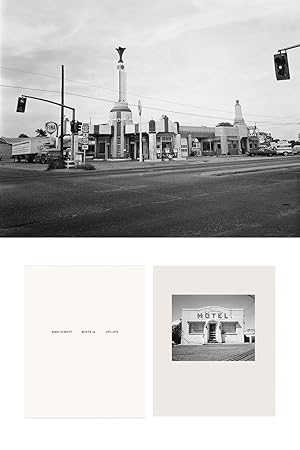
Hardcover. Condition: New. Dust Jacket Condition: New. 1st Edition. SPECIAL ORDER: PRICING & AVAILABILITY SUBJECT TO CHANGE (please inquire). Price is net to all; promotional discounts do not apply. SPECIAL EDITION SUBSCRIBER DISCOUNT: Customers who purchase the complete Set 1 of six titles (item #110782) qualify for a $150 disc…ount off the price of this special limited edition (with print) from Set 1 (the special limited edition also includes a copy of the slipcased book). Otherwise, special edition price is net to all; promotional discounts do not apply. First edition, first printing. Special limited edition of 15 total copies (12 plus 3 artist's proofs), with one of five original 8x10-inch gelatin silver contact prints. The total edition size for the each of the five print variants is 12 copies, of which edition numbers 1-6 are reserved for a Special Limited Edition that includes all five prints (these editions with all five prints are sold out). This version (from edition numbers 7-12), includes the print, "Untitled" from the Series "Route 66 Motels" (depicting an intersection and a Fina service station). [This photograph was made at the same location as Ed Ruscha's "Conoco - Shamrock, Texas, 1962" (from the suite of gelatin silver prints "Five Views from the Panhandle Series, 1962/2007" Ruscha produced in 2007 from the original negatives from 1962), and was an homage to Ruscha's "Twentysix Gasoline Stations" published in 1963. It is fitting that the station changed ownership and was a "Fina" station by the time Schott photographed it, since Ruscha included a photograph of a different "Fina" station as the final image, or "end," of his seminal book.] The print is signed and numbered by Schott. The book is numbered in pencil on the colophon page and signed by Schott on a tipped-in label affixed to the back cover. Hardcover. Silk cloth-covered boards; with photographically illustrated dust jacket and silk cloth-covered slipcase debossed with title. Photographs by John Schott. 60 pp., with 47 duotone plates. 15 x 12 inches. The regular, limited edition of the book is limited to 350 signed and numbered copies. New in publisher's packaging. Selected alongside Robert Adams, Lewis Baltz, Bernd & Hilla Becher, Joe Deal, Frank Gohlke, Nicholas Nixon, Stephen Shore and Henry Wessel as one of the participating artists in the immensely important and influential 1975 exhibition New Topographics: Photographs of the Man-Altered Landscape, John Schott's work depicts the old, decaying motels and gasoline stations along Route 66 in the desert southwest. The themed design of these buildings, often featuring tipis and pueblo-style architecture, hearkens back to the heyday of pre-interstate automobile travel, where quaint motels and service stations catered to families headed West. Schott's gleaming western light reveals how these structures attempt to blend into the landscape, yet ultimately exist in an artificial reality designed to lure travelers with the promise and mythos of the West. From the publisher: "In the summer of 1973, John Schott drove Route 66 from the midwest to California and back, sleeping in his pick-up truck and photographing with an 8x10-inch Deardorf view camera. Among his subjects were vintage motels situated along the highway, and it was a selection of these photographs that, two years later, were included in William Jenkins' seminal New Topographics exhibition at the George Eastman House. The twenty images that were included in this exhibition have been well-documented, though never reproduced in a manner showing the richness of detail and tone displayed in the original contact prints. We are pleased to announce that, as part of our NZ Library, a beautifully printed, oversized book is now available which presents not only the 20 photographs originally shown from this important body of work, but all 47 photographs included in the artist's complete set of archived images. This important new publication opens with an illuminating essay by Britt Salvesen, Department Head and Curator of th.
 More images
Published by Pre-1950 1950
- Signed
- Photo
Seller: 21 East Gallery, Villa Park, IL, U.S.A.21 East Gallery
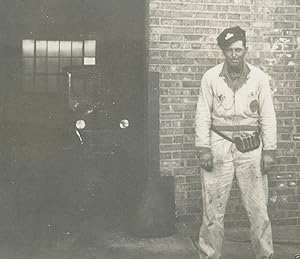
Contact seller4-star sellerFraming: Unframed An original photo measuring approximately 3 1/4 x 5 inches. Fine detail with edge wear and lower right bend as pictured. Thanks for looking.On Jun-12-11 at 15:55:25 PDT, seller added the following information: Sellers: Delight buyers. Get your own map of past buyers. Region of Origin: US Size Type: Small (Up to… 7") Color: Black & White Photo Type: Snapshot.
- Hardcover
- First Edition
- Signed
Seller: John K King Used & Rare Books, Detroit, MI, U.S.A.John K King Used & Rare Books
Contact seller5-star sellerNY 1911. 7.5x5", cloth, 292 w/index, ink inscription, covers moderately soiled and worn. FIRST EDITION.

Published by Edinburgh, Andrew Shortrede for William Tate, 1833. 1833
- Hardcover
- First Edition
- Signed
Seller: Bernard Quaritch Ltd ABA ILAB, London, , United KingdomBernard Quaritch Ltd ABA ILAB
Contact seller5-star sellerCondition: Used
US$ 750.44
US$ 42.39 shippingShips from United Kingdom to U.S.A.Quantity: 1 available
8vo, pp. iv, 267, [5]; some scattered foxing particularly to first few leaves; overall a very good uncut copy in original dark brown moiré cloth, printed label with price to spine (chipped); some marks to boards and light wear to extremities; ink inscription to front free endpaper 'Alexander Seejars(?) Esq with the authors comps…', pencil note to front pastedown 'Purchased from the collection of Prof. Matthew Hay M.D. L.L.D. Wed 25 Oct 1933.First edition of this account by the naval surgeon Peter Leonard (1801-1888), a presentation copy from the author. 'The principal objects in publishing the following records are, to make known the horrors which attend the slave trade on the western coast of Africa, and the condition and mental capacity of the slaves liberated by our ships of war, and located in Sierra Leone; to expose some of the defects of the laws and treaties, having for their object the suppression of the disgraceful traffic in human beings; and to point out the additional sufferings entailed upon the wretched African as a consequence of these defects' (Preface). The volume ends with a table of 'vessels engaged in the slave trade captured by the British squadron'.Provenance: Matthew Hay (1855-1932), Professor of Forensic Medicine at Aberdeen University and public health pioneer.
 More images
Published by Pre-1950 1950
- Signed
- Photo
Seller: 21 East Gallery, Villa Park, IL, U.S.A.21 East Gallery
Contact seller4-star sellerFraming: Unframed An original photo measuring approximately 3 1/4 x 5 inches. Fine detail with some light indentions and scratches with upper left corner bend as pictured. Thanks for looking.On Jun-12-11 at 15:55:25 PDT, seller added the following information: Sellers: Delight buyers. Get your own map of past buyers. Region of O…rigin: US Size Type: Small (Up to 7") Color: Black & White Photo Type: Snapshot.
Published by Pre-1950 1950
- Signed
- Photo
Seller: 21 East Gallery, Villa Park, IL, U.S.A.21 East Gallery
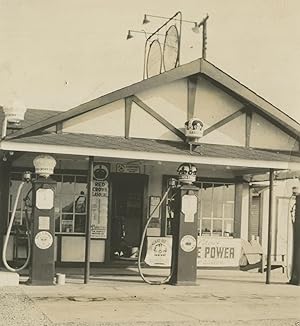
Contact seller4-star sellerFraming: Unframed An original photo measuring approximately 2 3/4 x 4 1/2 inches. Fine detail with indentions (i.e. roof signs) and creases on lower left and middle right as pictured. Thanks for looking.On Jun-12-11 at 15:55:25 PDT, seller added the following information: Sellers: Delight buyers. Get your own map of past buyers.… Region of Origin: US Size Type: Small (Up to 7") Color: Black & White Photo Type: Snapshot.
 More images
Published by Pre-1950 1950
- Signed
- Photo
Seller: 21 East Gallery, Villa Park, IL, U.S.A.21 East Gallery
Contact seller4-star sellerFraming: Unframed An original photograph measuring approximately 2 3/4 x 4 1/2 inches. Last origin was southern CA. Thanks for looking. Gold Districts of California RAND Location. The Rand or Randsburg district lies athwart the Kern-San Bernardino County line in the vicinity of the town of Randsburg, about 40 miles northeast of…Mojave and 30 miles north of Kramer. The western part of the district, in Kern County, has been chiefly a source of gold, while the eastern part, in San Bernardino County, has been largely a source of silver. The Atolia tungsten district is just to the southeast (fig. 30). History. Although this region was prospected as early as the 1860s, it was not until placer gold was discovered in 1893 in Goler Wash, in the El Paso Mountains 15 miles to the west, that there was any mineral production. Numerous short-lived dry-washing camps soon sprang up in the entire region. The Yellow Aster mine, originally known as the Olympus was located in 1895. Other discoveries were made, and the rich ore recovered in these early operations led to a gold rush. The district was named for the Rand district in South Africa. The ore was first shipped out for treatment, but a 100-stamp mill was erected at the Yellow Aster mine in 1901 and other mills were built soon after-ward. During the early days some difficulty was encountered in concentrating the gold because of the presence of "heavy spar" or scheelite. Large-scale gold mining continued until 1918. The famous and highly productive Kelly or California Rand silver mine was discovered in 1919 and was operated on a major scale through the 1930s. Gold production from the district was substantial in the 1930s and early 1940s, and there has been intermittent prospecting and development work since. The total gold output of the district is estimated at more than $20 million. During the two world wars and the Korean War, Atolia was the source of large amounts of tungsten ore. From 1897 until 1933 Randsburg was served by a branch of the Santa Fe Railroad, which extended north from the main line at Kramer. Geology. The principal rocks underlying the district are the Precambrian Rand Schist and the Atolia Quartz Monzonite of Mesozoic age. The Rand Schist is chiefly biotite schist with smaller amounts of amphibolite and quartzite. To the east are poorly consolidated clays, sandstones, and conglomerates of continental origin, which are overlain by andesite at Red Mountain. Rhyolite and latite intrusives are in the east-central part of the district. Ore Deposits. Most of the lode-gold deposits are in veins that occur along faults, except at the Yellow Aster mine, where the gold is in a series of closely spaced veinlets in small fractures. The majority of the gold deposits are in the schist, which is more widespread than the quartz monzonite, and nearly all are in an area where the rocks have been colored a pale red by iron oxides (fig. 30). The veins are unoriented but usually have a well-defined hanging wall. The ore bodies most commonly occur in the vein footwalls, usually at or near vein intersections or in sheared and brecciated zones. The ore consists of iron oxide-stained brecciated and silicified rock containing native gold in fine grains and varying amounts of sulfides. The sulfides increase at depth, but the gold values decrease. Most mining has stopped where unoxidized sulfides were found in the veins, and the maximum depth of development is 600 feet. Milling ore contains from 1/7 to % ounce of gold per ton. The high-grade ore nearly always occurs in pockets near the surface. Most of the placer gold has been recovered from dry placers at Stringer or in the Rand Mountains north of Randsburg. Mines. Arizona, Baltic $50,000, Barnett, Beehive, Big Dike $200,000, Big Gold $500,000, Black Hawk $700,000, Buckboard $500,000, Bully Boy $120,000, Butte $2 million, California, Consolidated $50,000, Culbert, Gold Crown, Granton, Gunderson, Hawkeye, Hercules, King Solomon $500,000, Little But.
 More images
Published by Pre-1950 1950
- Signed
- Photo
Seller: 21 East Gallery, Villa Park, IL, U.S.A.21 East Gallery
Contact seller4-star sellerFraming: Unframed This is an original photograph approximately 4 5/8 x 3 visible inches. Thanks for looking. On Jun-12-11 at 15:40:32 PDT, seller added the following information: Sellers: Delight buyers. Get your own map of past buyers. On Jul-23-13 at 05:13:10 PDT, seller added the following information: FREE! Sellers: Add a FR…EE map to your listings. FREE! Region of Origin: US Size Type: Small (Up to 7'') Color: Black & White Photo Type: Snapshot.
 More images
- Signed
- Photo
Seller: Max Rambod Inc, Woodland Hills, CA, U.S.A.Max Rambod Inc
Contact seller5-star sellerAfrican American U.S. Navy sailors photographed during World War II document the service of Black enlisted men in the segregated naval forces of the United States during the global conflict of 1939-1945. Eleven photographs depict African American sailors in uniform,some of them have signed their names below their images, includi…ng multiple images of recruit George Bailey Brooks stationed at Great Lakes Naval Training Station near Chicago, one of the principal training centers for Black naval recruits during the war. The photographs record both formal studio portraits and candid scenes of naval life, providing visual evidence of Black participation in the wartime Navy at a moment when most leadership and combat roles remained racially restricted despite the rapidly expanding wartime demand for manpower. Eleven silver gelatin photographs showing African American sailors in U.S. Navy uniforms during the World War II era. Photographs measure approximately 4 x 3.25 inches to 8 x 10 inches and include a mixture of studio portraits and informal service photographs. Four photographs depict sailor George Bailey Brooks at Great Lakes Naval Training Station, including three portrait images and one image of Brooks standing upright in uniform holding a training rifle. One portrait bears the date Aug 4, 1945. Five photographs remain mounted to fragments of tan album paper on the verso, suggesting removal from an earlier family or personal album. Additional images show young sailors posed at attention with training rifles and one photograph depicts a mixed gathering of white and Black sailors aboard a ship watching a band performance featuring three Black musicians playing double bass, piano, and guitar. World War II transformed the scale of African American participation in the U.S. Navy, although the service remained largely segregated in both training and assignment. Training installations such as Great Lakes Naval Training Station became major entry points for Black recruits and also hosted the first class of Black naval officers known as the "Golden Thirteen," commissioned in 1944 after training at the base. Most Black sailors during the war were initially assigned to steward or service roles, though the demands of the Pacific War led to expanded participation in construction battalions, logistics units, and specialized technical assignments such as the Seabees. The photographs of Brooks and other sailors in uniform capture this transitional moment in naval history when African Americans were entering naval service in unprecedented numbers while still confronting institutional segregation that would remain in place until President Harry S. Truman ordered desegregation of the armed forces in 1948 through Executive Order 9981. Eleven photographs ranging in size from approximately 4 x 3.25 inches to 8 x 10 inches. Light handling wear and minor age toning typical of mid twentieth century photographs. Overall condition very good. Signed.


