Order Total (1 Item Items):
Shipping Destination:

Struck Hermann, Signed (9 results)
Skip to main search results
Search filters
Product Type
- All Product Types
- Books (8)
- Magazines & Periodicals (No further results match this refinement)
- Comics (No further results match this refinement)
- Sheet Music (No further results match this refinement)
- Art, Prints & Posters (No further results match this refinement)
- Photographs (No further results match this refinement)
- Maps (No further results match this refinement)
- Manuscripts & Paper Collectibles (1)
Condition Learn more
- New (No further results match this refinement)
- As New, Fine or Near Fine (No further results match this refinement)
- Very Good or Good (6)
- Fair or Poor (No further results match this refinement)
- As Described (3)
Binding
- All Bindings
- Hardcover (3)
- Softcover (No further results match this refinement)
Collectible Attributes
Language (2)
Price
- Any Price
- Under US$ 25 (No further results match this refinement)
- US$ 25 to US$ 50
- Over US$ 50
Free Shipping
- Free Shipping to U.S.A. (No further results match this refinement)
Seller Location
Seller Rating
-

Jacovleff and Other Artists; Alexandre Jacovleff, William Blake and Other Illustrators of Dante, Thomas Rowlandson, Aubrey Beardsley, Marcus Behmer, Arthur Rackham, Hermann Struck, Anne Goldthwaite,
Published by P. A. Struck, New York, 1946
Seller: The Second Reader Bookshop, Buffalo, NY, U.S.A.
Seller rating 5 out of 5 stars

First Edition Signed
Hardcover. Condition: Very Good. Dust Jacket Condition: Good. First Edition; First Printing. Signed by author on title page. (No inscriptions or personalizations) Very Good/Good with edgewear and chipping to Dust Jacket and no marks to text. Art history; Royal Crown Octavo; 235 pages; Signed by Author.
-
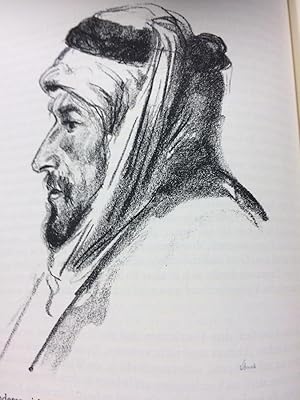
Kriegsgefangene: 100 Steinzeichnungen von Hermann Struck [SIGNED] (Prisoners of War: One hundred etchings signed by Hermann Struck)
Published by Dietrich Reimer (Ernst Vohsen), Berlin, 1916
Seller: ERIC CHAIM KLINE, BOOKSELLER (ABAA ILAB), Santa Monica, CA, U.S.A.
Seller rating 4 out of 5 stars

First Edition Signed
Hardcover. Condition: g- to vg. Limited First edition. 1/50. Folio (19 1/2 x 13 1/2"). [6], 28pp (Booklet), 100 loose leaves (Plates), as issued. Original full vellum portfolio with lettering and publisher's logo in gilt to front cover. Booklet's front cover gold-lettered, numbered, and hand-signed by the artist Hermann Struck*. The plates are housed in their stiff paper chemise, as issued, with printed title to front cover. In this spectacular monograph, artist Hermann Struck, who was serving in the Imperial German army as a translator, liaison officer and military artist, sketched the faces of one hundred prisoners of war in the German camps. Among the French, British, Belgian and Russian inmates were also included soldiers from the British Empire (mostly from India) as well as the French Empire (Algeria, Tunisia, Morocco, and Senegal). The prisoners' age range from 12 (Anton Matyszewski, a volunteer from Lomza, Russian Poland) to 56 (Mohammed ben Ahmed, Spahi from Djelfa, French Algeria). It is interesting to note that the Jewish prisoners were identified first by their religion, then by the place they came from (exemple: Chacus Krasikow, Jew from Lubin, Russian Poland; Isaak Chotoran, Jew from Kiev (Ukraine); Bomblatt David, Polish Jew from Warsaw, etc.). Bomblatt David is sketched twice: After Struck drew his face, he added a second sketch depicting the prisoner reading the Talmud. Each plate is handsigned in pencil by the artist. The booklet contains a foreword, and an essay on ethnology in the World War, by Prof. Dr. Felix von Luschan (1854-1924), an Austrian doctor, anthropologist, explorer, archaeologist and ethnographer who joined the German Society for Racial Hygiene in 1908. The society was an eugenic organization whose goal was "for society to return to a healthy and blooming, strong and beautiful life." As Alfred Ploetz, its founder, put it, the Nordic race was supposed to regain its "purity" through selective reproduction and sterilization. The society ceased to exist after WWI. One of 50 numbered copies, of which this is No. 30. Some foxing to portfolio, with strings missing. Minor age-toning and foxing to wrappers of booklet. 5" closed tear at lower front joint of chemise. Only plates 4 and 5 are foxed along edges (not affecting illustrations). Text in German, Gothic script (Booklet), captions of plates in German. Portfolio in overall fair to good, booklet in very good, chemise in fair to good-, plates in very good condition. * Hermann Struck (1876-1944) was a German Jewish artist known for his etchings. A fervent Zionist and Jewish activist, Struck visited the Land of Israel in 1903, displayed his art at the Fifth Zionist Congress, and was a founder of the Mizrachi Religious Zionist movement. At the same time, he was a German patriot and volunteered for military service in World War I serving as a translator, liaison officer and military artist. Hermann Struck was awarded the Iron Cross 1st Class and promoted to an officer for bravery, in 1917 he became the referent for Jewish affairs at the German Eastern Front High Command. Struck immigrated to Palestine in 1922, taught at Bezalel Academy and helped establish the Tel Aviv Museum of Art. He visited Berlin every summer until the Nazis rose to power. ** From the beginning of the war, the German authorities found themselves confronted with an unexpected influx of prisoners. In September 1914, 125,050 French soldiers and 94,000 Russian ones were held captive. Before 1915, conditions of detention in Germany were very harsh and marked by temporary lodging and the absence of infrastructure. The prisoners slept in hangars or tents, where they dug holes to keep warm. The humid forts requisitioned to serve as places of detention led to numerous cases of pulmonary illness. The German authorities also commandeered schools, barns and various other types of shelters. Camps were established in the countryside as well as near the towns, which had consequences when epidemics of cholera or typhus threatened to spread to the civilian population. Not all the camps were situated on German territory; a certain number were built in occupied territories, notably in northern and eastern France. They began to be developed starting in 1915 when the number of prisoners being held captive in Germany reached 652,000. According to official directives, each prisoner had to have use of 26.9 square foot (2.5 m ). The camps mixed a large number of nationalities sharing the same quarters: French, Russian, British, American, Canadian, Belgian, Italian, Romanian, Serbian, Montenegrin, Portuguese and Japanese prisoners were found there, as well as Greeks and Brazilians. Equally, soldiers of various social origins rubbed elbows: workers, peasants, bureaucrats and intellectuals were among those held. The number of prisoners rose very quickly. From February to August 1915, it went from 652,000 to 1,045,232. In August 1916, it reached 1,625,000, jumping to 2,415,000 by October 1918. For more information, see: Uta Hinz's "Gefangen im Großen Krieg: Kriegsgefangenschaft in Deutschland 1914-1921" (in German). Essen, Klartext Verlag (2006).
-
DAS NEUE KANAAN. EINE UNTERSUCHUNG ÜBER LAND UND GEIST. ZU 15 STEINZEICHNUNGEN VON HERMANN STRUCK.
Language: German
Published by Horodisch & Marx, Berlin, 1925
Seller: M.POLLAK ANTIQUARIAT Est.1899, ABA, ILAB, Tel-Aviv, Israel
Seller rating 5 out of 5 stars
Signed
Modern Half-leather. Condition: Very Good. Hermann Struck (illustrator). Limited Edition. 42pp (unnumbered pages). One on 85 numbered copies printed on Van Gelder Butten paper. ( this copy without number) where ALL THE 15 ORIGINAL LITHOGRAPHS ARE SIGNED BY STRUCK IN PENCIL. Bound in superb half marocco binding with marbled boards. A VERY GOOD, CLEAN AND FRESH COPY. This edition is unseen on the market for may years. Signed Lithographs.
-

Condition: guter Zustand. Struck, Hermann. Bildnis des Baron Berger.1906. Radierung / Strichätzung, mit leichtem Plattenton, in Schwarz, auf Van-Gelder-Zonen-Bütten. Originale Künstlergrafik, von Hermann Struck, nach Max Liebermann. 23,9 x 17,6 cm (Darstellung / Platte), 30 x 22 cm (Blatt).Aus: Zeitschrift für bildende Kunst (Leipzig: E.A. Seemann 1906), Bd. 17. Originalgrafische Wiedergabe des 1905 von Max Liebermann gemalten Porträts des Wiener Theaterdirektors Baron Alfred von Berger (1853-1912). Papier kaum merklich knickspurig. Insgesamt gut erhalten.Hermann Struck (1876 Berlin - 1944 Haifa). Deutsch-jüdischer Maler, Radierer und Lithograf. Studium an der Berliner Kunstakademie. Autor des Buches Die Kunst des Radierens (1908). In dieser Technik unterrichtete er u.a. Marc Chagall, Lovis Corinth, Joseph Budko und Lesser Ury. 1923 Emigration nach Palästina. Mitglied der Bezalel Akademie für Kunst und Design in Jerusalem Mitbegründer des Tel Aviv Museum of Art.Max Liebermann (1847 Berlin - 1935 Berlin). Deutscher Maler und Grafiker, führender Vertreter des deutschen Impressionismus. 1866-68 private Malstunden parallel zum Studium an der Philosophischen Fakultät Berlin. 1869-72 Kunstschule Weimar. 1873 Umzug nach Paris und Berührung mit der Schule von Barbizon. 1876 Umzug nach Holland, lernt die Plein-air-Malerei kennen. 1878 Umzug nach München, 1884 nach Berlin. 1894 Teilnahme am Pariser Salon, veröffentlicht 1886 in der Zeitschrift 'PAN' eine Studie über Edgar Degas. 1898 Mitbegründer der Berliner Secession. 1899 wird er deren Vorsitzender. Nach seinem Rücktritt 1911 schließt er sich 1914 der Freien Secession an. 1920 Berufung zum Präsidenten der Preußischen Akademie der Künste. 1933 erhält er als Jude Arbeits- und Ausstellungsverbot und tritt aus der Akademie aus.Alfred Freiherr von Berger (1853 Wien - 1912 Wien). Österreichischer Dramaturg, Theaterdirektor und Schriftsteller. Studium der Rechtswissenschaft, Philosophie und Literatur. 1878 Verleihung des Freiherrenstands durch Kaiser Franz Joseph I. Ab 1887 Privatdozent für Philosophie und Ästhetik, ab 1896 Professor für Philosophie und Ästhetik an der Universität Wien. 1899-1909 erster Direktor des Deutschen Schauspielhauses in Hamburg. Ab 1910 Direktor des Burgtheaters in Wien, wo er moderne zeitgenössische Werke von Henrik Ibsen, Oscar Wilde und Arthur Schnitzler auf den Spielplan setzte. Verfasste neben Novellen und Gedichten v.a. Schriften zu Theater und Literatur. 1889 Heirat der Wiener Schauspielerin Stella Hohenfels, geborene Loderbang (1857-1920). In der Platte rechts oben signiert: Hermann Struck nach / M. Liebermann 190[.]. Unterhalb typografisch bezeichnet: BILDNIS DES BARON BERGER / RADIERUNG VON HERMANN STRUCK NACH DEM GEMÄLDE VON MAX LIEBERMANN. 23,9 x 17,6 cm (Darstellung / Platte), 30 x 22 cm (Blatt).
-

Lithography by Hermann Struck, Portrait of August Bebel, 1909, Jewish artist
Publication Date: 1909
Signed
No binding. Condition: Good. Hermann Struck. Portrait of August Bebel, 1909. Paper, lithograph. Size: 43.2x58.3 cm plus margins. Hermann Struck (1876 1944) was a German Jewish artist known for his etchings. Hermann Struck (Chaim Aaron ben David) was born in Berlin. He studied at the Berlin Academy of Fine Arts. In 1904, he joined the modern art movement known as the Berlin Secession. In 1900, Struck met Jozef Israels, a Dutch artist, who became his mentor. Both were recognized as leading artists of their time. In 1908, Struck published Die Kunst des Radierens (The Art of Etching), which became a seminal work on the subject. It was a textbook that offered both theory and practical instruction. Struck's students included Marc Chagall, Lovis Corinth, Jacob Steinhardt, Lesser Ury and Max Liebermann. In 1899, upon completing his studies at the Berlin Academy, he was banned from teaching there because he was Jewish. He signed his work with his Hebrew name, Chaim Aaron ben David, and a Star of David. Struck did commission portraits of Ibsen, Nietzsche, Freud, Albert Einstein, Herzl, Oscar Wilde and other leading figures of the time. Struck's home in Haifa has been open as the Hermann Struck Museum since 2013. Struck's work is held in the collections of several other institutions worldwide. (Brooklyn Museum, Jewish Museum (Manhattan), Haifa Museum of Art, Leo Baeck Institute, New York, University of Michigan Museum of Art, the British Museum, the Museum of New Zealand Te Papa Tongarewa, Fine Arts Museums of San Francisco), SKUKAZ000001 kaz_gr.
-

Lithography by Hermann Struck, Portrait of August Bebel, 1909, Jewish artist
Publication Date: 1909
Signed
No binding. Condition: Good. Hermann Struck. Portrait of August Bebel, 1909. Paper, lithograph. Size: 43.2x58.3 cm plus margins. Hermann Struck (1876 1944) was a German Jewish artist known for his etchings. Hermann Struck (Chaim Aaron ben David) was born in Berlin. He studied at the Berlin Academy of Fine Arts. In 1904, he joined the modern art movement known as the Berlin Secession. In 1900, Struck met Jozef Israels, a Dutch artist, who became his mentor. Both were recognized as leading artists of their time. In 1908, Struck published Die Kunst des Radierens (The Art of Etching), which became a seminal work on the subject. It was a textbook that offered both theory and practical instruction. Struck's students included Marc Chagall, Lovis Corinth, Jacob Steinhardt, Lesser Ury and Max Liebermann. In 1899, upon completing his studies at the Berlin Academy, he was banned from teaching there because he was Jewish. He signed his work with his Hebrew name, Chaim Aaron ben David, and a Star of David. Struck did commission portraits of Ibsen, Nietzsche, Freud, Albert Einstein, Herzl, Oscar Wilde and other leading figures of the time. Struck's home in Haifa has been open as the Hermann Struck Museum since 2013. Struck's work is held in the collections of several other institutions worldwide. (Brooklyn Museum, Jewish Museum (Manhattan), Haifa Museum of Art, Leo Baeck Institute, New York, University of Michigan Museum of Art, the British Museum, the Museum of New Zealand Te Papa Tongarewa, Fine Arts Museums of San Francisco), SKUKAZ000002 kaz_gr.
-

HERMANN STRUCK (Chaim Aharon ben David, 1876-1944 Haifa) deutsch-jüdischer Maler, Radierer und Lithograf
Manuscript / Paper Collectible Signed
ORIGINAL-RADIERUNG (Kaltnadel, 6 x 9 cm, unter Passepartout quer 4°) Signatur: Unterhalb der Darstellung mit Bleistift handsigniert "Hermann Struck" sowie mit Auflagennummerierung 75/100. MOTIV : Winterlandschaft: Zwei einsame Almhütten in schneebedeckter Landschaft. Rückseitig am Passepartout alte Expertise einer Münchener Galerie / Kunstantiquariat.
-

No binding. Condition: Good. Hermann Struck. View of Kovno, 1916. Paper, lithography. Size: 39.5x27.5 cm. Hermann Struck (1876 1944) was a German Jewish artist known for his etchings. Hermann Struck (Chaim Aaron ben David) was born in Berlin. He studied at the Berlin Academy of Fine Arts. In 1904, he joined the modern art movement known as the Berlin Secession. In 1900, Struck met Jozef Israels, a Dutch artist, who became his mentor. Both were recognized as leading artists of their time. In 1908, Struck published Die Kunst des Radierens (The Art of Etching), which became a seminal work on the subject. It was a textbook that offered both theory and practical instruction. Struck's students included Marc Chagall, Lovis Corinth, Jacob Steinhardt, Lesser Ury and Max Liebermann. In 1899, upon completing his studies at the Berlin Academy, he was banned from teaching there because he was Jewish. He signed his work with his Hebrew name, Chaim Aaron ben David, and a Star of David. Struck did commission portraits of Ibsen, Nietzsche, Freud, Albert Einstein, Herzl, Oscar Wilde and other leading figures of the time. Struck's home in Haifa has been open as the Hermann Struck Museum since 2013. Struck's work is held in the collections of several other institutions worldwide. (Brooklyn Museum, Jewish Museum (Manhattan), Haifa Museum of Art, Leo Baeck Institute, New York, University of Michigan Museum of Art, the British Museum, the Museum of New Zealand Te Papa Tongarewa, Fine Arts Museums of San Francisco), SKUKAZ000012 kaz_gr.
-

Struck, Hermann, Porträt von Herbert Eulenberg , Struck, Hermann. - Porträt von Herbert Eulenberg.
Seller: Graphikantiquariat Koenitz, Leipzig, Germany
Seller rating 4 out of 5 stars
Signed
Historische Künstlergrafik. Radierung, 1923. Von Hermann Struck. Exemplar 76 von 100. 20,0 x 14,3 cm (Darstellung ) / 31,8 x 24,0 cm (Blatt). - Unterhalb der Darstellung von Hand signiert "Hermann Struck". Ferner nummeriert "76/100". In der Platte monogrammiert mit Davidstern und "HS". - Treffliche Porträtstudie des Schriftstellers, ausgeführt in der typischen realistischen Formensprache des bekannten jüdischen Künstlers. Schöne Radierung in der Technik der kalten Nadel. Erschienen in der Mappe "Köpfe" beim Verlag Dehen in Leipzig. - Insgesamt guter Zustand. - - (1876 Berlin - 1944 Haifa). Deutsch-jüdischer Maler, Radierer und Lithograf. Studium an der Berliner Kunstakademie. Autor des Buches "Die Kunst des Radierens" (1908). In dieser Technik unterrichtete er u.a. Marc Chagall, Lovis Corinth, Joseph Budko und Lesser Ury. 1923 Emigration nach Palästina. Mitglied der Bezalel Akademie für Kunst und Design in Jerusalem Mitbegründer des Tel Aviv Museum of Art.


![Seller image for Kriegsgefangene: 100 Steinzeichnungen von Hermann Struck [SIGNED] (Prisoners of War: One hundred etchings signed by Hermann Struck) for sale by ERIC CHAIM KLINE, BOOKSELLER (ABAA ILAB)](https://pictures.abebooks.com/inventory/md/md22923094690.jpg)