Order Total (1 Item Items):
Shipping Destination:

Ticket Exploded by Burroughs William, Signed (13 results)
Skip to main search results
Search filters
Product Type
- All Product Types
- Books (13)
- Magazines & Periodicals (No further results match this refinement)
- Comics (No further results match this refinement)
- Sheet Music (No further results match this refinement)
- Art, Prints & Posters (No further results match this refinement)
- Photographs (No further results match this refinement)
- Maps (No further results match this refinement)
- Manuscripts & Paper Collectibles (No further results match this refinement)
Condition Learn more
- New (No further results match this refinement)
- As New, Fine or Near Fine (7)
- Very Good or Good (1)
- Fair or Poor (No further results match this refinement)
- As Described (5)
Binding
Collectible Attributes
Language (2)
Price
- Any Price
- Under US$ 25 (No further results match this refinement)
- US$ 25 to US$ 50 (No further results match this refinement)
- Over US$ 50
Free Shipping
Seller Location
Seller Rating
-
The Ticket That Exploded
Language: English
Published by Grove Press, 1967
Seller: Paul Johnson Fine Books, IOBA, Temecula, CA, U.S.A.
Association Member: IOBA
Seller rating 5 out of 5 stars

Signed
US$ 400.00 30% offUS$ 280.00
US$ 7.00 shipping
Ships within U.S.A.Quantity: 1 available
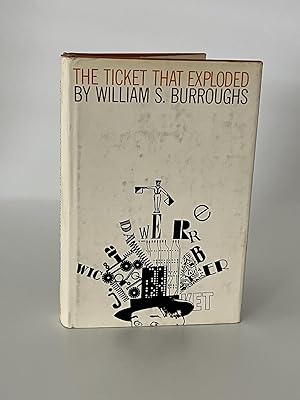
Add to basketHardcover. Condition: Fine. Dust Jacket Condition: Very Good. 1st Edition. Grove Press: New York, 1964. First edition after the Olympia Press edition of 1962. Fine book in a very good plus book with some rubbing to the front panel and three small holes to the jacket at the spine folds. Signed by WSB on the title page. Ref: Maynard and Miles. Signed by Author(s).
-
The Ticket That Exploded
Language: English
Published by Calder and Boyars, 1968
Seller: Paul Johnson Fine Books, IOBA, Temecula, CA, U.S.A.
Association Member: IOBA
Seller rating 5 out of 5 stars
Signed
US$ 500.00 30% offUS$ 350.00
US$ 7.00 shipping
Ships within U.S.A.Quantity: 1 available
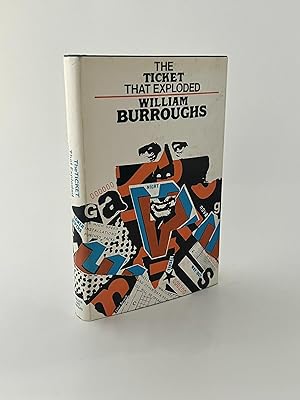
Add to basketHardcover. Condition: Fine. Dust Jacket Condition: Near Fine. 1st Edition. First UK edition so first edition thus. Fine book in blue cloth in a near fine jacket with light rubbing to the rear panel. Price-clipped; price sticker shadow on the bottom of the front flap. SIGNED by Burroughs on the title page. Signed by Author(s).
-
Soft cover. Condition: Near Fine. Dust Jacket Condition: Near Fine. 1st Edition. ** INSCRIBED, ONLY COPY THAT I COULD FIND, 1ST EDITION, 1ST PRINTING ** Octavo, original green wrappers. Near fine copy. Inscibed by William Burroughs. The image features a page from William S. Burroughs' 1964 novel, Nova Express. The text represents a pivotal scene titled "The Last Words of Hassan i Sabbah," which utilizes Burroughs' signature "cut-up" technique to dismantle linguistic control. Summary of the Text: The passage serves as a "manifesto for global resistance" against "Nova Criminals" and systems of control. It portrays a transition from the physical world to a state of silence, stripping away "flesh identity". Finality and Transition: The text begins with "Last round over," signaling an end to the "ship" of the physical body and its associated identities. The Power of Silence: It emphasizes that silence is the only way to say "good-bye" to the word-and-image machines that Burroughs believed program human thought. Asemic Illustration: Below the typewritten text is a handwritten section by artist Brion Gysin. It mirrors the typed words "To say good silence by." but gradually devolves into asemic writing?symbols that look like text but carry no specific linguistic meaning. This visual "cut-up" reinforces the theme of "rubbing out the word" to achieve liberation. A superior example. â It is in books like The Ticket that Exploded that Burroughs seems to revel in a new medium for its own sakeâ "a medium totally fantastic, spaceless, timeless, in which the normal sentence is fractured, the cosmic tries to push its way through bawdry, and the author shakes the reader as a dog shakes a rat" (Anthony Burgess). Inscribed by Author(s).
-

Hardback. Condition: Fine. Dust Jacket Condition: Fine. First Edition. first printing. Signed Label By Burroughs. Book.
-
The Ticket that Exploded
Published by Calder and Boyars, London, 1968
Seller: Riverrun Books & Manuscripts, ABAA, Ardsley, NY, U.S.A.
Seller rating 5 out of 5 stars
First Edition Signed
8vo. Original pictorial wrappers. First UK edition, simultaneous paperback issue, signed by Burroughs on the title-page. This was Burrough's fourth novel, and the last of the trilogy originally published by Olympia in Paris. The British edition, like Grove Press's 1967 US edition, was an extensively revised text. A fine, well-preserved copy with some minor wear at the extremities and a few small soilmarks.
-
Hardcover. Condition: Very Good. Dust Jacket Condition: Very Good. 1st Edition. Inscribed and signed by Burroughs. To Rob . A very good copy in a very good dust jacket. A soil spot inside dust jacket at lower spine. Associated soil spot on spine of book. See pictures. Inscribed by Author(s).
-
THE TICKET THAT EXPLODED
Published by Grove Evergreen, NY, 1967
Seller: REVERE BOOKS, abaa/ilab & ioba, Fernandina Beach, FL, U.S.A.
Association Member: ABAA ILAB IOBA
Seller rating 5 out of 5 stars
First Edition Signed
Hardcovers. Condition: Near Fine. Dust Jacket Condition: Near Fine. First Edition. First US edition, first prnt. Originally published in softcovers in Paris in 1962 by the Olympia Press. Signed & dated "July 30, 1995" by Burroughs on the title page. Minimal shelfwear. Orange boards and white dustjacket clean. Tiny wrinkles at dustjacket spine top edge. Near Fine condition in a Near Fine dustjacket with an archival cover. Second book in Burroughs' Nova trilogy. Signed by Author(s).
-
The Ticket That Exploded (First Edition, inscribed by William S. Burroughs to journalist Gary Goldhill)
Published by Olympia Press, Paris, 1962
Seller: Royal Books, Inc., ABAA, Baltimore, MD, U.S.A.
Seller rating 5 out of 5 stars
First Edition Signed
Dust Jacket Condition: dj. First Edition. First Edition, preceding all others. INSCRIBED by author William S. Burroughs to noted Merry Prankster Gary Goldhill: "For Gary Goldhill / With best wishes / William Burroughs." One of 5000 copies printed, with a Byron Gysin printed drawing on the last page of the text and a price of 18 N.F. on the rear panel of the book, as called for in Maynard and Miles. In 1963, Gary Goldhill, then working as a journalist, sent Burroughs some questions, which is likely when this book was inscribed. Burroughs recorded his responses to Goldhill's questions on a tape recorder, producing some 30 minutes of spoken word material, which subsequently made their way into popular culture through underground magazines, lectures, and more. Goldhill is one of the figures Tom Wolfe references as a member of the League of Spiritual Discovery in his book, "The Electric Kool-Aid Acid Test." Goldhill worked for the BBC, Wolfe notes, until he took some magic mushrooms in San Miguel de Allende, and in so doing discovered, as Wolfe put it, "the Management and gave up all, all the TV BBC game, and dedicated himself to The Life." Goldhill is also known for his work as an artist while living in Haight-Ashbury in the 1960s. Just a hint of a lean, overall About Near Fine in the trademark green Olympia Press softcover wrappers, in an about Very Good example of the card dust jacket, as issued. Jacket is complete with minor loss at the crown and corners, and with scattered foxing and rubbing (see image). Maynard & Miles A6a. Schottlaender A6a. Schoaf 6. Kearney 5.91.1. Signed.
-

First edition, first printing. Octavo, original green wrappers. Signed by William Burroughs on the title page. In fine condition. A superior example. âIt is in books like The Ticket that Exploded that Burroughs seems to revel in a new medium for its own sakeâ"a medium totally fantastic, spaceless, timeless, in which the normal sentence is fractured, the cosmic tries to push its way through bawdry, and the author shakes the reader as a dog shakes a rat" (Anthony Burgess).
-
The Ticket That Exploded
Published by Grove Press, Inc, New York, 1967
Seller: Between the Covers-Rare Books, Inc. ABAA, Gloucester City, NJ, U.S.A.
Association Member: ABAA ESA ILAB IOBA
Seller rating 5 out of 5 stars
Signed
Hardcover. Condition: Fine. Dust Jacket Condition: Fine. Second Printing. Fine in a very slightly age-toned, else fine dustwrapper. Inscribed by Burroughs to Ruth Ford: "For Ruth Ford, William S. Burroughs." Ford, the Mississippi-born sister of surrealist author Charles Henri Ford, was a beautiful model and actress, first in Orson Welles's Mercury Theatre, and later in films and theater. Notably, she starred on Broadway in Jean Paul Sartre's *No Exit* in 1946, under the direction of John Huston (the last of five Broadway plays he directed). Her apartment in the Dakota became a salon for authors such as Tennessee Williams, Edward Albee, Terrence McNally, and Truman Capote. A chance encounter between Stephen Sondheim and Arthur Laurents in her Manhattan living room led to their collaboration, with her Dakota-neighbor Leonard Bernstein, on *West Side Story*. Similarly, she brought together Kay Thompson and Hilary Knight to create the celebrated stories of *Eloise*, the little girl who lived at the Plaza. Ford is well known also for her long friendship with William Faulkner, which began with her dating his brother Dean in the early 1930s. Faulkner was openly smitten with Ford for many years. He wrote his experimental 1951 title *Requiem for a Nun*, a sequel to his early and controversial novel *Sanctuary*, with her in mind. He further declared, to the consternation of his agent and publisher, that it was her dramatic property (*Requiem for a Nun* was a mixture of stage play and novel). Stage production of the title stalled for years, partly because Faulkner's experimental drama did not lend itself to live theatre, and partly because the producers were unsure of Ford's suitability. Faulkner was adamant that it was her dramatic property, and in 1959 she adapted the play herself and starred in its London production opposite her second husband, Zachary Scott. Her stage version received enthusiastic reviews in both London and New York, but did not fare so well with audiences and closed after a short run on Broadway. Ford continued to act on both stage and screen well into the 1980s. She passed away in 2009 at the age of 98. A nice association.
-
The Ticket That Exploded.
Published by Paris: The Olympia Press, 1962, 1962
Seller: Peter Harrington. ABA/ ILAB., London, United Kingdom
Association Member: ABA ILAB PBFA
Seller rating 5 out of 5 stars
First Edition Signed
US$ 3,435.24
US$ 29.35 shipping
Ships from United Kingdom to U.S.A.Quantity: 1 available
Add to basketFirst edition, first printing, inscribed by the author on the title page, "For David Snell, William Burroughs". Snell (1921-1987) was one of two reporters for Life magazine, the other Loomis Dean (1917-2005), who were present when Burroughs and Brion Gysin inaugurated the cut-up technique on 1 October 1959, and whose subsequent interview outed Burroughs as a heroin user to Life readers, among them Burroughs's own mother. Snell's opening line upon meeting his interviewee was "Have an Old Gold, Mr Burroughs", a direct reference to Naked Lunch, in which two cops, O'Brien and Hauser, let themselves into Bill's flat; Snell's reference draws an excellent and knowing parallel between the two Life reporters and the cops, positioning himself as O'Brien: "they weren't bad as laws go. At least O'Brien wasn't. O'Brien was the con man, and Hauser the tough guy. A vaudeville team. Hauser had a way of hitting you before he said anything just to break the ice. Then O'Brien gives you an Old Gold - just like a cop to smoke Old Golds somehow. and starts putting down a cop con that was really bottled in bond. Not a bad guy" (Burroughs, p. 190). Burroughs valued Snell's reference, writing to Allen Ginsberg that Snell and Dean were "2 far out cats with real appreciation for my work that can't be faked" (quoted in Roach, p. 164). Burroughs had no love for Life magazine, but he liked Snell and Dean, and exonerated them for their parts in the final piece, a vitriolic repudiation of the Beats penned by a staff writer. The Life article, a long list of character assassinations that targets Kerouac, Ginsberg, Corso, and various others, characterizes "The bulk of Beat writers [as] undisciplined and slovenly amateurs who have deluded themselves into believing their lugubrious absurdities are art simply because they have rejected the form, style, and attitudes of previous generations and have seized upon obscenity as an expression of 'total personality'". Burroughs is painted with broad brush strokes: "for sheer horror no member of the Beat Generation has achieved effects to compare with William S. Burroughs. a pale, cadaverous and bespectacled being who has devoted most of his adult life to a lonely pursuit of drugs and debauchery. He has, first in Mexico and then in Tangier, dosed himself with alcohol, heroin, marijuana, kif, majoun and a hashish candy". Burroughs's mother was understandably horrified by the piece, while his response was more dismissive: "In order to earn my reputation I may have to start drinking my tea from a skull since this is the only vice remaining to me. I hope I am not ludicrously miscast as the wickedest man alive, a title vacated by the late Aleister Crowley" (quoted Roach, p. 24). This title, number 91 in The Traveller's Companion series, contains two pieces written in collaboration with Michael Portman; "In a Strange Bed" and "The Black Fruit". Together with The Soft Machine (1961) and Nova Express (1964), The Ticket That Exploded forms part of the Nova trilogy. It describes Burroughs's idea of language as a virus and lays the groundwork for many of the ideas detailed in The Electronic Revolution (1970). Kearney 166; Maynard and Miles A6. William S. Burroughs, Naked Lunch, 1992; Paul O'Neil, "The Only Rebellion Around", Life Magazine, 30 November 1959; Rebecca Roach, Literature and the Rise of the Interview, 2018. Octavo. Green border on title page, monochrome design on p. 183 by Brion Gysin. Original green and white wrappers, printed in black. With Ian Sommerville dust jacket. Trivial creases to front wrapper and spine, light offsetting to rear pastedown. A fine copy in jacket, a few marks to panels, folds lightly rubbed, crease to head of front panel, a few nicks to head of spine, two short closed tears to head of front panel and one to front flap, a very sharp example.
-
The Ticket that Exploded
Published by Grove Press, New York, 1967
Seller: James Cummins Bookseller, ABAA, New York, NY, U.S.A.
Seller rating 5 out of 5 stars
Signed
1 vols. 8vo. Condition: Near Fine. Dust Jacket Condition: dj. First American edition, revised and expanded from the Olympia Press edition. 1 vols. 8vo. Inscribed on the title page: "for Bob Wilson | William S. Burroughs". Maynard & Miles A6b Original orange cloth. Fine in near fine, unclipped dust jacket with very slight soiling visible on white upper panel. Review copy, with slip laid in First American edition, revised and expanded from the Olympia Press edition. Signed.
-
The Ticket That Exploded
Published by Calder and Boyars, London, 1968
Seller: James Cummins Bookseller, ABAA, New York, NY, U.S.A.
Seller rating 5 out of 5 stars
Signed
1 vols. 8vo. Dust Jacket Condition: dj. First British edition. First British edition. 1 vols. 8vo. Signed by Burroughs on the title-page. Maynard & Miles A6d Blue boards. Fine copy in a dust jacket with slight soiling and wear, some waterstaining to lower edge interally. Signed.