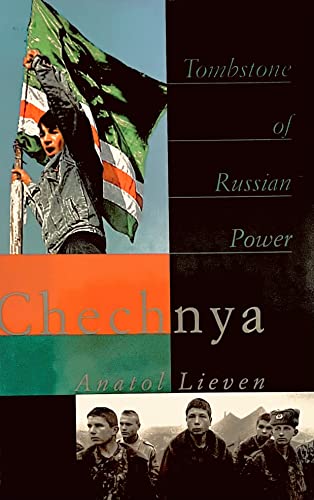
Synopsis
The humiliation of Russia by separatist rebels in the Chechen War marked a key moment in Russian - and perhaps world - history. In this new analysis Anatol Lieven offers a riveting account of the war as a means to explore the painful fate of the post-Soviet state.
Reviews
[F]or a reader with a little resilience, Lieven has compiled a thorough and insightful account of Chechnya's post-Soviet resurgence and Russia's post-Soviet decline.
Journalist Lieven (The Baltic Revolution) offers something of a three-course menu in his latest book. The first is a commanding eyewitness account of the recent Chechen war and the personalities and power maneuvers surrounding it, followed by his analysis of the breakdown of the Russian military and, indeed, of the entire Russian political structure after the Soviet Union's collapse. Third is a condensed history of the Chechen (and North Caucasus) region?its people, culture and attitudes, concluding with the author's prognoses. As his subtitle might suggest, Lieven's emphasis is on issues of Russian power?Chechnya's strategic and symbolic significance, the breakdown of legitimacy, mismanagement and pervasive corruption within the Russian state, from Yeltsin down, which destroyed public and military morale. Russian troops who survived by theft while fighting a guerrilla war they had no training for ended up asking why they were fighting outside Russia, risking death without pay, only to inflate remote political egos and fortunes. Lieven shows enormous respect for the Chechens, whose memory of Stalin's mass deportations between 1944 and 1958 galvanized their resolve to be free. Although helpful to understanding Russia and Chechnya today and rich in firsthand information, the work's three main themes remain unsatisfactorily integrated, while Lieven's indictment of post-Soviet Russia begs for a larger work, with Chechnya as one telling chapter.
Copyright 1998 Reed Business Information, Inc.
Russia's humiliation in the Chechen war forms the basis of a nuanced argument about the end of Russian military and imperial power. Lieven, a reporter on Eastern Europe for the Financial Times, offers a compelling view of Russia's defeat in Chechnya (based on his eyewitness account of the fighting), as well as a revisionist interpretation of Russia's role as a global power. The Chechen war, maintains Lieven, is a ``key moment in Russian and perhaps world history'' because it has highlighted the collapse of Russia's military might and its imperial power. Throughout his study, Lieven interweaves specifics of the situation in Chechnya (background on Grozny, Dudayev, and the course of the war itself) with a broader look at Russian society (privatization, the new capitalist elites, the Russian army, the nature of Russian nationalism) and the historical roots of the Russian-Chechen conflict. A final section discusses the striking nature of the Chechen victory and raises questions about the military and larger ramifications of clashes between organized armies and rebel fighters. Of all of Lieven's challenging interpretations, the most forceful is his suggestion that Russian society has fundamentally changed, making it impossible to follow traditional Western approaches that assume lasting continuities in Russian and Soviet history. Another of Lieven's theses that deserves consideration is that today's Russia should not be compared with earlier Russian or Soviet periods, but with models of ``liberal'' states in Latin America and southern Europe a century ago (both in terms of national and economic development). While Lieven falls into political science jargon in these types of discussion, the comparative nature of his analysis enlivens them with thoughtful contrasts. A serious contribution to understanding both the implications of the Chechen war and the broader debate among scholars on appropriate interpretations of Russia's role in the postCold War period ahead of us. (12 illustrations) -- Copyright ©1998, Kirkus Associates, LP. All rights reserved.
"About this title" may belong to another edition of this title.