
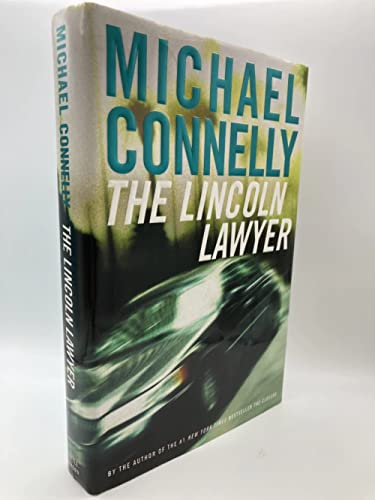
Synopsis
Mickey Haller has spent all his professional life afraid that he wouldn't recognize innocence if it stood right in front of him. But what he should have been on the watch for was evil.
Haller is a Lincoln Lawyer, a criminal defense attorney who operates out of the backseat of his Lincoln Town Car, traveling between the far-flung courthouses of Los Angeles to defend clients of every kind. Bikers, con artists, drunk drivers, drug dealers - they're all on Mickey Haller's client list. For him, the law is rarely about guilt or innocence - it's about negotiation and manipulation. Sometimes it's even about justice.
A Beverly Hills playboy arrested for attacking a woman he picked up in a bar chooses Haller to defend him, and Mickey has his first high-paying client in years. It is a defense attorney's dream, what they call a franchise case. And as the evidence stacks up, Haller comes to believe this may be the easiest case of his career.
Then someone close to him is murdered and Haller discovers that his search for innocence has brought him face-to-face with evil as pure as a flame. To escape without being burned, he must deploy every tactic, feint, and instinct in his arsenal - this time to save his own life.
"synopsis" may belong to another edition of this title.
Reviews
Michael Connelly is as scary as any of the plots he devises, which is saying something. In mid-May of this year, he published The Closer, the latest novel in his continuing series about LAPD detective Harry Bosch, 400 pages of intelligent, scrupulously researched, witty and smoothly written drama from which it was almost impossible to tear oneself away. Now here it is the second Sunday in October, and, incredibly, Connelly is back, with another 400 pages of exactly the same as above, except that this time around he's writing -- for the first time -- about lawyers, which, as it turns out, he does almost as well as John Grisham does.
Almost but not quite. Grisham has been in the law his entire working life, and he knows it with an intimacy that, among contemporary American novelists, only Scott Turow can match. Connelly is a reformed journalist who covered crime in two places that have plenty of it, Florida and Los Angeles, so he knows the law more as an observer than as a participant. Mickey Haller, the protagonist of The Lincoln Lawyer, is as cynical about the law as any of Grisham's lawyers, but one doesn't sense that this cynicism is drawn out of the deep well of experience that enriches Grisham's work. Still, if the best of Grisham's legal novels grade in at a solid A, The Lincoln Lawyer gets an equally solid B+, which isn't exactly bad for the first time out.
Plainly and simply, Connelly always knows what he's doing. His prose is clean and from time to time betrays a hint of passion. His characters are invariably believable and, where appropriate, sympathetic, sometimes against type. He knows Los Angeles inside and out and evokes it with such verisimilitude that you can't help thinking of Raymond Chandler. His plots are intricate and sometimes tricky, but I've yet to find a significant hole in any of them. He obviously enjoys what he's doing (he'd have to, to publish two novels in a single year), and he conveys that to his readers, a rare gift in any writer.
"Lincoln lawyer"? Another phrase for it would be "ambulance chaser." Mickey Haller has an office in the back seat of his Lincoln Town Car, a half-page ad in the Los Angeles Yellow Pages, and his phone number blaring forth "on 36 bus benches scattered through high-crime areas in the south east county." His "rate schedule . . . starts with a $5,000 flat fee to handle a DUI and ranges to the hourly fees I charge for felony trials." His phone is answered by his second ex-wife, Lorna Taylor, who is his case manager. His first ex-wife and mother of his only child, a daughter, is Margaret McPherson, known around the Van Nuys courthouse as Maggie McFierce, "one of the toughest and, yes, fiercest deputy district attorneys."
Of course, Maggie can't prosecute a case if she has a personal relationship with the defense attorney, which suits Mickey just fine when a bail bondsman steers him to what may just be the first "franchise client" he's had in almost two years:
"Every attorney who works the machine has two fee schedules. There is schedule A, which lists the fees the attorney would like to get for certain services rendered. And there is schedule B, the fees he is willing to take because that is all the client can afford. A franchise client is a defendant who wants to go to trial and has the money to pay his lawyer's schedule A rates. From first appearance to arraignment to preliminary hearing and on to trial and then appeal, the franchise client demands hundreds if not thousands of billable hours. He can keep gas in the tank for two to three years. From where I hunt, they are the rarest and most highly sought beast in the jungle."
Louis Roulet, 32 years old, the son of a wealthy self-made real-estate operator, handsome and self-confident, looks for all the world like a franchise client. He's been arrested in the apartment of Regina Campo, 26, an actress wannabe who's slipped down the slope to prostitution. He meets her in a bar, they size each other up, she names a price of $400 and tells him to be at her apartment at 10 p.m. Soon after he gets there, though, strange and violent things happen. When the police arrive, Reggie has blood all over herself, and the left side of her face is badly battered. Louis is on the floor, held there by two men who live nearby, with blood all over his left hand; soon a bloody knife is found with his initials on it. The cops run him in, and he's soon before a judge on charges of attempted rape and attempted murder. His mother and her society lawyer make it plain that money isn't a problem, so when Maggie has to quit the case Mickey is hugely relieved: The franchise looks as if it's in for a huge payday.
Cynical? You bet. Mickey is the son of a famous defense lawyer whom he hardly knew -- he was the unexpected offspring of a second marriage, and his father died when Mickey was 5 -- but from whom he inherited a powerful case of the legal hots. Any ideals or illusions he cherished while young have vanished: "The law school notions about the virtue of the adversarial system, of the system's checks and balances, of the search for truth, had long since eroded like the faces of statues from other civilizations. The law was not about truth. It was about negotiation, amelioration, manipulation. . . . Much of society thought of me as the devil but they were wrong. I was a greasy angel. I was the true road saint. I was needed and wanted. By both sides. I was the oil in the machine. I allowed the gears to crank and turn. I helped keep the engine of the system running."
The people whom Mickey represents are mostly guilty: drug dealers, drunk drivers, petty criminals, hard cases. He usually gets them off or gets them much lighter sentences and penalties than they really deserve. He's so accustomed to guilt that when Roulet declares his innocence passionately, angrily and persuasively, Mickey finds himself at sea: "I was always worried that I might not recognize innocence. The possibility of it in my job was so rare that I operated with the fear that I wouldn't be ready for it when it came. That I would miss it." He thinks he's found just such a client in Roulet, and he doesn't quite know how to handle it. As he tells Raul Levin, the private investigator who often works for him, "If I had only known it this morning, I would have charged him the innocent man premium. If you're innocent you pay more because you're a hell of a lot more trouble to defend."
That's only the beginning of it. Something about the Roulet case puts Mickey in mind of Jesus Menendez, who, facing charges eerily similar to those confronted by Roulet, took an early plea on Mickey's advice because, though Menendez insisted on his innocence, Mickey thought the evidence against him was irrefutable. Now Menendez is in San Quentin. Mickey visits him there, where Menendez "looked at me with eyes as dead as the gravel stones out in the parking lot." He shows Menendez some pictures, and the prisoner's response tells him at once "that Jesus Menendez had been innocent. Something as rare as a true miracle -- an innocent man -- had come to me and I hadn't recognized it. I had turned away."
So now Mickey has two missions: to defend his client and to get Menendez out of San Quentin. Now, too, is the moment when it's up to you to find out what happens and how, because from here on out the story belongs strictly to Connelly. Suffice it to say that events conspire to force Mickey, in the words of a Tupac Shakur song, "to be a man in this wicked land." He does get more or less what he wants, something approximating justice, but it's at a high price, and he hasn't recovered from the labor of it as the novel ends. What happens in those final pages, as well as all the pages leading up to them, has the ring of truth. It's not a pretty story, but the world in which Mickey Haller works isn't a pretty place. Michael Connelly knows it all too well and writes about it with chilling authority. He's not a "genre" novelist but the real thing, taking us into parts of the real America that most of our novelists never visit because they don't even know where, or what, they are.
Copyright 2005, The Washington Post. All Rights Reserved.
The Lincoln Lawyer, a legal thriller, departs both in character and genre from Connelly’s crime-fiction series starring Harry Bosch. As it turns out, Bosch and Haller are half brothers—a convenient device to link the novel to Connelly’s popular series. Critics agree that his new character—a man who finds holes in the system to aid guilty clients and is forced to question his own moral code—is just as compelling as Bosch. In fact, notes The Oregonian, the novel "seduces us into rooting for a guy we detest." As usual, Connelly paints a convincingly shady world of flawed heroes, prostitutes, real estate agents, drug dealers, and cops, all the while delving into legal ethics, court procedures, and media issues. It’s a fast-paced, unpredictable ride.
Copyright © 2004 Phillips & Nelson Media, Inc.
Starred Review. Veteran bestseller Connelly enters the crowded legal thriller field with flash and panache. Los Angeles criminal defense attorney Mickey Haller regularly represents lowlifes, but he's no slickster trolling for loopholes in the ethics laws. He's haunted by how he mishandled the case of (probably innocent) Jesus Menendez, and, though twice divorced, he's on good terms with his ex-wives; one of them manages his office, and the other, an ambitious assistant DA, occasionally tumbles back into bed with him. When Mickey signs on to defend young real estate agent Louis Roulet against charges of assault, he can't help seeing dollar signs: Roulet's imperious mother will spend any amount to prove her beloved son's innocence. But probing the details of the case, Mickey and private investigator Raul Levin dig up a far darker picture of Roulet's personality and his past. Levin's murder and a new connection to the Menendez case make Mickey wonder if he's in over his head, and his defense of Roulet becomes a question of morality as well as a test of his own survival. After Connelly spends the book's first half involving the reader in Mickey's complex world, he thrusts his hero in the middle of two high-stakes duels, against the state and his own client, for heart-stopping twists and topflight storytelling. (Oct.)
Copyright © Reed Business Information, a division of Reed Elsevier Inc. All rights reserved.
*Starred Review* Defending deadbeats is a way of life for Los Angeles attorney Michael "Mickey" Haller. Operating out of the back seat of his Lincoln Town Car (hence the moniker, "Lincoln Lawyer"), Haller takes on the case of Louis Ross Roulet, a rich, young Beverly Hills realtor accused of beating a prostitute. Roulet's guilt or innocence is of little concern to Haller, who sees him as nothing more than a "franchise," a client who can make him a lot of money over an extended period of time. But the deeper Haller digs, the more he suspects Roulet might have been framed. Links to a past case, which landed a client on Death Row, prompt the jaded lawyer to reassess his professional M.O. This is the first legal thriller for Connelly, author of the best-selling series featuring Los Angeles police detective Harry Bosch and winner of every major prize in crime fiction. It has all the right stuff: a sinuous plot, crisp dialogue, and a roster of reprehensible characters (including a marijuana- and crystal meth-dealing biker and an internet con artist who steals credit card numbers through a tsunami relief fund). As the trial progresses, Mickey ponders the words of his late lawyer father, who knew the most frightening client of all was an innocent man. "If . . . he goes to prison, it'll scar you for life." Allison Block
Copyright © American Library Association. All rights reserved
"About this title" may belong to another edition of this title.
Other Popular Editions of the Same Title

Search results for The Lincoln Lawyer: A Novel (Mickey Haller)

Stock Image
The Lincoln Lawyer (Mickey Hal
Published by
Little, Brown and Company, 2005
ISBN 10: 0316734934
ISBN 13: 9780316734936
Used
Hardcover
Seller: World of Books (was SecondSale), Montgomery, IL, U.S.A.
Seller rating 5 out of 5 stars

Condition: Good. Good condition ex-library book with usual library markings and stickers. Seller Inventory # 00103893077
Stock Image
The Lincoln Lawyer Mickey Hall
Published by
Little, Brown and Company, 2005
ISBN 10: 0316734934
ISBN 13: 9780316734936
Used
Hardcover
Seller: World of Books (was SecondSale), Montgomery, IL, U.S.A.
Seller rating 5 out of 5 stars
Condition: Good. Item in good condition. Textbooks may not include supplemental items i.e. CDs, access codes etc. Seller Inventory # 00103370466
Stock Image
The Lincoln Lawyer Mickey Hall
Published by
Little, Brown and Company, 2005
ISBN 10: 0316734934
ISBN 13: 9780316734936
Used
Hardcover
Seller: World of Books (was SecondSale), Montgomery, IL, U.S.A.
Seller rating 5 out of 5 stars
Condition: Very Good. Item in very good condition! Textbooks may not include supplemental items i.e. CDs, access codes etc. Seller Inventory # 00104930985
Stock Image
The Lincoln Lawyer Mickey Hall
Published by
Little, Brown and Company, 2005
ISBN 10: 0316734934
ISBN 13: 9780316734936
Used
Hardcover
Seller: World of Books (was SecondSale), Montgomery, IL, U.S.A.
Seller rating 5 out of 5 stars
Condition: Acceptable. Item in acceptable condition! Textbooks may not include supplemental items i.e. CDs, access codes etc. Seller Inventory # 00097041565
Seller Image
The Lincoln Lawyer: A Novel (Mickey Haller)
Published by
Little, Brown and Company, 2005
ISBN 10: 0316734934
ISBN 13: 9780316734936
Used
Hardcover
Seller: Dream Books Co., Denver, CO, U.S.A.
Seller rating 5 out of 5 stars
Condition: acceptable. This copy has clearly been enjoyedâ"expect noticeable shelf wear and some minor creases to the cover. Binding is strong, and all pages are legible. May contain previous library markings or stamps. Seller Inventory # DBV.0316734934.A
Seller Image
The Lincoln Lawyer: A Novel (Mickey Haller)
Published by
Little, Brown and Company, 2005
ISBN 10: 0316734934
ISBN 13: 9780316734936
Used
Hardcover
Seller: Zoom Books East, Glendale Heights, IL, U.S.A.
Seller rating 5 out of 5 stars
Condition: very_good. Book is in very good condition and may include minimal underlining highlighting. The book can also include "From the library of" labels. May not contain miscellaneous items toys, dvds, etc. . We offer 100% money back guarantee and 24 7 customer service. Seller Inventory # ZEV.0316734934.VG
Seller Image
The Lincoln Lawyer: A Novel (Mickey Haller)
Published by
Little, Brown and Company, 2005
ISBN 10: 0316734934
ISBN 13: 9780316734936
Used
Hardcover
Seller: 3Brothers Bookstore, Egg harbor township, NJ, U.S.A.
Seller rating 5 out of 5 stars
Condition: very_good. Cover may have light wear, pages in very good condition and binding is sturdy; may have other light shelf wear or creases. May have notes or highlighting. Seller Inventory # EVV.0316734934.VG
Seller Image
The Lincoln Lawyer: A Novel (Mickey Haller)
Published by
Little, Brown and Company, 2005
ISBN 10: 0316734934
ISBN 13: 9780316734936
Used
Hardcover
Seller: Zoom Books Company, Lynden, WA, U.S.A.
Seller rating 5 out of 5 stars
Condition: very_good. Book is in very good condition and may include minimal underlining highlighting. The book can also include "From the library of" labels. May not contain miscellaneous items toys, dvds, etc. . We offer 100% money back guarantee and 24 7 customer service. Seller Inventory # ZBV.0316734934.VG
Seller Image
The Lincoln Lawyer: A Novel (Mickey Haller)
Published by
Little, Brown and Company, 2005
ISBN 10: 0316734934
ISBN 13: 9780316734936
Used
Hardcover
Seller: Zoom Books East, Glendale Heights, IL, U.S.A.
Seller rating 5 out of 5 stars
Condition: good. Book is in good condition and may include underlining highlighting and minimal wear. The book can also include "From the library of" labels. May not contain miscellaneous items toys, dvds, etc. . We offer 100% money back guarantee and 24 7 customer service. Seller Inventory # ZEV.0316734934.G
Seller Image
The Lincoln Lawyer: A Novel (Mickey Haller)
Published by
Little, Brown and Company, 2005
ISBN 10: 0316734934
ISBN 13: 9780316734936
Used
Hardcover
Seller: Zoom Books Company, Lynden, WA, U.S.A.
Seller rating 5 out of 5 stars
Condition: like_new. Seller Inventory # ZBV.0316734934.LN