

Order Total (1 Item Items):
Shipping Destination:

49 50 (22 results)
Author:
49 50
Refine with Advanced Search
Skip to main search results
Search filters
Product Type
- All Product Types
- Books (17)
- Magazines & Periodicals (4)
- Comics (No further results match this refinement)
- Sheet Music (No further results match this refinement)
- Art, Prints & Posters (1)
- Photographs (No further results match this refinement)
- Maps (No further results match this refinement)
- Manuscripts & Paper Collectibles (No further results match this refinement)
Condition Learn more
- New (2)
- As New, Fine or Near Fine (5)
- Very Good or Good (4)
- Fair or Poor (No further results match this refinement)
- As Described (11)
Binding
Collectible Attributes
Language (3)
Free Shipping
Seller Location
Seller Rating
-

Soft cover. Condition: Very Good. 96 pages. 3 Catherine Eisner The House that looks like Hitler 4 Joseph Alien / Orly Orbach Seasons 7 Tim Vyner Drawing London 2012 14 Gina Wisker / Michael Foreman Whales and Crises 16 Julien Campredon, trans, by Rosemary Canavan / Mireille Fauchon Burning Punks for the Love of Elves 25 Douglas Thompson / Michael Foreman Icarus 28 Jenny Powell / Ken Cox Normandy 31 Paul Binding / Charles Shearer Extract from After Brock 34 Stuart Pickford Ana Mladic Remembers her Father 36 Robert Cole / Astrid Chesney Nero and his Mother 39 Matt Messana / Michael Foreman Gravity 45 Dorothy Fryd Mare Crisium 46 Jehane Markham / Charles Shearer The Appointment 49 Douglas Basford Piss-Poor Extempore 50 Rachel Burns Run 51 Michael Foreman Tidbits from the Bawdy Bard 55 Regi Claire / Ken Cox The Tasting 64 Miles Salter Birds 66 Deborah Sellers / Michael Foreman In What Was Shade 68 Reviews of Griffiths, Foley O'Donoghue, Schneider, Crocker, Dunmore, Moore, Riviere, Pusteria, Murphy 75 N S Thompson After Experience 77 Samuel Brookes Mutations 82 Thomas Land / Chris Pig Peace Conference 84 David Gaffney / Mike Foreman New Ultra Short Fiction 92 Alistair Heys Within Wood 94 Linda Rose Parkes The Girl Who Wants to Kiss Him Again 96 Ron Sandford Portrait of Alistair Heys.
-
La ciudad de México I.
Language: Spanish
Published by Artes de México, 1964. Año XI, México., 1964
Seller: Librería "Franz Kafka" México., Cuernavaca, MOR, Mexico
Seller rating 5 out of 5 stars

Encuadernación de tapa blanda. Condition: Bueno. México, Artes de México, 1964. Año XI.Características: Pasta rústica en cartoncillo plastificado. En buen estado general. Contiene gran variedad de ilustraciones. Introducción y selección Miguel Salas Anzures. Viñetas de Myra Landau. LXVI p. + un extenso apéndice con ilustraciones y fotografías. (32 x 23). Peso: 850 grs.
-
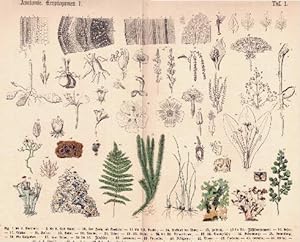
34,0 x 44,0 cm. Tafel 1. Senkrechter Mittelfalz. Kleine hinterlegte Randeinrisse. Die Portokosten betragen im Inland 5,00 Euro und in der EU 12,00 Euro. Nebenstehende Abbildung zeigt nicht immer den vollen Rand, dieser ist jedoch im Original vorhanden.
-

La politique extérieure de l'URSS : Lectures
Published by AGE D HOMME, 1997
ISBN 10: 2825110752 ISBN 13: 9782825110751
Condition: new. Livraison rapide, bien emballé, service client soigné.Pour tout renseignement complémentaire, n'hésitez pas à nous contacter.
-

Gengångaren.
Published by Stockholm 1996 1996, 1996
Seller: Rönnells Antikvariat AB, Stockholm, Sweden
Seller rating 5 out of 5 stars
107 s. Häftad. Förlagsnytt exemplar. Sigmund Freud, Aris Fioretos, Spencer Finch, Hugo von Hofmannsthal, W Hartenau, Parmenides, Sven-Olov Wallenstein, Hans Ruin, Kristian Petri, Franz Anton Mesmer, Edgar Allan Poe, Nicolas Abraham.
-

lumiere du thabor 47-48/2003
Published by AGE D HOMME, 2003
ISBN 10: 2825118516 ISBN 13: 9782825118511
Condition: Neuf.
-

ludOEI - lek, spel, leksaker.
Published by OEI 2010. 2010, 2010
Seller: Rönnells Antikvariat AB, Stockholm, Sweden
Seller rating 5 out of 5 stars
29,5x19,5 cm. 608 s. Häftad. Ett gästspel ingår i form av ett nummer av tidskriften Pequod.
-
Marcel Conche filosofo (1922-2022), por occasia da sua morte. Aspecto da correspondencia a ele dirigida : I-2002-2013 [entre Marcel Conche e M. Cadafaz de Matos] + N° IV centenario do nascimento de Molière
Published by TAVOLA REDONDA, 2022
Seller: Librairie Philosophique J. Vrin, Paris, France
Seller rating 4 out of 5 stars

Couverture souple. Condition: Bon. Revista portuguesa de historia do livro, n°49-50. Marcel Conche filosofo (1922-2022), por occasia da sua morte. Aspecto da correspondencia a ele dirigida : I-2002-2013 [entre Marcel Conche e M. Cadafaz de Matos]. + N° IV centenario do nascimento de Molière (1622-1673). Lisboa, 2022, fort vol. in-8°, br., couv. ill. à rabats, ill. in-t., envoi en page de garde.
-
Couverture souple. Condition: bon. RO10002645: 14 décembre 1947. In-4. Broché. Bon état, Couv. convenable, Dos satisfaisant, Intérieur bon état. Non Renseigné. . . . Classification Dewey : 630-Agriculture et techniques connexes.
-
Prague 1946 .
Published by Sutton Coldfield A "CHESS" Publication ND circa, 1950
Seller: John L. Capes (Books) Established 1969, STAITHES, United Kingdom
Association Member: PBFA
Seller rating 5 out of 5 stars
US$ 41.43
US$ 36.20 shipping
Ships from United Kingdom to U.S.A.Quantity: 1 available
Add to basketA very good copy in original publishers cloth with " Bespoke" dustwrapper ie.home-made from images of the author, but no ownership marks Royal 8vo.viii.2-115pps Ninety one annotated games.
-
Hessische Volksbücher Herausgegeben von Wilhelm Diehl 49/50 Adam Henß Aus dem Tagebuch eines reisenden Handwerkers
Published by Selbstverlag, Friedberg, 1923
Seller: Bücher-Insel Antiquariat Rolf Selbert, Kassel, Germany
Seller rating 4 out of 5 stars
196 S. Einige historische Abbildungen. Fakten aus dem Leben eines Handwerkers, Deutschland Mitte 19. Jhdt. Interessant! Gelesen. Rücken teils lädiert, etwas nachgebräunt.
-

Número Monográfico dedicado a D. MIGUEL DE UNAMUNO
Published by Revista de la Universidad de Madrid, 1964
Seller: Librería Miguel Miranda, Lope de Vega n.º XIX, Madrid, M, Spain
Seller rating 5 out of 5 stars
Magazine / Periodical
Condition: Very Good / Muy bien. Madrid: Revista de la Universidad de Madrid [Edita], 1964.- 295 p., [1 h.]; 4º (23,5 x 16 cm); Fínamente encuadernado en Media Piel Nueva, lomo dorado, conserva la cubierta anterior original.- CONTIENE: Unamuno y elprofesor francés Jacques Chevalier, por M. García Blanco; Unamuno et les philosophes, por F. Meyer; La inseguridad ontológica, clavedel mundo unamuniano, por C. París; L'itineraire agonique d'Unamuno , por Alain Guy; Unamuno y el existencialismo de Soren Kierkegaard, por J. A. Collado; La relación sociedad-individuo, en Unamuno, por L. Gonzalez Seara; Teatro del alma, por Ricardo Gullón; Estructura y significado de "Niebla", por G. Ribbans; Camilo Castelo Branco frente a Eça de Queiros. Dos actitudes unamunianas, por J. Garcia Morejón; Algo sobre Unamuno y Rusia, por G. Aniama. Excelente estado. Libro en español LITERATURA Y FILOSOFÍA ESPAÑOLAS DE LOS SIGLOS XIX-XXI Y SU HISTORIA EN GENERAL.
-
Condition: Assez bon. POINTS ET CONTREPOINTS (illustrator).
-
![Seller image for International Socialism [43 issues] for sale by Bolerium Books Inc.](https://pictures.abebooks.com/inventory/md/md30408621933.jpg)
International Socialism [43 issues]
Published by Socialist Review Publishing Co Ltd, London, 1968
Seller: Bolerium Books Inc., San Francisco, CA, U.S.A.
Seller rating 5 out of 5 stars
Magazine / Periodical
Magazine. Forty three issues of the magazine, a complete run for the period between November 1970 and June 1976. Issues present are Numbers 45 to 89. Various pagination, all 8.25 x 12 inches, all with worn and soiled wraps, some toning and stains, front wrap of Number 47 creased, Number 65 with previous owner's name on front wrap, Numbers 69 and 73 with price stamped in ink on front wrap, Number 71 with price written in pen on front wrap, else generally good condition. Contributors include Tony Cliff, Hal Draper, Paul Foot, Duncan Hallas, Alex Callinicos, and Ken Coates.
-
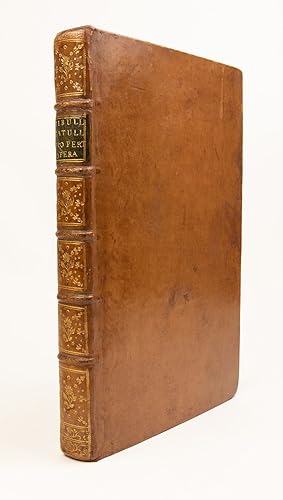
[Urbis Romae] Cosmo Medici Duci Florentinorum et Senensium Urbis Romae Aedificiorum illustrium quae supersunt reliquiae, summa cum diligentia, a Ioanne Antonio Dosio, stilo ferreo, ut hodie cernuntur, descriptae, et a Io. Baptista de Cavaleriis aeneis tabulis incisis repraesentatae
Published by [Rome or Florence], 1569
Seller: Földvári Books, Budapest, Hungary
Seller rating 5 out of 5 stars
First Edition
Engraved title and 49 numbered full-page plates (numbered 2-50), complete. (illustrator). 1st Edition. Engraved title and 49 numbered full-page plates (numbered 2-50), complete. First edition. Latin text engraved beneath each image. Later quarter calf over marbled boards; spine with red morocco label titled Urbis Romae. Marbled endpapers. 50 plates (title included). (c. 270 × 190 mm). Rare complete copy of Dosio's celebrated 1569 architectural suite of ancient Rome, etched by Cavalieri and praised by Fowler for its sober fidelity and avoidance of archaeological fantasy. First edition of this important early corpus of Roman architectural views, drawn by Giovanni Antonio Dosio and engraved by Giovanni Battista Cavalieri. The sequence depicts surviving ancient monuments in the city of Rome as they appeared in the mid-sixteenth century, rendered without imaginative reconstruction. The etched views include the Colosseum, Arch of Titus, Palatine Hill, Temple of Vesta, Pantheon, Tiber Island, and other landmarks, often shown amid vegetation or with figures for scale. Dedicated to Cosimo de' Medici, the title-page is framed by a triumphal arch flanked by Egyptian caryatids and the Medici palle. The work was reissued in 1640 by De Rossi, but the present edition retains the original engraved title and sequence. The series is archaeologically significant for its fidelity to the visual state of Rome's ruins before modern excavations. Of over 110 original drawings by Dosio for this project, only 28 survive today (14 in Berlin, 14 in the Uffizi). Complete with all 50 plates. References: Fowler, Architecture, 117 ("One of the most important of the sixteenth-century collections of views of Rome, being free from the fantastic reconstructions so dear to the archaeologists of the period"); Lukomski, Architettura Classica, pp.?412-415. . Light browning; title-page with small tear at lower edge; occasional spotting and marginal dampmarks. Plates 46 and 47 misbound out of sequence. Plates otherwise clean and well-preserved. Later quarter calf over marbled boards; spine with red morocco label titled Urbis Romae. Marbled endpapers First edition. Latin text engraved beneath each image.
-
Catullus. Tibullus. Propertius
Published by In aedibus Aldi, et Andreae soceri, Venice, 1515
Seller: Liber Antiquus Early Books & Manuscripts, Chevy Chase, MD, U.S.A.
Seller rating 5 out of 5 stars
Hardcover. Condition: Fine. SECOND ALDINE EDITION. A lovely, unsophisticated copy in contemporary limp vellum (binding lightly soiled, remains of ties, small splits on spine). Very fresh and bright, with generous margins and only some very minor ink marks or the occasional blemish. Title lightly soiled and with early note deleted in ink. An early reader (possibly two) has made comments, offered alternate readings, and supplied the occasional line in the longer poems Cat. 61. (Epithalamium), Cat. 63 (Attis), Cat. 64 (the epyllion, printed here under the title "Argonautica"), and 68A. ("Quod mihi fortuna"); as well as in a few of the shorter poems. The important second Aldine edition of the poems of Catullus, Tibullus and Propertius, co-edited by Girolamo Avanzi (fl. 1500.) and Aldus. The first Aldine Catullus, one of the first of the "libri portatiles", the handy ("forma enchiridii") octavo-sized format that Aldus popularized, appeared in 1502. In his epistle to the reader, Aldus informs us that Avanzi has made further improvements upon the text for this edition. "Avantius was younger by a generation than all of his Catullan predecessors, and a more careful textual critic than any-with the obvious exception of Poliziano. He was to become a professional editor of Latin poetry, principally for the Venetian printers Johannes Tacuinus and Aldo Manuzio, preparing, inter alia, editions of Catullus, Tibullus, and Propertius (Tacuino, 1500), Lucretius (Aldine, 1500), and the first and second Aldine editions of Catullus (1502; 1515). "Because Avanzi was more systematic, thorough, and knowledgeable than his predecessors -and because he had the whole printed tradition to work with- he was able to make an enormous contribution to the text of Catullus in the 'Emendationes'. In addition to a large number of emendations, he made dozens of corrections both to the printed tradition as a whole and to the recent base text of Calfurnio and Partenio. He also made some improvements in the 'dispositio carminum', although this was becoming increasingly difficult, since the easy corrections had already been made." (Gaisser, Catullus and His Renaissance Readers. p.52 ff. ) "Avantius is principally interested in textual and metrical problems and only occasionally in interpretation. His emendations are based on the collation of his texts, the work of other scholars, and his own observations of Catullus' stylistic and metrical practice. He depends much less on parallels from other Latin and Greek authors, which he cites sparingly and selectively "The 'Emendationes' were [first] published without a text of Catullus, but the second edition, published in 1500, appeared in a volume that included not only Catullus but also Tibullus and Propertius. [.] Avantius used this edition as the basis for his important first Aldine edition of Catullus (1502), and its influence is apparent in his second Aldine (1515)." (Gaisser, 'Catullus' in 'Catalogus Translationum et Commentariorum' Vol. VII) Catullus: "Catullus' name and poetry are traditionally associated with the 'neoteric revolution'; indeed, they are the most important document of it. It is a revolution in literary taste but also a revolution in ethics. While at a time of acute crisis for the Republic the old moral and political values of the 'civitas' are crumbling, personal 'otium' becomes the attractive alternative to communal life, the space in which to devote oneself to culture, poetry, friendship, and love. The small universe of the individual, with its joys and dramas, is identified with the very horizon of existence, and literary activity no longer turns towards epic and tragedy, the genres that speak for the state and its values, but rather toward lyric, towards personal poetry, which is introverted and suitable for embracing and expressing the small events of private life." "[Catullus' poetry] achieved a vast and immediate success among cultivated Latin readers. In particular, it exercised a profound influence upon the Augustan poets (with the exception.
-
Tibulli Elegiae cum comm. Bernardini Veronensi. Catulli Carmina cum comm. Antonini Partheni. Propertii Elegiae cum comm. Philippi Beroladi
Published by Bonetus Locatellus, per Octavianus Scotus, 9 December, Venice, 1491
Seller: Liber Antiquus Early Books & Manuscripts, Chevy Chase, MD, U.S.A.
Seller rating 5 out of 5 stars
Hardcover. Condition: Fine. [Bound with]: Statius, Publius Papinius (b. ca. 45-50 ? d. ca. 96) Statii Achilleida cum comm. Ioannis Britannici Brescia: per Iacobum Brtitannicum, 21 May 1485 Folio: 29 x 19.6 cm. Two works bound as one. I. [158] lvs. (the last leaf blank). Collation: a-c8, d-e6, f-s8, t-x6. II. [28] lvs. (the first leaf blank). Collation: A4, a-d6. Bound in attractive 18th c. blonde calf, spine richly gilt with floral tools and morocco label; board edges also gilt (light wear, corners bumped). Fine, crisp copies with minor blemishes as follows: I. Title lightly soiled, marginal dampstain to the first three lvs., leaf l1, leaf g6, and a few lvs. in gathering h; 4 lvs. in gathering e and bifolium f1/8 lightly browned (f1/8 with light ink stain). II. Light dampstain blank margin. Both books with woodcut initials. First work with Octavian Scotus? printer?s device on the final leaf. From the library of the French poet and journalist Frédéric Plessis (1851-1942), with his label ?ex-libris Fridericus Plessis? on the front fly-leaf. This volume comprises two incunabula. The first is the 1491 edition of the Roman elegiac poets, Catullus, Propertius and Tibullus, with the commentaries of (respectively) Antonio Partenio (1456-1506), Filippo Beroaldo the Elder (1453-1505) and Berardino Cillenio (b. ca. 1450) of Verona. The second is the 1485 Brescia edition of Statius?s ?Achilleid?, an unfinished epic poem on the life of Achilles, with the commentary of the humanist Giovanni Britannico (fl. 1470-1518). Catullus and Parthenius: The commentary of Parthenius on Catullus is particularly important. His work was ?not only the first but also the most important of the fifteenth-century commentaries on Catullus. He made significant improvements to the text and explained Catullan style and usage with parallels from a wide range of ancient authors, both Greek and Latin, including among others, Cicero, Vergil, Martial, Pliny Ovid, Lucretius, Donatus, Homer, and Sappho. He was also interested in interpreting the poems and successfully emended and explained several that had previously seemed pointless. The commentary was hailed in verse by several of Parthenius? fellow citizens and other contemporaries, including Iacobus Iuliarius and Hieronymus Bononius.? (Gaiser) Statius? Interrupted Epic: ?Any judgment upon [the ?Achilleid?] is difficult, since the text we have (interrupted by the author's death) deals only with episodes of the young Achilles on Scyros. The plan of narrating all of Achilles' life (1.4 ff.) suggests large literary ambitions. Statius, had he been able to continue, would have found himself facing Homer. And beginning with its title the work seems, even more than Statius? ?Thebaid?, to be heading towards a perilous confrontation with the ghost of its father Virgil.?(Conte).
-
C. Valerii Catulli.Liber I. Alb. Tibulli Equitis Romani libri IIII. Sex Aurelii Propertii umbri libri IIII. C N. Cornelii Galli fragmenta. Basel: Henricus Petri, 1530 b/w Martialis, Marcus Valerius (40- ca. 100) Epigrammaton Libri XIIII Basel: Henricus Petri, 1530
Published by Henricus Petri, Basel, 1530
Seller: Liber Antiquus Early Books & Manuscripts, Chevy Chase, MD, U.S.A.
Seller rating 5 out of 5 stars
Signed
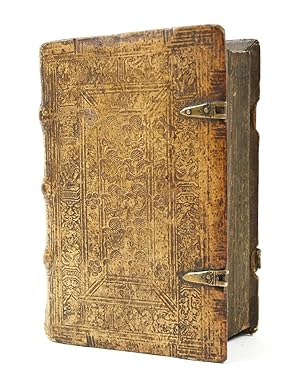
Hardcover. Condition: Fine. TWO SEPARATE PUBLICATIONS. Bound in contemporary alum-tawed pigskin over wooden boards, lacking clasps but with the brass catches, with acorn tools and rolls of 3 of the Muses: Terpsichore, Euterpe (signed N.C.), and Calliope (signed M.A.). First title dusty, damp-stain in the first part of the Martial. Intermittent annotations in the margins of both works and some underscoring in the Tibullus. The three most famous Roman elegiac poets together with the great Roman satirist.
-
Taxon International Journal Of Plant Taxonomy, Phylogeny And Evolution - Volumes 8 No.1, Volume 9 no.7,8, Volume 10 No.3, 6-9, Volume 11 No.1-5, 7, 9, Volume 13 No.5, 9, Volume 14 no.1,2,6, 8, Volume 15, No.1-9, Volumes 16 Complete Thru Volume 50 No.4 except Volume 49 No.3 Missing Also Included Is The Index to Names Voliumes 1-49 Complete
Published by International Association For Plant Taxonomy
Seller: Terrace Horticultural Books, St. Paul, MN, U.S.A.
Seller rating 4 out of 5 stars
Magazine / Periodical
Soft cover. Condition: Very Good. Tables, Text Figures (illustrator). Copyright Date: 1959 Sm Quarto, Various As Listed January 1959 Thru November 2001, Varioius Pagination, An Impressive Run Of This Important Journal of Taxonomy priced to Sell! Additional Shipping Quoted Upon Request for three large boxes Volumes 8 No.1, Volume 9 no.7,8, Volume 10 No.3, 6-9, Volume 11 No.1-5, 7, 9, Volume 13 No.5, 9, Volume 14 no.1,2,6, 8, Volume 15, No.1-9, Volumes 16 Complete Thru Volume 50 No.4 except Volume 49 No.3 Missing.
-
Poradnik dla Pracownikow Swietlic Zolnierskich. Wydawnictwo Polskiej YMCA w W. Brytanii. [R.4 (1944)]. Nr 41-52 (Styczen - Listopad 1944) (brak nr Grudzien 1944) / APW / Tadeusz Kosciuszko / Krakow / Emigracja polska
Published by London: Polska YMCA w W. Brytanii, 1944, 1944
Oprawa wydawnicza broszurowa. Nr 41/42 i 48 zdobil Wojciech Tadeusz Jastrzebowski; nr 43, 47 i 50 zdobil Jan Polinski; nr 44/45 zdobila Krystyna Dydynska-Henneberg; nr 46 zdobil W. A.; nr 49 i 51 zdobil W. Machan (illustrator). @ Cover design and illustrations / Projekt okladki i ilustracje: Nr 41/42 i 48 zdobil Wojciech Tadeusz Jastrzebowski; nr 43, 47 i 50 zdobil Jan Polinski; nr 44/45 zdobila Krystyna Dydynska-Henneberg; nr 46 zdobil W. A.; nr 49 i 51 zdobil W. Machan; @ Blurb / Notka wydawnicza: London: Polska YMCA w W. Brytanii, 1944; @ Size of the book block / Wymiar bloku: 26 cm; @ Circulation / Naklad: -; @ Comments/ Uwagi: Literatura: Jagielska 1996 poz. 994, Kowalik poz. 2446. // Czasopismo ilustrowane wydawane w latach 1941-1945 w Perth = R. 1 (1941) nr 1/2 (styczen 1941) - R. 5 (1945) nr 64 (grudzien 1945); poczatkowo dwutygodnik nr 1-8/9 z 1941, nastepnie miesiecznik. Tytul kontynuowany przez: Poradnik Swietlicowy. Wydawnictwo Polskiej YMCA w W. Brytanii - miesiecznik wydawany w latach 1946-1950. // Zawiera dwa numery podwojne oraz numery tematyczne: Nr 44/45: "Muzyka"; Nr 46: "A.P.W."; Nr 48: Krakow; Nr 49: Kosciuszko; Nr 51: "Wychodzctwo Polskie"; @ Weight / Waga: 630; @ Pages / Strony: nr po 32s.; @ Thematic categories / Kategorie tematyczne: czasopisma polskie polskie emigracyjne, historia Polski emigracja, Polonia, zeslanie - h. Polski II wojna swiatowa - h. Polski kultura - h. Polski wojskowosc - h. Polski, ilustratorzy graficy Dydynska-Henneberg Krystyna* Jastrzebowski Wojciech Tadeusz* Machan W.* Polinski Jan*, nauka oswiata pedagogika, varia druki emigracyjne, okres wydania 1901-1944 / 45 / magazines Polish, history of Poland emmigration World War II culture military, , science education pedagogy, general emmigration editions / prints, period of edition 1901-1944 / 45 / Zeitschriften polnische, Geschichte Polens Emigration 2. Weltkrieg Kultur Militärwesen, , Wissenschaft Bildungswesen Pädagogik, Allgemein Emigration, Erscheinungsperioden 1901?1944 / 45; Numery 44/45, 50, 51 bez wad, nr 41/42, 43, 47, 49 nieznacznie poplamione lub uszkodzone; nr 48 ze sladem po starym zlozeniu, zagiety rog, nieco poplamiona okladka, blok czysty, brak nr 52 (nr 12 Grudzien). Pozycja w dosc ladnym stanie.
-

catalogo catalogue pieces de rechange
Published by , piaggio
Seller: STUDIO PRESTIFILIPPO NUNZINA MARIA PIA, CATANIA, CT, Italy
Seller rating 5 out of 5 stars
vespa mod. 49 50 catalogo catalogue pieces de rechange. piaggio .
-
1952-1953. Journals, North America, South America, etc. very good monographs bound in ex-library binding 147p., 111p., 126p. & 114p.



![Seller image for [Urbis Romae] Cosmo Medici Duci Florentinorum et Senensium Urbis Romae Aedificiorum illustrium quae supersunt reliquiae, summa cum diligentia, a Ioanne Antonio Dosio, stilo ferreo, ut hodie cernuntur, descriptae, et a Io. Baptista de Cavaleriis aeneis tabulis incisis repraesentatae for sale by Földvári Books](https://pictures.abebooks.com/inventory/md/md32247142992.jpg)

![Seller image for Poradnik dla Pracownikow Swietlic Zolnierskich. Wydawnictwo Polskiej YMCA w W. Brytanii. [R.4 (1944)]. Nr 41-52 (Styczen - Listopad 1944) (brak nr Grudzien 1944) / APW / Tadeusz Kosciuszko / Krakow / Emigracja polska for sale by POLIART Beata Kalke](https://pictures.abebooks.com/inventory/md/md4853595801.jpg)