

Order Total (1 Item Items):
Shipping Destination:

Aramaic (16 results)
Author:
aramaic
Refine with Advanced Search
Skip to main search results
Search filters
Product Type
- All Product Types
- Books (16)
- Magazines & Periodicals (No further results match this refinement)
- Comics (No further results match this refinement)
- Sheet Music (No further results match this refinement)
- Art, Prints & Posters (No further results match this refinement)
- Photographs (No further results match this refinement)
- Maps (No further results match this refinement)
- Manuscripts & Paper Collectibles (No further results match this refinement)
Condition Learn more
- New (3)
- As New, Fine or Near Fine (2)
- Very Good or Good (9)
- Fair or Poor (No further results match this refinement)
- As Described (2)
Binding
Collectible Attributes
- First Edition (5)
- Signed (No further results match this refinement)
- Dust Jacket (2)
- Seller-Supplied Images (9)
- Not Print on Demand (16)
Language (5)
Free Shipping
- Free Shipping to U.S.A. (No further results match this refinement)
Seller Location
Seller Rating
-

Soft cover. Condition: Good (-) Book. No Jacket. Pen underlining throughout, mild cover soil and a small bottom spine edge tear. Owner sticker name at the inside cover. 9 x 6 soft cover book with 72 pages. Scarce. Size: 8vo - over 7¾ - 9¾" tall. Book.
-
THE BABYLONIAN TALMUD IN SELECTION
Published by Philosophical Library, New York/Bell Publishing Company (Crown Publishers), 1944
Hardcover. Condition: Very Good. Dust Jacket Condition: Very Good. 286pp; Glossary. Contents clean and textually unmarked. No library stamps. Owner's name written on front blank endpaper. Red cloth HC with black lettering on spine.
-

Pesikta de-Rav Kahana: R. Kahana's Compilation of Discourses for Sabbaths and Festal Days.
Language: English
Published by Jewish Publication Society of America, Philadelphia, 2002
ISBN 10: 0827606796 ISBN 13: 9780827606791
Seller: Henry Hollander, Bookseller, Los Angeles, CA, U.S.A.
Seller rating 4 out of 5 stars

Hardbound. Condition: Very Good. Duodecimo, mauve cloth with gold lettering, cii, 795 pp., glossary, passages cited, authrities cited, subjects and names, plays on words and letters.
-

Three Aramaic Papyri From Elephantine, Egypt. Written by Eduard Sachau. An article published by the Smithsonian Institution in 1907 : 7 Pages.
Published by Smithsonian Institution, Washington, 1907
US$ 15.06
US$ 15.95 shipping
Ships from United Kingdom to U.S.A.Quantity: 2 available
Add to basketBooklet - Unbound Pages. Condition: Very Good. A brief presentation of three papyri discovered on Elephantine Island, outlining their contents, historical setting, and the light they shed on daily life and administration in a multicultural frontier community. 7 Pages. An authentic standalone article, extracted from a larger volume. Not a reprint or reproduction, but an original work in its own right. Preserved in a modern card cover, prepared for practicality - an unassuming but serviceable presentation that favours function over finery. Size: 16 x 24 cms. Category: Smithsonian Institution; Cosmo Books : 29 years on ABE, 47 years taking care of customers. A bookseller you can rely on.
-

US$ 51.70
US$ 16.76 shipping
Ships from United Kingdom to U.S.A.Quantity: 1 available
Add to basketHardcover. Condition: Brand New. revised enl edition. 349 pages. 8.50x6.00x1.25 inches. In Stock.
-

The Folk Literature of the Kurdistani Jews: An Anthology.
Language: English
Published by Yale University Press, New Haven, 1982
ISBN 10: 0300026986 ISBN 13: 9780300026986
Seller: Henry Hollander, Bookseller, Los Angeles, CA, U.S.A.
Seller rating 4 out of 5 stars
First Edition
Hardbound. Condition: Very Good. First Edition. Octavo in dust jacket, xlii, 250 pp., map, list of abbreviations, glossary, selected bibliography, indexes. Inscribd by the author on the free frontr endpaper. Yale Judaica Series Volume XXIII. "Yona Sabar, himself a Kurdistani Jew, offers representative selections from the types of Kurdistani literature: epic re-creations of biblical stories, midrashic legends, folktales about local rabbis, moralistic anecdotes, fold songs, nursery rhymes, sayings, and proverbs. Sabar's introduction and notes are a storehouse of information on the history and spiritual life of the Kurdistani Jews and on their relationship to the Land of Israel. Because almost all the Kurdistani Jews now live in Israel and speak Hebrew, there is very little new literary activity in their Neo-Aramaic dialects. This delightful anthology captures the essence of Kurdistani Jewish literature, presenting it for public enjoyment and preserving it for the future." from the book jacket.
-
US$ 108.84
US$ 16.76 shipping
Ships from United Kingdom to U.S.A.Quantity: 1 available
Add to basketHardcover. Condition: Brand New. revised enl edition. 349 pages. 8.50x6.00x1.25 inches. In Stock.
-

The New Covenant. Commonly called the New Testament. Peshitta aramaic Texte with a hebrew translation.
Language: French
Published by The Bible Society, 1986
Couverture souple. Condition: Bon. Jérusalem, The Bible Society, 1986 ; in-8° reliure éditeur, texte sur deux colonnes, 383-V pp.
-
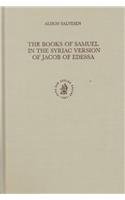
The Books of Samuel in the Syriac Version of Jacob of Edessa (Monographs of the Peshitta Institute, Leiden, V. 10)
Seller: Books From California, Simi Valley, CA, U.S.A.
Seller rating 4 out of 5 stars
Library Binding. Condition: New.
-
Ha-'Esrim ve-'Arba'[ah] (The Twenty-Four Holy Books, i.e. The Hebrew Bible) [BOUND WITH:] Tiberias, sive Commentarius Masorethicus triplex historicus didacticus criticus ad illustrationem Operis Biblici (A Three-fold Historical, Didactic, and Critical Commentary on the Masora for the Illustration of the Hebrew Bible)
Published by Ludwig König, Basel, 1619
Seller: ERIC CHAIM KLINE, BOOKSELLER (ABAA ILAB), Santa Monica, CA, U.S.A.
Seller rating 3 out of 5 stars

First Edition
Hardcover. Condition: Good. First edition (in part). Eight parts in three volumes, folio (biblical texts and commentary in four parts, continuously foliated; three supplemental sections, each with separate foliation; Tiberias (1655), with separate pagination, here bound after the Haftarot) - Vol. 1: [6, title and prelims], 1-228, [1, sect. title], 234-441, [1, blank] ff. Vol. 2: [1, sect. title], 442-705, [3, blank], 707 (sect. title)-837, [1, blank] ff. Vol. 3: 839 (half-title)-881, [1, blank], 883-946; 8 (Targum Yerushalmi; last leaf unfoliated); 67 (Masorah), [1, blank]; [1, title], 2-36 (Haftarot) ff.; [8, title and prelims], 108pp. Despite the gap in foliation between the first and second parts, and numerous errors in foliation throughout, the Rabbinic Bible collates complete, with all blanks noted in Prijs (Die Basler hebräischen Drucke), and the Haftarot bound at the end. Largely arranged in two columns of biblical texts in square font, surrounded by commentaries in rabbinic (Rashi) font; biblical texts read from right to left. This copy with collective Hebrew title surrounded by biblical quotations in Hebrew, set within elaborate woodcut architectural borders; brief preface in Hebrew by Abraham Braunschweig at the verso. Hebrew sectional titles, set within the same woodcut borders, for the three other biblical sections and the Haftarot (with a plain letterpress half-title for the Five Megillot). Opening word of each biblical book set in large (one-third to one-half page) cartouche vignettes with elaborate woodcut borders and surrounding letterpress Hebrew text. Main title Jewish date chronogram = [5]378 (1618-1619). Near-contemporary half calf over speckled boards (worn and rubbed); spines with raised bands, gilt morocco lettering pieces, and old paper labels (heavily faded). About two-thirds of the text embrowned (ranging from minimal to moderately heavy); worm tracing in a 1- by 2-inch section at leaves 541-553 (affecting text). A good, complete set, notably containing the Ashkenazi Haftarot readings, not found in all copies. Sixth Rabbinic Bible (in Hebrew: Mikra'ot Gedolot), edited by Johann Buxtorf I (1565-1629), professor of Hebrew at the University of Basel, and the foremost Christian Hebraist of his era, with the assistance of the Jewish scholars, Abraham Braunschweig, who served as the principal corrector, and Mordechai Gumplin of Posen. This was "a truly audacious undertaking for his time" (Burnett), as no Christian scholar had yet attempted to edit the entire biblical corpus, including the Aramaic versions (Targumim) and masoretic notes. Based mainly on the third Rabbinic Bible published by Daniel Bomberg at Venice in 1546-1548, the editor has carefully incorporated elements from two other Venetian editions. At the verso of the Latin title Buxtorf provides a detailed bibliographical excursus on the earlier Venetian editions and offers a tribute to Bomberg's industry by reprinting the colophon of the second Venetian Rabbinic Bible (1524-1525) at the conclusion of the masoretic appendix, with text by the Hebrew grammarian and lexicographer, Elijah Levita (1468 or 1469-1549) and a new introduction by Abraham Braunschweig. The design of the sectional titles and separate book title vignettes closely model those of the Venetian editions. "Buxtorf did not plan simply to reprint one of the existing Venice editions, but rather to assemble the best features of them all into one work" and "to provide theologians with what he considered the most important tools for interpreting the Old Testament" (Burnett). Buxtorf served in an official capacity as Basel's Hebrew censor, charged with the oversight of all Jewish printing in the city, and insuring that "no 'blasphemies' or slurs against Christians or Christianity appear in any book printed in Basel" (Burnett). He carefully edited the Jewish commentaries in the Rabbinic Bible in accordance with this mandate, "and removed many words and phrases which had escaped the attention of earlier censors" (Burnett). The Rabbinic Bible.
-
Biblia Sacra Hebraica & Chaldaica cum Masora (The Holy Bible in Hebrew and Aramaic, with the Masorah) [BOUND WITH:] Tiberias [COPIES of the ACCLAIMED OLD TESTAMENT SCHOLAR, BREVARD CHILDS, previously held at THE GREAT SYNAGOGUE OF MINSK]
Published by Ludwig König, Basel, 1619
Seller: ERIC CHAIM KLINE, BOOKSELLER (ABAA ILAB), Santa Monica, CA, U.S.A.
Seller rating 3 out of 5 stars
First Edition
Hardcover. Condition: Good. First editions. Seven parts in two volumes, folio (biblical texts and commentary in four parts, continuously foliated; two supplemental sections, each with separate foliation; Tiberias (1620), with separate pagination, here bound after the second part) - Vol. 1: [6, title and prelims], 1-228, [1, sect. title], 234-441, [1, blank]ff.; [6, sect. title and prelims], [2, blank], 114, [2, blank]pp. Vol. 2: 442-946; 8 (Targum Yerushalmi; last leaf unfoliated); 67 (Masora), [1, blank]ff. Largely arranged in two columns of biblical texts in square font, surrounded by commentaries in rabbinic (Rashi) font; text reads from right to left. This copy with collective Latin title surrounded by biblical quotations in Hebrew, set within elaborate woodcut architectural borders. Hebrew sectional titles, set within the same woodcut borders, for the second and fourth parts, with a plain letterpress half-title for the Five Megillot. The third sectional title for the Latter Prophets is lacking, as are the Ashkenazi Haftarot readings (not found in all copies). Apart from these lacks the Rabbinic Bible collates complete, despite numerous errors in foliation throughout, as per the detailed notes in Prijs (Die Basler hebräischen Drucke). Opening word of each biblical book set in large (one-third to one-half page) cartouche vignettes with elaborate woodcut borders and surrounding letterpress Hebrew text. Main Latin title dated 1619, with the editor's Latin preface to the reader appearing at the verso. Jewish date chronogram for the second section (Former Prophets) dated [5]378 (1618/1619). Early twentieth-century black cloth boards (worn at extremities), gilt-lettered spine. Title moderately soiled, re-inforced at gutter; neat old repairs to corners and fore-edge of title and next three leaves; old Russian stamp at bottom margin title, manuscript entry in Russian along fore-edge, dated 1837[?]; intermittent mild to moderate marginal dampstains (largely confined to corners) and embrowning throughout both volumes (somewhat more heavily in the first, especially throughout Tiberias); top right corner of the opening leaf in vol. 2 repaired with loss of about 12 words surrounding title cartouche recto, and some text in 9 lines of the commentary at the verso. Overall a good set, with a notable chain of provenance. Sixth Rabbinic Bible (in Hebrew: Mikra'ot Gedolot), edited by Johann Buxtorf I (1565-1629), professor of Hebrew at the University of Basel, and the foremost Christian Hebraist of his era, with the assistance of the Jewish scholars, Abraham Braunschweig, who served as the principal corrector, and Mordechai Gumplin of Posen. This was "a truly audacious undertaking for his time" (Burnett, From Christian Hebraism to Jewish Studies), as no Christian scholar had yet attempted to edit the entire biblical corpus, including the Aramaic versions (Targumim) and masoretic notes. Based mainly on the third Rabbinic Bible published by Daniel Bomberg at Venice in 1546-1548, the editor has carefully incorporated elements from two other Venetian editions. At the verso of the Latin title Buxtorf provides a detailed bibliographical excursus on the earlier Venetian editions and offers a tribute to Bomberg's industry by reprinting the colophon of the second Venetian Rabbinic Bible (1524-1525) at the conclusion of the masoretic appendix, with text by the Hebrew grammarian and lexicographer, Elijah Levita (1468 or 1469-1549) and a new introduction by Abraham Braunschweig. The design of the sectional titles and separate book title vignettes closely model those of the Venetian editions. "Buxtorf did not plan simply to reprint one of the existing Venice editions, but rather to assemble the best features of them all into one work" and "to provide theologians with what he considered the most important tools for interpreting the Old Testament" (Burnett). Buxtorf served in an official capacity as Basel's Hebrew censor, charged with the oversight of all Jewish printing in the city, and insuring tha.
-
Targum shel Divrei ha-Yamim Rishonim va-Aharonim yisdo Rabi Yosef rosh yeshivah be-Surya: Paraphrasis chaldaica in Librum Priorem et Posteriorum Chronicorum (Aramaic Paraphrase of the Biblical Books of Chronicles by Joseph ben Hiyya) [From the LIBRARY of the CELEBRATED SCHOLAR of ISLAMIC LITERATURE, G.H.A. JUYNBOLL]
Published by Jan Boom, Amsterdam, 1715
Seller: ERIC CHAIM KLINE, BOOKSELLER (ABAA ILAB), Santa Monica, CA, U.S.A.
Seller rating 3 out of 5 stars
First Edition
Hardcover. Condition: Very Good. First edition. Small quarto. [asterisk]4 a-f4 (-blank f4) A-3F4 (= 235 leaves). [54], 415, [1, blank]pp. Contemporary vellum with exposed thongs (boards somewhat bowed, spine darkened), early manuscript title in Hebrew and Latin at spine. Old owner entry at top margin title, memorial label at front paste-down. A very good copy, amply-margined, with fine, crisp text throughout. Important edition of this Aramaic version of the biblical books of Chronicles, attributed to Joseph ben Hiyya (d. 333), a Babylonian amora and head of the Pumbedita academy near present-day Falluja, Iraq. "[Ben Hiyya] was also distinguished in biblical exegesis and left an Aramaic translation of parts of the Bible, which is often quoted. It is not to be assumed, however, that Joseph translated the whole Bible, though the Aramaic translation of the Books of Chronicles is ascribed to him. (Enc. Jud.). The editio princeps, edited from an Erfurt manuscript by Matthias Frederick Beck, and accompanied by substantial annotations, was published at Augsburg in 1680. "After this [David] Wilkins gave the public an edition from a Cambridge manuscript, of which the text was more pure and more complete. The critic should unite both these editions, the former for the value of its learned notes, and the latter for its full and accurate text" (The Biblical Repertory). The Coptic scholar, David Wilkens (16851745), was born of Prussian parentage in Memel, Lithuania. Little is known about his education in Germany (probably in Berlin) or how he acquired his knowledge of ancient and Semitic languages, which was extensive rather than profound. He referred to the antiquarian Ezechiel Spanheim, the elector of Brandenburg's ambassador in England from 1701 to 1710, as his former teacher. By 1707 Wilkins was studying at the Bodleian Library in Oxford and had encountered a group of clerical protectors in London. In 1709, engaged in preparing a history of the patriarchs of Alexandria (which remained in manuscript) and the editio princeps of the Coptic (Bohairic) New Testament, the Novum Testamentum Aegyptium (1716), he left for the continent. He called on scholars, examined manuscripts in Vienna, Rome, and Paris, and stopped in Amsterdam in 1714 to see to the publication of his first works -- an edition of the Aramaic paraphrasis of the books of Chronicles and an Armenian version of the apocryphal third epistle to the Corinthians (1715) -- and of John Chamberlayne's polyglot edition of the Lord's prayer, to which he contributed. Wilkins was an industrious scholar. In the three years he spent as librarian at Lambeth he made important contributions to the cataloguing of manuscripts. In 1721 he edited the Anglo-Saxon laws, in 17256 the complete works of John Selden, and in 1731 the Coptic Pentateuch. His main work was his Concilia Magnae Britanniae et Hiberniae, an account of British church councils from 446 to 1717. Wilkins had many detractors -- John Gagnier, the professor of Arabic at Oxford, who deplored his incompetence in Arabic and Hebrew, Edward Harley, who described him as 'a very great scoundrel', and the cantankerous Thomas Hearne, who, as librarian at the Bodleian, had watched him turn from a young man 'of a civil, Courteous and modest behaviour' into 'a vain ambitious man, of little judgement, tho' great industry', ready to 'do anything in the World for a little Money' (Alastair Hamilton: "Wilkens, David" -- ODNB online). Provenance: From the library of G.H.A. Juynboll (1935-2010), the celebrated scholar of Islamic Hadith literature, with his printed memorial label at front paste-down. Hebrew title: ????? ?? ???? ????? ??????? ???????? ???? ??? ????? ?????? References: The Biblical Repertory (1834) 6:248-249. Brunet 3:574 - "Livre recherché et peu commun". Enc. Jud. 10:229. Le Long, Bibliotheca sacra (1723) 1:92B. Le Long-Masch 2.1, p. 48: "Multo correctior est editio ac praecedens Beckiana." [long note, in which the relation with the [never published?] version by Clarke is discussed].
-
Sefer Netivot Hashalom Bamidbar [= The Book of Numbers, the fourth book of the Jewish Bible. the fourth book of the Pentateuch]
Language: Hebrew
Published by Anton Schmid, Vienna, Wien, Austria, 1846
Hardcover. Condition: Very Good. No Jacket. In Hebrew, Judeo German and Aramaic. 231, 40, 5 leaves. 218 x 153 mm. The book of Numbers with the Haftarot, the Book of Ruth, etc. In addition to the Mendelsohn commentary and translation, the book also has the traditional commentary of Rashi and Onklos' translation into Aramaic. Onkelos, possibly identical to Aquila of Sinope, was a Roman national who converted to Judaism in Tannaic times (c. 35-120 CE). He is considered to be the author of the Targum Onkelos (c. 110 CE).
-

Al-Kitab al-Muqaddas, Al-'ahd al-Jadid, lisayyidina wa-mukhalisina Yasw' al-MasiH, tarjamat al-niskhah al-suryaniya lil-injyl al-ma'rwfa bi-al-basita ila al-lugha al-'Arabiya wa-al-lahja al-Mardiniya = The Holy Bible, the New Testament of our lord and savior Jesus Christ, translation of the Syriac Bible known as Peshitto to the Arabic language and Mardini dialect
Language: Arabic
Published by Aramaic Bible Translation, Winfield, Illinois, 2012
ISBN 10: 0985805900 ISBN 13: 9780985805906
Seller: Joseph Burridge Books, Dagenham, United Kingdom
Seller rating 5 out of 5 stars

US$ 138.09
US$ 30.84 shipping
Ships from United Kingdom to U.S.A.Quantity: 1 available
Add to basketHardcover. Condition: Fine. 791 pages ; 23 cm. Notes: Mardini Arabic is a spoken language/dialect that is part of the North Mesopotamian Arabic language group, which is spoken in parts of Iraq, Syria, and Turkey "Turkish Bible Society has the right to publish this work in Turkey." Language Notes: Facing Standard Arabic and Mardini dialect translations on each page; parallel title page and letter from the Syriac Orthodox Archbishopric of Mardin, Turkey in English.
-
Hardcover. Condition: Very Good. Raban, Ze'ev Raban, 1890-1970 (illustrator). 10 color illustrations after Raban with free verse rendering of the traditional Passover song below, musical notes on last leaves. followed by publisher's ad. Perhaps the finest of Raban's illustrated works. Raban was a major Jewish artist born in Poland. He studied in Munich and Brussels and was heavily influenced by the jugendstil (art nouveau) movement of that era. He moved to Israel in 1912 and joined Boris Schatz's Bezalel School. 8vo, original color-pictorial wrappers, Ze'ev Raban (born Wolf Rawicki, 1890-1970), studied sculpture and the decorative arts in Europe, first in his hometown and later in Munich, Paris, and Brussels. At the Kunstgewerbechule in Munich, Raban learned design, including object and jewelry design, in Paris, he specialized in sculpture; and in Brussels, he was influenced by Symbolism and earned his living through architectural decoration projects. Raban reached Eretz-Israel in 1912 and joined the staff of the Bezalel School in Jerusalem, at the invitation of its director, Boris Schatz. In 1914, he was appointed director of the brass and copper repousse department. Raban viewed himself as a pioneer in the renewal of Hebrew art in Eretz-Israel and was actively involved in the forming of the ethos of the growing nation. He encouraged tourism through his poster art, illustrated Hebrew primers, and endowed decorative and functional objects with Jewish/Hebrew content. Raban underwent a metamorphosis in art from the western art of his studies to an incorporation of Eastern techniques and motifs, and the use of indigent flora and fauna. An important stage in that transformation was the adoption of the Yemenite as a model for the Biblical figure. Raban's acquaintance had been with a European Symbolism that was international, equivocal, and often personal. But in Erez Israel, Raban created a "Hebrew Symbolism" that was national and carried a clear message, although he still preferred the ideal and the archetypal over realistic. He developed a visual lexicon of motifs based on Jewish designs and topics, and to these he added his own Hebrew calligraphic script and other decorative elements, to form what was to become the "Bezalel style".
-

Grammatik des Biblisch-Aramäischen. Mit einer kritischen Erörterung der aramäischen Wörter im Neuen Testament
Published by F. C. W. Vogel, Leipzig, 1884
Seller: James Cummins Bookseller, ABAA, New York, NY, U.S.A.
Seller rating 5 out of 5 stars
First Edition
Pp. viii, 181. 1 vols. 8vo. First Edition. First Edition. Pp. viii, 181. 1 vols. 8vo. New half brown morocco preserving nineteenth century marbled boards with french tips. Pencil ownership signature of Chas. P. Pagnani 1892 on title page. Fine.


![Seller image for Ha-'Esrim ve-'Arba'[ah] (The Twenty-Four Holy Books, i.e. The Hebrew Bible) [BOUND WITH:] Tiberias, sive Commentarius Masorethicus triplex historicus didacticus criticus ad illustrationem Operis Biblici (A Three-fold Historical, Didactic, and Critical Commentary on the Masora for the Illustration of the Hebrew Bible) for sale by ERIC CHAIM KLINE, BOOKSELLER (ABAA ILAB)](https://pictures.abebooks.com/inventory/md/md31636293952.jpg)

![Seller image for Biblia Sacra Hebraica & Chaldaica cum Masora (The Holy Bible in Hebrew and Aramaic, with the Masorah) [BOUND WITH:] Tiberias [COPIES of the ACCLAIMED OLD TESTAMENT SCHOLAR, BREVARD CHILDS, previously held at THE GREAT SYNAGOGUE OF MINSK] for sale by ERIC CHAIM KLINE, BOOKSELLER (ABAA ILAB)](https://pictures.abebooks.com/inventory/md/md31614621903.jpg)
![Seller image for Targum shel Divrei ha-Yamim Rishonim va-Aharonim yisdo Rabi Yosef rosh yeshivah be-Surya: Paraphrasis chaldaica in Librum Priorem et Posteriorum Chronicorum (Aramaic Paraphrase of the Biblical Books of Chronicles by Joseph ben Hiyya) [From the LIBRARY of the CELEBRATED SCHOLAR of ISLAMIC LITERATURE, G.H.A. JUYNBOLL] for sale by ERIC CHAIM KLINE, BOOKSELLER (ABAA ILAB)](https://pictures.abebooks.com/inventory/md/md31098943046.jpg)
![Seller image for Sefer Netivot Hashalom Bamidbar [= The Book of Numbers, the fourth book of the Jewish Bible. the fourth book of the Pentateuch] for sale by Meir Turner](https://pictures.abebooks.com/inventory/md/md22203970845.jpg)
![Seller image for Chad Gadya [Khad Gadya] for sale by Meir Turner](https://pictures.abebooks.com/inventory/md/md14970999688.jpg)