

Order Total (1 Item Items):
Shipping Destination:

Arcade Gallery (10 results)
Skip to main search results
Search filters
Product Type
- All Product Types
- Books (10)
- Magazines & Periodicals (No further results match this refinement)
- Comics (No further results match this refinement)
- Sheet Music (No further results match this refinement)
- Art, Prints & Posters (No further results match this refinement)
- Photographs (No further results match this refinement)
- Maps (No further results match this refinement)
- Manuscripts & Paper Collectibles (No further results match this refinement)
Condition Learn more
- New (No further results match this refinement)
- As New, Fine or Near Fine (2)
- Very Good or Good (7)
- Fair or Poor (No further results match this refinement)
- As Described (1)
Binding
- All Bindings
- Hardcover (No further results match this refinement)
- Softcover (8)
Collectible Attributes
- First Edition (4)
- Signed (No further results match this refinement)
- Dust Jacket (No further results match this refinement)
- Seller-Supplied Images (7)
- Not Print on Demand (10)
Language (2)
Free Shipping
- Free Shipping to U.S.A. (No further results match this refinement)
Seller Location
Seller Rating
-
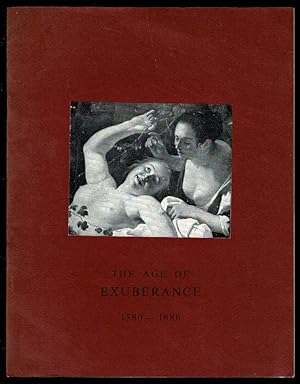
The Age of Exuberance: Paintings from 1580-1680
Language: English
Published by Arcade Gallery, London, 1953
Seller: Lazy Letters Books, Market Rasen, United Kingdom
Seller rating 5 out of 5 stars

Soft cover. Condition: Very Good. No Jacket. Exhibition catalogue. Minor wear.
-

Paperback. Condition: Very Good. Former owner's neat embossed identification on title page. 1 colour and 25 black & white photos of objects. Catalogue of an exhibition and sale Spring 1976. U.S. orders are shipped from N.Y. state.
-
African Tribal Sculpture
Language: English
Published by Arcade Gallery, London, 1975
Seller: Salsus Books (P.B.F.A.), Kidderminster, United Kingdom
Association Member: PBFA
Seller rating 5 out of 5 stars
First Edition
US$ 20.78
US$ 20.17 shipping
Ships from United Kingdom to U.S.A.Quantity: 1 available
Add to basketSoft cover. Condition: Good. 1st Edition. 12pp catalogue Spring 1975, illustrated stapled card covers, 16 pieces illustrated in bw from the Grosvenor House Fair.
-
Garantiert Echt: A Loan Exhibition to Celebrate an Eightieth Birthday. Text by Denys Sutton. June 1974.
Published by London, 1974
Seller: Ars Libri, Ltd. (ABAA), Charlestown, MA, U.S.A.
Association Member: ABAA ILAB VDA
Seller rating 4 out of 5 stars

(24)pp. Prof. illus. Sm. sq. 4to. Wraps.
-

African tribal sculpture : The Arcade Gallery, Autumn 1978
Published by Arcade Gallery, London, 1978
Seller: Joseph Burridge Books, Dagenham, United Kingdom
Seller rating 5 out of 5 stars
First Edition
US$ 13.85
US$ 20.17 shipping
Ships from United Kingdom to U.S.A.Quantity: 4 available
Add to basketSoft cover. Condition: Fine. 1st Edition. [16] pages : illustrations ; 20 x 21 cm. Exhibition catalogue.
-

Mannerist and Baroque Pictures from Italy and Holland
Published by Arcade Gallery, London, 1953
Seller: Lazy Letters Books, Market Rasen, United Kingdom
Seller rating 5 out of 5 stars
Soft cover. Condition: Very Good. No Jacket. Tipped-in and creased picture to front cover else minor wear. Exhibition catalogue.
-

An Exhibition of Baule sculptures
Published by Arcade Gallery, London, 1981
Seller: Joseph Burridge Books, Dagenham, United Kingdom
Seller rating 5 out of 5 stars
First Edition
US$ 16.62
US$ 30.93 shipping
Ships from United Kingdom to U.S.A.Quantity: 4 available
Add to basketSoft cover. Condition: Fine. 1st Edition. 67 pages : chiefly illustrations ; 20 x 21 cm. Exhibition catalogue.
-

African tribal sculpture
Published by Arcade Gallery, London, 1976
Seller: Joseph Burridge Books, Dagenham, United Kingdom
Seller rating 5 out of 5 stars
First Edition
US$ 16.62
US$ 30.93 shipping
Ships from United Kingdom to U.S.A.Quantity: 2 available
Add to basketSoft cover. Condition: Good. 1st Edition. 26 pages : illustrations : 20 cm. Catalogue from the Arcade Gallery, London. Spring 1976. Content: Sculptures from Mangbetu - Ibibio - M'bole - Baule - Batchokwe - Zulu - Bena Lulua - Cameroons - Mende - Bambara - Senufo - Bakongo - Bambara - Attie - Epa Masks.
-

African Tribal Sculpture (Autumn 1978).
Language: English
Published by London, 1978
Seller: Borkert, Schwarz und Zerfaß GbR, Berlin, Germany
Seller rating 5 out of 5 stars
Papier / Paper. Condition: Gut. ca. 16 p.: ill. Leicht berieben, bestoßen, vergilbt, sonst guter Zustand / Slightly rubbed, scuffed, yellowed, otherwise in good condition. - Introduction: It is not easy to discuss the qualities of an African carving with its creator. The abstract and often fashionable terminology of Western art criticism does not translate well into African languages. Indeed, it is doubtful if any of those languages has a word that corresponds to our word art. And how can you be sure that even such an apparently straightforward term as beauty means the same thing in an African society as it does in America or Europe? This is not to say that Africans are not acute critics of their own sculpture. Of course they are. But the terms they use are of a different kind. The questions they are likely to raise are not whether an object is beautiful but whether it is correct; not whether its lines are slack or taut, but whether it obeys the rules that should govern a work intended for a particular purpose. And nearly all African sculpture has a purpose. A mask is carved so that a dancer may represent a certain spirit, a ceremonial staff to carry emblems that are essential for the performance of a ritual, a figure to provide an appropriate home for a mans soul. In order that his creations may perform such functions, a sculptor carves in a manner that is prescribed by tradition. Novelty is not, in itself, a virtue. Obscurity resulting from the pursuit of a private artistic obsession is a defect. A sculpture must declare its purpose and convey its message unambiguously to its intended audience. The forms that do so have been refined by generations and conform to a visual grammar understood by the whole community. The fact that such sculptures obey rules, however, does not mean that they are identical. Each can be recognised as coming from a particular tribe because of those rules, but each can be an individual and unique creation. It is only during this century that the aesthetic qualities of African sculpture have been widely appreciated outside Africa. Among the first people to do so were a few European painters who, seventy-five years ago, were struggling to free themselves from the bonds of the oppressive naturalism that had dominated Western art during the nineteenth century. They found African objects abandoned in the bric-à-brac of curio shops and recognised in them a new attitude to representational art. The unknown creators of these masks and figures had clearly not been trying to imitate the superficial appearance of things. Instead they had been striving to represent a different aspect of reality, to make visible the invisible. Braque, Vlaminck and Picasso in France, Nolde and Kirchner in Germany, experimented excitedly with this new vocabulary of shapes and began to use it in their own battles against naturalism. Sprache: Englisch Gewicht in Gramm: 550.
-

Soft cover. Condition: Good. Spring 1975 , 12 pp The Arcade Gallery Photos with Artifacts in it.


