Order Total (1 Item Items):
Shipping Destination:

Broelmann Stephan (2 results)
Skip to main search results
Search filters
Product Type
- All Product Types
- Books (2)
- Magazines & Periodicals (No further results match this refinement)
- Comics (No further results match this refinement)
- Sheet Music (No further results match this refinement)
- Art, Prints & Posters (No further results match this refinement)
- Photographs (No further results match this refinement)
- Maps (No further results match this refinement)
- Manuscripts & Paper Collectibles (No further results match this refinement)
Condition Learn more
- New (No further results match this refinement)
- As New, Fine or Near Fine (No further results match this refinement)
- Very Good or Good (2)
- Fair or Poor (No further results match this refinement)
- As Described (No further results match this refinement)
Binding
Collectible Attributes
- First Edition (2)
- Signed (No further results match this refinement)
- Dust Jacket (No further results match this refinement)
- Seller-Supplied Images (2)
- Not Print on Demand (2)
Language (1)
Price
- Any Price
- Under US$ 25 (No further results match this refinement)
- US$ 25 to US$ 50 (No further results match this refinement)
- Over US$ 50
Free Shipping
Seller Location
Seller Rating
-
Epideigma, Sive Specimen Historiae ()
Published by Gerard Grevenbruch, 1608
Seller: Sokol Books Ltd. ABA ILAB, London, United Kingdom
Seller rating 5 out of 5 stars

First Edition
US$ 17,203.20
US$ 56.12 shipping
Ships from United Kingdom to U.S.A.Quantity: 1 available
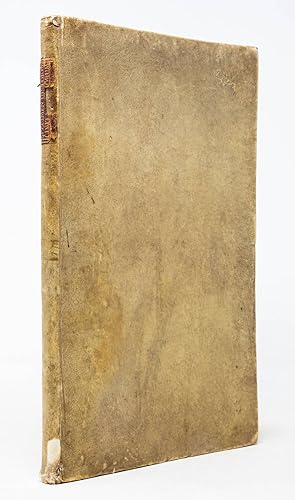
Add to basketSoft cover. Condition: Very Good. 1st Edition. FIRST EDITION. Folio, two parts in one, ff. 36 (unnumbered, including 14 full-page and double- page hand-coloured engravings, lacking blanks before I 1 and O 1 which appear in some copies), bound with: 3 manuscript ll. in brown ink (charming contemporary cursive, double column), monogram of author 'SBA IC', and 1 folding plate from Braun and Hogenberg's 'Civitates Orbis Terrarum' (also coloured). Roman and italic letter, woodcut floriated initials, headpieces with foliage and masks. Handsome engraved frontispices, first with central illustration of a plinth surrounded by Noah and his sons, landscape with animals and mountains in the background, second with large arch and standing figures of Roman aristocrats and soldiers, statues, putti and angels above and below, historical maps of Cologne, Europe and Asia (marginal tear at fold), illustrations of Roman antiquities, all hand- coloured. Browning to a few ll., occasional very light foxing, wormholes to outer blank edges of last ms. fol. An excellent copy, t-p on thick paper, in contemporary vellum, covers double blind ruled, decorated oval centrepiece, spine lightly repaired. Ms. presentation inscription to Cardinal Scipione Borghese (1551-1622) to t-p, ms. "Ubiorum civitas et antiquitates quaedam | Copia Scipioni Card(inali) Burghesio dicata 1813' to upper cover. In folding box. HAND-PAINTED PRESENTATION COPY TO CARDINAL SCIPIONE BORGHESE WITH AUTHORIAL MANUSCRIPT Stunning presentation copy to Cardinal Scipione Borghese, with handsome colouring, of the first edition of this this beautifully illustrated work on the history of Cologne by Broelmann. This unique volume includes an additional fold-out map of the city accompanied by a manuscript description written by the author himself and signed with his initials. The most attractive feature of this volume is the fourteen magnificent engravings, designed by the author and realised by two of the most prominent engravers of Cologne. Broelmann engaged Georg Braun (1541-1622), the geographer and cartographer who edited the famous atlas Civitates orbis terrarum (1572) with Frans Hogenberg (1535 1590), and Johann Hogenberg (1594-1614), portrait engraver and son of Frans. The plates - preceded by dedications to dignitaries, academics and clerics - contain historical maps of Germany, Europe and Asia, charming views of Cologne in its early days and also a fascinating series of artefacts, including statues, inscriptions and coins. Remarkably, the drawings show the position of the Roman wall around Cologne, and record a collection of antiquities which helped modern historians dealing with a large number of inscriptions that have been destroyed by war or urban development. At the end, the volume includes one large additional map depicting contemporary Cologne, by Braun and Hogenberg (father), which appeared for the first time in Civitates orbis terrarum (1572). On the plate, a series of hand-written numbers and letters correspond to streets, buildings and other main features of the city, which are all catalogued and described in three manuscript leaves. The manuscript is signed at the end with the initials S.B.A. IC , which stand for the name of the author: Sebastian Broelmann Agrippinensis , Iuris Consultus , meaning expert in law. The charming cursive calligraphy corresponds perfectly to Broelmann s personal handwriting, as we were able to confirm through a careful comparison with images of his original manuscripts (preserved at the Historischen Archiv der Stadt Köln, Best. 7030, Chroniken und Darstellungen, 74, 75 and 76). USTC 2092867; VD17 23:233223F; BM STC Ger 17th century, B2134. Not in Brunet or Graesse.
-
Epideigma, Sive Specimen Historiae Vet. Omnis et purae Florentis atq. Amplae civitatis Ubiorum, er eorum ad Rhenum Agrippensis Oppidi, quod pòst Colonia. Claudia. Aug. Agrippinensis. In aliquot primis æris laminis, ex horis succisivis & Commentarij Rer. civilium Parte I. & II. Quæ sunt Originum priscarum & Ubio-Romanarum. S(tephanus) B(raelmanus) A(grippinensis) ic
Published by Gerard Grevenbroich, Cologne, 1608
First Edition
Hardcover. Condition: Very good. First. First and only edition. Cologne: printed by Gerardus Greuenbruch for the author, 1608. Quarto (12 1/8" x 7 1/2", 307mm x 190mm). [Full collation available.] With two engraved title-pages and 12 engraved plates, of which 11 are double-page. Bound in contemporary vellum over boards. On the spine, a russet morocco label gilt (SPECIMEN HISTORIÆ/ CIVITA[TIS UB]IORUM). Boards splayed, and a little soiled. Tail skinned and frayed. Part of the spine label perished. Initial two leaves partly worn and soiled at the upper fore-edge. Quire L (part 2, pl. 2) split at the fold halfway from the bottom. Evenly and mildly tanned throughout. Early ink manuscript ownership of the Paris Jesuit College (Collegij Paris. Societatis IESU.) to the upper edge of the title-page. Stephan Brölmann (1551-1622) was a professor and lawyer in Cologne, where he lived, died and was a tireless advocate for the city's antiquity and importance. The city name (Cöln or Köln in German, Cologne in French and English from Latin colonia, colony) had its Latin root as well as a Germanic root submerged in Latin: Ara (or Oppidum) Ubiorum, meaning Altar (or Fort) of the Ubii. The Ubii were a tribe that allied with Julius Caesar in 55 BC to facilitate Roman control of the province of Germania Inferior; a veteran's colony was set up at Ara Ubiorum. Later, the Ubii came under the patronage of Julia Agrippina, wife of the Emperor Claudius; thus the full title of the ancient city was Colonia Claudia Ara Agrippinensium. Brölmann belonged to one of the patrician families of Cologne, and so burnishing the reputation of the city burnished his own. He distinguished himself from other aristocrats with the rigor of his historical investigation. He explored the remains of the Roman-era walls and collated the physical remains of the ancient colony with descriptions in surviving sources. He came into possession of two manuscripts, the Chronicle of Gottfried from the church of St. Pantaleon and a historical account from Eberbach Abbey, which he collated with classical sources to create the fullest-yet account of the development of the city. The historical commentary -- a preliminary step to a much fuller but never realized account, covering the foundation of the city to the end of the Roman empire -- is in the form of the explications of images: maps, city views, historical events and collections of surviving primary sources (inscriptions and coins especially). The maps and plans likely come from the Hogenberg firm; some, at least, come from Brölmann's own observations and perhaps even drawings. The union of research and primary sources makes the Epideigma a vital document of European history. Complete copies such as the present example (notably the errata leaf) are quite rare, with no copies in American institutions. The copy was preserved in the collection of the Paris Jesuit College (Collège de Clermont), which was dissolved and then disbursed by the University of Paris. The connection is best understood in the Dreikönigsgymnasium, the oldest and preeminent school in Cologne, which from 1556 to 1778 was run by the Jesuits. Meurer, Atlantes Colonienses BLM 1; VD17 23:233223F.