
Ca 1909 (31 results)

- Softcover
Seller: GreatBookPrices, Columbia, MD, U.S.A.GreatBookPrices
Contact seller5-star sellerCondition: Used - As new
US$ 29.00
US$ 2.64 shippingShips within U.S.A.Quantity: Over 20 available
Condition: As New. Unread book in perfect condition.

- Hardcover
Seller: GreatBookPrices, Columbia, MD, U.S.A.GreatBookPrices
Contact seller5-star sellerCondition: Used - As new
US$ 38.65
US$ 2.64 shippingShips within U.S.A.Quantity: Over 20 available
Condition: As New. Unread book in perfect condition.
- Softcover
Seller: GreatBookPrices, Columbia, MD, U.S.A.GreatBookPrices
Contact seller5-star sellerCondition: New
US$ 48.40
US$ 2.64 shippingShips within U.S.A.Quantity: Over 20 available
Condition: New.
- Softcover
Seller: GreatBookPricesUK, Woodford Green, United KingdomGreatBookPricesUK
Contact seller5-star sellerCondition: New
US$ 34.38
US$ 20.12 shippingShips from United Kingdom to U.S.A.Quantity: Over 20 available
Condition: New.
- Softcover
Seller: GreatBookPricesUK, Woodford Green, United KingdomGreatBookPricesUK
Contact seller5-star sellerCondition: Used - As new
US$ 38.73
US$ 20.12 shippingShips from United Kingdom to U.S.A.Quantity: Over 20 available
Condition: As New. Unread book in perfect condition.
- Hardcover
Seller: GreatBookPrices, Columbia, MD, U.S.A.GreatBookPrices
Contact seller5-star sellerCondition: New
US$ 64.24
US$ 2.64 shippingShips within U.S.A.Quantity: Over 20 available
Condition: New.
- Hardcover
Seller: GreatBookPricesUK, Woodford Green, United KingdomGreatBookPricesUK
Contact seller5-star sellerCondition: Used - As new
US$ 48.66
US$ 20.12 shippingShips from United Kingdom to U.S.A.Quantity: Over 20 available
Condition: As New. Unread book in perfect condition.
- Hardcover
Seller: GreatBookPricesUK, Woodford Green, United KingdomGreatBookPricesUK
Contact seller5-star sellerCondition: New
US$ 50.39
US$ 20.12 shippingShips from United Kingdom to U.S.A.Quantity: Over 20 available
Condition: New.
 More images
Published by C. V. Mosby, 1951., St. Louis: 1951
- Hardcover
Seller: Jeff Weber Rare Books, Neuchatel, NEUCH, SwitzerlandJeff Weber Rare Books
Contact seller5-star sellerCondition: Used
US$ 18.00
US$ 28.98 shippingShips from Switzerland to U.S.A.Quantity: 1 available
8vo. 164 pp. 1 page of figs., charts, index. Original gray cloth. Some internal soiling, some leaves with corners folded. Good+. Friedman was an international authority on migraine headaches.

Flowers of the field. 324 p., 245 figs, 92 col
Johns, C.A. (revised & edited by C. Elliott), 1909/1923 (3rd impression/10th impression).
- Hardcover
Seller: Backhuys Biological Books, Kerkwerve, , NetherlandsBackhuys Biological Books
Contact seller5-star sellerCondition: Used
Original price: US$ 35.81; 30% offCurrent price: US$ 25.07
US$ 21.73 shippingShips from Netherlands to U.S.A.Quantity: 1 available
Hardcover. pls, publisherÕs decorated cloth 0.0.
 More images
Published by London: Faber & Faber 1964
- Hardcover
- First Edition
Seller: Benedict Wilson Books, Folkestone, KENT, United KingdomBenedict Wilson Books
Contact seller5-star sellerCondition: Used - Near fine
US$ 55.27
US$ 26.83 shippingShips from United Kingdom to U.S.A.Quantity: 1 available
Hardcover. Condition: Near Fine. Dust Jacket Included. 1st Edition. FIRST EDITION, first printing. Octavo (23 x 15cm), pp.54; [2]. Publisher's red cloth, gilt titles to spine. Dust-jacket with printed price of 15s net to front flap. A Poetry Book Society Autumn Choice for 1964 with the bulletin loosely inserted. Dust-jacket ligh…tly toned to spine, slight wear to extremities. Near fine.
Seller: Backhuys Biological Books, Kerkwerve, , NetherlandsBackhuys Biological Books
Contact seller5-star sellerCondition: Used
Original price: US$ 45.37; 30% offCurrent price: US$ 31.76
US$ 21.73 shippingShips from Netherlands to U.S.A.Quantity: 1 available
Scarce 0.0.

- Softcover
Seller: Antiquariat Kastanienhof, Pirna, GermanyAntiquariat Kastanienhof
Contact seller5-star sellerCondition: New
US$ 14.33
US$ 71.29 shippingShips from Germany to U.S.A.Quantity: 1 available
Softcover. Condition: New. 26x21 cm NEU---Landkarte von Ost- und Westpreussen aus dem Jahr 1909 im Maßstab 1 zu 1.700.000. Regierungssitze und Kreissitze, sowie Hauptverkehrsverbindungen, größere Städte und Flüsse sind in der Karte eingezeichnet. Zwei eingedruckte Miniaturdetailkarten zeigen die Umgebung von Danzig und die Umgeb…ung von Königsberg im Maßstab von 1 zu 300.000. Für Ihre Zufriedenheit versenden wir mit DHL und ausschließlich mit Trackingcode für eine sichere Sendungsverfolgung! Weitere Angebote unter antiquariat-kastanienhof , 1 Seiten. nein.

- Softcover
- Print on Demand
Seller: Majestic Books, Hounslow, , United KingdomMajestic Books
Contact seller4-star sellerCondition: New
US$ 33.14
US$ 8.72 shippingShips from United Kingdom to U.S.A.Quantity: 4 available
Condition: New. Print on Demand.

- Softcover
Seller: Antiquariat Kastanienhof, Pirna, GermanyAntiquariat Kastanienhof
Contact seller5-star sellerCondition: New
US$ 17.91
US$ 71.29 shippingShips from Germany to U.S.A.Quantity: 1 available
Softcover. Condition: New. 37x30 cm NEU---Landkarte von Ost- und Westpreussen aus dem Jahr 1909 im Maßstab 1 zu 1.700.000. Regierungssitze und Kreissitze, sowie Hauptverkehrsverbindungen, größere Städte und Flüsse sind in der Karte eingezeichnet. Zwei eingedruckte Miniaturdetailkarten zeigen die Umgebung von Danzig und die Umgeb…ung von Königsberg im Maßstab von 1 zu 300.000. Für Ihre Zufriedenheit versenden wir mit DHL und ausschließlich mit Trackingcode für eine sichere Sendungsverfolgung! Weitere Angebote unter antiquariat-kastanienhof , 1 Seiten. nein.
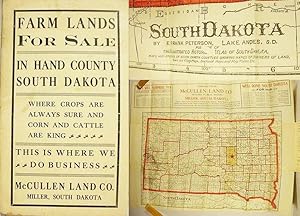
Published by Will A. Beach Printing Co.; Sioux Falls, SD; pp.; Wraps; F-; 1907/nd (1909) 1909
- Softcover
- Map
Seller: Watermark West Rare Books, Wichita, KS, U.S.A.Watermark West Rare Books
Contact seller4-star sellerCondition: Used - Near fine
US$ 175.00
US$ 8.00 shippingShips within U.S.A.Quantity: 1 available
Soft cover. Condition: Near Fine. _____Single sheet, 17 x 21 7/8", printed on one side, folded and mounted into stiff paper covers (6 x 3.5"). _____ The covers are printed with the title: "Farm Lands / For Sale / In Hand County / South Dakota / Where Crops Are / Always Sure and / Corn and Cattle / Are King / This is Where We Do…Business / McCullen Land Co. / Miller, South Dakota." There is more information from the sponsoring company on the the inside front and outside rear covers._____ . _____ The top 3.5" of the map sheet is printed with tabular farm statistics for 1908 as well as more copy from the McCullen Co. _____ The map itself is 11.5 x 18.5", black & white with counties outlined in red._____ The town of Miller is starred and its surrounding Hand County printed in gold._____ Towns, railroads, reservations, creeks, rivers and lakes across the state are all located._____though not indexed._____ There are some topographic hachures in the Black Hills region. _____ The verso is blank. _____ The map was mis-mounted into the covers (so that south is at the top) and has been misfolded in the past. _____ WorldCat (12/13) shows 5 holdings for a ca._____1909 issue._____ Three are at Yale and one each at USD and UMi._____ None have this sponsor's copy or details. _____ Karrow/SD (11-0740) shows a similar Peterson ca.1909 pocket map but with different land company details. _____.
- Softcover
- Print on Demand
Seller: Biblios, frankfurt am main, HESSE, GermanyBiblios
Contact seller4-star sellerCondition: New
US$ 35.73
US$ 11.53 shippingShips from Germany to U.S.A.Quantity: 4 available
Condition: New. PRINT ON DEMAND.
Published by Undated 1943
- Manuscript
Seller: Richard M. Ford Ltd, London, , United KingdomRichard M. Ford Ltd
Contact seller5-star sellerCondition: Used
US$ 165.82
US$ 6.04 shippingShips from United Kingdom to U.S.A.Quantity: 1 available
The three items are stapled to one another, in good condition on lightly-aged paper. The first item is the typescript, which is 1p., 4to. It is addressed to 'Dear Brother Artist,' and begins: 'You will possibly be rather surprised to receive a letter from me, but after having spent most of my life in the Provinces, I now find my…self landed in London. I am surprised at the amount of discussion and activity that takes place here regarding the "politics" of the theatre - and realise how you in the Provinces are apt to get left out. With regard to Sunday Opening I think that this is a matter which primarily affects you personally. | I am rather surprised to find that a few West End actors, who know nothing of those train journeys from Scunthorpe to Lincoln via Plymouth (because the Railway Company is repairing a tunnel - on Sunday!) were opposed to bettering the travelling and working conditions of 75% of our Profession - and that means you again.' A reference to 'the Progressive bunch, the anti-D.O.R.A.'S' follows, with an injunction for 'those of you who are Equity members - to vote in the Ballot. Whether you are for or against - vote and vote now - post that card now.' The draft ends: 'Yours sincerely, | (Signature block)'. In a postscript Trinder apologises 'for poking my nose into something that appears not to concern me by sending you this book. But I feel it concerns everyone in the show business, be it circus, music-hall, or the "legit." to give the Forces and the Public what they obviously want and need.' The facsimile of Trinder's signature (the 'Signature block' referred to in the typewritten draft) is 8.5 cm long, on a 5 x 20cm strip of paper. The manuscript draft, with several emendations, is 4pp., 12mo, and is written out in pencil on four leaves. A copy of Trinder's printed circular is among the Robert Donat papers at the John Rylands Library in Manchester.
 More images
Schönes Kabinettfoto des jüdischen Pianisten und Komponisten Sally Liebling. Auf der Motivseite mit eigenhändiger Notenzeile und Widmung an den Geiger und Kammervirtuosen Felix Meyer (1847-1914): "Dem ausgezeichneten Künstler & lieben Freunde, Felix Meyer, in freundschaftl. Verehrung von seinem Sally Liebling. Dez. 94!"
Jüd. Komponist Sally Liebling (1859-1909): CAB-Foto mit Widmung 1894, Autograph
Published by Berlin 1894 1894
Seller: Antiquariat Thomas Mertens, Berlin, GermanyAntiquariat Thomas Mertens
Contact seller4-star sellerCondition: Used
US$ 107.46
US$ 63.76 shippingShips from Germany to U.S.A.Quantity: 1 available
Schönes Kabinettfoto aus dem Atelier des kgl.-bayerischen Hoffotografen E. Bieber (Berlin, Leipziger Straße 128), d.i. Leonard Berlin-Bieber (1841-1931). Die Bezeichnung "E. Bieber" stammt von der Gründerin des Ateliers Emilie Bieber. Foto mit eingeprägter Datierung 1894. -- Format (Pappe): 16,8 x 10,8 cm. -- Zustand: Ecken leic…ht bestoßen; Pappe gebogen und etwas fleckig; auch das Foto fleckig. Über Sally Liebling und Felix Meyer (Quelle: dt. & engl. Wikipedia): Sally Liebling, sometimes given as Solly Liebling, (8 April 1859 - 15 September 1909) was a German pianist, composer, and teacher. Biography: Born in the province of Posen, Liebling was from a prominent Jewish family of musicians. His three brothers, Georg, Emil, and Max Liebling, were also successful pianists, and all four of them were trained on the piano by Franz Liszt. Sally studied with Liszt at Weimar in 1884. The four brothers also had success as composers in addition to being notable performers. His older brother Max moved to New York City as a teenager having already had a career as a concert pianist in Europe. Max was the father of several successful musicians, including the soprano and famous voice teacher Estelle Liebling; the cellist James Liebling; and the music critic, pianist, composer, and opera librettist Leonard Liebling. In addition to his time as a pupil of Liszt, Sally Liebling pursued further studies in music and the piano under Theodor Kullak, Franz Bendel and Carl Friedrich Weitzmann in Berlin. He made a number of concert tours in Germany, and with Theodore Thomas's orchestra in the United States (1875). He subsequently gave many recitals with well-known artists. In 1888 he founded the New Conservatory of Music at Berlin where he taught until his death. His students included Selmar Janson. ----- Karl Wilhelm Felix Meyer (* 5. Februar 1847 in Berlin; gest. 3. Oktober 1914 in Berlin-Schöneberg) war Geiger und Königlicher Kammervirtuose. Meyer, Sohn des Königlich sächsischen Musikdirektors Moritz Bernhard Meyer und seiner Frau Ernestine Henriette, geborene Herrmann, absolvierte seine musikalische Ausbildung im Leipziger Konservatorium, wo er Schüler Ferdinand Davids war. Später wurde er als Geiger erst Mitglied und dann Solist im Orchester von Benjamin Bilse. 1878 wurde er in die Königliche Hofkapelle Berlin berufen. In diesem Rahmen nahm er auch die Stellung als Königlicher Kammervirtuose ein. Meyer war verheiratet mit Adelheid Auguste Marie Haustein. 1914 verstarb Meyer in Berlin und wurde auf dem Städtischen Friedhof Friedenau beigesetzt. Sein jüngerer Bruder Waldemar Meyer (1853-1940) war ebenfalls Geiger (Schüler Joseph Joachims) und von 1873 bis 1881 Mitglied der Kgl. Hofkapelle.

Seller: Johannes Müller, Salzburg, AustriaJohannes Müller
Contact seller5-star sellerCondition: Used
US$ 71.64
US$ 25.50 shippingShips from Austria to U.S.A.Quantity: 1 available
Jan Mlcoch, "Schlosser & Wenisch. Ein Prager Fotoatelier", in: Fotogeschichte 116, 2010.- Vintage Abzug.- Unbekannte Künstlerin mit großer Kopfbedeckung.- Der Violonist Otto Schlosser (1880-1942) eröffnete 1909 gemeinsam mit Max Wenisch (1876-?) das Prager Atelier "Schlosser & Wenisch". Ab 1911 scheint Otto Schlosser als Alleini…nhaber auf, allerdings blieb der Doppelname des Geschäfts aufrecht. Er wurde als Porträtfotograf der vornehmen Gesellschaft, Künstler, Musiker u. Schauspieler sehr schnell erfolgreich; daneben aber entstanden auch Theater-, Akt- und Tanzaufnahmen. Um 1930 gehörte das Atelier Schlosser & Wenisch zu den bekanntesten des Landes. Anfang der 1930er Jahre wurde Antonín Studnicka und Václav Dub als Fotografen eingestellt. Studnicka galt zu dieser Zeit als einer der fortschrittlichsten tschechischen Porträtfotografen. Nach der Annexion Tschechiens 1939 durch das Dritte Reich wurde Schlosser, der jüdischer Herkunft war zusammen mit seiner Frau Josefina und ihrem Sohn Tomás 1942 in ein Vernichtungslager in der Nähe von Minsk in Weißrussland deportiert, wo sie ermordet wurden. Das Fotoatelier wurde verwüstet und das Archiv vernichtet.-# Vintage silver bromide print with photographer`s blind stamp and year; as well as studio`s stamp on the reverse.-.

Seller: Johannes Müller, Salzburg, AustriaJohannes Müller
Contact seller5-star sellerCondition: Used
US$ 71.64
US$ 25.50 shippingShips from Austria to U.S.A.Quantity: 1 available
Jan Mlcoch, "Schlosser & Wenisch. Ein Prager Fotoatelier", in: Fotogeschichte 116, 2010.- Vintage Abzug.- Unbekannte Tänzerin (Revue).- Der Violonist Otto Schlosser (1880-1942) eröffnete 1909 gemeinsam mit Max Wenisch (1876-?) das Prager Atelier "Schlosser & Wenisch". Ab 1911 scheint Otto Schlosser als Alleininhaber auf, allerdi…ngs blieb der Doppelname des Geschäfts aufrecht. Er wurde als Porträtfotograf der vornehmen Gesellschaft, Künstler, Musiker u. Schauspieler sehr schnell erfolgreich; daneben aber entstanden auch Theater-, Akt- und Tanzaufnahmen. Um 1930 gehörte das Atelier Schlosser & Wenisch zu den bekanntesten des Landes. Anfang der 1930er Jahre wurde Antonín Studnicka und Václav Dub als Fotografen eingestellt. Studnicka galt zu dieser Zeit als einer der fortschrittlichsten tschechischen Porträtfotografen. Nach der Annexion Tschechiens 1939 durch das Dritte Reich wurde Schlosser, der jüdischer Herkunft war zusammen mit seiner Frau Josefina und ihrem Sohn Tomás 1942 in ein Vernichtungslager in der Nähe von Minsk in Weißrussland deportiert, wo sie ermordet wurden. Das Fotoatelier wurde verwüstet und das Archiv vernichtet.-# Vintage silver bromide print with photographer`s blind stamp and year; as well as studio`s stamp on the reverse.-.

Seller: Johannes Müller, Salzburg, AustriaJohannes Müller
Contact seller5-star sellerCondition: Used
US$ 71.64
US$ 25.50 shippingShips from Austria to U.S.A.Quantity: 1 available
Jan Mlcoch, "Schlosser & Wenisch. Ein Prager Fotoatelier", in: Fotogeschichte 116, 2010.- Vintage Abzug.- Unbekannte Balletttänzerin.- Der Violonist Otto Schlosser (1880-1942) eröffnete 1909 gemeinsam mit Max Wenisch (1876-?) das Prager Atelier "Schlosser & Wenisch". Ab 1911 scheint Otto Schlosser als Alleininhaber auf, allerdin…gs blieb der Doppelname des Geschäfts aufrecht. Er wurde als Porträtfotograf der vornehmen Gesellschaft, Künstler, Musiker u. Schauspieler sehr schnell erfolgreich; daneben aber entstanden auch Theater-, Akt- und Tanzaufnahmen. Um 1930 gehörte das Atelier Schlosser & Wenisch zu den bekanntesten des Landes. Anfang der 1930er Jahre wurde Antonín Studnicka und Václav Dub als Fotografen eingestellt. Studnicka galt zu dieser Zeit als einer der fortschrittlichsten tschechischen Porträtfotografen. Nach der Annexion Tschechiens 1939 durch das Dritte Reich wurde Schlosser, der jüdischer Herkunft war zusammen mit seiner Frau Josefina und ihrem Sohn Tomás 1942 in ein Vernichtungslager in der Nähe von Minsk in Weißrussland deportiert, wo sie ermordet wurden. Das Fotoatelier wurde verwüstet und das Archiv vernichtet.-# Vintage silver bromide print with photographer`s blind stamp and year; as well as studio`s stamp on the reverse.-.

Seller: Johannes Müller, Salzburg, AustriaJohannes Müller
Contact seller5-star sellerCondition: Used
US$ 71.64
US$ 25.50 shippingShips from Austria to U.S.A.Quantity: 1 available
Jan Mlcoch, "Schlosser & Wenisch. Ein Prager Fotoatelier", in: Fotogeschichte 116, 2010.- Vintage Abzug.- Biographische Daten der Künstlerin Edith Röder (Film?) konnten wir nicht ermitteln.- Der Violonist Otto Schlosser (1880-1942) eröffnete 1909 gemeinsam mit Max Wenisch (1876-?) das Prager Atelier "Schlosser & Wenisch". Ab 191…1 scheint Otto Schlosser als Alleininhaber auf, allerdings blieb der Doppelname des Geschäfts aufrecht. Er wurde als Porträtfotograf der vornehmen Gesellschaft, Künstler, Musiker u. Schauspieler sehr schnell erfolgreich; daneben aber entstanden auch Theater-, Akt- und Tanzaufnahmen. Um 1930 gehörte das Atelier Schlosser & Wenisch zu den bekanntesten des Landes. Anfang der 1930er Jahre wurde Antonín Studnicka und Václav Dub als Fotografen eingestellt. Studnicka galt zu dieser Zeit als einer der fortschrittlichsten tschechischen Porträtfotografen. Nach der Annexion Tschechiens 1939 durch das Dritte Reich wurde Schlosser, der jüdischer Herkunft war zusammen mit seiner Frau Josefina und ihrem Sohn Tomás 1942 in ein Vernichtungslager in der Nähe von Minsk in Weißrussland deportiert, wo sie ermordet wurden. Das Fotoatelier wurde verwüstet und das Archiv vernichtet.-# Vintage silver bromide print with photographer`s blind stamp and year; as well as studio`s stamp on the reverse.-.

Seller: Johannes Müller, Salzburg, AustriaJohannes Müller
Contact seller5-star sellerCondition: Used
US$ 71.64
US$ 25.50 shippingShips from Austria to U.S.A.Quantity: 1 available
Jan Mlcoch, "Schlosser & Wenisch. Ein Prager Fotoatelier", in: Fotogeschichte 116, 2010.- Vintage Abzug.- Unbekannte Tänzerin (Revue).- Der Violonist Otto Schlosser (1880-1942) eröffnete 1909 gemeinsam mit Max Wenisch (1876-?) das Prager Atelier "Schlosser & Wenisch". Ab 1911 scheint Otto Schlosser als Alleininhaber auf, allerdi…ngs blieb der Doppelname des Geschäfts aufrecht. Er wurde als Porträtfotograf der vornehmen Gesellschaft, Künstler, Musiker u. Schauspieler sehr schnell erfolgreich; daneben aber entstanden auch Theater-, Akt- und Tanzaufnahmen. Um 1930 gehörte das Atelier Schlosser & Wenisch zu den bekanntesten des Landes. Anfang der 1930er Jahre wurde Antonín Studnicka und Václav Dub als Fotografen eingestellt. Studnicka galt zu dieser Zeit als einer der fortschrittlichsten tschechischen Porträtfotografen. Nach der Annexion Tschechiens 1939 durch das Dritte Reich wurde Schlosser, der jüdischer Herkunft war zusammen mit seiner Frau Josefina und ihrem Sohn Tomás 1942 in ein Vernichtungslager in der Nähe von Minsk in Weißrussland deportiert, wo sie ermordet wurden. Das Fotoatelier wurde verwüstet und das Archiv vernichtet.-# Vintage silver bromide print with photographer`s blind stamp and year; as well as studio`s stamp on the reverse.-.

Seller: Johannes Müller, Salzburg, AustriaJohannes Müller
Contact seller3-star sellerCondition: Used
US$ 71.64
US$ 25.50 shippingShips from Austria to U.S.A.Quantity: 1 available
Jan Mlcoch, "Schlosser & Wenisch. Ein Prager Fotoatelier", in: Fotogeschichte 116, 2010.- Vintage Abzug.- Unbekannte Balletttänzerin.- Der Violonist Otto Schlosser (1880-1942) eröffnete 1909 gemeinsam mit Max Wenisch (1876-?) das Prager Atelier "Schlosser & Wenisch". Ab 1911 scheint Otto Schlosser als Alleininhaber auf, allerdin…gs blieb der Doppelname des Geschäfts aufrecht. Er wurde als Porträtfotograf der vornehmen Gesellschaft, Künstler, Musiker u. Schauspieler sehr schnell erfolgreich; daneben aber entstanden auch Theater-, Akt- und Tanzaufnahmen. Um 1930 gehörte das Atelier Schlosser & Wenisch zu den bekanntesten des Landes. Anfang der 1930er Jahre wurde Antonín Studnicka und Václav Dub als Fotografen eingestellt. Studnicka galt zu dieser Zeit als einer der fortschrittlichsten tschechischen Porträtfotografen. Nach der Annexion Tschechiens 1939 durch das Dritte Reich wurde Schlosser, der jüdischer Herkunft war zusammen mit seiner Frau Josefina und ihrem Sohn Tomás 1942 in ein Vernichtungslager in der Nähe von Minsk in Weißrussland deportiert, wo sie ermordet wurden. Das Fotoatelier wurde verwüstet und das Archiv vernichtet.-# Vintage silver bromide print with photographer`s blind stamp and year; as well as studio`s stamp on the reverse.-.

Seller: Johannes Müller, Salzburg, AustriaJohannes Müller
Contact seller3-star sellerCondition: Used
US$ 71.64
US$ 25.50 shippingShips from Austria to U.S.A.Quantity: 1 available
Jan Mlcoch, "Schlosser & Wenisch. Ein Prager Fotoatelier", in: Fotogeschichte 116, 2010.- Vintage Abzug.- Biographische Daten der Künstlerin (Film?) Edith Röder konnten wir nicht ermitteln.- Der Violonist Otto Schlosser (1880-1942) eröffnete 1909 gemeinsam mit Max Wenisch (1876-?) das Prager Atelier "Schlosser & Wenisch". Ab 191…1 scheint Otto Schlosser als Alleininhaber auf, allerdings blieb der Doppelname des Geschäfts aufrecht. Er wurde als Porträtfotograf der vornehmen Gesellschaft, Künstler, Musiker u. Schauspieler sehr schnell erfolgreich; daneben aber entstanden auch Theater-, Akt- und Tanzaufnahmen. Um 1930 gehörte das Atelier Schlosser & Wenisch zu den bekanntesten des Landes. Anfang der 1930er Jahre wurde Antonín Studnicka und Václav Dub als Fotografen eingestellt. Studnicka galt zu dieser Zeit als einer der fortschrittlichsten tschechischen Porträtfotografen. Nach der Annexion Tschechiens 1939 durch das Dritte Reich wurde Schlosser, der jüdischer Herkunft war zusammen mit seiner Frau Josefina und ihrem Sohn Tomás 1942 in ein Vernichtungslager in der Nähe von Minsk in Weißrussland deportiert, wo sie ermordet wurden. Das Fotoatelier wurde verwüstet und das Archiv vernichtet.-# Vintage silver bromide print with photographer`s blind stamp and year; as well as studio`s stamp on the reverse.-.

Seller: Johannes Müller, Salzburg, AustriaJohannes Müller
Contact seller3-star sellerCondition: Used
US$ 71.64
US$ 25.50 shippingShips from Austria to U.S.A.Quantity: 1 available
Jan Mlcoch, "Schlosser & Wenisch. Ein Prager Fotoatelier", in: Fotogeschichte 116, 2010.- Vintage Abzug.- Biographische Daten der Tänzerin Eva Hesse konnten wir nicht ermitteln.- Der Violonist Otto Schlosser (1880-1942) eröffnete 1909 gemeinsam mit Max Wenisch (1876-?) das Prager Atelier "Schlosser & Wenisch". Ab 1911 scheint Ot…to Schlosser als Alleininhaber auf, allerdings blieb der Doppelname des Geschäfts aufrecht. Er wurde als Porträtfotograf der vornehmen Gesellschaft, Künstler, Musiker u. Schauspieler sehr schnell erfolgreich; daneben aber entstanden auch Theater-, Akt- und Tanzaufnahmen. Um 1930 gehörte das Atelier Schlosser & Wenisch zu den bekanntesten des Landes. Anfang der 1930er Jahre wurde Antonín Studnicka und Václav Dub als Fotografen eingestellt. Studnicka galt zu dieser Zeit als einer der fortschrittlichsten tschechischen Porträtfotografen. Nach der Annexion Tschechiens 1939 durch das Dritte Reich wurde Schlosser, der jüdischer Herkunft war zusammen mit seiner Frau Josefina und ihrem Sohn Tomás 1942 in ein Vernichtungslager in der Nähe von Minsk in Weißrussland deportiert, wo sie ermordet wurden. Das Fotoatelier wurde verwüstet und das Archiv vernichtet.-# Vintage silver bromide print with photographer`s blind stamp and year; as well as studio`s stamp on the reverse.-.

Seller: Johannes Müller, Salzburg, AustriaJohannes Müller
Contact seller3-star sellerCondition: Used
US$ 71.64
US$ 25.50 shippingShips from Austria to U.S.A.Quantity: 1 available
Jan Mlcoch, "Schlosser & Wenisch. Ein Prager Fotoatelier", in: Fotogeschichte 116, 2010.- Vintage Abzug.- Biographische Daten der Tänzerin Eva Hesse konnten wir nicht ermitteln.- Der Violonist Otto Schlosser (1880-1942) eröffnete 1909 gemeinsam mit Max Wenisch (1876-?) das Prager Atelier "Schlosser & Wenisch". Ab 1911 scheint Ot…to Schlosser als Alleininhaber auf, allerdings blieb der Doppelname des Geschäfts aufrecht. Er wurde als Porträtfotograf der vornehmen Gesellschaft, Künstler, Musiker u. Schauspieler sehr schnell erfolgreich; daneben aber entstanden auch Theater-, Akt- und Tanzaufnahmen. Um 1930 gehörte das Atelier Schlosser & Wenisch zu den bekanntesten des Landes. Anfang der 1930er Jahre wurde Antonín Studnicka und Václav Dub als Fotografen eingestellt. Studnicka galt zu dieser Zeit als einer der fortschrittlichsten tschechischen Porträtfotografen. Nach der Annexion Tschechiens 1939 durch das Dritte Reich wurde Schlosser, der jüdischer Herkunft war zusammen mit seiner Frau Josefina und ihrem Sohn Tomás 1942 in ein Vernichtungslager in der Nähe von Minsk in Weißrussland deportiert, wo sie ermordet wurden. Das Fotoatelier wurde verwüstet und das Archiv vernichtet.-# Vintage silver bromide print with photographer`s blind stamp and year; as well as studio`s stamp on the reverse.-.
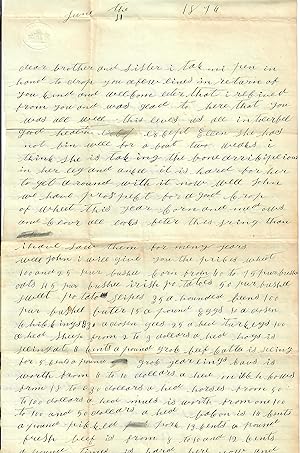
Rickards, Peter (ca. 1843-1918); Rickards, Ellen (ca. 1845-1909). Historically Interesting Letter Written by an Indiana Farmer and His Wife to "Dear Brother and Sister" in Starr's Point, Oregon, Talking About Suffering from the Food Shortage and Seeking Provisions in Springfield, Illinois, Mentioning the Exceptional Promise of Wheat, Corn, Meadows, and Clover, and Indicating Early Prices of Various Agricultural Commodities, Including Butter, Fresh Beef, Chickens, Turkeys, Irish Potatoes, Bacon, etc. Indiana, 11 June 1876.
Rickards, Peter (ca. 1843-1918); Rickards, Ellen (ca. 1845-1909)
- Manuscript
Seller: Globus Rare Books & Archives, San Francisco, CA, U.S.A.Globus Rare Books & Archives
Contact seller5-star sellerCondition: Used - Very good
US$ 350.00
US$ 3.00 shippingShips within U.S.A.Quantity: 1 available
None. Condition: Very Good. Quarto (ca. 31.5x19.5 cm, 12.5x7.5 in.) 2 pp. black ink on yellowish lined wove paper. Fold marks, minor tear, one left side with rough edge, slightly age-toned, but overall a very good letter written in a legible hand. With the original yellow postmarked envelope. A historically interesting original…autograph manuscript letter from the Long Depression (1873-1879), offering a firsthand account of Indiana, economic hardship and food scarcity during the Long Depression through the eyes of a local farmer. Dated 11 June 1876, the letter was penned by a farmer Peter Rickard (ca. 1843-1918) and his wife Ellen Rickard (ca. 1845-1909) in Indiana. At the time of writing, the couple, along with their four children, resided in Pike County. Later, the Rickards would move to Gibson County and eventually settle in Oregon. The authors address the letter, full of grammatical mistakes, to "dear brother and sister," John (ca. 1827-1921) and Susan Rickard (ca. 1830-1916) in Starr's Point (Benton County), Oregon. In the text, the Rickards complain about hard economic times, mentioning the diminishing availability of products and their pursuit of provisions in Springfield, Illinois. The authors express optimism for a fruitful harvest, emphasizing the exceptional promise of wheat, corn, meadows, and clover. Interestingly, the Rickards also impart detailed prices of various agricultural commodities, including wheat, corn, oats, Irish potatoes, butter, eggs, bacon, fresh beef, chickens, turkeys, sheep, horses, mules, and tobacco. In the rest of the letter, the authors talk about Susan's health condition and a dispute about the division of "henry's land" between "henry's children and wife". Overall, a historically interesting original autograph manuscript letter capturing Indiana's economic hardships as seen through the eyes of a local farmer. The text of the letter (original punctuation and spelling preserved): " Dear brother and sister I tak mi pen in hand to drop you a few lines in return of you kind and wellcom leter that I received from you and was glad to here that you was all well. This lived us all in tolerble good health … except Ellen she had not bin well for a bout two weaks I think she is taking bone drriciplious in her leg and ankle it is hard for her to get around with it now well John we have prospect for a good crop of wheet this year corn and medows and clovr all looks beter this sring than I have saw them for many years well john I will give you the prices wheet 100 and 25 pur bushel corn from 40 to 15 pur bushel oats 45 pur bushel irish potatoes 50 pur bushel sweet potato slipes 35 a hounded blend 100 pur bushel buter 15 a pound eggs 10 a dosen chickings $3 a dosen gus 25 a hed turkeys 100 a hed sheep from 2 to 3 dollars a hed hoys is seling at 11 cents a pound groc beef cattle is seling for 5 cents a pound groc yearlings cavs is worth from 11 to 10 dollars a hed milcn cowesfrom 18 to 30 dollars a hed horses from 50 to 100 dollars a hed muls is worth from one 100 to 100 and 50 dollars a hed bacon is 14 cents a pound pickld pork 13 cents a pound fresh beef is from 8 to 10 and 12 centsa pound times is hard here now and noth ing much going on here to given up the times the produc is a bout all sold off and gon but tobaco it is worth from 159 cents a pound well John I have every where to get you them Cam mill seed but I cant get any around here now i have sent to spring feld illinois to anold gardner for them and i will send them in your next leter well John Casper waunted a pare of reel birds i will send 2 pare of them iwaunt you to ceep one pare of them and give Casper the other pair I will send them with John black and Lucey miller. The con nec tion is well sofaras ino henrys children and wiff has of devided henrys land his wif got the Tom Son 40 30 at michce old house and she is cut ing up up a big over it she sas she is going to have it dun over agane and if she cant have it dun over agane she will sell out to a niyor and put him on it and levl it well susan ellen got the - you sent her. we think that it is - peec of goods ellen will send you a star plac the star in the senter of the spred cete point - to each corner of the spred tell bother and mother rite to me i would be glad to see them no more this time god by til the next time. From Peter and Ellen Rickard to John and Susan Rickard write soon and often. ".

Hammerschmidt, Wilhelm (ca. 1830 - d. 1869); Maison Bonfils (1867-1909) [Attributed to]. Historically Significant Album with Twenty-Three Original Albumen Photos of Egypt, Showing the Early, Pre-Restoration Views of Ancient Landmarks in Cairo (Mosque of Sultan Hassan, Mosque of Mahmud Pasha, Tombs of Caliphs & Mamluks, Funerary complex of Sultan Qaytbay), Luxor (Temple of Khonsu, Grand colonnade of Amenophis), and Nubia (Temple of Al-Maharraqa Temples at Wadi es-Sabua, Abu Simbel Temple, Kiosk of Qertassi, Trajan's Kiosk). Ca. 1860s.
HAMMERSCHMIDT, Wilhelm (ca. 1830 - d. 1869); MAISON BONFILS (1867-1909) [Attributed to].
Seller: Globus Rare Books & Archives, San Francisco, CA, U.S.A.Globus Rare Books & Archives
Contact seller5-star sellerNone. Condition: None. Oblong Folio album (ca. 23,2x30,8 cm). 11 card stock leaves. With 23 albumen prints ca. 19,1x25,8 cm (7 ½ x 10 in) and one newspaper clipping ca. 15,8x21,8 cm (6 ¼ x 8 ½ in). No captions. Period papered boards fastened with a string. Boards with tears, but overall a very good album with strong, interesting… photos. Historically important collection of twenty-three large, excellent early photographs of iconic sites in ancient Egypt, likely taken by its pioneering photographers Wilhelm Hammerschmidt and/or Maison Bonfils photographic company. The attribution is based on two images in our collection that closely match photographs from Documents Archéologiques sur l'Égypte, Nubie, Syrie (P. Verdier de Latour, 1875), credited to Hammerschmidt and Bonfils. The photographs from our album were likely taken in the 1860s, as the image of the Mosque of Sultan Hassan does not show the adjacent Al-Rifai Mosque, whose construction began in 1869. Many of these photos capture famous monuments in their original state, such as the Abu Simbel Temple before its relocation in the 1960s due to the flooding caused by the construction of the Aswan High Dam, and the Philae temple complex before it was submerged by the Aswan Low Dam in the early 20th century. The photos show: Cairo: View from the Citadel with the Mosque of Sultan Hassan, Mosque of Mahmud Pasha, Sultaniyya Mausoleum - Tombs of Caliphs & Tomb of Mamluks (part of the Sultaniyya complex has disappeared, with its current remains restored in modern times; in 2023, the minaret was disassembled for a highway roundabout, with plans to relocate it), Funerary complex of Sultan Qaytbay; Luxor: Temple of Khonsu (before 2008 restoration), Grand colonnade of Amenophis (before 2001 restoration); Nubia: Temple of Al-Maharraqa (relocated in the 1960s as part of the International Campaign to Save the Monuments of Nubia), Temples at Wadi es-Sabua (relocated in the 1960s because of the Aswan Dam), Abu Simbel Temple (relocated in the 1960s), Kiosk of Qertassi (taken at its original location before being moved inland in the 1960s due to the rising waters of Lake Nasser), the approach to Philae, Trajan's Kiosk (relocated from Philae during the 1970s rescue efforts); Nile's First & Second Cataracts. "Born in Berlin, Wilhelm Hammerschmidt was already a professional photographer when he settled in Cairo, Egypt, around 1860. There he established the Hammerschmidt shop, where he sold photographic materials. Hammerschmidt exhibited ten views of Egypt at the Société Française de Photographie in 1861 before becoming a member the following year. He also made costume and ethnographic studies, exhibiting those at the Exposition Universelle in Paris in 1867. Hammerschmidt also made photographs in Syria and Nubia, now Sudan" (Wilhelm Hammerschmidt / J. Paul Getty Museum online). Hammerschmidt is considered one of first photographers to produce high quality detailed images of Egypt and his travels and photographs of Upper Egypt and Nubia predate popular tourism in Egypt. He appears to have collaborated with the pioneering photo chemist Hermann Wilhelm Vogel (1834-1898) which would explain the high quality of Hammerschmidt's photographs." Maison Bonfils was started by Felix Bonfils (1831-1885) in Beirut in 1867 and was "to become one of the most successful photographic businesses in the world. They photographed most of the important sights in the Middle East and their views were widely distributed" (Jacobsen p. 216). Bonfils' "stock had variety enough to please all and ranged from classical landscapes and biblical scenes to ethnographic portraits" (Perez, p. 141). Overall, historically important collection of large, excellent early photographs of iconic sites in ancient Egypt.


