
Daniel H Watts (9 results)

The Year's Top Hard Science Fiction Stories 8
Kaster, Allan; Buckell, Tobias S.; Gilman, Carolyn Ives; Kunsken, Derek; Landis, Geoffrey A.; Lee, Yoon Ha; Ryman, Geoff; Steele, Allen M.; Watts, Peter; Wilson, Daniel H.
Language: English
Published by Infinivox 2024
Series: The Year's Top Hard Science Fiction Stories, Book 8 of 9. Book 8 of 9 - The Year's Top Hard Science Fiction Stories
- Softcover
Seller: Zoom Books East, Glendale Heights, U.S.A.Zoom Books East
Contact seller5-star sellerCondition: Used - Good
US$ 20.43
Free ShippingShips within U.S.A.Quantity: 1 available
Condition: good. Book is in good condition and may include underlining highlighting and minimal wear. The book can also include "From the library of" labels. May not contain miscellaneous items toys, dvds, etc. . We offer 100% money back guarantee and 24 7 customer service.
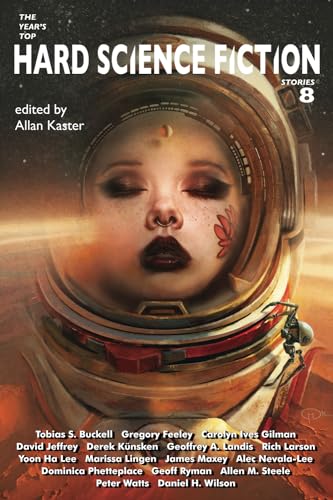
The Year's Top Hard Science Fiction Stories 8
Kaster, Allan; Buckell, Tobias S.; Gilman, Carolyn Ives; Kunsken, Derek; Landis, Geoffrey A.; Lee, Yoon Ha; Ryman, Geoff; Steele, Allen M.; Watts, Peter; Wilson, Daniel H.
Language: English
Published by Infinivox 2024
Series: The Year's Top Hard Science Fiction Stories, Book 8 of 9. Book 8 of 9 - The Year's Top Hard Science Fiction Stories
- Softcover
Seller: Ria Christie Collections, Uxbridge, United KingdomRia Christie Collections
Contact seller5-star sellerCondition: New
US$ 31.12
US$ 16.01 shippingShips from United Kingdom to U.S.A.Quantity: Over 20 available
Condition: New. In.

Published by Afro-American Research Institute, Inc, New York 1965
- Softcover
Seller: D. Anthem, Bookseller, Cornish Flat, U.S.A.D. Anthem, Bookseller
Contact seller5-star sellerAn issue of one of the most important, yet often overlooked, magazines of radical black, which began in 1961 as the organ of the short-lived Liberation Committee for Africa (LCA). Inspired by the liberation movements in Africa, the LCA was formed by the once-promising architect, Daniel H. Watts, along with veteran black journali…st Richard Gibson and white activist Pete Beveridge, a Communist Party member who'd previously been education director for the Brooklyn chapter of the Association for the Study of Negro Life and History (Beveridge was married to an African American Communist named Hortense "Tee" Sie who was an organizer for the Council on African Affairs). Beveridge would later be nudged out of his role at the Liberator due to the racialization of black organizations during the 1960s. The noted intellectual John Henrik Clarke was also an early member of the magazine's editorial board, although he wasn't involved with the day-to-day operations. Initially focused on African independence movements and the African diaspora, the magazine increasingly focused on black power, black nationalism, and black arts in the United States with articles supporting Malcolm X, Rev. Albert Cleage, Robert F. Williams, SNCC, and other militant groups and individuals. In 1963, the magazine featured a three-part series by former New York Black Panther Eddie Ellis on "Semitism and the Black Ghetto," which caused a backlash among some supporters and the resignation of Ossie Davis and James Baldwin from its Advisory Board. By 1970 the magazine was in dire financial straits and the last issue appeared in March 1971. This issue features an editorial by Watts ("Selective Violence"), "Incident At Cornell" by Othello Mahome, "Black Ideology and the Search for Community" by Robert E. Staples, "Afternoon in Peru" by St. Clair Bourne, a short story, "End of the Affair" by Ann A. Shockley, an Open Letter to James Earl Jones by John Cosby, Jr., reviews, and letters to the editor. Magazine format, photo-illustrated cover, 22 p. Slight ripple to the front cover.

Published by Afro-American Research Institute, Inc, New York 1965
- Softcover
Seller: D. Anthem, Bookseller, Cornish Flat, U.S.A.D. Anthem, Bookseller
Contact seller5-star sellerAn issue of one of the most important, yet often overlooked, magazines of radical black, which began in 1961 as the organ of the short-lived Liberation Committee for Africa (LCA). Inspired by the liberation movements in Africa, the LCA was formed by the once-promising architect, Daniel H. Watts, along with veteran black journali…st Richard Gibson and white activist Pete Beveridge, a Communist Party member who'd previously been education director for the Brooklyn chapter of the Association for the Study of Negro Life and History (Beveridge was married to an African American Communist named Hortense "Tee" Sie who was an organizer for the Council on African Affairs). Beveridge would later be nudged out of his role at the Liberator due to the racialization of black organizations during the 1960s. The noted intellectual John Henrik Clarke was also an early member of the magazine's editorial board, although he wasn't involved with the day-to-day operations. Initially focused on African independence movements and the African diaspora, the magazine increasingly focused on black power, black nationalism, and black arts in the United States with articles supporting Malcolm X, Rev. Albert Cleage, Robert F. Williams, SNCC, and other militant groups and individuals. In 1963, the magazine featured a three-part series by former New York Black Panther Eddie Ellis on "Semitism and the Black Ghetto," which caused a backlash among some supporters and the resignation of Ossie Davis and James Baldwin from its Advisory Board. By 1970 the magazine was in dire financial straits and the last issue appeared in March 1971. This issue features an editorial by Watts, a review of an event dedicated to Paul Robeson, "Black People & the New Left: Here We Go Again" by C. E. Wilson, "The Legacy of Malcolm X" by A. B. Spellman, "Return of the Big Stick" by Carlos E. Russell (on U.S. involvement in the Dominican Republic), a centerfold photo spread on Tanzania, "Howard University: Neither Red nor Black, Just Servile," a short story, "Luck of the Mestizo" by Edward S. Jones, "The Cultural Front" by L. P. Neal, letters to the editor, reviews, etc. Magazine format, photo-illustrated cover, 30 p. Some toning to covers, else a near fine copy.

Published by Afro-American Research Institute, Inc, New York 1965
- Softcover
Seller: D. Anthem, Bookseller, Cornish Flat, U.S.A.D. Anthem, Bookseller
Contact seller5-star sellerAn issue of one of the most important, yet often overlooked, magazines of radical black, which began in 1961 as the organ of the short-lived Liberation Committee for Africa (LCA). Inspired by the liberation movements in Africa, the LCA was formed by the once-promising architect, Daniel H. Watts, along with veteran black journali…st Richard Gibson and white activist Pete Beveridge, a Communist Party member who'd previously been education director for the Brooklyn chapter of the Association for the Study of Negro Life and History (Beveridge was married to an African American Communist named Hortense "Tee" Sie who was an organizer for the Council on African Affairs). Beveridge would later be nudged out of his role at the Liberator due to the racialization of black organizations during the 1960s. The noted intellectual John Henrik Clarke was also an early member of the magazine's editorial board, although he wasn't involved with the day-to-day operations. Initially focused on African independence movements and the African diaspora, the magazine increasingly focused on black power, black nationalism, and black arts in the United States with articles supporting Malcolm X, Rev. Albert Cleage, Robert F. Williams, SNCC, and other militant groups and individuals. In 1963, the magazine featured a three-part series by former New York Black Panther Eddie Ellis on "Semitism and the Black Ghetto," which caused a backlash among some supporters and the resignation of Ossie Davis and James Baldwin from its Advisory Board. By 1970 the magazine was in dire financial straits and the last issue appeared in March 1971. This issue features an editorial by Watts ("The Negro Is Obsolete"), "Race War Over Rhodesia," "Racism in Great Britain" (Part 2 of 2 parts) by C. E. Wilson, "Is Revolutionary Theatre in Tune with the People" by Eddie Ellis, "Black People and Vietnam" by Donald W. Jackson, "NOW in Watts, L.A." by Bob Stewart, a centerfold photo spread by Tim Janke of a SNCC organizing meeting in Gould, Arkansas, a short story, "One Mexican," by Hamilton Bims, letters to the edtior, "The Prophet Drew Ali Has Spoken" by Jeseph Jeffries-El, "The Black Writer's Role - Richard Wright" by L.P. Neal, etc. Magazine format, photo-illustrated cover, 22 p. Some toning to covers, else a near fine copy.

Published by Afro-American Research Institute, Inc, New York 1963
- Softcover
Seller: D. Anthem, Bookseller, Cornish Flat, U.S.A.D. Anthem, Bookseller
Contact seller5-star sellerAn issue of one of the most important, yet often overlooked, magazines of radical black, which began in 1961 as the organ of the short-lived Liberation Committee for Africa (LCA). Inspired by the liberation movements in Africa, the LCA was formed by the once-promising architect, Daniel H. Watts, along with veteran black journali…st Richard Gibson and white activist Pete Beveridge, a Communist Party member who'd previously been education director for the Brooklyn chapter of the Association for the Study of Negro Life and History (Beveridge was married to an African American Communist named Hortense "Tee" Sie who was an organizer for the Council on African Affairs). Beveridge would later be nudged out of his role at the Liberator due to the racialization of black organizations during the 1960s. The noted intellectual John Henrik Clarke was also an early member of the magazine's editorial board, although he wasn't involved with the day-to-day operations. Initially focused on African independence movements and the African diaspora, the magazine increasingly focused on black power, black nationalism, and black arts in the United States with articles supporting Malcolm X, Rev. Albert Cleage, Robert F. Williams, SNCC, and other militant groups and individuals. In 1963, the magazine featured a three-part series by former New York Black Panther Eddie Ellis on "Semitism and the Black Ghetto," which caused a backlash among some supporters and the resignation of Ossie Davis and James Baldwin from its Advisory Board. By 1970 the magazine was in dire financial straits and the last issue appeared in March 1971. This issue features an editorial by Watts, C. E. Wilson's commentary on a Newsweek article, "What the White Man Thinks of the Negro Revolt,"a brief tribute to JFK, a poem by Carol J. Lawson ("Black and White"), a tribute to Liberator's âMan of the Year', the Rev. Albert B. Cleage, Jr. by Sterling Gray, "The Crux of Black Non-Violence" by Edith Schomburg, an interview with Ossie Davis by Charlie L. Russell, "Apartheid's Allies" by L. P. Beveridge, Jr., part three of a four-part series by Harold Cruse on "Rebellion or Revolution,", letters to the editor, "Thru Women's Eyes: A Mother's Responsibility" by Jeannette, and a poem by Eugene 3X Rivers ("The Wailing Tree"). Magazine format, photo-illustrated cover, 22 p. A near fine copy.

Published by Afro-American Research Institute, Inc, New York 1965
- Softcover
Seller: D. Anthem, Bookseller, Cornish Flat, U.S.A.D. Anthem, Bookseller
Contact seller5-star sellerAn issue of one of the most important, yet often overlooked, magazines of radical black, which began in 1961 as the organ of the short-lived Liberation Committee for Africa (LCA). Inspired by the liberation movements in Africa, the LCA was formed by the once-promising architect, Daniel H. Watts, along with veteran black journali…st Richard Gibson and white activist Pete Beveridge, a Communist Party member who'd previously been education director for the Brooklyn chapter of the Association for the Study of Negro Life and History (Beveridge was married to an African American Communist named Hortense "Tee" Sie who was an organizer for the Council on African Affairs). Beveridge would later be nudged out of his role at the Liberator due to the racialization of black organizations during the 1960s. The noted intellectual John Henrik Clarke was also an early member of the magazine's editorial board, although he wasn't involved with the day-to-day operations. Initially focused on African independence movements and the African diaspora, the magazine increasingly focused on black power, black nationalism, and black arts in the United States with articles supporting Malcolm X, Rev. Albert Cleage, Robert F. Williams, SNCC, and other militant groups and individuals. In 1963, the magazine featured a three-part series by former New York Black Panther Eddie Ellis on "Semitism and the Black Ghetto," which caused a backlash among some supporters and the resignation of Ossie Davis and James Baldwin from its Advisory Board. By 1970 the magazine was in dire financial straits and the last issue appeared in March 1971. This issue features an editorial by Watts, "Malcolm X Returns" by Pearl Black (on Malcolm's speech given on Nov. 29, 1964), a list of notable events from 1964, C. E. Wilson's "It Seems Safe to Predict" (his predictions for 1965), "Black Bourgeoisie and Gospel Music" by Charles Hobson, "Black Suburbia" by Louise Moore, "Revolutionary Nationalism and the Afroamerican Student" by RAM founder Max Stanford (Muhammad Ahmad), a U.N. report, the conclusion to Douglas Turner Ward's one-act play, "Happy Ending," letters to the editor, etc. Magazine format, photo-illustrated cover, 30 p. Wear along the spine, lower spine detached from the staple, very good.

Published by Afro-American Research Institute, Inc, New York 1964
- Softcover
Seller: D. Anthem, Bookseller, Cornish Flat, U.S.A.D. Anthem, Bookseller
Contact seller5-star sellerAn issue of one of the most important, yet often overlooked, magazines of radical black, which began in 1961 as the organ of the short-lived Liberation Committee for Africa (LCA). Inspired by the liberation movements in Africa, the LCA was formed by the once-promising architect, Daniel H. Watts, along with veteran black journali…st Richard Gibson and white activist Pete Beveridge, a Communist Party member who'd previously been education director for the Brooklyn chapter of the Association for the Study of Negro Life and History (Beveridge was married to an African American Communist named Hortense "Tee" Sie who was an organizer for the Council on African Affairs). Beveridge would later be nudged out of his role at the Liberator due to the racialization of black organizations during the 1960s. The noted intellectual John Henrik Clarke was also an early member of the magazine's editorial board, although he wasn't involved with the day-to-day operations. Initially focused on African independence movements and the African diaspora, the magazine increasingly focused on black power, black nationalism, and black arts in the United States with articles supporting Malcolm X, Rev. Albert Cleage, Robert F. Williams, SNCC, and other militant groups and individuals. In 1963, the magazine featured a three-part series by former New York Black Panther Eddie Ellis on "Semitism and the Black Ghetto," which caused a backlash among some supporters and the resignation of Ossie Davis and James Baldwin from its Advisory Board. By 1970 the magazine was in dire financial straits and the last issue appeared in March 1971. This issue features an editorial by Watts, "Johnson and Us" by C. E. Wilson, "Goldwater and Us" by Ossie Sykes, "A Black View of the Elections" by Lawrence P. Neal, "The Backlash Myth" by C. E. Wilson, "Mississippi Freedom Democratic Party Report: A Lesson in Democracy" by Frank Smith, "Problems of Selling Black" by Carlos E. Russell, a lengthy letter by socialist Clifton DeBerry in response to Harold Cruse's two-part series on Marxism in previous issues, "Thru Women's Eyes: What I Want for Junnie" by S.A.L., book review. Magazine format, photo-illustrated cover, 22 p. A near fine copy.
 More images
- Softcover
- Signed
- Periodical
Seller: Max Rambod Inc, Woodland Hills, U.S.A.Max Rambod Inc
Contact seller5-star seller[Black Activism][Black Panthers] Watts, Daniel H. Liberator Vol. 10, No. 2, a February 1970 Black radical magazine covering the Young Lords, Addison Gayle Jr., and Selwyn R. Cudjoe, at a time of intensified Black and Puerto Rican political organizing in New York. The cover announces "The Young Lords," "Dreams of a Native Son," a…nd "Beyond the Panthers". Articles include Watts's editorial "Let It Crawl," Henry Gerard Chery's "Recipe for a Riot," Akbar Balagon Ahmed's "Harlem Farewell," and Clayton Riley's theatre review. Issued just after the Young Lords' occupation of the First Spanish United Methodist Church in East Harlem, the magazine records neighborhood campaigns around garbage, food programs, police confrontation, Black political education, and the continuing political presence of Malcolm X through Gayle's essay and its full-page portrait captioned "El Hajj Malik El Shabazz / May 1925 - February 1965." Liberator. Vol. 10, No. 2. New York: Liberator, February 1970. About 23 pages. Radical monthly magazine edited by Daniel H. Watts. The issue opens with Watts's editorial "Let It Crawl," followed by Gayle's "Dreams of a Native Son". Rich Balghur's Young Lords feature begins on page 11 and includes group portraits and documentary captions including "The breakfast program," "Supporters from the community bringing food and clothing," and "The bust," while the accompanying text identifies the organization as founded in 1969 and recounts its garbage campaign, church occupation, eviction by New York police, children's breakfast programs, and health work. Additional contents include Ahmed's "Harlem Farewell," illustrated with a Harlem streetscape; Cudjoe's "Beyond the Panthers," opening beside protest placards reading "FREE THE BLACK PANTHERS"; Chery's "Recipe for a Riot," paired with a Harlem rat protest photograph; Othello Mahone's review of Julius Lester's Revolutionary Notes; Clayton Riley's theatre review; and letters including "Black University" from The Black Students, Nashville, Tennessee. Cover price 40 cents. The issue belongs to Liberator's final major decade as an independent Black-owned monthly, and page 19 states that history explicitly in Watts's signed appeal noting publication of writers including LeRoi Jones, Nathan Hare, Eldridge Cleaver, Addison Gayle, Clayton Riley, Douglas Turner Ward, Toni Cade, and Malcolm X. That same page records a subscription increase from $3.00 to $4.00 and a single-copy increase from 35 cents to 40 cents because of rising postal, manufacturing, and labor costs, fixing the number within the material economics of Black independent publishing in 1970. 23 pages; tanning throughout; some staining and pin hole on back wrapper; otherwise very good condition. A strong issue for Black Power print culture, African American periodical history, and Young Lords organizing in New York. Signed.


