

Order Total (1 Item Items):
Shipping Destination:

Dulong Pierre (30 results)
Skip to main search results
Search filters
Product Type
- All Product Types
- Books (30)
- Magazines & Periodicals (No further results match this refinement)
- Comics (No further results match this refinement)
- Sheet Music (No further results match this refinement)
- Art, Prints & Posters (No further results match this refinement)
- Photographs (No further results match this refinement)
- Maps (No further results match this refinement)
- Manuscripts & Paper Collectibles (No further results match this refinement)
Condition Learn more
- New (5)
- As New, Fine or Near Fine (7)
- Very Good or Good (5)
- Fair or Poor (No further results match this refinement)
- As Described (13)
Binding
Collectible Attributes
Language (4)
Free Shipping
Seller Location
Seller Rating
-

Paris et ses rois
Seller: JLG_livres anciens et modernes, Saint Maur des Fossés, France
Seller rating 5 out of 5 stars

Condition: Très bon. 01. J.L.G se sert de Zelliseller Evolution pour gérer ses Market Places.
-
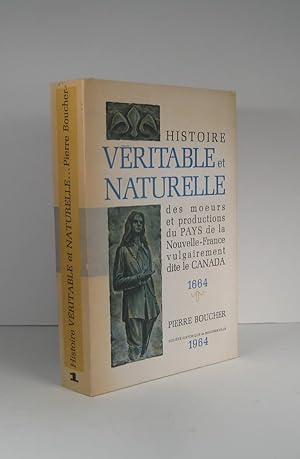
Histoire véritable et naturelle des moeurs et productions du pays de la Nouvelle-France vulgairement dite le Canada (1664)
Published by Société historique de Boucherville, Boucherville, 1964
Seller: Librairie Bonheur d'occasion (LILA / ILAB), Montréal, QC, Canada
Seller rating 5 out of 5 stars
Couverture souple. Condition: Très bon. Grand in-8. 415 pages. Édition facsimilée de l'originale parue en 1664. Édition critique accompagnée d'études socio-historiques.
-

Paris et ses rois (Edition broché)
Seller: Librairie de l'Avenue - Henri Veyrier, Saint-Ouen, FR, France
Seller rating 5 out of 5 stars
Couverture souple. Condition: Très bon état. In-4 broché 30,8 cm sur 21,5. 184 pages. Très bon état d'occasion. in-4°.
-

Né à Rouen. 1785-1838. Physicien français. Il est l'auteur de travaux sur la chaleur spécifique, la dilatation et l'indice de réfraction des gaz. B.A. à monsieur Michelot. Paris, 1er avril 1837. 1/2 page in-8. En-tête de l'Ecole Royale polytechnique. Adresse et marques postales.
Published by 01/04/1837, 1837
Rendez-vous pour .dimanche à onze heures et demie.
-
Grèves revendicatives ou grèves politiques ? Acteurs, pratiques, sens du mouvement de mai.
Published by Anthropos, Paris, 1971
Seller: Mouvements d'Idées - Julien Baudoin, Loupiac, France
Seller rating 5 out of 5 stars
Condition: Bon Etat. Acteurs, pratiques, sens du mouvement de mai. éd. Anthropos, 1971. 550 p. Nom d'ancien propriétaire en page de garde.
-

Das Ausdehnungsgesetz der Gase. Abhandlungen (1802-1842).
Seller: Antiquariat Renner OHG, Albstadt, Germany
Association Member: BOEV
Seller rating 5 out of 5 stars
Softcover. Condition: Sehr gut. 2. Auflage. Thun, Deutsch (1997). 211 S. OKart. Ostwalds Klassiker der exakten Wissenschaften, 44.- Weitere Autoren: A.T. Petit, F. Rudberg, H.G. Magnus, H.V. Regnault.- Privater Stempel auf Vortitel und letzter Seite ansonsten sehr gut erhalten.
-

Anthropos, Sociologie et Travail, 1971, 550 pp., broché, dos un peu insolé, quelques rousseurs sur les tranches, état très correct.
-
Published by LE DIVAN N° 279, juillet-septembre 1951. In-12, broché., 1951
[5994].
-

Grèves revendicatives ou grèves politiques ? Acteurs, pratiques, sens du mouvement de mai.
Published by Anthropos Editions, 1971
ISBN 13: 2100001662035
Seller: Almacen de los Libros Olvidados, Barakaldo, BI, Spain
Seller rating 5 out of 5 stars
tapa blanda. Condition: 2ª Mano - Bueno. Dust Jacket Condition: 2ª Mano. Anthropos Editions. 1971. idioma francés, huelgas revidicativas o politicas. Mayo del 68 rebelion estudiantil. Libro.
-

Recherches sur les lois de dilatation des solides, des liquides et des fluides élastiques, et sur la mesure exacte des températures. SS. 240-263. In: Annales de Chimie et de Physique. Tome 2.
Language: French
Published by Paris Crochard, 1816
Seller: Antiquariat Gerhard Gruber, Heilbronn, Germany
Seller rating 4 out of 5 stars

First Edition
(20 x 12,5 cm). 440 S. Pappband der Zeit. Erste Ausgabe ihrer ersten gemeinsamen Arbeit zum Dulong-Petischen Gesetz. - "In 1815 Dulong's famous collaboration with the mathematical physicist Alexis Thérèse Petit began; it produced three important memoirs on heat. The best-known part of this work is the statement of the law of constant atomic heats that bears their names, They began with the fundamental problem of measuring quantities of heat, which involved a critical analysis of thermometric scales. In 1804-1805 Gay-Lussac had carried out a comparison of mercury and air thermometers between 0°C. and 100°C. Dulong and Petit extended the range of comparison up to 300°C. and found an increasing discrepancy between the two scales at higher temperatures" (DSB). - Name auf Vorsatz und Stempel auf Titel. Vereinzelt leicht gebräunt, sonst gut erhalten. - DSB 4, 238; Darmstaedter S. 321. - Der Band enthält weiter Arbeiten von Ampère, Gay-Lussac, Berzelius, de Saussure, Chevreul, Wollaston, Biot etc.
-

Das Ausdehnungsgesetz der Gase. Abhandlungen von Gay-Lussac, Dalton, Dulong und Petit, Rudberg, Magnus, Regnault (1802-1842). Hrsg. v. W. Ostwald. Mit 33 Textfiguren.
Language: German
Published by Wilhelm Engelmann, Leipzig, 1894., 1894
Kl.-Oktav (190 x 120 mm), Org.-Pappband, 211 (+1) S., umseitig farbiger Schnitt, sehr leichte Gebrauchspuren, aber insgesamt gut erhalten. [Ostwald's Klassiker der exakten Wissenschaften; 44]. - [Inhalt / content:] Gay-Lussac: Untersuchungen über die Ausdehnung der Gasarten und der Dämpfe durch die Wärme. Erste Abhandlung - Dalton: Ueber die Ausdehnung der elastischen Flüssigkeiten durch Wärme - Dulong, Petit: Untersuchungen über die Ausdehnung der festen, flüssigen und gasförmigen Stoffe, und über die genaue Messung der Temperaturen - Rudberg: Ueber die Ausdehnung der trocknen Luft zwischen 0° und 100° C. - Nachtrag - Zweite Reihe von Versuchen über die Ausdehnung der trocknen Luft zwischen 0° und 100° - Magnus: Ueber die Ausdehnung der Gase durch die Wärme - Regnault: Untersuchung über die Ausdehnung der Gase. Erster Theil: Ueber die Ausdehnung der atmosphärischen Luft - Zweiter Theil: Ueber die Ausdehnung einiger anderen Gase - Regnault: Untersuchungen über die Ausdehnung der Gase. Zweite Abhandlung - Erster Theil: Von der Ausdehnung der Gase unter verschiedenen Drucken, berechnet aus der Aenderung der Spannkräfte - Zweiter Theil: Versuche zur Bestimmung der Ausdehnung der Gase unter constantem Druck - Regnault: Ueber den Vergleich des Luftthermometers mit dem Quecksilberthermometer - Magnus: Ueber die Ausdehnung der atmosphärischen Luft in höheren Temperaturen - Anmerkungen. - [604 | SOD | ] 200 g.
-
"Recherches sur la chaleur speifique des fluides elastiques" in Annales de Chimie et de Physique
Published by Paris, Crochard, 1829
Seller: JF Ptak Science Books, Hendersonville, NC, U.S.A.
Seller rating 5 out of 5 stars
Hardcover. Condition: Good. Pierre Dulong, "Recherches sur la chaleur speifique des fluides elastiques" in Annales de Chimie et de Physique, Paris, Crochard, 1829, volume 41, 448pp, with one folding engraved plate. Bound in the original calf-backed decorated [a[er Pierre Dulong's work on the relationship between heat and work helped lay the foundation for the development of thermodynamics. Dulong and his collaborator Alexis Thérèse Petit formulated what is known as the Dulong-Petit law (see Annales de Chemie et de Physique, Feb. 1818, t. vii. p. 122) . This law played a crucial role in the development of thermodynamics and contributed to the understanding of heat transfer and energy conversion in various systems. Experimental Demonstration of the principles and predictions of the Carnot cycle.
-

Pierre DULONG and Alexis Petit, "Recherches sur la Mesure des Temperatures et sur les lois de la communication de la chaleur", pp 150-161 AND pp 239-249, in Bibliotheque Universelle.
Published by Imprimerie Bibliotheque Universelle, 1819
Seller: JF Ptak Science Books, Hendersonville, NC, U.S.A.
Seller rating 5 out of 5 stars
Hardcover. Condition: Very Good. Introduction of the Dulong-Petit Law, a fundamental step in statistical physics. [++] Pierre DULONG and Alexis Petit, "Recherches sur la Mesure des Temperatures et sur les lois de la communication de la chaleur", pp 150-161 AND pp 239-249, in Bibliotheque Universelle, Geneva, Imprimerie Bibliotheque Universelle, 1819, volume 10, viii, 304pp, folding plate. Bound in paper covered boards, gilt stamped title on spine. Provenance: Staatsbibliothek, Berlin, and also from "Kong. Bergwerks Bibliothek", (Royal Mining Library) with their two small stamps on the title page. Ex-library: paper call number on bottom spine, and aside from these two bits there are no other markings. The binding is tight, the book strong and squared, and the text is very fresh and crisp. GOOD/VERY GOOD copy. There is some faded black smudging on the bottom of the text block which cannot be seen in the interior of the book. [++] Dulong and Petit occupies pp 150-161 AND pp 239-249. It seems to me that the paper first appeared slightly earlier in the year and about 40% longer in "Annales de Chime et de Physique" for 1819. "Pierre Dulong (1785-1838, French) and Alexis Petit (1791-1820, French) find that many substances have molar heat capacities of approximately 6 cal/mole C, implying, through the constancy of the molar heat capacities, that the specific heats tend to be inversely proportional to the atomic weights. The result is announced in the paper "Recherches sur quelques points importants de la théorie de la chaleur" [Researches on several important points of the theory of heat]."--Parkinson, Breakthroughs (1819). The Dulong-Petit limiting law for the specific heats of solids, one of the first general results in thermodynamics, has provided Mendeleev with a powerful tool for devising the periodic table and gave an important support to Boltzmann s statistical mechanics. Even its failure at low temperature, accounted for by Einstein, paved the way to the the quantum mechanical theory of solids." -- "The strange case of Dr. Petit and Mr. Dulong," Roberto Piazza, 2018. "They were concerned with the specific heats of elements; but if these elements really existed as atoms, it seemed possible that there might be a connection between the weight of the atom and the amount of heat acquired to raise the temperature of a given weight of that element by a certain amount."--Complete Dictionary of Scientific Biography online. [++] "The Dulong Petit law, a thermodynamic law proposed in 1819. states the classical expression for the molar specific heat capacity of certain chemical elements. Experimentally the two scientists had found that the heat capacity per weight (the mass-specific heat capacity) for a number of elements was close to a constant value, after it had been multiplied by a number representing the presumed relative atomic weight of the element. These atomic weights had shortly before been suggested by John Dalton and modified by Jacob Berzelius." --Wikipedia) [++] BIOT, "Notice sur la continuation des traveux enterpris pour determiner la figure de la Terre." pp 225-238. ALSO in this volume: Henry KATER, "AN Account of Experiments, etc. Detail d'experience faites pour determiner la longueur du pendule qui bat les secondes dans la latitude de Londres." (originally in the Phil Trans, 1818), pp 3-13. Henry Kater (1777-1835) British physicist known for the invention of Kater's pendulum, enabling the determination of gravity throughout Great Britain. J.A. De LUC, "De la Fluidte originelle des roches primitives", pp 162-169.
-
Recherches sur la mesure des températures et sur les lois de la communication de la chaleur (publiés dans Annales de Chimie et de physique - Tome VII)
Published by Crochard, Paris, 1817
Seller: Eric Zink Livres anciens, PARIS, France
Association Member: ILAB
Seller rating 5 out of 5 stars
First Edition
Couverture rigide. Condition: Très bon. Edition originale. Demi veau de l'époque, dos lisse. Un volume in-8 (200x125 mm), 448 pages et 2 planches hors texte dont une dépliante (p.113-155 et 225-264 pour les travaux de Dulong et Petit). Frottements. Dos en partie détaché. Edition originale. Premiers travaux de Dulong et Petit qui conduiront à l'établissement de la loi thermodynamique du même nom. Ces travaux ont été récompensés du prix de physique de l'Académie des Sciences en 1818. Dans le même volume des articles de Gay-Lussac, Humboldt, Dalton. References : DSB, IV, 240. _______________________________________________________________________________ ____ ______________________________ENGLISH_DESCRIPTION : Contemporary half calf, flat spine. 8vo (200x125 mm), 448 pages and 2 plates (p.113-155 and 225-264 for Dulong et Petit works). Rubbed. Spine almost detached. First edition. First work by Dulong and Petit which will lead to the establishment of the thermodynamic law with the same name. This work was rewarded with the physics prize of the Académie des Sciences in 1818. In the same volume, articles by Gay-Lussac, Humboldt, Dalton . References : DSB, IV, 240. 500g.
-
"Mémoire Sur l Action que les rayons de lumière polarisés exercent les uns sur les autres" AND "Recherches sur quelques points importants de la Théorie de la Chaleur" in Annales de Chime et de Physique
Published by Paris, by Crochard, 1819
Seller: JF Ptak Science Books, Hendersonville, NC, U.S.A.
Seller rating 5 out of 5 stars
Hardcover. Condition: Near Fine. __+__Two Major Works in One Volume (1819)__+__ Augustin Fresnel and François Arago, Mémoire Sur l Action que les rayons de lumière polarisés exercent les uns sur les autres , in Annales de Chimie et de Physique; Paris, by Crochard, 1819, vol 10 pp. 288 305 in the volume of 448. with two folding plates (one relatively large). Beautifully rebound in half-calf and marbled boards, with new endpaper; very usable, quite a lovely job. The only demerit here is an old cellophane tape repair on the title page. Fine copy. __+__ Fresnel's theory was confirmed by French physicist François Arago who later carried out this experiment. Fresnel discovered that light was a transverse wave instead of a longitudinal wave as had previously been thought, and he presented his results in 1817. --Azooptics. (They) describe experiments demonstrating that light vibrates transversely to its direction of forward movement. (in this paper translated as Memoir on the action that the rays of polarized light exert on one another . --Parkson, Breakthroughs, (1819). __+__ Bound with: Pierre Dulong and Alexis Petit, Recherches sur quelques points importants de la Théorie de la Chaleur , same volume, pp. 395 427. Introduction of the Dulong-Petit Law, .a fundamental step in statistical physics. The Dulong-Petit limiting law for the specific heats of solids, one of the first general results in thermodynamics, has provided Mendeleev with a powerful tool for devising the periodic table and gave an important support to Boltzmann s statistical mechanics. Even its failure at low temperature, accounted for by Einstein, paved the way to the the quantum mechanical theory of solids . -- The strange case of Dr. Petit and Mr. Dulong , Roberto Piazza, 2018. They were concerned with the specific heats of elements; but if these elements really existed as atoms, it seemed possible that there might be a connection between the weight of the atom and the amount of heat acquired to raise the temperature of a given weight of that element by a certain amount."--Complete Dictionary of Scientific Biography online. The Dulong Petit law, a thermodynamic law proposed in 1819. states the classical expression for the molar specific heat capacity of certain chemical elements. Experimentally the two scientists had found that the heat capacity per weight (the mass-specific heat capacity) for a number of elements was close to a constant value, after it had been multiplied by a number representing the presumed relative atomic weight of the element. These atomic weights had shortly before been suggested by John Dalton and modified by Jacob Berzelius. --Wikipedia) __+__ Also bound with: Simeon Dennis Poisson, Sur la Theorie des instrumens a vent , pp 129-142 (relating to his Sur le Mouvement des fluides ´elastiques dans les tuyaux cylindriques, et sur la th´eorie des instruments `a vent, M´em. Acad. Roy. Sci. Inst., vol. 2, p. 305, 1819). The propagation of a compressional wave in a three-dimensional fluid medium was first considered by S. D. Poisson in 1819 [23] but it remained, however, for Hermann von Helmholtz to give in 1860 a more thorough treatment of this whole problem. __+__ And with: (William Frederic Edwards), Sur l'Asphyxie , pp 5-29 (being a continuation of two earlier papers from 1817 and 1818). With: Welter and Gay-Lussac, Sur un Acide nouveau forme par ke siufre et l'oxigene , pp 312-320.
-
Das Ausdehnungsgesetz der Gase : Abhandlungen (1802-1842)
Language: German
Published by Europa Lehrmittel Verlag, 1997
ISBN 10: 3817130449 ISBN 13: 9783817130443
Condition: Gut. Zustand: Gut | Sprache: Deutsch | Produktart: Bücher | Keine Beschreibung verfügbar.
-
![Seller image for Recherches sur la chaleur specifique des fluides elastiques 1828 [LeatherBound] for sale by S N Books World](https://pictures.abebooks.com/inventory/md/md30639194414.jpg)
Recherches sur la chaleur specifique des fluides elastiques 1828 [LeatherBound]
Language: French
Publication Date: 2025
Leatherbound. Condition: NEW. BOOKS ARE EXEMPT FROM IMPORT DUTIES AND TARIFFS; NO EXTRA CHARGES APPLY. Leatherbound edition. Condition: New. Leather Binding on Spine and Corners with Golden leaf printing on spine. Bound in genuine leather with Satin ribbon page markers and Spine with raised gilt bands. Pages: 112. A perfect gift for your loved ones. Reprinted from 1828 edition. NO changes have been made to the original text. This is NOT a retyped or an ocr'd reprint. Illustrations, Index, if any, are included in black and white. Each page is checked manually before printing. As this print on demand book is reprinted from a very old book, there could be some missing or flawed pages, but we always try to make the book as complete as possible. Fold-outs, if any, are not part of the book. If the original book was published in multiple volumes then this reprint is of only one volume, not the whole set. IF YOU WISH TO ORDER PARTICULAR VOLUME OR ALL THE VOLUMES YOU CAN CONTACT US. Resized as per current standards. Sewing binding for longer life, where the book block is actually sewn (smythe sewn/section sewn) with thread before binding which results in a more durable type of binding. Language: French Pages: 112.
-
Condition: Used: Good. Jolie reliure à coins, contre-plats marbrés. Intérieur un peu jauni mais propre et frais.
-
Pierre Louis Dulong and Louis Jacques Thenard, "Nouvelles Observations sur la Propriete dont jouissent certains de savoriser la combinaisondes fluides elastiques" in Annales de Chimie et de Physique.
Published by Crochard, Paris, 1823
Seller: JF Ptak Science Books, Hendersonville, NC, U.S.A.
Seller rating 5 out of 5 stars
Condition: Good. Pierre Louis Dulong and Louis Jacques Thenard, "Nouvelles Observations sur la Propriete dont jouissent certains de savoriser la combinaisondes fluides elastiques" in Annales de Chimie et de Physique. (Louis-Joseph GAY-LUSSAC, François ARAGO, editors.) Volume 24. Paris; Crochard 1823. 9"x 6", 448pp., 3 folding engraved plates. Bound in paper covered boards. A GOOD, solid copy, the boards showing some wear from what seems to be a lot of use, with the decorative paper wearing through at the joints and corners as well as the head and heel of the spine, with a long-ago hand-written label on the spine. The paper by Pierre Louis Dulong and Louis Jacques Thénard Thenard appears on pp 380-387. "Dulong collaborated with Thenard on a study of catalytic phenomena. They confirmed Döbereiner's discovery that a jet of hydrogen could be kindled by allowing it to impinge in air on spongy platinum. They found that palladium, rhodium, and iridium are active at room temperature and other metals at higher temperatures. They realized that the metal's activity was dependent on its physical state but offered no explanation of the action of these substances, which Berzelius later called catalysts."--Complete DSB online "Pierre Louis Dulong (1785-1838) and Louis Jacques Thénard (1777-1857) were prominent French chemists who made significant early contributions to the field of catalysis in the 1820s, specifically concerning the action of metals on gases. Together, they explored how certain metals could facilitate chemical combinations and verified the "catalytic action" exerted by metals such as platinum, palladium, rhodium, and iridium."--Britannica Also bound in this volume are papers by: Laplace, "De l'Action de la Lune sur l'atmosphere pp 280-294. Felix Savart, Recherches sur les Vibrations de l'air pp 56-88; Becquerel, "De l'Etat de l'electricite developpee pendant les actions chimiques, pp 192-206. And with: Davy, Sir Humphry (1778-1829). Note sur la Condensation du gaz acide muriatique en liquide. p. 401-403; Faraday, Michael, Sur la Transformation de différens gaz en liquides, pp 403-414. Becquerel, Antoine-César. D'un Système de galvanomètres propres à rendre sensible de très-faibles quantités d'électricité ; et des Courans électrique qui ont lieu dans les actions capillaires et dans les dissolutions, pp 337-355; Mitscherlich, Eilhard, Sur la Relation qui existe entre les proportions chimiques et la forme cristalline. Quatrième mémoire. Sur la Production artificielle des minéraux cristallises. Pp 355-377. Louis Vauquelin, Sur la Pierre de touche. p. 377-380. Michael Faraday, Sur le Chlore fluide et sur la Condensation de divers gaz en liquides. Pp 396-401. Sir Humphry Davy, pp 401-403, Note sur la Condensation du gaz acide muriatique en liquide. Michael Faraday, Sur la Transformation de différens gaz en liquides. pp. 403-414. 714.3.
-
Recherches sur les lois de dilation des solides, des liquides et des fluides élastiques, et sur la mesure exacte des temperatures.
Seller: Herman H. J. Lynge & Søn ILAB-ABF, Copenhagen, Denmark
Seller rating 4 out of 5 stars
(Paris, Crochard), 1816. Without wrappers. In "Annales de Chimie et de Physique", Tome II, 2. Series, Cahier Juillet 1816. Pp. (217-) 328. Entire issue offered). The paper of Dulong & Petit: pp. 240-263. 5 leaves with a stamp in upper right corner. Some scattered brownspots. First apperance of this, their (first) joint paper, which initiated the recheches leading to the the "Law of Dulong and Petit", the connection between atomic weight and atomic heat."In 1815 Dulong?s famous collaboration with the mathematical physicist Alexis Thérèse Petit began" it produced three important memoirs on heat (of which this is the first). The best-known part of this work is the statement of the law of constant atomic heats that bears their names, . They began with the fundamental problem of measuring quantities of heat, which involved a critical analysis of thermometric scales. In 1804-1805 Gay-Lussac had carried out a comparison of mercury and air thermometers between 0°C. and 100°C. Dulong and Petit extended the range of comparison up to 300°C. and found an increasing discrepancy between the two scales at higher temperatures." (DSB).
-
Untersuchungen über die gesetze der Ausdehnung fester, tropfbarer und elastisch-flüssiger Körper durch die Wärme, und über das wahre Maass der temperaturen.
Seller: Herman H. J. Lynge & Søn ILAB-ABF, Copenhagen, Denmark
Seller rating 4 out of 5 stars
(Leipzig, Barth), 1818. No wrappers. In: "Annalen der Physik. Neue Folge. Herausgegeben von L.W. Gilbert", Bd. 28, Drittes Stück. Pp. 233-344,(2) pp. a. 1 engraved plate. (Entire issue offered). The paper of Dulong & Petit: pp. 254-280. First appearance in German (edited by Gilbert) of this, their (first) joint paper, which initiated the recheches leading to the the "Law of Dulong and Petit", the connection between atomic weight and atomic heat. The original Frensh having the title: Recherches sur les lois de dilation des solides, des liquides et des fluides élastiques, et sur la mesure exacte des temperatures."In 1815 Dulong?s famous collaboration with the mathematical physicist Alexis Thérèse Petit began" it produced three important memoirs on heat (of which this is the first). The best-known part of this work is the statement of the law of constant atomic heats that bears their names, . They began with the fundamental problem of measuring quantities of heat, which involved a critical analysis of thermometric scales. In 1804-1805 Gay-Lussac had carried out a comparison of mercury and air thermometers between 0°C. and 100°C. Dulong and Petit extended the range of comparison up to 300°C. and found an increasing discrepancy between the two scales at higher temperatures." (DSB).
-
Recherches sur les lois de dilation des solides, des liquides et des fluides élastiques, et sur la mesure exacte des températures.
Seller: Herman H. J. Lynge & Søn ILAB-ABF, Copenhagen, Denmark
Seller rating 4 out of 5 stars
Paris, Crochard, 1816. Without wrappers. In "Annales de Chimie et de Physique", Tome II, 2. Series, Cahier 3 (Juillet 1816). Pp. (217-) 328. (Entire issue offered with titlepage to tome II). Dulong & Petit's paper: pp. 240-263. Some brownspots to title-page and a stamp on verso. A few scattered brownspots. First apperance of this (their first) joint paper, which initiated the recheches leading, the year after, to the "Law of Dulong and Petit", the connection between atomic weight and atomic heat."In 1815 Dulong?s famous collaboration with the mathematical physicist Alexis Thérèse Petit began" it produced three important memoirs on heat (of which this is the first). The best-known part of this work is the statement of the law of constant atomic heats that bears their names, . They began with the fundamental problem of measuring quantities of heat, which involved a critical analysis of thermometric scales. In 1804-1805 Gay-Lussac had carried out a comparison of mercury and air thermometers between 0°C. and 100°C. Dulong and Petit extended the range of comparison up to 300°C. and found an increasing discrepancy between the two scales at higher temperatures." (DSB).
-
![Seller image for Academie Royale des Sciences. Seance publique du lundi 16 juin 1828 - [1828] [Leather Bound] for sale by True World of Books](https://pictures.abebooks.com/inventory/md/md31618810077.jpg)
Academie Royale des Sciences. Seance publique du lundi 16 juin 1828 - [1828] [Leather Bound]
Publication Date: 2025
LeatherBound. Condition: NEW. LeatherBound edition. Condition: New. Reprinted from [1828] edition. Leather Binding on Spine and Corners with Golden leaf printing on spine. Bound in genuine leather with Satin ribbon page markers and Spine with raised gilt bands. A perfect gift for your loved ones. NO changes have been made to the original text. This is NOT a retyped or an ocr'd reprint. Illustrations, Index, if any, are included in black and white. Each page is checked manually before printing. As this print on demand book is reprinted from a very old book, there could be some missing or flawed pages, but we always try to make the book as complete as possible. Fold-outs, if any, are not part of the book. If the original book was published in multiple volumes then this reprint is of only one volume, not the whole set. Sewing binding for longer life, where the book block is actually sewn (smythe sewn/section sewn) with thread before binding which results in a more durable type of binding. Pages: 20.
-
Researches on the Measure of Temperature, and on the Laws of the Communication of Heat.
Seller: Herman H. J. Lynge & Søn ILAB-ABF, Copenhagen, Denmark
Seller rating 4 out of 5 stars
London, Baldwin, Cradock, and Joy, 1819. 8vo. Contemp. hcalf. Marbled boards. Spine lacks and boards loose. In: "Annals of Philosophy" or Magazine of Chemistry, Mineralogy, Mechanics. By Thomas Thomson". Vol. XIII. XCII,486 pp. a. 6 engraved plates. (Entire volume offered). Some brownspots to the plates. Iternally clean. A small stamp in upper right corner of two leaves. Dulong & Petit's paper: pp. 112-124, 161-182, 241-251, 321-339 a. 1 engraved plate. First appearance in English of this, their (first) joint paper, which initiated the recheches leading to the the "Law of Dulong and Petit", the connection between atomic weight and atomic heat. The original Frensh having the title: Recherches sur les lois de dilation des solides, des liquides et des fluides élastiques, et sur la mesure exacte des temperatures."In 1815 Dulong?s famous collaboration with the mathematical physicist Alexis Thérèse Petit began" it produced three important memoirs on heat (of which this is the first). The best-known part of this work is the statement of the law of constant atomic heats that bears their names, . They began with the fundamental problem of measuring quantities of heat, which involved a critical analysis of thermometric scales. In 1804-1805 Gay-Lussac had carried out a comparison of mercury and air thermometers between 0°C. and 100°C. Dulong and Petit extended the range of comparison up to 300°C. and found an increasing discrepancy between the two scales at higher temperatures." (DSB).
-
Recherches Sur la Mesure des Températures et sur les Lois de la communication de la chaleur. Introduction. (+) Suite des Recherches sur la Mesure des Témperatures. Seconde Partie. Des Lois du Refroidissement. (+) Suite Des Recherches sur la Mesure.
Seller: Herman H. J. Lynge & Søn ILAB-ABF, Copenhagen, Denmark
Seller rating 4 out of 5 stars
First Edition
Paris, Crochard, 1817 a. 1819. Bound in one contemp hcloth (vol. 7) and 1 issue without wrappers. In: "Annales de Chimie et de Physique, Par MM. Gay-Lussac et Arago.", Vol. 7 and vol. 10, Cahier 4. - 448 pp. a. 2 engraved plates (entire vol. 7 offered) + pp. 337-443 a. 2 engraved plate (entire issue offered, Cahier 4 of vol. 10 with htitle to the vol.). Dulon & Petit's papers: pp. 113-154, pp. 225-264, pp. 337-367 and Vol. X, pp. 395-413. First edition of these 4 groundbreaking papers with the first appearance in print of THE LAW OF THE CONSTANCY OF ATOMIC HEAT, i.e. the specific heat multiplied by the atomic weight. The insight had far reaching implications as it showed a new way to Dalton's atomic theory. "In 1815 Dulong's famous collaboration with the mathematical physicist Alexis Therese Petit began" it produced three importent memoirs on heat." (the papers offered here). The 2 first was awarded the price of the Academy in 1818 and was leading up to the last paper in which they formulted the "Law of the Constancy of product of atomic weight and specific heat"They (Dulang and Petit) were concerned with the specific heats of elements" but if these elements really existed as atoms, it seemed possible that there might be a connection between trhe weight of the atom and the amount of heat aquired to raise the temperature of a given weight of that element by a certain amount." (DSB). "One of his (Dulong) most importent researches was made in collaboration with Alexis Thérese Petit (1791-1820), with whom he announced the law that the product of atomic weight and specific heat is constant (1819). It rendered a distinct service in fixing atomic weights, especially when these were in question, and enabled Berzelius and later Cannizzaro to arrive at correct atomic weights and the correct number of atoms in molecules." (Leicester & Klickstein, A source Book in Chemistry 1400-1900, p. 273). Parkinson, Breakthroughs (1819).
-
Recherches Sur la Mesure des Températures et sur les Lois de la communication de la chaleur. Introduction. (+) Suite des Recherches sur la Mesure des Témperatures. Seconde Partie. Des Lois du Refroidissement. (+) Suite Des Recherches sur la Mesure.
Seller: Herman H. J. Lynge & Søn ILAB-ABF, Copenhagen, Denmark
Seller rating 4 out of 5 stars
First Edition
Paris, Crochard, 1817. Contemp. hcalf, richly gilt spines. Light wear at top of spine. Minor scratches to edges. Small stamps on verso of titlepages and verso of plates. In: "Annales de Chimie et de Physique, Par MM. Gay-Lussac et Arago.", tome 7, 2e Series. 448 pp. a. 2 engraved plates. (the entire volume offered). Dulong & Petit-papers: pp. 113-154, pp. 225-264, pp. 337-367. Clean and fine. First edition of these 3 groundbreaking papers with the first appearance in print of THE LAW OF THE CONSTANCY OF ATOMIC HEAT, i.e. the specific heat multiplied by the atomic weight. The insight had far reaching implications as it showed a new way to Dalton's atomic theory."In 1815 Dulong's famous collaboration with the mathematical physicist Alexis Therese Petit began" it produced three importent memoirs on heat." (the papers offered here). The 2 first was awarded the price of the Academy in 1818 and was leading up to the last paper in which they formulted the "Law of the Constancy of product of atomic weight and specific heat"They (Dulang and Petit) were concerned with the specific heats of elements" but if these elements really existed as atoms, it seemed possible that there might be a connection between trhe weight of the atom and the amount of heat aquired to raise the temperature of a given weight of that element by a certain amount." (DSB). - "One of his (Dulong) most importent researches was made in collaboration with Alexis Thérese Petit (1791-1820), with whom he announced the law that the product of atomic weight and specific heat is constant (1819). It rendered a distinct service in fixing atomic weights, especially when these were in question, and enabled Berzelius and later Cannizzaro to arrive at correct atomic weights and the correct number of atoms in molecules." (Leicester & Klickstein, A source Book in Chemistry 1400-1900, p. 273). - Parkinson, Breakthroughs (1819).
-
![Seller image for Das Ausdehnungsgesetz der Gase: Abhandlungen von Gay-lussac, Dalton, Dulong . 1894 [LeatherBound] for sale by True World of Books](https://pictures.abebooks.com/inventory/md/md31533183220.jpg)
LeatherBound. Condition: New. BOOKS ARE EXEMPT FROM IMPORT DUTIES AND TARIFFS; NO EXTRA CHARGES APPLY. LeatherBound edition. Condition: New. Reprinted from 1894 edition. Leather Binding on Spine and Corners with Golden leaf printing on spine. NO changes have been made to the original text. This is NOT a retyped or an ocr'd reprint. Illustrations, Index, if any, are included in black and white. Each page is checked manually before printing. Pages: 220 As this print on demand book is reprinted from a very old book, there could be some missing or flawed pages, but we always try to make the book as complete as possible. Fold-outs, if any, are not part of the book. If the original book was published in multiple volumes then this reprint is of only one volume, not the whole set. Sewing binding for longer life, where the book block is actually sewn (smythe sewn/section sewn) with thread before binding which results in a more durable type of binding. Pages: 220 Language: German.
-
Leather Bound. Condition: New. Language: German. Language: German. Presenting an Exquisite Leather-Bound Edition, expertly crafted with Original Natural Leather that gracefully adorns the spine and corners. The allure continues with Golden Leaf Printing that adds a touch of elegance, while Hand Embossing on the rounded spine lends an artistic flair. This masterpiece has been meticulously reprinted in 2024, utilizing the invaluable guidance of the original edition published many years ago in 1894. The contents of this book are presented in classic black and white. Its durability is ensured through a meticulous sewing binding technique, enhancing its longevity. Imprinted on top-tier quality paper. A team of professionals has expertly processed each page, delicately preserving its content without alteration. Due to the vintage nature of these books, every page has been manually restored for legibility. However, in certain instances, occasional blurriness, missing segments, or faint black spots might persist. We sincerely hope for your understanding of the challenges we faced with these books. Recognizing their significance for readers seeking insight into our historical treasure, we've diligently restored and reissued them. Our intention is to offer this valuable resource once again. We eagerly await your feedback, hoping that you'll find it appealing and will generously share your thoughts and recommendations. Lang: - German, Pages: - 216, Print on Demand. If it is a multi-volume set, then it is only a single volume. We are specialised in Customisation of books, if you wish to opt different color leather binding, you may contact us. This service is chargeable. Product Disclaimer: Kindly be informed that, owing to the inherent nature of leather as a natural material, minor discolorations or textural variations may be perceptible. Explore the FOLIO EDITION (12x19 Inches): Available Upon Request. 216 216.
-
Leather Bound. Condition: New. Language: German. Language: German. Presenting an Exquisite Leather-Bound Edition, expertly crafted with Original Natural Leather that gracefully adorns the spine and corners. The allure continues with Golden Leaf Printing that adds a touch of elegance, while Hand Embossing on the rounded spine lends an artistic flair. This masterpiece has been meticulously reprinted in 2024, utilizing the invaluable guidance of the original edition published many years ago in 1894. The contents of this book are presented in classic black and white. Its durability is ensured through a meticulous sewing binding technique, enhancing its longevity. Imprinted on top-tier quality paper. A team of professionals has expertly processed each page, delicately preserving its content without alteration. Due to the vintage nature of these books, every page has been manually restored for legibility. However, in certain instances, occasional blurriness, missing segments, or faint black spots might persist. We sincerely hope for your understanding of the challenges we faced with these books. Recognizing their significance for readers seeking insight into our historical treasure, we've diligently restored and reissued them. Our intention is to offer this valuable resource once again. We eagerly await your feedback, hoping that you'll find it appealing and will generously share your thoughts and recommendations. Lang: - German, Pages: - 220, Print on Demand. If it is a multi-volume set, then it is only a single volume. We are specialised in Customisation of books, if you wish to opt different color leather binding, you may contact us. This service is chargeable. Product Disclaimer: Kindly be informed that, owing to the inherent nature of leather as a natural material, minor discolorations or textural variations may be perceptible. Explore the FOLIO EDITION (12x19 Inches): Available Upon Request. 220 220.
-
[Portrait by Jules Boilly]
Seller: Antiquariaat Schierenberg, Amsterdam, Netherlands
Seller rating 4 out of 5 stars
Signed
Paris, J. [L.] Boilly, 1823. Engraved broadsheet (36.3 x 27.3 cm). = A rarely-seen portrait of the French physicist and chemist Pierre Louis Dulong FRS (1785-1838). "He is remembered today largely for the law of Dulong and Petit, although he was much-lauded by his contemporaries for his studies into the elasticity of steam, conduction of heat, and specific heats of gases. He worked most extensively on the specific heat capacity and the expansion and refractive indices of gases. He collaborated several times with fellow scientist Alexis Petit, the co-creator of the Dulong-Petit law. Dulong also discovered the dangerously sensitive nitrogen trichloride in 1811, losing three fingers and an eye in the process. The fact that Dulong kept the accident a secret meant that Humphry Davy's investigation of the compound had the same unfortunate consequence, although Davy's injuries were less severe. "In addition to his accomplishments in chemistry, Dulong has been hailed as an interdisciplinary expert. His contemporaries in the Royal Society of London acknowledged his 'command of almost every department of physical science'. In 1815, Dulong collaborated for the first time with Alexis Petit, in publishing a paper on heat expansion. The two would continue to collaborate, researching the specific heats of metals. In 1819, Dulong and Petit showed that the mass heat capacity of metallic elements are inversely proportional to their atomic masses, this being now known as the Dulong-Petit law. This law, though largely discredited in modern times, helped develop the periodic table and, more broadly, the examination of atomic masses" (Wikipedia). The artist, Julien-Léopold Boilly (1796-1874) was noted for his album of lithographs, Iconographie de l'Institut royal de France ou collection des portraits des Membres composant les quatre académies depuis 1814 jusqu'en 1825 (1820-1825). His portraits are much less stiff and formal than many by his contemporaries. Signed by the artist in the lower left margin of the portrait. The caption states the date of his birth and the year (1823) when Dulong was elected as a member of the Institut. Uncut. With in the upper left margin a rather vague damp-stain; scattered foxing throughout, some marginal creasing, and in lower right corner a small, oval blindstamp, 'Galerie Vivienne Bénard'. Some light creasing and denting in the right margin; otherwise very good.


![Seller image for Das Ausdehnungsgesetz der Gase: Abhandlungen von Gay-lussac, Dalton, Dulong . 1894 [Leather Bound] for sale by Gyan Books Pvt. Ltd.](https://pictures.abebooks.com/inventory/md/md30264723382.jpg)
![Seller image for Das Ausdehnungsgesetz der Gase: Abhandlungen von Gay-lussac, Dalton, Dulong . 1894 [Leather Bound] for sale by Gyan Books Pvt. Ltd.](https://pictures.abebooks.com/inventory/md/md31227427695.jpg)