

Order Total (1 Item Items):
Shipping Destination:

Eremin (425 results)
Author:
eremin
Refine with Advanced Search
Skip to main search results
Search filters
Product Type
- All Product Types
- Books (327)
- Magazines & Periodicals (2)
- Comics (No further results match this refinement)
- Sheet Music (No further results match this refinement)
- Art, Prints & Posters (95)
- Photographs (No further results match this refinement)
- Maps (No further results match this refinement)
- Manuscripts & Paper Collectibles (1)
Condition Learn more
Collectible Attributes
- First Edition (11)
- Signed (No further results match this refinement)
- Dust Jacket (No further results match this refinement)
- Seller-Supplied Images (276)
- Not Print on Demand (374)
Language (5)
Free Shipping
Seller Location
Seller Rating
-

American Mathematical Society Translations Series 2 Volume 88 : Twelve Papers on Real and Complex Function Theory
Seller: George Cross Books, Lexington, MA, U.S.A.
Association Member: IOBA
Seller rating 5 out of 5 stars

First Edition
Hardcover. First edition. Good/No Jacket (34546) Ex-library hardcover. Library information crossed out. Pocket removal scar. No dust jacket. Light usage. Clean, text unmarked. In English, translated from the Russian originals. . 325.
-
-
-
-
Paperback. Condition: New. *NEW* paperback. Sealed in plastic. Fresh from a distributor with No price tags and no remainder marks.
-

The Scientific and Clinical Basis of Surgical Practice
Language: English
Published by Oxford University Press, 2001
ISBN 10: 0192627031 ISBN 13: 9780192627032
Condition: Good. This is an ex-library book and may have the usual library/used-book markings inside.This book has hardback covers. In good all round condition. No dust jacket. Please note the Image in this listing is a stock photo and may not match the covers of the actual item,2550grams, ISBN:9780192627032.
-

Soft cover. Condition: Good. Softcover, periodical, English text, 191 pages. In good condition, slight to moderate wear to covers, contents clean. Contributions by Dementiev, Kokin, Babayevsky, Auezov, Polevoy, Chakovsky and others. Published by The Union of Soviet Writers.
-

-

Genii intrigi. Ot Valtasara do Marii Styuart
Seller: Globus Books, San Francisco, CA, U.S.A.
Seller rating 5 out of 5 stars
-

Condition: good. Befriedigend/Good: Durchschnittlich erhaltenes Buch bzw. Schutzumschlag mit Gebrauchsspuren, aber vollständigen Seiten. / Describes the average WORN book or dust jacket that has all the pages present.
-

Theory of Linear Optimization. (=Inverse and Ill-Posed Problems Series; Vol. 29).
Seller: Antiquariat Thomas Haker GmbH & Co. KG, Berlin, Germany
Association Member: GIAQ
Seller rating 5 out of 5 stars
First Edition
Hardcover. Condition: Wie neu. 1st ed. 258 S. Like new. Shrink wrapped. Sprache: Englisch Gewicht in Gramm: 700.
-

Stikhotvorenii?a? (Russian Edition)
Seller: Globus Books, San Francisco, CA, U.S.A.
Seller rating 5 out of 5 stars
-
Dura. Condition: Buen estado. Tres grandes apartados: Preguntas y respuestas de la sociología de la juventud.
-

Pushkin-publitsist
Published by Gos. id. khudozh. lit-ry, Moskva, 1963
Seller: McBlain Books, ABAA, Hamden, CT, U.S.A.
Association Member: ABAA ILAB SNEAB
Seller rating 5 out of 5 stars
Hardcover. Condition: Very Good. a few illustrations, 445p. Original cloth. 20 cm. Cover slightly soiled. Errata slip laid in. No jacket. Russian text.
-

Condition: very good. Gut/Very good: Buch bzw. Schutzumschlag mit wenigen Gebrauchsspuren an Einband, Schutzumschlag oder Seiten. / Describes a book or dust jacket that does show some signs of wear on either the binding, dust jacket or pages.
-

L-Arginine: Biological Aspects and Clinical Application. (=Medical Intelligence Unit).
Seller: Antiquariat Thomas Haker GmbH & Co. KG, Berlin, Germany
Association Member: GIAQ
Seller rating 5 out of 5 stars
First Edition
Hardcover. Condition: Wie neu. 1st ed. 170 S. Like new. Shrink wrapped. Sprache: Englisch Gewicht in Gramm: 755.
-
Monuments of Early Russian Literature Volume 2 (Cyrillic Text)
Published by Berkeley Slavic Specialties, 1989
First Edition
Paperback. Condition: Very Good. 1st edition. 117pp, quarto, tight binding, clean throughout, sticker residue to lower left corner of back cover, mild edge wear. Cyrillic text.
-
Pushkin - publitsist.
Published by Gos. izd. khudozh. lit-ry, Moscow, 1963
Seller: Henry Hollander, Bookseller, Los Angeles, CA, U.S.A.
Seller rating 4 out of 5 stars

Hardbound. Condition: Very Good. Small octavo, tan cloth with brown lettering, frontispiece photo, 448 pp., notes Text is in Russian.
-

Condition: New.
-

Hardback or Cased Book. Condition: New. Application of Antibody and Immunoassay for Food Safety. Book.
-
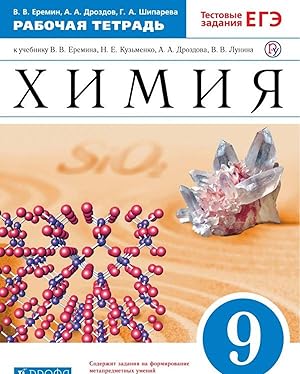
Condition: new. Pages: 192 Language: Russian. Predlagaemaja tetrad - chast uchebnogo kompleksa k uchebniku V. V. Eremina, N. E. Kuzmenko, A. A, Drozdova, V. V. Lunina "Khimija. 9 klass". Uchebnik sootvetstvuet Federalnomu gosudarstvennomu obrazovatelnomu standartu osnovnogo obschego obrazovanija. Takzhe tetrad mozhet ispolzovatsja s uchebnikom, sootvetstvujuschim Federalnomu komponentu gosudarstvennogo obrazovatelnogo standarta. Pomimo tetradi v sostav UMK vkhodjat metodicheskoe posobie i rabochaja programma. Spetsialnymi znakami otmecheny zadanija, napravlennye na formirovanie metapredmetnykh umenij (planirovat dejatelnost, vydeljat razlichnye priznaki, sravnivat, klassifitsirovat, ustanavlivat prichinno-sledstvennye svjazi, preobrazovyvat informatsiju i dr.) i lichnostnykh kachestv uchenikov. 9785358235557.
-
Condition: New.
-

Ekonomiko-metodicheskoe modelirovanie razrabotki neftegazovykh mestorozhdenij
Seller: ISIA Media Verlag UG | Bukinist, Leipzig, Germany
Seller rating 5 out of 5 stars
Softcover/Paperback. Condition: As New. V monografii rassmotrena normativnaya baza ekonomiko-metodicheskogo modelirovaniya, otrazhayushchayaya rezultaty vnedreniya tekhniko-tekhnologicheskikh i ekonomicheskikh reshenij.
-

Anglijskij s Sherlokom Kholmsom. Sluchaj v internate
Published by VKN, 2019
ISBN 10: 5787314859 ISBN 13: 9785787314854
Condition: new. Language: Russian. 9785787314854.
-
Condition: As New. Unread book in perfect condition.
-

Vorovskoj orden
Seller: ISIA Media Verlag UG | Bukinist, Leipzig, Germany
Seller rating 5 out of 5 stars
Hardcover/Hardback. Condition: Good. Redaktor-obozrevatel Nedeli voskresnoe prilozhenie k gazete Izvestiya Vitalij Eremin -izvestnyj rossijskij zhurnalist, pishushchij v osnovnom na kriminalnye temy, avtor neskolkikh knig i stsenariev dokumentalnykh filmov. Publitsisticheskie i portretnye ocherki V. Eremina otlichayutsya informatsionnoj nasyshchennostyu i netrivialnymi razmyshleniyami avtora o tom, kak proiskhodit moralnoe padenie cheloveka, i v kakoj mere obshchestvo dolzhno razdelit s nim etu vinu.Chitatelskaya auditoriya V. Eremina obshirna. Gazety s ego materialami peredayut iz kamery v kameru podsledstvennye, zachityvayut do dyr osuzhdennye. Osobennyj interes vyzyvayut oni u rodstvennikov zaklyuchennykh, kotorye khotyat ponyat prichiny nravstvennoj katastrofy blizkogo cheloveka i chto on ispytyvaet, popav za reshetku.Po-svoemu interesny ocherki V. Eremina i dlya rabotnikov ispravitelnykh uchrezhdenij. Oni pobuzhdayut ikh uvidet v samom padshem cheloveke potentsial dlya dukhovnogo ochishcheniya, vozvrata k normalnoj zhizni. S drugoj storony, opisyvaya okayannoe remeslo tyuremshchikov, avtor ubeditelno pokazyvaet, chto ne vse oni zarazheny prezreniem i nenavistyu k zeku.V zaklyuchitelnom razdele knigi predstavlen ekspeditsionnyj ocherk Puteshestvie za uzhasom - zhurnalistskoe rassledovanie novejshikh svidetelstv ochevidtsev, stolknuvshikhsya s superzagadkoj KhKh-go veka - fenomenom snezhnogo cheloveka. V. Eremin rassmatrivaet eto unikalnoe yavlenie so vsekh tochek zreniya, predostavlyaya chitatelyu bogatyj material dlya sobstvennykh vyvodov: sushchestvuet li snezhnyj chelovek na samom dele ili zhe eto - odna iz nepoznannykh tajn chelovecheskoj psikhiki.
-

Vorovskoj orden
Seller: ISIA Media Verlag UG | Bukinist, Leipzig, Germany
Seller rating 5 out of 5 stars
Hardcover/Hardback. Condition: Good. Redaktor-obozrevatel Nedeli voskresnoe prilozhenie k gazete Izvestiya Vitalij Eremin -izvestnyj rossijskij zhurnalist, pishushchij v osnovnom na kriminalnye temy, avtor neskolkikh knig i stsenariev dokumentalnykh filmov. Publitsisticheskie i portretnye ocherki V. Eremina otlichayutsya informatsionnoj nasyshchennostyu i netrivialnymi razmyshleniyami avtora o tom, kak proiskhodit moralnoe padenie cheloveka, i v kakoj mere obshchestvo dolzhno razdelit s nim etu vinu.Chitatelskaya auditoriya V. Eremina obshirna. Gazety s ego materialami peredayut iz kamery v kameru podsledstvennye, zachityvayut do dyr osuzhdennye. Osobennyj interes vyzyvayut oni u rodstvennikov zaklyuchennykh, kotorye khotyat ponyat prichiny nravstvennoj katastrofy blizkogo cheloveka i chto on ispytyvaet, popav za reshetku.Po-svoemu interesny ocherki V. Eremina i dlya rabotnikov ispravitelnykh uchrezhdenij. Oni pobuzhdayut ikh uvidet v samom padshem cheloveke potentsial dlya dukhovnogo ochishcheniya, vozvrata k normalnoj zhizni. S drugoj storony, opisyvaya okayannoe remeslo tyuremshchikov, avtor ubeditelno pokazyvaet, chto ne vse oni zarazheny prezreniem i nenavistyu k zeku.V zaklyuchitelnom razdele knigi predstavlen ekspeditsionnyj ocherk Puteshestvie za uzhasom - zhurnalistskoe rassledovanie novejshikh svidetelstv ochevidtsev, stolknuvshikhsya s superzagadkoj KhKh-go veka - fenomenom snezhnogo cheloveka. V. Eremin rassmatrivaet eto unikalnoe yavlenie so vsekh tochek zreniya, predostavlyaya chitatelyu bogatyj material dlya sobstvennykh vyvodov: sushchestvuet li snezhnyj chelovek na samom dele ili zhe eto - odna iz nepoznannykh tajn chelovecheskoj psikhiki.
-
Metallogenesis and Tectonics of the Russian Far East, Alaska, and the Canadian Cordillera Professional Paper 1697
Published by USGS, 2005
ISBN 10: 0607984074 ISBN 13: 9780607984071
US$ 41.00 25% offUS$ 30.75
US$ 5.05 shipping
Ships within U.S.A.Quantity: 3 available
Add to basketCondition: new. "The Proterozoic and Phanerozoic metallogenic and tectonic evolution of the Russian Far East, Alaska, and the Canadian Cordillera is recorded in the cratons, craton margins, and orogenic collages of the Circum-North Pacific mountain belts that separate the North Pacific from the eastern North Asian and western North American Cratons. The collages consist of tectonostratigraphic terranes and contained metallogenic belts, which are composed of fragments of igneous arcs, accretionary-wedge and subduction-zone complexes, passive continental margins, and cratons. The terranes are overlapped by continental-margin-arc and sedimentary-basin assemblages and contained metallogenic belts. The metallogenic and geologic history of terranes, overlap assemblages, cratons, and craton margins has been complicated by postaccretion dismemberment and translation during strike-slip faulting that occurred subparallel to continental margins. Seven processes overlapping in time were responsible for most of metallogenic and geologic complexities of the region (1) In the Early and Middle Proterozoic, marine sedimentary basins developed on major cratons and were the loci for ironstone (Superior Fe) deposits and sediment-hosted Cu deposits that occur along both the North Asia Craton and North American Craton Margin. (2) In the Late Proterozoic, Late Devonian, and Early Carboniferous, major periods of rifting occurred along the ancestral margins of present-day Northeast Asia and northwestern North America. The rifting resulted in fragmentation of each continent, and formation of cratonal and passive continental-margin terranes that eventually migrated and accreted to other sites along the evolving margins of the original or adjacent continents. The rifting also resulted in formation of various massive-sulfide metallogenic belts. (3) From about the late Paleozoic through the mid-Cretaceous, a succession of island arcs and contained igneous-arc-related metallogenic belts and tectonically paired subduction zones formed near continental margins. (4) From about mainly the mid-Cretaceous through the present, a succession of continental-margin igneous arcs (some extending offshore into island arcs) and contained metallogenic belts, and tectonically paired subduction zones formed along the continental margins. (5) From about the Jurassic to the present, oblique convergence and rotations caused orogen-parallel sinistral, and then dextral displacements within the plate margins of the Northeast Asian and North American Cratons. The oblique convergences and rotations resulted in the fragmentation, displacement, and duplication of formerly more continuous arcs, subduction zones, passive continental margins, and contained metallogenic belts. These fragments were subsequently accreted along the margins of the expanding continental margins. (6) From the Early Jurassic through Tertiary, movement of the upper continental plates toward subduction zones resulted in strong plate coupling and accretion of the former island arcs, subduction zones, and contained metallogenic belts to continental margins. In this region, the multiple arc accretions were accompanied and followed by crustal thickening, anatexis, metamorphism, formation of collision-related metallogenic belts, and uplift; this resulted in the substantial growth of the North Asian and North American continents. (7) In the middle and late Cenozoic, oblique to orthogonal convergence of the Pacific Plate with present-day Alaska and Northeast Asia resulted in formation of the present ring of volcanoes and contained metallogenic belts around the Circum-North Pacific. Oblique convergence between the Pacific Plate and Alaska also resulted in major dextral-slip faulting in interior and southern Alaska and along the western part of the Aleutian- Wrangell arc. Associated with dextral-slip faulting was crustal extrusion of terranes from western Alaska into the Bering Sea. " DV2. softcover, wrapped in shrink wrap, tight, crisp,
-
Metallogenesis and Tectonics of the Russian Far East, Alaska, and the Canadian Cordillera Professional Paper 1697
Published by USGS, 2005
ISBN 10: 0607984074 ISBN 13: 9780607984071
US$ 41.00 25% offUS$ 30.75
US$ 5.05 shipping
Ships within U.S.A.Quantity: 2 available
Add to basketCondition: new. "The Proterozoic and Phanerozoic metallogenic and tectonic evolution of the Russian Far East, Alaska, and the Canadian Cordillera is recorded in the cratons, craton margins, and orogenic collages of the Circum-North Pacific mountain belts that separate the North Pacific from the eastern North Asian and western North American Cratons. The collages consist of tectonostratigraphic terranes and contained metallogenic belts, which are composed of fragments of igneous arcs, accretionary-wedge and subduction-zone complexes, passive continental margins, and cratons. The terranes are overlapped by continental-margin-arc and sedimentary-basin assemblages and contained metallogenic belts. The metallogenic and geologic history of terranes, overlap assemblages, cratons, and craton margins has been complicated by postaccretion dismemberment and translation during strike-slip faulting that occurred subparallel to continental margins. Seven processes overlapping in time were responsible for most of metallogenic and geologic complexities of the region (1) In the Early and Middle Proterozoic, marine sedimentary basins developed on major cratons and were the loci for ironstone (Superior Fe) deposits and sediment-hosted Cu deposits that occur along both the North Asia Craton and North American Craton Margin. (2) In the Late Proterozoic, Late Devonian, and Early Carboniferous, major periods of rifting occurred along the ancestral margins of present-day Northeast Asia and northwestern North America. The rifting resulted in fragmentation of each continent, and formation of cratonal and passive continental-margin terranes that eventually migrated and accreted to other sites along the evolving margins of the original or adjacent continents. The rifting also resulted in formation of various massive-sulfide metallogenic belts. (3) From about the late Paleozoic through the mid-Cretaceous, a succession of island arcs and contained igneous-arc-related metallogenic belts and tectonically paired subduction zones formed near continental margins. (4) From about mainly the mid-Cretaceous through the present, a succession of continental-margin igneous arcs (some extending offshore into island arcs) and contained metallogenic belts, and tectonically paired subduction zones formed along the continental margins. (5) From about the Jurassic to the present, oblique convergence and rotations caused orogen-parallel sinistral, and then dextral displacements within the plate margins of the Northeast Asian and North American Cratons. The oblique convergences and rotations resulted in the fragmentation, displacement, and duplication of formerly more continuous arcs, subduction zones, passive continental margins, and contained metallogenic belts. These fragments were subsequently accreted along the margins of the expanding continental margins. (6) From the Early Jurassic through Tertiary, movement of the upper continental plates toward subduction zones resulted in strong plate coupling and accretion of the former island arcs, subduction zones, and contained metallogenic belts to continental margins. In this region, the multiple arc accretions were accompanied and followed by crustal thickening, anatexis, metamorphism, formation of collision-related metallogenic belts, and uplift; this resulted in the substantial growth of the North Asian and North American continents. (7) In the middle and late Cenozoic, oblique to orthogonal convergence of the Pacific Plate with present-day Alaska and Northeast Asia resulted in formation of the present ring of volcanoes and contained metallogenic belts around the Circum-North Pacific. Oblique convergence between the Pacific Plate and Alaska also resulted in major dextral-slip faulting in interior and southern Alaska and along the western part of the Aleutian- Wrangell arc. Associated with dextral-slip faulting was crustal extrusion of terranes from western Alaska into the Bering Sea. " DV1. softcover, wrapped in shrink wrap, tight, crisp,
-
Metallogenesis and Tectonics of the Russian Far East, Alaska, and the Canadian Cordillera Professional Paper 1697
Published by USGS, 2005
ISBN 10: 0607984074 ISBN 13: 9780607984071
US$ 41.00 25% offUS$ 30.75
US$ 5.05 shipping
Ships within U.S.A.Quantity: 3 available
Add to basketCondition: new. "The Proterozoic and Phanerozoic metallogenic and tectonic evolution of the Russian Far East, Alaska, and the Canadian Cordillera is recorded in the cratons, craton margins, and orogenic collages of the Circum-North Pacific mountain belts that separate the North Pacific from the eastern North Asian and western North American Cratons. The collages consist of tectonostratigraphic terranes and contained metallogenic belts, which are composed of fragments of igneous arcs, accretionary-wedge and subduction-zone complexes, passive continental margins, and cratons. The terranes are overlapped by continental-margin-arc and sedimentary-basin assemblages and contained metallogenic belts. The metallogenic and geologic history of terranes, overlap assemblages, cratons, and craton margins has been complicated by postaccretion dismemberment and translation during strike-slip faulting that occurred subparallel to continental margins. Seven processes overlapping in time were responsible for most of metallogenic and geologic complexities of the region (1) In the Early and Middle Proterozoic, marine sedimentary basins developed on major cratons and were the loci for ironstone (Superior Fe) deposits and sediment-hosted Cu deposits that occur along both the North Asia Craton and North American Craton Margin. (2) In the Late Proterozoic, Late Devonian, and Early Carboniferous, major periods of rifting occurred along the ancestral margins of present-day Northeast Asia and northwestern North America. The rifting resulted in fragmentation of each continent, and formation of cratonal and passive continental-margin terranes that eventually migrated and accreted to other sites along the evolving margins of the original or adjacent continents. The rifting also resulted in formation of various massive-sulfide metallogenic belts. (3) From about the late Paleozoic through the mid-Cretaceous, a succession of island arcs and contained igneous-arc-related metallogenic belts and tectonically paired subduction zones formed near continental margins. (4) From about mainly the mid-Cretaceous through the present, a succession of continental-margin igneous arcs (some extending offshore into island arcs) and contained metallogenic belts, and tectonically paired subduction zones formed along the continental margins. (5) From about the Jurassic to the present, oblique convergence and rotations caused orogen-parallel sinistral, and then dextral displacements within the plate margins of the Northeast Asian and North American Cratons. The oblique convergences and rotations resulted in the fragmentation, displacement, and duplication of formerly more continuous arcs, subduction zones, passive continental margins, and contained metallogenic belts. These fragments were subsequently accreted along the margins of the expanding continental margins. (6) From the Early Jurassic through Tertiary, movement of the upper continental plates toward subduction zones resulted in strong plate coupling and accretion of the former island arcs, subduction zones, and contained metallogenic belts to continental margins. In this region, the multiple arc accretions were accompanied and followed by crustal thickening, anatexis, metamorphism, formation of collision-related metallogenic belts, and uplift; this resulted in the substantial growth of the North Asian and North American continents. (7) In the middle and late Cenozoic, oblique to orthogonal convergence of the Pacific Plate with present-day Alaska and Northeast Asia resulted in formation of the present ring of volcanoes and contained metallogenic belts around the Circum-North Pacific. Oblique convergence between the Pacific Plate and Alaska also resulted in major dextral-slip faulting in interior and southern Alaska and along the western part of the Aleutian- Wrangell arc. Associated with dextral-slip faulting was crustal extrusion of terranes from western Alaska into the Bering Sea." DV4. softcover, wrapped in shrink wrap, tight, crisp, 4.


