
Gream Thomas (3 results)
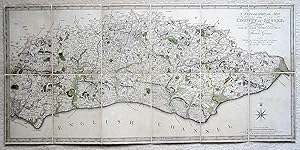
Published by W.Faden, 1799
- Softcover
- Map
Seller: Angelika C. J. Friebe Ltd. - MapWoman, Dorking, United KingdomAngelika C. J. Friebe Ltd. - MapWoman
Contact seller5-star sellerCondition: Used - Very good
US$ 691.71
US$ 26.86 shippingShips from United Kingdom to U.S.A.Quantity: 1 available
Add to basketSoft cover. Condition: Very Good. W.Faden London 1799.- copper engraved map with old hand colouring; overall size 37 x 80 cm; map size 36,5 x 79 cm.- A very detailed folding map of Sussex by Thomas Gream, published by W.Faden. 12 segments on linen, without slipcase.- paper cream coloured; some occasional discolouration; some fai…nt foxing; top left corner missing but not affecting image; w/out slip case; o/w vg cond. - [ref: 3047 ].
 More images
Published by William Faden, 1819
- Map
Seller: Morning Mist Books and Maps, Cirencester, United KingdomMorning Mist Books and Maps
Contact seller5-star sellerCondition: Used - Good
US$ 221.35
US$ 60.44 shippingShips from United Kingdom to U.S.A.Quantity: 1 available
Add to basketNo Binding. Condition: Good. Folding map in contemporary slipcase. 7x2 panels mounted on linen: linen bright with only light wear, no holes and no tears. General toning to the map with significant 'ghosting' (see accompanying photos). Outline colouring to 'Rapes'. Parks in green with faint blue colouring to water courses/marshes…. Roads coloured. Some landscape features shown by hachuring. Some coastal features. Intended route of the Arun/Portsmouth Canal marked as a dotted line. Slipcase heavily worn with loss to sides. Sheet size: 38.5cm by 80.5cm approx. Further details available on request. (n506).
 More images
- Map
Seller: Altea Antique Maps, London, United KingdomAltea Antique Maps
Contact seller5-star sellerCondition: Used
US$ 2,766.86
US$ 47.01 shippingShips from United Kingdom to U.S.A.Quantity: 1 available
Add to basketLondon: William Faden, 1795. Fine original body colour. Four sheets, dissected and laid on linen in four sections, edged with silk as issued, each section 805 x 510mm. Some faint offset. A large and detailed map of Sussex, important as the first published map of the county using the Board of Ordnance trigonometrical survey. Will…iam Gardner (1739-1800) and Thomas Yeakell (1758-87) originally intended that their survey of Sussex to be on a scale of two inches to a mile, with the eight sheets to be published over six years from 1778. However they needed to sell at least 400 subscriptions to meet the estimated cost of £2,400 but only sold 250, meaning their enterprise folded after the fourth plate was published in 1783, leaving half the county unmapped. In 1787 Yeakell died and Gardner joined the Ordnance as Chief Surveying Draftsman, although he maintained his private practice. With the encouragement of the Master-General of the Ordnance (Charles Lennox, Duke of Richmond), who allowed him access to William Mudge's trigonometrical survey, Gardner returned to his map of Sussex, working alongside surveyor Thomas Gream to complete it, although on a reduced scale. Their finished map was then engraved by Thomas Foot and published 1795 by William Faden, predating the first OS map (Kent) by six years. Not only did the map win Faden a gold medal from the Society of Arts, but it also became the template for other large scale county maps like the first Ordnance Survey maps and those of John & Christopher Greenwood. KINGSLEY: 57 state iii, same year as first state.


