

Order Total (1 Item Items):
Shipping Destination:

Hansen Nils (75 results)
Skip to main search results
Search filters
Product Type
- All Product Types
- Books (73)
- Magazines & Periodicals (No further results match this refinement)
- Comics (No further results match this refinement)
- Sheet Music (2)
- Art, Prints & Posters (No further results match this refinement)
- Photographs (No further results match this refinement)
- Maps (No further results match this refinement)
- Manuscripts & Paper Collectibles (No further results match this refinement)
Condition Learn more
Binding
Collectible Attributes
- First Edition (3)
- Signed (No further results match this refinement)
- Dust Jacket (5)
- Seller-Supplied Images (33)
- Not Print on Demand (66)
Language (5)
Free Shipping
Seller Location
Seller Rating
-

Christian Krohg: Pictures That Captivate
Language: English
Published by National Museum of Oslo, 2025
ISBN 10: 8281540672 ISBN 13: 9788281540675
Hardcover. Condition: Fair. No Jacket. Readable copy. Pages may have considerable notes/highlighting. ~ ThriftBooks: Read More, Spend Less.
-
Christian Krohg : Pictures That Captivate -Language: norwegian
Language: English
Published by National Museum of Oslo, 2025
ISBN 10: 8281540672 ISBN 13: 9788281540675
Condition: As New. Unread book in perfect condition.
-
Condition: As New. Unread copy in mint condition.
-
Christian Krohg : Pictures That Captivate -Language: norwegian
Language: English
Published by National Museum of Oslo, 2025
ISBN 10: 8281540672 ISBN 13: 9788281540675
Condition: New.
-
Condition: New.
-
Hardcover. Condition: new. Hardcover. Christian Krohg was a key figure in the Norwegian art community of the 1880s and 1890s, and was strongly influenced by the ideology of realism. In his view, art should have meaning for a broad segment of the population, not merely serve as wall decorations for the bourgeoisie. Three types of motifs were recurrent themes for Krohg during this period: the working-class hero, scenes from family life and the fallen woman. Many people responded to his literary and visual representations of the poverty-stricken girl Albertine. He depicted members of the working class with great sympathy in paintings such as Errand Boy Drinking Coffee and Woman Cutting Bread. The Gaihede family, fishermen from Skagen in Denmark, are portrayed in many everyday situations, as are members of Krohg's own family. The catalogue sheds light on the subject matter of the exhibition, Krohg's period of study in Berlin and its impact on him, his relationship with Georg Brandes, the novel Albertine and Krohg's own use of photography as a model for his work and a medium. Text in English and Norwegian. The catalogue sheds light on Christian Krohg's period of study in Berlin and its impact on him, his relationship with Georg Brandes, the novel Albertine and Krohg's own use of photography as a model for his work and a medium. Text in English and Norwegian. Shipping may be from multiple locations in the US or from the UK, depending on stock availability.
-

Hardback. Condition: New. Multilingual. Christian Krohg was a key figure in the Norwegian art community of the 1880s and 1890s, and was strongly influenced by the ideology of realism. In his view, art should have meaning for a broad segment of the population, not merely serve as wall decorations for the bourgeoisie. Three types of motifs were recurrent themes for Krohg during this period: the working-class hero, scenes from family life and "the fallen woman". Many people responded to his literary and visual representations of the poverty-stricken girl Albertine. He depicted members of the working class with great sympathy in paintings such as Errand Boy Drinking Coffee and Woman Cutting Bread. The Gaihede family, fishermen from Skagen in Denmark, are portrayed in many everyday situations, as are members of Krohg's own family. The catalogue sheds light on the subject matter of the exhibition, Krohg's period of study in Berlin and its impact on him, his relationship with Georg Brandes, the novel Albertine and Krohg's own use of photography as a model for his work and a medium.Text in English and Norwegian.
-

Schleswig-Holsteinische Dörfer in der Kaiserzeit.
Seller: Antiquariat Hubertus von Somogyi-Erdödy, Schleswig, Germany
Seller rating 5 out of 5 stars

144 S. mit zahlr. Abb. - Pappband gebunden (leicht bestossen, sonst sauber, frisch.
-
Christian Krohg
Seller: PBShop.store UK, Fairford, GLOS, United Kingdom
Seller rating 5 out of 5 stars
HRD. Condition: New. New Book. Shipped from UK. Established seller since 2000.
-
HRD. Condition: New. New Book. Shipped from UK. Established seller since 2000.
-

French Regional Planning.
Language: English
Published by Edinburgh University Press, 1968
Seller: Antiquariat Thomas Haker GmbH & Co. KG, Berlin, Germany
Association Member: GIAQ
Seller rating 5 out of 5 stars
Hardcover. Condition: Gut. 319 S.; Ill. Good. Ex-library. Sprache: Englisch Gewicht in Gramm: 880.
-

Luftbildatlas Dänemark - Eine Landeskunde in 78 farbigen Luftaufnahmen.
Language: German
Published by Neumünster : Wachholtz, 1982
ISBN 10: 3529052124 ISBN 13: 9783529052125
Seller: Druckwaren Antiquariat, Salzwedel, Germany
Association Member: GIAQ
Seller rating 5 out of 5 stars
OPp., gebundene Ausgabe, SU. Condition: Gut. 80 S., Ill. SU. leicht berieben, ansonsten sehr gut erhalten. ISBN: 3529052124 Sprache: Deutsch Gewicht in Gramm: 910.
-
144 S. mit Abb., OPBd., 1. Aufl., 8° guter Zustand. Bücher.
-
Christian Krohg: Pictures that captivate
Language: English
Published by National Museum, Oslo, 2025
ISBN 10: 8281540672 ISBN 13: 9788281540675
Seller: Kennys Bookshop and Art Galleries Ltd., Galway, GY, Ireland
Seller rating 5 out of 5 stars
Condition: New. 2025. Multilingual. hardcover. . . . . .
-

Christian Krohg
Seller: Rarewaves.com USA, London, LONDO, United Kingdom
Seller rating 5 out of 5 stars
Hardback. Condition: New. Multilingual. Christian Krohg was a key figure in the Norwegian art community of the 1880s and 1890s, and was strongly influenced by the ideology of realism. In his view, art should have meaning for a broad segment of the population, not merely serve as wall decorations for the bourgeoisie. Three types of motifs were recurrent themes for Krohg during this period: the working-class hero, scenes from family life and "the fallen woman". Many people responded to his literary and visual representations of the poverty-stricken girl Albertine. He depicted members of the working class with great sympathy in paintings such as Errand Boy Drinking Coffee and Woman Cutting Bread. The Gaihede family, fishermen from Skagen in Denmark, are portrayed in many everyday situations, as are members of Krohg's own family. The catalogue sheds light on the subject matter of the exhibition, Krohg's period of study in Berlin and its impact on him, his relationship with Georg Brandes, the novel Albertine and Krohg's own use of photography as a model for his work and a medium.Text in English and Norwegian.
-
Christian Krohg : Pictures That Captivate -Language: norwegian
Language: English
Published by National Museum of Oslo, 2025
ISBN 10: 8281540672 ISBN 13: 9788281540675
Seller: GreatBookPricesUK, Woodford Green, United Kingdom
Seller rating 5 out of 5 stars
US$ 31.27
US$ 20.01 shipping
Ships from United Kingdom to U.S.A.Quantity: 17 available
Add to basketCondition: New.
-

Christian Krohg
Language: English
Published by National Museum Of Oslo Nov 2025, 2025
ISBN 10: 8281540672 ISBN 13: 9788281540675
Seller: BuchWeltWeit Ludwig Meier e.K., Bergisch Gladbach, Germany
Seller rating 5 out of 5 stars
Buch. Condition: Neu. Neuware -The catalogue sheds light on Christian Krohg's period of study in Berlin and its impact on him, his relationship with Georg Brandes, the novel Albertine and Krohg's own use of photography as a model for his work and a medium. Text in English and Norwegian.Christian Krohg was a key figure in the Norwegian art community of the 1880s and 1890s, and was strongly influenced by the ideology of realism. In his view, art should have meaning for a broad segment of the population, not merely serve as wall decorations for the bourgeoisie. Three types of motifs were recurrent themes for Krohg during this period: the working-class hero, scenes from family life and 'the fallen woman'. Many people responded to his literary and visual representations of the poverty-stricken girl Albertine. He depicted members of the working class with great sympathy in paintings such as Errand Boy Drinking Coffee and Woman Cutting Bread. The Gaihede family, fishermen from Skagen in Denmark, are portrayed in many everyday situations, as are members of Krohg's own family. The catalogue sheds light on the subject matter of the exhibition, Krohg's period of study in Berlin and its impact on him, his relationship with Georg Brandes, the novel Albertine and Krohg's own use of photography as a model for his work and a medium. Text in English and Norwegian. 242 pp. Englisch.
-
Christian Krohg: Pictures that captivate
Language: English
Published by National Museum, Oslo, 2025
ISBN 10: 8281540672 ISBN 13: 9788281540675
Condition: New. 2025. Multilingual. hardcover. . . . . . Books ship from the US and Ireland.
-

Christian Krohg
Language: English
Published by National Museum Of Oslo Nov 2025, 2025
ISBN 10: 8281540672 ISBN 13: 9788281540675
Buch. Condition: Neu. Neuware -The catalogue sheds light on Christian Krohg's period of study in Berlin and its impact on him, his relationship with Georg Brandes, the novel Albertine and Krohg's own use of photography as a model for his work and a medium. Text in English and Norwegian.Christian Krohg was a key figure in the Norwegian art community of the 1880s and 1890s, and was strongly influenced by the ideology of realism. In his view, art should have meaning for a broad segment of the population, not merely serve as wall decorations for the bourgeoisie. Three types of motifs were recurrent themes for Krohg during this period: the working-class hero, scenes from family life and 'the fallen woman'. Many people responded to his literary and visual representations of the poverty-stricken girl Albertine. He depicted members of the working class with great sympathy in paintings such as Errand Boy Drinking Coffee and Woman Cutting Bread. The Gaihede family, fishermen from Skagen in Denmark, are portrayed in many everyday situations, as are members of Krohg's own family. The catalogue sheds light on the subject matter of the exhibition, Krohg's period of study in Berlin and its impact on him, his relationship with Georg Brandes, the novel Albertine and Krohg's own use of photography as a model for his work and a medium. Text in English and Norwegian.
-
US$ 37.42
US$ 20.01 shipping
Ships from United Kingdom to U.S.A.Quantity: 1 available
Add to basketHardcover. Condition: Brand New. 208 pages. 10.83x8.51x10.88 inches. In Stock.
-
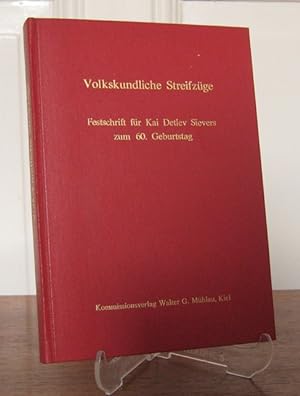
Volkskundliche Streifzüge. Festschrift für Kai Detlev Sievers zum 60. Geburtstag. Hg. von Silke Göttsch, Nils Hansen, Outi Tuomi-Nikula, Harm-Peer Zimmermann.
Language: German
Published by Kiel, Walter G. Mühlau, 1994
ISBN 10: 3928326058 ISBN 13: 9783928326056
Seller: Antiquariat Kelifer, Flensburg, Germany
Association Member: GIAQ
Seller rating 5 out of 5 stars
Condition: Sehr gut. 286 S. Mit einigen s/w-Abbildungen. Minimale Lesespuren. Sehr guter Zustand. Sprache: Deutsch Gewicht in Gramm: 510 8° (=18,5-22,5cm), Leinen mit Goldprägung.
-

Couverture rigide. Condition: Très bon. 12312 Très bon état, envoi rapide et soigné.
-
US$ 41.46
US$ 20.01 shipping
Ships from United Kingdom to U.S.A.Quantity: 2 available
Add to basketHardcover. Condition: Brand New. 208 pages. 10.83x8.51x10.88 inches. In Stock.
-
US$ 50.84
US$ 16.68 shipping
Ships from United Kingdom to U.S.A.Quantity: 1 available
Add to basketHardcover. Condition: Brand New. bilingual edition. 111 pages. French language. 12.00x8.50x0.75 inches. In Stock.
-
Eugenics and the welfare state: sterilization policy in Denmark, Sweden, Norway, and Finland.
Language: English
Published by Michigan State University Press, East Lansing, 1996
hardcover. Condition: Near Fine. near fine blue cloth, attractive copy, appears little used if at all, barcode and printing info on last blank page suggests this was a digital reprint. ROLL-HANSEN, NILS, 1938-; BROBERG, GUNNAR, 1942-2022, ed. . Eugenics and the welfare state: sterilization policy in Denmark, Sweden, Norway, and Finland. East Lansing: Michigan State University Press, 1996, probably a digital reprint with the 1st printing number line starting with 1, ix, 294pp., . Note that a 2005 revised edition included a new preface addressing the controversies raised by the book. - The history of sterilization in the Nordic countries shows the interaction between science, political ideology, and the development of social policy. - CONTENTS: Scandinavia : an introduction / Gunnar Broberg -- Something rotten in the state of Denmark : eugenics and the ascent of the welfare state / Bent Sigurd Hansen -- Eugenics in Sweden : efficient care / Gunnar Broberg and Mattias Tydén -- Norwegian eugenics : sterilization as social reform / Nils Roll-Hansen -- From race hygiene to sterilization : the eugenics movement in Finland / Marjatta Hietala -- Conclusion : Scandinavian eugenics in the international context / Nils Roll-Hansen. 9780870134135 ISBN 0870134132 20.40.
-

Hardback. Condition: New. Multilingual. Christian Krohg was a key figure in the Norwegian art community of the 1880s and 1890s, and was strongly influenced by the ideology of realism. In his view, art should have meaning for a broad segment of the population, not merely serve as wall decorations for the bourgeoisie. Three types of motifs were recurrent themes for Krohg during this period: the working-class hero, scenes from family life and "the fallen woman". Many people responded to his literary and visual representations of the poverty-stricken girl Albertine. He depicted members of the working class with great sympathy in paintings such as Errand Boy Drinking Coffee and Woman Cutting Bread. The Gaihede family, fishermen from Skagen in Denmark, are portrayed in many everyday situations, as are members of Krohg's own family. The catalogue sheds light on the subject matter of the exhibition, Krohg's period of study in Berlin and its impact on him, his relationship with Georg Brandes, the novel Albertine and Krohg's own use of photography as a model for his work and a medium.Text in English and Norwegian.
-
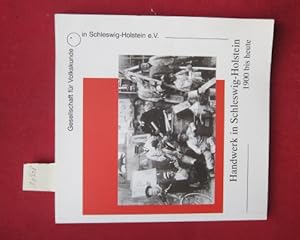
Handwerk in Schleswig-Holstein 1900 bis heute : Katalog der Wanderausstellung der Gesellschaft für Volkskunde in Schleswig-Holstein e.V. Bildzusammenstellung und Textgestaltung: Nils Hansen u.a., Schriftenreihe der Gesellschaft für Volkskunde in Schleswig-Holstein ; Bd. 2
Language: German
Published by Großbarkau : Ed. Barkau,, 1997
ISBN 10: 3928326171 ISBN 13: 9783928326179
Seller: Versandantiquariat buch-im-speicher, Berlin, Germany
Association Member: GIAQ
Seller rating 5 out of 5 stars
Condition: Gut. 93 S. : zahlr. ganzseitige Abb. ; 21x20 cm ; Marginal berieben, bestoßen, innen sauber. Gutes Exemplar. Sprache: Deutsch Gewicht in Gramm: 330 weißer Org.-Broschur mit Deckelillustr.
-
US$ 41.21
US$ 49.36 shipping
Ships from United Kingdom to U.S.A.Quantity: 1 available
Add to basketHardcover. Condition: new. Hardcover. Christian Krohg was a key figure in the Norwegian art community of the 1880s and 1890s, and was strongly influenced by the ideology of realism. In his view, art should have meaning for a broad segment of the population, not merely serve as wall decorations for the bourgeoisie. Three types of motifs were recurrent themes for Krohg during this period: the working-class hero, scenes from family life and the fallen woman. Many people responded to his literary and visual representations of the poverty-stricken girl Albertine. He depicted members of the working class with great sympathy in paintings such as Errand Boy Drinking Coffee and Woman Cutting Bread. The Gaihede family, fishermen from Skagen in Denmark, are portrayed in many everyday situations, as are members of Krohg's own family. The catalogue sheds light on the subject matter of the exhibition, Krohg's period of study in Berlin and its impact on him, his relationship with Georg Brandes, the novel Albertine and Krohg's own use of photography as a model for his work and a medium. Text in English and Norwegian. The catalogue sheds light on Christian Krohg's period of study in Berlin and its impact on him, his relationship with Georg Brandes, the novel Albertine and Krohg's own use of photography as a model for his work and a medium. Text in English and Norwegian. Shipping may be from our UK warehouse or from our Australian or US warehouses, depending on stock availability.
-

Christian Krohg
Language: English
Published by National Museum Of Oslo Nov 2025, 2025
ISBN 10: 8281540672 ISBN 13: 9788281540675
Seller: buchversandmimpf2000, Emtmannsberg, BAYE, Germany
Seller rating 5 out of 5 stars
Buch. Condition: Neu. Neuware -The catalogue sheds light on Christian Krohg's period of study in Berlin and its impact on him, his relationship with Georg Brandes, the novel Albertine and Krohg's own use of photography as a model for his work and a medium. Text in English and Norwegian.Christian Krohg was a key figure in the Norwegian art community of the 1880s and 1890s, and was strongly influenced by the ideology of realism. In his view, art should have meaning for a broad segment of the population, not merely serve as wall decorations for the bourgeoisie. Three types of motifs were recurrent themes for Krohg during this period: the working-class hero, scenes from family life and 'the fallen woman'. Many people responded to his literary and visual representations of the poverty-stricken girl Albertine. He depicted members of the working class with great sympathy in paintings such as Errand Boy Drinking Coffee and Woman Cutting Bread. The Gaihede family, fishermen from Skagen in Denmark, are portrayed in many everyday situations, as are members of Krohg's own family. The catalogue sheds light on the subject matter of the exhibition, Krohg's period of study in Berlin and its impact on him, his relationship with Georg Brandes, the novel Albertine and Krohg's own use of photography as a model for his work and a medium. Text in English and Norwegian.Libri GmbH, Europaallee 1, 36244 Bad Hersfeld 242 pp. Englisch.
-

Kinderträume: Zur Geschichte der Kindheit von der Nachkriegszeit bis zur antiautoritären Erziehung (1945-1970). -
Language: German
Published by Rosengarten-Ehestorf, Freilichtmuseum am Kiekeberg,, 1992
ISBN 10: 3927521116 ISBN 13: 9783927521117
Seller: Libresso Antiquariat, Jens Hagedorn, Harsefeld, Germany
Seller rating 5 out of 5 stars
Kartoniert. 96 Seiten, Mit Abbildungen und Literaturverzeichnis; [Schriften des Freilichtmuseums am Kiekeberg, Band 11]; --- gutes Exemplar Sprache: Deutsch Gewicht in Gramm: 280.


