
Leponce (3 results)
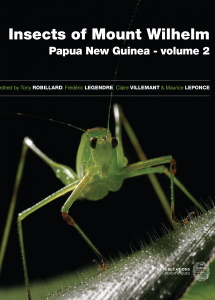
- Hardcover
Seller: PEMBERLEY NATURAL HISTORY BOOKS BA, ABA, Iver, , United KingdomPEMBERLEY NATURAL HISTORY BOOKS BA, ABA
Contact seller5-star sellerCondition: New
US$ 109.24
US$ 29.54 shippingShips from United Kingdom to U.S.A.Quantity: 2 available
Condition: NEW. 600, 1078 col + b/w figs. 270x220mm. HB. NEW. . Text English. Papua New Guinea has one of the most remarkable ecosystems in the world in terms of rich plant species and marine biodiversity. During the 'The Planet Revisited - Papua New Guinea 2012-2013' biodiversity inventory, more than two hundred people explored… these ecosystems, from the bottom of the Bismarck Sea to the summit of Mount Wilhelm, its highest point. Helped by local communities and local parataxonomists, researchers, technicians, amateur naturalists and students from 21 different countries have gathered a large amount of specimens and data in an attempt to answer fundamental questions such as determining the number of living species that inhabit our planet or the biodiversity generated by the renewal of arthropod species. The Mémoires du Muséum publish the second volume on the main results of the land part of the expedition, advancing the study of the arthropod fauna of Mount Wilhelm and presenting an inventory of the plants collected during the expedition. This volume includes 14 contributions dealing with various groups of insects, with the description of 118 species and 3 genera new to science. Includes CD-ROM. [9782856538364].

- Hardcover
Seller: ConchBooks, Harxheim, , GermanyConchBooks
Contact seller4-star sellerCondition: Used
US$ 127.23
US$ 27.86 shippingShips from Germany to U.S.A.Quantity: 1 available
Papua New Guinea possesses among the most remarkable ecosystems in the world in terms of plant species richness and marine biodiversity. During the biotic survey "Our Planet Reviewed Papua New Guinea 2012-2013" more than two hundred people have explored these ecosystems, from the bottom of the Bismarck Sea to the summit of Mount… Wilhelm, its highest peak. Assisted by both local communities and local parataxonomists, researchers, technicians, amateur naturalists and students from 21 different countries have gathered a large amount of specimens and data to attempt answering fundamental questions such as how many living species inhabit our planet or how much biodiversity is generated by elevational turnover of arthropod species. The Mémoires du Muséum publish the first major outcomes of the terrestrial part of the expedition, focusing on the insect fauna of Mount Wilhelm. This volume comprises 20 contributions dealing with diverse groups of insects, with the description of 144 species and 6 genera new to Science. 573 pp. + CD, num. figs, hardcover 22 x 27,5 cm.
 More images
Insects of Mount Wilhelm: Papua New Guinea, Volume 2
Robillard, T., Legendre, F., Villemant, C. & Leponce, M. [eds]
Seller: ConchBooks, Harxheim, , GermanyConchBooks
Contact seller4-star sellerCondition: Used
US$ 122.39
US$ 27.86 shippingShips from Germany to U.S.A.Quantity: 1 available
Papua New Guinea has one of the most remarkable ecosystems in the world in terms of plant species richness and marine biodiversity. During the "The Planet Revisited - Papua New Guinea 2012-2013" ??biodiversity inventory, more than two hundred people explored these ecosystems, from the bottom of the Bismarck Sea to the summit of…Mount Wilhelm, its highest point. Helped by local communities and local parataxonomists, researchers, technicians, amateur naturalists and students from 21 different countries have collected a large amount of specimens and data in an attempt to answer fundamental questions such as determining the number of living species that inhabit our planet or the biodiversity generated by the renewal of arthropod species. The Mémoires du Muséum publish the second volume on the main results of the land part of the expedition, advancing the study of the arthropod fauna of Mount Wilhelm and presenting an inventory of the plants collected during the expedition. This volume includes 14 contributions dealing with various groups of insects, with the description of 118 species and 3 genera new to science. La Papouasie-Nouvelle-Guinée possède l'un des écosystèmes les plus remarquables au monde en termes de richesse en espèces végétales et de biodiversité marine. Au cours de l'inventaire de biodiversité "La Planète Revisitée - Papouasie-Nouvelle-Guinée 2012-2013", plus de deux cents personnes ont exploré ces écosystèmes, du fond de la mer de Bismarck au sommet du mont Wilhelm, son point culminant. Aidés par les communautés locales et des parataxonomistes locaux, des chercheurs, des techniciens, des naturalistes amateurs et des étudiants de 21 pays différents ont rassemblé une grande quantité de spécimens et de données pour tenter de répondre à des questions fondamentales telles que déterminer le nombre d'espèces vivantes qui habitent notre planète ou la biodiversité générée par le renouvellement des espèces d'arthropodes. Les Mémoires du Muséum publient le deuxième volume sur les principaux résultats de la partie terrestre de l'expédition, en faisant avancer l'étude de la faune des arthropodes du mont Wilhelm et en présentant un inventaire des plantes collectées au cours de l'expédition. Ce volume comprend 14 contributions traitant de divers groupes d'insectes, avec la description de 118 espèces et 3 genres nouveaux pour la science. Paris. Muséum national d'Histoire naturelle. 599 pp.

