

Order Total (1 Item Items):
Shipping Destination:

Physiologist Surgeon (8 results)
Skip to main search results
Search filters
Product Type
- All Product Types
- Books (2)
- Magazines & Periodicals (No further results match this refinement)
- Comics (No further results match this refinement)
- Sheet Music (No further results match this refinement)
- Art, Prints & Posters (No further results match this refinement)
- Photographs (No further results match this refinement)
- Maps (No further results match this refinement)
- Manuscripts & Paper Collectibles (6)
Condition Learn more
- New (No further results match this refinement)
- As New, Fine or Near Fine (No further results match this refinement)
- Very Good or Good (No further results match this refinement)
- Fair or Poor (No further results match this refinement)
- As Described (8)
Binding
- All Bindings
- Hardcover (No further results match this refinement)
- Softcover (No further results match this refinement)
Collectible Attributes
- First Edition (No further results match this refinement)
- Signed (No further results match this refinement)
- Dust Jacket (No further results match this refinement)
- Seller-Supplied Images (2)
- Not Print on Demand (8)
Language (1)
Price
- Any Price
- Under US$ 25 (No further results match this refinement)
- US$ 25 to US$ 50
- Over US$ 50
Free Shipping
- Free Shipping to U.S.A. (No further results match this refinement)
Seller Location
Seller Rating
-

[Benjamin C. Brodie, The Elder. Surgeon and physiologist.] Autograph letter signed to the Dean of Westminster.
Published by 26 Dec., 1847
Seller: Richard M. Ford Ltd, London, United Kingdom
Seller rating 5 out of 5 stars

The Elder. Surgeon and physiologist (1783-1862). Two pages, 8vo. He is sorry to find that the Dean and his wife are ill, and that he cannot accept an invitation.
-
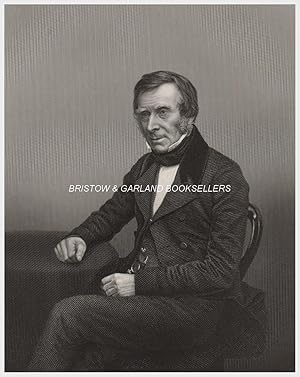
A fine original antique engraved portrait of Sir Benjamin Collins Brodie F.R.S., engraved on steel by D.J. Pound from a photograph by Maull & Polybank.
Published by London: John Tallis The London Joint Stock Newspaper Co. circa, 1862
Seller: Bristow & Garland, Shaftesbury, United Kingdom
Seller rating 4 out of 5 stars

US$ 34.52
US$ 18.77 shipping
Ships from United Kingdom to U.S.A.Quantity: 1 available
Add to basketSize of the engraved image 8 1/2 x 6 3/4 inches, size overall 15 1/2 x 10 1/2 inches. On good quality paper (not newspaper stock). Printed caption, identifying the subject below the image. Some light offsetting of text below caption else very good and with good margins; ideal for framing. From "The National Portrait Gallery of Eminent Personages" issued as a supplement to "The Illustrated News of the World" which was published 1858-1864. With the original printed leaf of text giving biographical details of the subject.
-
[Sir Benjamin Collins Brodie, Serjeant Surgeon to William IV and Victoria.] Autograph Prescription Signed ('B C Brodie') in case of 'Miss Smedley'.
Published by No place; 1 May, 1845
Seller: Richard M. Ford Ltd, London, United Kingdom
Seller rating 5 out of 5 stars
Manuscript / Paper Collectible
1p, 4to. On grey paper. In fair condition, lightly aged and worn, with thin strip of paper from mount adhering to reverse. Folded three times. A typical prescription, in Latin, beneath the heading 'Miss Smedley. April [last word deleted] May 1 1845'. The prescription begins with the usual 'Rx'; the last of the fourteen lines that follow ending with Brodie's signature ('B C Brodie').
-
[Sir Benjamin Collins Brodie, distinguished surgeon.] Autograph Letter Signed ('B C Brodie') to Mrs Hewitt of Nantwich, giving advice on what action to take regarding her indisposition.
Published by Zurich; 8 September, 1853
Seller: Richard M. Ford Ltd, London, United Kingdom
Seller rating 5 out of 5 stars
Manuscript / Paper Collectible
US$ 103.57
US$ 6.03 shipping
Ships from United Kingdom to U.S.A.Quantity: 1 available
Add to basket3pp, 12mo. Bifolium. In fair condition, lightly aged and worn, with thin strip of paper from mount adhering to the blank reverse of the second leaf. Tipped-in below the signature is the letter's envelope, addressed, with postmarks, to 'Mrs Hewitt | Wrenbury Hall | Nantwich', amended to 'Chislehurst | Kent'. He begins by explaining that he has 'been for the last few weeks on the continent, & in consequence of the gross neglect of the Geneva post office' her letter has only just reached him. He is sorry that he should have been 'made to appear so negligent'. While sorry that she cannot 'give a better account' of herself, he cannot 'venture to give you much advice without seeing you'. He will be shortly in England, and will write to let her know 'the first day' he can see her in London. of yourself'. He wonders, as she is not 'getting on satisfactorily', whether in the meantime it might not be better for her to 'procure some other advice'. He suggests 'Mr Parkin', of 32 Clarges Street, Piccadilly 'as a proper person to be consulted'.
-
[Sir Benjamin Collins Brodie, Serjeant Surgeon to William IV and Victoria.] Autograph Letter Signed ('B C Brodie')
Published by 14 Savile Row London; 5 December, 1836
Seller: Richard M. Ford Ltd, London, United Kingdom
Seller rating 5 out of 5 stars
Manuscript / Paper Collectible
US$ 124.29
US$ 6.03 shipping
Ships from United Kingdom to U.S.A.Quantity: 1 available
Add to basket2pp, 12mo. In fair condition, lightly aged, with thin strip of paper from mount adhering to reverse. The recipient is not identified. Reads: 'My Dear Sir | I hope that I shall not put you to inconvenience by making my visit to your patient today as late as half past five o clock. A particular circumstance has occurred which will prevent my being in your part of the town at the time originally proposed.'.
-
[Sir Thomas Watson, President of the Royal College of Physicians.] Autograph Letter Signed ('Thomas Watson.') to Yarmouth physician Henry Davey, suggesting a meeting and tour of London University, with reference to 'Mr. Bell', i.e. Sir Charles Bell.
Published by 24 Henrietta Street Cavendish Square London. 'Monday Evening. - Feby 23. ', 1829
Seller: Richard M. Ford Ltd, London, United Kingdom
Seller rating 5 out of 5 stars
Manuscript / Paper Collectible
US$ 138.10
US$ 6.03 shipping
Ships from United Kingdom to U.S.A.Quantity: 1 available
Add to basketThe recipient of this letter is the surgeon Henry William Robert Davey (1798-1870) of Yarmouth, son of surgeon Henry Sallows Davey (1781-1855) of Beccles; and the 'Mr. Bell' mentioned in it is Sir Charles Bell, who had taught Davey ten years before at Theatre of Anatomy, Great Windmill Street. 2pp, 12mo. Bifolium. In fair condition, lightly aged, with a strip cut away from the outside edge of the second leaf, which carries two postmarks and Watson's address to 'Henry Davey Esqre | Tavistock Hotel | Covent Garden'. Twenty-one lines of neatly-written text. He begins by apologising for being 'in such a hurry' when Davey called at his house that morning that he 'did not immediately open my Friend Rennie's letter In fact I was just starting, as you perhaps saw, to visit a Patient in the Country'. Should Davey 'not have succeeded in meeting with Mr. Bell' Watson will have 'great pleasure in shewing you the London University'. He can 'with difficulty' suggest a time when he is 'sure to be found at home', but he 'must be at the Middlesex Hospital' on the following day between noon and one o'clock, 'where I shall be very glad to see you if you think I can be useful to you'. From the distinguished autograph collection of the psychiatrist Richard Alfred Hunter (1923-1981), whose collection of 7000 works relating to psychiatry is now in Cambridge University Library. Hunter and his mother Ida Macalpine had a particular interest in the illness of King George III, and their book 'George III and the Mad Business' (1969) suggested the diagnosis of porphyria popularised by Alan Bennett in his play 'The Madness of George III'.
-

Signed photograph.
Published by n. p. n. d.
Seller: Kotte Autographs GmbH, Roßhaupten, Germany
Association Member: ILAB PADA VDA
Seller rating 5 out of 5 stars
Manuscript / Paper Collectible
5 x 7 inch. Head and shoulders pose of the surgean and Nobel Prize winner. - He was one of the founding staff members of the University of Chicago Medical School, where he remained for the duration of his professional research career. Huggins's work on how sex hormones influence prostate function ultimately led to his discovery of hormone therapies to treat prostate cancer. For this finding, he was awarded the 1966 Nobel Prize for Physiology or Medicine. In addition to his work on prostate cancer, Huggins explored the relationship between hormones and breast cancer, developed an animal model for breast cancer, and developed chromogenic substrates that are widely used for biochemical analyses.
-
[Marion, Lady Bell, wife of Sir Charles Bell, Scottish physiologist.] Autograph Letter Signed ('Marion Bell') to her husband's 'old Pupil and Friend' Henry Davey of Yarmouth, discussing the publication of his letters to his brother.
Published by 47? Albany Street N.W. London 24 March, 1870
Seller: Richard M. Ford Ltd, London, United Kingdom
Seller rating 5 out of 5 stars
Manuscript / Paper Collectible
US$ 345.24
US$ 6.03 shipping
Ships from United Kingdom to U.S.A.Quantity: 1 available
Add to basketMarion Shaw, daughter of Charles Shaw of Ayr, married Charles Bell in 1811. Following the death of her husband in 1842, she lived with her brother the surgeon Alexander Shaw (1804-1890), and their house became a centre of artistic and literary society. The recipient is a former pupil of Bell's at the Hunterian School of Medicine in Great Windmill Street, London, the surgeon Henry William Robert Davey (1798-1870), son of surgeon Henry Sallows Davey (1781-1855) of Beccles. The letter is written on the publication of 'The Letters of Sir Charles Bell, K.H., F.R.S.L. & E.: Selected from His Correspondence with his Brother George Joseph Bell' (1870). 4pp, 12mo. Bifolium. In good condition, lightly aged, with thin strip from mount adhering to reverse of second leaf. The letter begins: 'Dear Henry Davey | When I thought of those, to whom these Memorials would be acceptable , I was not mistaken in clasing Yourself the old Pupil and friend of my dear Husband among the first. - I thank you sincerely for your kind note. - I have grieved for you and your wife, in the great sorrow that I saw had befallen you.' She continues by observing that in her 'long life' she has 'written few letters, - but of sympathy and bereavements!' Her only hope is that the Daveys 'can both accept gratefully the mercies' that are still around them, including their son. She is sorry to see from Davey's writing that he is 'a sufferer [from arthritis]'. Concerning the book she states that the letters belong to George Joseph Bell, and that '[f]rom many circumstances' connected with his family 'they have been late in appearing; | The Mass of correspondence was so large, that the selection was difficult: to refrain, or to venture, equally so.' Nevertheless she hopes that there is 'enough to show Sir Charles Bell as he was, & which I believe will be precious to The Profession.' The selection of the letters was 'by the surviving daughter of Geo Jos Bell', 'which of course I superintended, as far as possible. I have not yet recovered the task'. She concludes by stating that she is 'pretty well' in health, 'considering my more than 80 years. I go out seldom. My sister Mrs Haughton lives with me'. From the distinguished autograph collection of the psychiatrist Richard Alfred Hunter (1923-1981), whose collection of 7000 works relating to psychiatry is now in Cambridge University Library. Hunter and his mother Ida Macalpine had a particular interest in the illness of King George III, and their book 'George III and the Mad Business' (1969) suggested the diagnosis of porphyria popularised by Alan Bennett in his play 'The Madness of George III'.


