Order Total (1 Item Items):
Shipping Destination:

Roberval S (3 results)
Skip to main search results
Search filters
Product Type
- All Product Types
- Books (3)
- Magazines & Periodicals (No further results match this refinement)
- Comics (No further results match this refinement)
- Sheet Music (No further results match this refinement)
- Art, Prints & Posters (No further results match this refinement)
- Photographs (No further results match this refinement)
- Maps (No further results match this refinement)
- Manuscripts & Paper Collectibles (No further results match this refinement)
Condition Learn more
- New (1)
- As New, Fine or Near Fine (1)
- Very Good or Good (No further results match this refinement)
- Fair or Poor (No further results match this refinement)
- As Described (1)
Binding
Collectible Attributes
- First Edition (2)
- Signed (No further results match this refinement)
- Dust Jacket (No further results match this refinement)
- Seller-Supplied Images (2)
- Not Print on Demand (3)
Language (2)
Free Shipping
Seller Location
Seller Rating
-

These : Des Successions anormales en droit francais
Language: French
Published by HACHETTE LIVRE-BNF 2018-02, 2018
ISBN 10: 2016162600 ISBN 13: 9782016162606
US$ 15.85
US$ 20.77 shipping
Ships from United Kingdom to U.S.A.Quantity: 10 available
Add to basketPF. Condition: New.
-
Mémoires de l'Académie Royale des Sciences. Depuis 1666 jusqu'à 1699. Tome VI.
Published by Compagnie des Libraires, Paris, 1730
Seller: Eric Zink Livres anciens, PARIS, France
Association Member: ILAB
Seller rating 5 out of 5 stars

First Edition
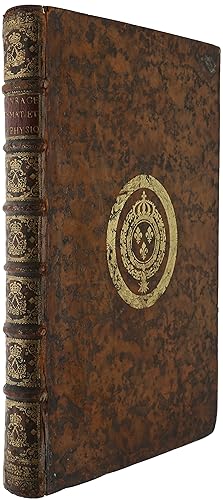
Couverture rigide. Condition: Bon. Edition originale. Plein veau marbré de l'époque, dos à cinq nerfs orné et doré portant la pièce de titre, tranches rouges. Un volume in quarto (256x188 mm), (8)-712 pages et une planche dépliante. Découpe sur 1 cm en haut de la page de titre pour supprimer un exlibris manuscrit, sans atteinte au texte. Coiffes et coins abîmés, mors fendus. Reliure aux armes de l'académie des Sciences. Ce volume des Mémoires de l'Académie Royale des Sciences contient des articles de Gilles Personne de ROBERVAL. Mathématicien et physicien français, il est l'inventeur de la balance à deux fléaux dite « balance de Roberval ». Il fait partie en 1666 des sept savants qui fondent l'Académie royale des sciences. Il est moins connu pour ses travaux en mathématiques qui sont pourtant important. Hélas il avait tendance à garder ses découvertes secrètes ce qui a engendré des polémiques sur l'antériorité de certains de ses travaux. Il a ainsi mis au point la méthode des "indivisibles", mais ne la publie pas et perd l'honneur de la découverte du calcul intégral en faveur des travaux indépendants de Bonaventura Cavalieri. On doit aussi à Roberval ses travaux sur les courbes cycloïdes et ses observations sur la composition des mouvements font de lui "the founder of kinematic geometry" (DSB). On trouve entre autres ici ces traités de Roberval - Observations sur la composition des mouvemens & sur le moyen de trouver les touchantes des lignes courbes. - Traité des indivisibles. - De Trochoide ejusque spatio. Et des articles de Jean Picard, géodésien et astronome français. Il est considéré comme le fondateur de la géodésie moderne. References : OHR [2327_1], DSB [(Roberval) XI, p. 487 :"Roberval's tendency to keep his own discoveries secret has been attributed to his desire to profit from them in order to retain Ramus chair. But this habit also resulted in his tardy and frequent claims to priority. (.) Roberval was one of the leading proponents of the geometry of infinitesimals, which he claimed to have taken direcly from Archimedes, without having known the work of Cavalieri. (.). The numerous results that he obtain in this area are collected (.) under the title ' Traité des indivisibles '. One of the first important finding was, in modern terms, the definite integration of the rational power. (.). On account of his method of the "composition of movements" Roberval may be called the founder of kinematic geometry"] (.). ___________________________________________________________________________________ ______________________________ENGLISH_DESCRIPTION : Contemporary full mottled calf, spine gilt in six compartments, title in gilt on lettering-piece, red edges. 4to (256x188), (8)-712 pages and 1 folding plate. Upper margin cut on 1 cm. Caps and corner worn, joints split. This volume contains articles from Roberval : - Observations sur la composition des mouvemens & sur le moyen de trouver les touchantes des lignes courbes. - Traité des indivisibles. - De Trochoide ejusque spatio. References : OHR [2327_1], DSB [(Roberval) XI, p. 487 :"Roberval's tendency to keep his own discoveries secret has been attributed to his desire to profit from them in order to retain Ramus chair. But this habit also resulted in his tardy and frequent claims to priority. (.) Roberval was one of the leading proponents of the geometry of infinitesimals, which he claimed to have taken direcly from Archimedes, without having known the work of Cavalieri. (.). The numerous results that he obtain in this area are collected (.) under the title ' Traité des indivisibles '. One of the first important finding was, in modern terms, the definite integration of the rational power. (.). On account of his method of the "composition of movements" Roberval may be called the founder of kinematic geometry"] (.). 1555g.
-
Divers ouvrages de mathématique et de physique
Published by L?Imprimerie Royale, Paris, 1693
Seller: SOPHIA RARE BOOKS, Koebenhavn V, Denmark
Seller rating 4 out of 5 stars

First Edition
First edition. A ROYAL PRESENTATION BINDING. First edition of this superb collection of thirty-one treatises by the leading scientists of seventeenth-century France, almost all of which are published here for the first time. This is one of the earliest important publications of the Académie des Sciences, and one of the most magnificent, and the present copy was probably intended for presentation: it is bound in contemporary calf with the arms of Louis XIV on each cover. Founded on 22 December 1666, one of the principal functions of the Académie was to facilitate publication of the works of its members. Frenicle and Roberval were founding members (as was Huygens), and without the assistance of the Académie it is likely that many of their works would have remained unpublished (only two works by Frenicle and two by Roberval were published in their lifetimes). After the death of Frenicle and Roberval in 1675, their books and manuscripts were entrusted to the astronomer Jean Picard; eight treatises by Huygens were also sent to Picard for publication in this collection. After Picard's death in 1682, publication of the works was brought to fruition by Philippe de la Hire. La Hire also included in the Divers ouvrages five treatises by Picard himself, including an unusual 37-page work on dioptrics, one by Mariotte and two each by Auzout and Rømer. The most important work in the volume is probably Roberval's Traité des indivisibles, composed around the same time as Cavalieri's Geometria indivisibilibus (1635) but independent of it and published here for the first time. The treatises by Frenicle, a close correspondent of Fermat, treat topics in number theory and related fields. See below for a full list of contents. Gilles Personne de Roberval (1602-75) arrived in Paris in 1628 and put himself in contact with the Mersenne circle. "Mersenne, especially, always held Roberval in the highest esteem. In 1632 Roberval became professor of philosophy at the Collège de Maître Gervais. On 24 June 1634, he was proclaimed the winner in the triennial competition for, the Ramus chair (a position that he kept for the rest of his life) at the Collège Royal in Paris, where at the end of 1655 he also succeeded to Gassendi's chair of mathematics. In 1666 Roberval was one of the charter members of the Académie des Sciences in Paris . He himself published only two works: Traité de méchanique (1636) and Aristarchi Samii de mundi systemate (1644). A rather full collection of his treatises and letters was published in the Divers ouvrages de mathématique et de physique par messieurs de I'Académie royale des sciences (1693), but since few of his other writings were published in the following period, Roberval was for long eclipsed by Fermat, Pascal, and, above all, by Descartes, his irreconcilable adversary. "Roberval was one of the leading proponents of the geometry of infinitesimals, which he claimed to have taken directly from Archimedes, without having known the work of Cavalieri. Moreover, in supposing that the constituent elements of a figure possess the same dimensions as the figure itself, Roberval came closer to the integral calculus than did Cavalieri, although Roberval's reasoning in this matter was not free from imprecision. The numerous results that he obtained in this area are collected in the Divers ouvrages, under the title of Traité des indivisibles. One of the first important findings was, in modern terms, the definite integration of the rational power, which he most probably completed around 1636, although by what manner we are not certain. The other important result was the integration of the sine . the most famous of his works in this domain concerns the cycloid. Roberval introduced the "compagne" ("partner") of the original cycloidal curve and appears to have succeeded, before the end of 1636, in the quadrature of the latter and in the cubature of the solid that it generates in turning around its base . "On account of his method of the "composition of Movements" Roberval may be called the founder of kinematic geometry. This procedure had three applications-the fundamental and most famous being the construction of tangents. "By means of the specific properties of the curved line," he stated, "examine the various movements made by the point which describes it at the location where you wish to draw the tangent: from all these movements compose a single one; draw the line of direction of the composed movement, and you will have the tangent of the curved line." Roberval conceived this remarkably intuitive method during his earliest research on the cycloid (before 1636). At first, he kept the invention secret, but he finally taught it between 1639 and 1644; his disciple François du Verdus recorded his lessons in Observations sur la composition des mouvemens, et sur le moyen de trouver les touchantes des lignes courbes . In the second place, he also applied this procedure to comparison of the lengths of curves, a subject almost untouched since antiquity . The third application consisted in determining extrema . "Roberval composed a treatise on algebra, De recognitione aequationum, and another on analytic geometry, De geometrica planarum et cubicarum aequationum resolutione. Before 1632, he had studied the "logistica speciosa" of Viète; but the first treatise, which probably preceded Descartes's Géométrie, contains only the rudiments of the theory of equations. On the other hand, in 1636 he had already resorted to algebra in search of a tangent. By revealing the details of such works, he would have assured himself a more prominent place in the history of analytic geometry, and even in that of differential calculus . "In 1647 [Roberval] wrote to Torricelli: "We have constructed a mechanics which is new from its foundations to its roof, having rejected, save for a small number, the ancient stones with which it had been built" (p. 301) . around 1669, Roberval wrote Projet d'un livre de mechanique traitant des mouvemens composez.