

Order Total (1 Item Items):
Shipping Destination:

Salmasius (86 results)
Author:
salmasius
Refine with Advanced Search
Skip to main search results
Search filters
Product Type
- All Product Types
- Books (83)
- Magazines & Periodicals (No further results match this refinement)
- Comics (No further results match this refinement)
- Sheet Music (No further results match this refinement)
- Art, Prints & Posters (3)
- Photographs (No further results match this refinement)
- Maps (No further results match this refinement)
- Manuscripts & Paper Collectibles (No further results match this refinement)
Condition Learn more
Binding
Collectible Attributes
Language (5)
Free Shipping
Seller Location
Seller Rating
-

Claudius Salmasius. Ein Philolog. Kupferstich-Porträt.
Published by Ohne Ort um 1660., 1660
Seller: Antiquariat Dennis R. Plummer, Bingen am Rhein, Germany
Seller rating 5 out of 5 stars

Art / Print / Poster
1 Blatt, verso weiß. Condition: Gut. Oval ca. 14 x 12 cm, Blatt ca. 21 x 16,3 cm. Brustbild-Portrait im Oval, darunter Inschrift. Zeigt den französischen Altphilologen und Universalgelehrten Claudius Salmasius (1588-1653). - Gutes Exemplar. Sprache: Deutsch Gewicht in Gramm: 150.
-

Defensio Regia, Pro Carolo I (1652)
Language: English
Published by Kessinger Publishing Co, US, 2009
ISBN 10: 1104644878 ISBN 13: 9781104644871
Seller: Rarewaves.com USA, London, LONDO, United Kingdom
Seller rating 5 out of 5 stars
US$ 75.07
Free Shipping
Ships from United Kingdom to U.S.A.Quantity: Over 20 available
Add to basketPaperback. Condition: New.
-

Defensio Regia, Pro Carolo I (1652)
Language: English
Published by Kessinger Publishing, LLC, 2009
ISBN 10: 1104644878 ISBN 13: 9781104644871
Condition: New. KlappentextrnrnThis scarce antiquarian book is a facsimile reprint of the original. Due to its age, it may contain imperfections such as marks, notations, marginalia and flawed pages. Because we believe this work is culturally important, we have.
-

Defensio Regia, Pro Carolo I (1652)
Language: English
Published by Kessinger Publishing, LLC Jun 2009, 2009
ISBN 10: 1104644878 ISBN 13: 9781104644871
Taschenbuch. Condition: Neu. Neuware - This scarce antiquarian book is a facsimile reprint of the original. Due to its age, it may contain imperfections such as marks, notations, marginalia and flawed pages. Because we believe this work is culturally important, we have made it available as part of our commitment for protecting, preserving, and promoting the world's literature in affordable, high quality, modern editions that are true to the original work.
-

Bericht von 1663 aus Paris: Über den Zucker. Manuskriptfragment aus dem Nachlaß. Herausgegeben von Hubert Olbrich.
Language: German
Published by Berlin, Institut für Zuckerindustrie, 1977
Seller: Antiquariat im Schloss, Schwaigern, D, Germany
Seller rating 5 out of 5 stars
88 Seiten. Gutes Exemplar. Sprache: Deutsch Gewicht in Gramm: 900 Or.-Broschur. Format: 20 x 14,5cm (=Beiträge zur Entwicklungsgeschichte der Zuckerwirtschaft und der Zuckerindustrie. Heft 9).
-

Defensio Regia, Pro Carolo I (1652)
Language: English
Published by Kessinger Publishing Co, US, 2009
ISBN 10: 1104644878 ISBN 13: 9781104644871
US$ 70.44
US$ 86.85 shipping
Ships from United Kingdom to U.S.A.Quantity: Over 20 available
Add to basketPaperback. Condition: New.
-

Praefatio In Librum De Homonymis Hyles Iatricae, Eiusdem De Plinio Judicium (1668)
Language: Latin
Published by Kessinger Publishing, LLC, 2009
ISBN 10: 1104893150 ISBN 13: 9781104893156
Condition: New. KlappentextrnrnThis scarce antiquarian book is a facsimile reprint of the original. Due to its age, it may contain imperfections such as marks, notations, marginalia and flawed pages. Because we believe this work is culturally important, we have.
-

Cl. Salmasii De Re Militari Romanorum Liber (1657)
Language: Latin
Published by Kessinger Publishing, LLC, 2009
ISBN 10: 1104634279 ISBN 13: 9781104634278
Condition: New. KlappentextrnrnThis scarce antiquarian book is a facsimile reprint of the original. Due to its age, it may contain imperfections such as marks, notations, marginalia and flawed pages. Because we believe this work is culturally important, we have.
-

Claudii Salmasii Epistolarum, Book 1 (1656)
Language: Greek, Modern (post 1453)
Published by Kessinger Publishing, LLC, 2009
ISBN 10: 110463449X ISBN 13: 9781104634490
Condition: New. KlappentextrnrnThis scarce antiquarian book is a facsimile reprint of the original. Due to its age, it may contain imperfections such as marks, notations, marginalia and flawed pages. Because we believe this work is culturally important, we have.
-

Praefatio In Librum De Homonymis Hyles Iatricae, Eiusdem De Plinio Judicium (1668)
Language: Latin
Published by Kessinger Publishing, LLC Aug 2009, 2009
ISBN 10: 1104893150 ISBN 13: 9781104893156
Taschenbuch. Condition: Neu. Neuware - This scarce antiquarian book is a facsimile reprint of the original. Due to its age, it may contain imperfections such as marks, notations, marginalia and flawed pages. Because we believe this work is culturally important, we have made it available as part of our commitment for protecting, preserving, and promoting the world's literature in affordable, high quality, modern editions that are true to the original work.
-
L. Annaeus Florus. C.L. Salmasius addidit Lucium Ampelium. E. cod. M. S. nunquam antehac editum.
Published by Elzevier, Leiden, 1638
Seller: terrahe.oswald, Gangkofen, Germany
Seller rating 5 out of 5 stars
12°. Mit gestochener Titelillustration. 4 nn. Blatt, 336 S., 8 nn. Blatt (Register). Ganzlederband der Zeit mit geprägtem Rückentitel. Herausgeber des vorliegenden Buches ist der französische Altphilologe und Universalgelehrte Claude Salmasius (1588-1653). Neben dem Hauptwerk von Florus ist es durch ein Werk des Autors Lucius Ampelius ergänzt, einem Schulautor der römischen Kaiserzeit. - Lucius Annaeus Florus, ein römischer Geschichtsschreiber um das Jahr 120 herum, skizzierte die Geschichte Roms von der Gründung der Stadt bis zur Varusschlacht im 9. Jahr nach Chr. Seine Quellen waren vor allem die Geschichtsschreiber, Politiker und Rhetoriker Titus Livius, Sallust, Seneca d. Ältere und Tacitus. Das Buch, eine Lobschrift auf die Größe und Erhabenheit Roms, ist in vier Abschnitte unterteilt. Im Mittelalter griff man trotz geographischer und chronologischer Fehler häufig auf dieses Werk zurück. Cornelis Claesz Duysend, von dem der gestochene Titel stammt, war ein holländischer Kupferstecher und Drucker in Leiden.-Weitere Fotos finden Sie auf unserer Internetseite Riemberg Antiquariat.- Einband berieben bzw. stellenweise beschabt; Rücken stärker beschabt; oberes Kapital mit kleiner Fehlstelle; vorderes Innengenek gebrochen; vorderes fliegendes Vorsatzblatt herausgetrennt; Titelblatt etwas gebräunt und angeschmutzt, Seiten nur stellenweise etwas stockfleckig.
-

Cl. Salmasii De Re Militari Romanorum Liber (1657)
Language: Latin
Published by Kessinger Publishing, LLC Jun 2009, 2009
ISBN 10: 1104634279 ISBN 13: 9781104634278
Taschenbuch. Condition: Neu. Neuware - This scarce antiquarian book is a facsimile reprint of the original. Due to its age, it may contain imperfections such as marks, notations, marginalia and flawed pages. Because we believe this work is culturally important, we have made it available as part of our commitment for protecting, preserving, and promoting the world's literature in affordable, high quality, modern editions that are true to the original work.
-

Defensio Regia pro Carolo I. Ad Serenissimum Magnae Britanniae regem Carolvm II. Filium natu majorem, heredem & successorem legirimum
Published by sumptibus regiis [L. Elzevier], [Amsterdam], 1652
Seller: McBlain Books, ABAA, Hamden, CT, U.S.A.
Association Member: ABAA ILAB SNEAB
Seller rating 5 out of 5 stars
Hardcover. Condition: Very Good. 499p. Later old leather. 14 cm. No cover titling. Edges and joints rubbed. Backstrip crazed. Outer blanks partially pasted down. Old name (Daniel Keim) inked on a couple of leaves. Narrowly margined. Latin text. This defense of Charles I and of the divine right of kings was first published in the year (1649) that Charles I was executed. This "Edition nova" appears to be rather scarce. Editio nova ab auctore sucta et recognita.
-
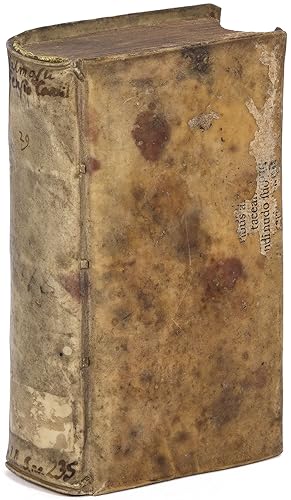
Defensio Regia, pro Carolo I, ad sereniss. Magnæ Britanniæ regem Carolum II
Published by Sumptibus Regiis, [Leyden?], 1650
Seller: Between the Covers-Rare Books, Inc. ABAA, Gloucester City, NJ, U.S.A.
Association Member: ABAA ESA ILAB IOBA
Seller rating 5 out of 5 stars
Softcover. Condition: Good. 12mo. [20], 472pp. Text in Latin. Contemporary parchment with yapp fore-edges. Armorial bookplate on front pastedown, early small library stamp on title page alongside "Doublette" ink stamp. The parchment is moderately soiled, front cover is discolored, lacking front free endpaper, else good or better with light soiling on title page. First published in 1649, this is an early issue of Claude Saumaise's royalist tract written in defense of Charles I after his execution in January, 1649. The book provoked an attack by John Milton in his *Defensio pro Populo Anglicano contra Claudii Salmasii Defensionem Regiam* (1651). *OCLC* locates only eight copies.
-
1638 Claudius Salmasius on Florus + Lucium Ampelium 2nd Edition Elzevir Imprint
Published by Elzevir, 1638
Seller: ROBIN RARE BOOKS at the Midtown Scholar, Harrisburg, PA, U.S.A.
Seller rating 5 out of 5 stars
Hardcover. Condition: Fair. 2nd Edition. L. Annæus Florus. CL. Salmasius addidit Lucium Ampelium E. cod. M.S. nunquam antehac editum. Lugdunum Batavorum: Apud Elzevirios. Anno 1638. Second Edition. Vignette title page with Romulus and Remus at the top with a scribe coming from behind a curtain for the purpose of engraving the title on the plinth with the wolf. 536 p + Index. 4.75 x 2.75", 48mo. In fair condition. Front board detached from binding. Edges of boards are normally scuffed at edges and worn at corners. Head and tail of spine scuffed & beginning to chip, headbands intact. Gilt lettering and deco on spines normally dulled & soiled; gilt denetelles on boards bright and overall clean. Edges of text-block gilt (top edge moderately soiled). Ownership bookplate found on front paste-down: "Mary Herbert Styche." Pencil and ink marginalia found on front end-page. Ink marginalia found on top & bottom edges of vignette title page. Normal toning throughout text-block, mostly at edges of leaves. Binding of text-block remains intact; front board is detached. Please see photos and ask questions, if any, before purchasing. Lucius Annaeus Florus (c.74-130) described as an ancient Roman poet, orator, and author who was born in Africa, but raised in Rome. Claude Saumaise (1588 1653), also known by the Latin name Claudius Salmasius, was a French classical scholar. He was a prolific author and textual critic. He first published (1608) an edition of a work by Nilus Cabasilas, (archbishop of Thessalonica in the 14th century) against the primacy of the pope (De primatu Papae), and an edition of a similar tract by the Calabrian monk Barlaam of Seminara (ca. 1290-1348). In 1609 he brought out an edition of Florus; a later edition (1638) included also the editio princeps of the Liber Memorialis of Lucius Ampelius. Elzevir is the name of a family of Dutch booksellers, publishers, and printers of the 17th and early 18th centuries. The duodecimo series of "Elzevirs" became very famous and very desirable among bibliophiles (like ourselves), who sought to obtain the tallest and freshest copies of these books. Although it appears the family was involved with the book trade as early as the 16th century, it is only known for its work in some detail beginning with Lodewijk Elzevir. The fame of the Elzevir editions rests chiefly on the works issued by the firm of Bonaventura and Abraham Elzevir. Their Greek and Hebrew impressions are considered inferior to those of the Aldines and the Estiennes, but their small editions in 12mo, 16mo, and 24mo, for their elegance of design, neatness, clearness, regularity of type, and beauty of paper, cannot be surpassed. Second Edition (First was 1609). Finely bound. RAREE1638EJLA - 04/19 FORN-SHELF-0460-BB-2411-HKREV292.
-

(Salmasii, Cl. / Saumaise, Claude de, 1588-1653): Re Militari Romanorum Liber. Opus Posthumum.
Published by Elsevir, Lugd. Batavorum, Elsevirium (Leiden, 1657
Seller: Antiquariat am St. Vith, Mönchengladbach, Germany
Seller rating 5 out of 5 stars
Leder. 234 S. Ldr. mit ca. 1,5 cm breiten, ornamentalen Fileten auf beiden Deckeln. Mit Druckermarke "Non Solus" in Holzschnitt u. einigen Diagrammen im Text. Einband stark berieben u. beschabt, Rücken oben u. unten mit Fehlstellen, Papier tlw. etwas gebräunt u. vereinzelt schwach wasserrandig.
-
De usuris liber.
Published by ex Officina Elseviriorum,, Lugd. Batav.,, 1638
Seller: Studio Bibliografico Benacense, Riva del garda, TN, Italy
Seller rating 4 out of 5 stars

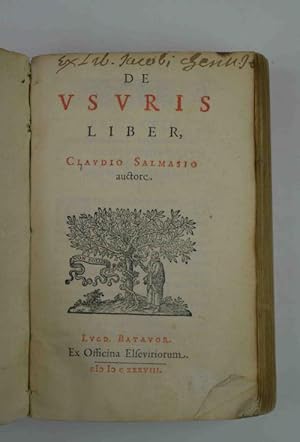
hardcover. Condition: Buono (Good). Cm. 15,5, pp. (56) 686 (72) + 1 cb. Frontespizio in rosso e nero con marchio tipografico inciso. Leg. coeva in perg. molle e titoli ms. al dorso. Una piccola mancanza alla base del dorso e qualche traccia d'uso, ma bell'esemplare, genuino e marginoso. Edizione originale, non comune, di questo trattato il cui fine è giustificare la legittimità del prestito sottomesso ad interesse. Cfr. Kress 536; Einaudi 5085 e Willems 471. Book.
-
Couverture rigide. Condition: Tràs bon. In-8 (13 x 8 cm), frontispice, 3 ff. 336 pp., 8 pp. index, reliuredu XIXe sià cle maroquin bleu-marine, dos ornà de filets, encadrements de filets et dentelles sur les plats, les coupes et intà rieurs, tranches dorà es. Ex-libris "de Boigne". Exemplaire en bel à tat.
-
Eikon basilike, vel, Imago Regis Caroli, in illis suis aerumnis et solitudine [Bound With] Defension Regia Pro Carolo I [Bound With] Pro Populo Anglicano Defensio
Published by Den Haag Samuelis Broun 1649, 1649
Seller: Harrison-Hiett Rare Books, Richelieu, France
Association Member: ABA ILAB NVVA
Seller rating 4 out of 5 stars
First Edition
Three works bound in one, in a contemporary French binding. Works are: Eikon basilike, vel, Imago Regis Caroli, in illis suis aerumnis et solitudine Hagae-Comitis (Den Haag) Samuelis Broun. 1649. Conforms to OCLC 60405083. Beautiful double page frontis engraving by Hollar. Text in Latin. Translation by John Earle. Attributed to Charles I and John Gauden. The book presents itself as the king's personal meditations, prayers, and reflections during his imprisonment, portraying him as a pious martyr steadfast in faith amid political turmoil [12], 272 pages. [Bound With] [SALMASIUS, CLAUDIUS] Defension Regia Pro Carolo I Ad Serenissimum Magnae Britannia Regem Carolum II. Filium natu majorem, Heredem & Successorem legitimum. Anonymous author & printer. 1649 Conforms to OCLC 70699080. 468 pages. Seems to be first edition but not clear. Claude Saumaise (Salmasius) was a French Humanist (1596-1653). This work is a defense of Charles I, (written shortly after his execution), supporting Absolute Monarchy and the Divine Right of Kings. [Bound With] MILTON, Joannis [John Milton], Angli Pro Populo Anglicano Defensio Contra Claudii Anonymi, alias Salmasii, Defensionem Regiam. Londini: Typis Du Gardianis, 1652. 192 pages. OCLC 933136975. Second (?) edition of this rebuttal of Saumaise (printed 1651) which was an important work for Milton, establishing his reputation, and celebrated as a victory over Salmasius's writing. The work, written in Latin is noted for its colourful invectives such as a 'dung-hill Frenchman' and indignant attacks on the French scholar. (With thanks for this Pat Marrin!) Wing, M2169. Binding has leather spine and vellum boards. These are somewhat bowed with age. Spine, with gilt titles and decoration is still attractive, but has a couple of small holes to the binding. Pages are clean and tidy throughout, with just a few foxing spots. Attractive armorial ex libris belonging to I.L.B. De Neve to the inside board. They were likely a member of the De Neve family, a name associated with the Low Countries. All works are 125 by 70mm (5 by 2¾ inches).
-
[Commentary on Solinus's "On the Wonders of the World"]. Claudii Salmasii Plinianae Exercitationes in Caji Julii Solini Polyhistora. Item Caji Julii Solini Polyhistor ex Veteribus Libris emendatus. Accefferunt huic editioni. De Homonyms Hyles Iatricae Exercitationes antehac ineditae, nec non De Manna & Saccharo.
Published by Trajecti ad RhenumApud Johannem vande Water Johannem Ribbium Franciscum Halma & Guilielmum vande Water Bibliop. ., 1689
Seller: Robert Frew Ltd. ABA ILAB, London, United Kingdom
Association Member: ABA ILAB PBFA
Seller rating 5 out of 5 stars
US$ 1,307.44
US$ 13.36 shipping
Ships from United Kingdom to U.S.A.Quantity: 1 available
Add to basket3 volumes bound in one. Large folio (42 x 24.5 cm). Contemporary full vellum, sides stamped in gilt with the coat of arms of the city of Amsterdam framed within gilt fillets, spine with raised bands, gilt rules, and red morocco label, sprinkled edges, evidence of old ties (now wanting). Titles printed in black and red. Text in Latin, Greek, and some Arabic. 3 engraved title vignettes, botanical engravings, head- and tail-pieces, decorative initials. Some light mellowing to vellum, a few scuffs to boards, contents clean and crisp, an excellent copy. Claude Saumaise (15 April 1588 3 September 1653), also known by the Latin name Claudius Salmasius, was a French classical scholar. The "Pliniane exercitationes" is his most famous work, in which the author, through the commentary on the work of Solinus Polyhistor, known by the title "Collectanea rerum memorabilium", studies its derivation from Pliny the Elder's Historia Naturalis. Solinus, taking up the works of Pliny, Pomponius Mela, Suetonius, and Terentius Varro, describes the strangest and most wonderful things inherent in peoples, customs, animals, and plants, illustrating them within a geographical framework. Mommsen has theorized that Solinus's work may have transmitted passages from Latin authors completely unknown to us. Solinus's work, in addition to Roman history, contains the description of part of Africa, Asia Minor, Arabia, India, and the Parthian Empire. Saumaise's commentary is considered the most important commentary on the "Collectanea rerum memorabilium." The third volume, entitled "Exercitationes de Homonymis Hyles Iatricae," deals with the botanical nomenclature of medicinal plants, with an essay dedicated to the identification and etymology of manna and saccarum. Salmasius learned Arabic to qualify himself for the botanical part of his task. 'In 1629 Salmasius produced his magnum opus as a critic, his commentary on Solinus's Polyhistor (also known as De mirabilibus mundi), or rather on Pliny, to whom Solinus is indebted for the most important part of his work. Greatly as this commentary may have been overrated by his contemporaries, it is a monument of learning and industry. Salmasius learned Arabic to qualify himself for the botanical part of his task. After declining overtures from Oxford, Padua and Bologna, in 1631 he accepted the professorship formerly held by Joseph Scaliger at Leiden.As a commentator and verbal critic, Salmasius is entitled to very high rank. His notes on the Augustan History and Solinus display not only massive erudition but massive good sense as well; his perception of the meaning of his author is commonly very acute, and his corrections of the text are frequently highly felicitous. His manly independence was shown in many circumstances, and the bias of his mind was liberal and sensible. He was accused of sourness of temper; but the charge, if it had any foundation, is extenuated by the wretched condition of his health' (Encyclopaedia Britannica). Brunet V 92-93 - "Ouvrage estimé".
-
De Annis Climactericis et antiqua Astrologia diatribae.
Published by Lugd. Batavor. (Leida), ex Offic. Elzeviriorum, 1648,, Leida, 1648
Seller: Libreria Antiquaria Pregliasco, Torino, TO, Italy
Seller rating 4 out of 5 stars
Condition: Good. in-8, pp. (128), 844, (20, le ultime 2 bianche), legatura moderna p. perg. rigida, tass. in pelle con tit. oro al dorso, legacci in stoffa. Titolo a stampa rossa e nera, con impresa tipogr. Testo in car. rom. con frequenti passi in greco. Con alcune figure schematiche (a pag. 150 e segg.) e vignette silogr. assai curiose (a pag. 566 e segg.). Dedica dell'autore a Gaspare Coignet de la Thuilerie, ambasciatore di Francia a L'Aia. Prima edizione di questa dottissima opera sull'influenza, reale o supposta, dell'anno climaterico sulla vita dell'uomo. ''On entendait par climatérique chaque septième (année)., parce que cette période était jugée nécessaire pour le renouvellement intégral de toutes les parties du corps'' (Willems). L'autore (Claude de Saumaise, erudito francese nato a Semur nel 1588 e morto a Maastricht nel 1653) nega decisamente qualsiasi influsso degli astri sulla vita degli uomini, che invece viene regolata semplicemente da leggi naturali. La salute degli individui, in particolare, dipende dalla costituzione fisica, dall'aria, dal clima, dal modo di vivere, ecc. Buon esemplare, ma lievi aloni d'umido marginali e frontespizio con antichi restauri di porzioni bianche del foglio di titolo. Caillet III, 9918. Bibl. Magica Casanatense n. 1087. Dorbon 4375. Willems 644. Cantamessa III, n. 7111: ''L'opera ebbe dunque successo, e non so dunque perché si limitò a questa sola edizione''. Book.
-
Commentarius in Enchiridion Epicteti, ex libris veteribus emendatus, cum versione Hieronymi Wolfii, Et Cl. Salmasii animadversionibus, et notis quibus Philosphia Stoica (Bound with three other titles). (Relié avec trois livres à la suite)
Published by Johannes Maire, Leiden (Lugduni Batavorum), 1640
Seller: DACART Livres rares & manuscrits (ALAC), Saint-Lambert, QC, Canada
Seller rating 5 out of 5 stars
First Edition
Velum. Condition: Good. First Edition. Strong octavo. 13 f., 332 pages, 6 f.; 1 f., 329 pages, 10 f.; 17 f., 88 pages; 15 pages. FOUR (4) PARTS BOUND IN ONE VOLUME, original velum. Manuscript title on spine. Handwritten ex-libris of previous owners, stamp from a former library. Waterstains in margins. Part II : Cl. Salmasii, Notae et animadversiones in Epictetum et simplicium. Part III : Tabula cebetis Graece, Arabice, Latine item Aurea carmina Pythagorae, cum paraphrasi Arabica, auctore Johanne Elichmanno M.D. cum prefatione Cl. Salmasii. Part IV : Pythagorae Aureorum Carminum Arabica paraphrasis cum latina versione auctore Joh. Elichmanno, M.D. Text in Latin and Greek for the first two parts, and in Latin, Greek and Arabic, for the las two parts. Commentaries on ancient philosophers, among them Epictetus and Pythagoras. Simplicius of Cilicia was the last great philosopher of pagan antiquity, Claudius Salmasius was a French classical scholar and Johan Elichman, must have been a Dr. med. who was interested in Greek-Arabic medicine and had learned Arabic as a self-taught man. Nice polyglot impression by Johannes Maire (1603-1657), publisher, printer and bookseller in Leiden. // QUATRE PARTIES RELIÉES EN UN VOLUME, velin d'origine. Titre manuscrit au dos. Ex-libris manuscrits d' anciens propriétaires, cachet d'une bibliothèque. Mouillures anciennes en marges. Texte en latin et grec pour les deux premières parties, et en latin, grec et arabe pour les deux dernières. Commentaires sur les philosophes antiques, dont Epictète et Pythagore. Simplicius de Cilicie était le dernier grand philosophe de l'antiquité païenne, Claude Saumaise était un savant classique français et Johan Elichman s'intéressait à la médecine gréco-arabe et avait appris l'arabe en tant qu'autodidacte. Belle impression polyglotte de Johannes Maire (1603-1657), éditeur, imprimeur et libraire à Leiden.
-
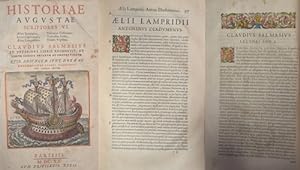
Historiae Augustae scriptores VI. Claudius Salmasius
Published by Artist: Salmasius Claudius ( - 1653 ) Leiden : 1620, 1588
Seller: Antique Sommer& Sapunaru KG, München, Germany
Seller rating 4 out of 5 stars
First Edition
Technic: Woodcut, colorit: original colored, condition: Binding in hardcover embossed in gold, size (in cm): 35 x 23 cm, Historiae augustae scriptores VI. Aeius Spartianus, Vulcatius Gallicanus, Iulius Capitolinus, Trebellius Pollio, Aelius Lampridius, Flavius Vopiscus. Claudius Salmasius ex veteribus libris recensuit, et librum adiecit notarum ac emendationum. Quib. adiunctæ sunt notæ ac emendationes Isaaci Casauboni iam antea editæ. First edition of Salmasius (in two parts). 1 Part: Pages 1- 519, Aelii Spartiani Adrianus Imp . 2 Part: Pages 1 - 258, Isaaci Casauboni in Aelii Spariani Hadrianum. Important review of this collection of the life of 30 Roman emperors from Hadrian (Adianus Caesar), Publius Helvius Pertinax, Elagabalus (or Heliogabalus) with index and magnificent title page.
-
Hardcover. Condition: Very Good-. Dust Jacket Condition: No Dust Jacket. Woodcut title vignette, devices and initials, contemporary vellum, yapp edges. Ink letters to top corner of first pages (from a to i). Small circle institution stamp to titlepage and to obverse of titlepage (University of London) and last page. Light Ink lines (1 or 2) and very minor ink notes (1 page) to index pages (about 6 pp). Rear inner cover shows faint evidence of removed plate. Small 1 cm tear near top of gutter of ffep. Former owner's name to ffep. Some foxing. Some darkening to vellum binding. ; [136] pp + 844 pp + [18] pp. "attack upon astrology by Claude Saumaise or Salmasius, the great French classical scholar, in his De annis climactericis, a long work published at Leyden in 1648" (Thorndike VII, 103). ; 990 pages.
-
PRO POPULO ANGLICANO DEFENSIO. Joannis Miltoni Angli Pro Populo Anglicano Defensio Contra Claudii Anonymi, alias Salmasii, Defensionem Regiam. Londini: Typis Du Gardianis, 1651 12mo. Blank before title page + [40] + 330 pp. Bound with [SALMASIUS, CLAUDIUS] DEFENSIO REGIA PRO CAROLO I Ad Serenissimum Magnae Britannia Regem Carolum II. Filium natu majorem, Heredem & Successorem legitimum. Sumptibus Regiis. [Leiden]: [Elzevir], 1649 12mo. 2pp + 720 pp.
Published by 1651; 1649, 1651
Seller: Marrins Bookshop, Folkestone, KENT, United Kingdom
Association Member: ABA ILAB PBFA
Seller rating 4 out of 5 stars
US$ 825.75
US$ 33.87 shipping
Ships from United Kingdom to U.S.A.Quantity: 1 available
Add to basketHardcover. Condition: Very Good. Two titles in one. 3 x 5 inches. Text in Latin and some Greek. Original vellum with 'Salmasius pro, Milton contra' and Commonwealth arms on spine in manuscript. These two works are bound together in the same volume. Various ink annotations verso front cover and pencil annotations on first blank page made by previous owners. Sympathetically recased at some point Pro Popolo Anglicano Defensio decorated with Commonwealth arms on title page; Defensio Regia decorated with title page, head and tail vignettes and initials. PRO POPULO ANGLICAN DEFENSIO Probably the Jansson edition of Milton's response to the Defensio by Salmasius (Claude de Saumaise,1588-1653) published in 1649. Milton's response was celebrated as a victory over the defence of Salmasius of absolute monarchy and the Divine Right of Kings. The work, written in Latin is noted for its colourful invectives such as a 'dung-hill Frenchman' and indignant attacks on the French scholar. Milton questions how the great European scholar could defend the principle of divine right and he defends the overthrow of the monarchy by the people. The 'Pro Populo Anglicano Defensio' was a pivotal work for Milton who gained recognition and fame through his powerful response to Salmasius' argument. DEFENSIO REGIA. This is the second edition of this work, published anonymously in the same year as the first edition. Both editions were published by the Elzevirs in Leiden. The printing of the Defensio is said to have been paid for by the exiled Charles II, who asked Salmasius (Claude de Saumaise 1588-1653) a renowned French and Classical scholar and Professor at the University of Leiden, to write a work defending the case of his father. In the Defensio, Salmasius condemns the parliamentary government in England and upholds the Divine Right of Kings. He wrote his work in Latin and it was censored in England, one of the censors being John Milton. Dutch Protestant printers produced these works in large numbers and their bibliography is incredibly complex: false imprints, no imprints and lack of dates being frequent. The deception was fired by the greed of the same printers competing for the Spanish theological printing contracts and so guarding their anonymity. It is for this reason that the order of precedence of these printings is very difficult to identify. HISTORY/THEOLOGY 17th CENTURY ENGLISH THEOLOGY- POLITICS 17TH CENTURY HISTORY/THEOLOGY Pro Populo Anglicano Defensio, ESTC R234384. Coleridge, Catalogue Milton Collection Turnbull Library, 51.
-
Plinianae exercitationes in Caii Julii Solini Polyhistora Volume 1 & 2
Published by C Morellum, Parisiis Paris, 1629
Seller: Victoria Bookshop, BERE ALSTON, DEVON, United Kingdom
Seller rating 4 out of 5 stars
First Edition
US$ 1,089.87
US$ 13.16 shipping
Ships from United Kingdom to U.S.A.Quantity: 1 available
Add to basketHardcover. Condition: Good+. First Edition. Folio. 2 volumes.Volume 1 1-824pp & Volume 2 285-1367pp + index Salmasius, Claudius 1588-1653, French humanist and philologist. Salmasius is known in French as Claude de Saumaise. After studying Latin and Greek with his father, he began a law career at Dijon in 1610. He turned to the study of theology, Hebrew, Arabic, and Persian when his Protestantism impeded his advancement in law. In 1631 he was called to the Univ. of Leiden to succeed Joseph Scaliger. There he produced 80 books and became widely known as a scholar of the first rank. Supporting the Stuarts, he wrote Defensio regia pro Carlo I (1649), upholding the divine right of monarchy, which brought a celebrated dissenting reply from John Milton. Salmasius major works include an important commentary on Pliny (1629), and Observationes in jus Atticum et Romanum (1645). In 1629 Salmasius produced his magnum opus as a critic, his commentary on Solinuss Polyhistor, or rather on Pliny, to whom Solinus is indebted for the most important part of his work. Greatly as this commentary may have been overrated by his contemporaries, it is a monument of learning and industry. Bookplate of MP Charles Bathurst. Piece missing from top spine volume 1. Book.
-

Claudii Salmasii Epistolarum, Book 1 (1656)
Language: Greek, Modern (post 1453)
Published by Kessinger Publishing, LLC Jun 2009, 2009
ISBN 10: 110463449X ISBN 13: 9781104634490
Taschenbuch. Condition: Neu. Neuware - This scarce antiquarian book is a facsimile reprint of the original. Due to its age, it may contain imperfections such as marks, notations, marginalia and flawed pages. Because we believe this work is culturally important, we have made it available as part of our commitment for protecting, preserving, and promoting the world's literature in affordable, high quality, modern editions that are true to the original work.
-
Cl. Salmasii Epistola ad Andream Colvium : super Cap. XI. Primae ad Corinth. Epist. de Caesarie Virorum et Mulierum Coma [ Suivi de : ] Judicium & Consilium De Comae & Vestium usu et abusu, Deductum Ex. I ad Corint. cap. II.I ad Timoth & Tit. c.2 atque I Petr. cap. 3 a Iohanne Polyandro à Kerckhoven,S.S. Theol. Doct. ejudemsque Professore primatio in Academ. Leydensi [ Editions originales ]
Language: Latin
Published by Ex Officina Elzeviriorum, 1644
First Edition
rigide. Condition: Assez bon. 1 vol. petit in-8 reliure de l'époque plein veau brun, dos à 5 nerfs orné, Ex Officina Elzeviriorum, Lugd. Batavor. [ Leyde ], 1644, 747 pp. (avec erreurs de pagination pages 143, 205, 556 et 600), 2 ff., 76 pp. Rappel du titre complet : Cl. Salmasii Epistola ad Andream Colvium : super Cap. XI. Primae ad Corinth. Epist. de Caesarie Virorum et Mulierum Coma [ Suivi de : ] Judicium & Consilium De Comae & Vestium usu et abusu, Deductum Ex. I ad Corint. cap. II.I ad Timoth & Tit. c.2 atque I Petr. cap. 3 a Iohanne Polyandro à Kerckhoven,S.S. Theol. Doct. ejudemsque Professore primatio in Academ. Leydensi [ Editions originales ] Extraordinaire recueil réunissant l'édition originale de deux ouvrages (le plus important rédigé par l'érudit protestant d'origine bourguignonne Claude Saumaise) consacrés au sujet de la coupe et de la longueur des cheveux ! Imprimé en gros caractères, ces deux écrits se rattachent "à une polémique bizarre qui passionna et tint divisés durant des années les plus fameux docteurs de l'église évangélique hollandaise. Le roi Louis XIII, qui portait toute sa chevelure, avait introduit et fait prévaloir la mode des cheveux longs. Cette innovation choqua bon nombre de ministres protestants. S'appuyant sur un passage de la première épître de Paul au Corinthiens, ils tonnèrent en chaire contre une pratique qui leur paraissait entachée d'hérésie, et songèrent sérieusement à exclure de leurs temples les fauteurs du scandale. Un professeur d'Utrecht, Charles de Maets, se mit à la tête de cette croisade, et déduisit ses raisons dans un copieux recueil [ . ] D'autres voix s'élevèrent en faveur de la tolérance [ Polyander rédigea la consultation que l'on trouve in fine dans ce volume ] Saumaise n'était pas homme à laisser passer une si belle occasion de déployer son érudition. Tout d'abord il se déclara le champion de la liberté des coiffures, et descendit dans l'arène armé [ de ce ] formidable factum [ . ] Toute cette érudition fut dépensée en pure perte. Le public resta indifférent. En dépit des objurgations et des anathèmes, la mode prévalut, et chacun continua à se coiffer à sa guise" (Willems, 143 ). De la bibliothèque du magistrat, industriel et collectionneur Jean-Baptiste Gluc, baron de Saint-Port (1674-1748). Etat très satisfaisant (mq. en coiffes, rel. un peu frottée, bon état par ailleurs, ex-libris J. B. de S. Port). Papillon, Bibliothèque des Auteurs de Bourgogne, 262 Langue: Latin.
-
Desiderii Heraldi Qvæstionvm Qvotidianarvm Tractatvs: Eivsdem Observationes Ad Ivs Atticvm Et Romanvm, In Qvibvs Clavdii Salmasii Miscellæ Deffensiones, Eivsqve Specimen Expendvntvr.
Language: German
Published by Paris, Alliot u. Chastellain,, 1650
Seller: Antiquariat Bernhard Schäfer, Bad Karlshafen, Germany
Association Member: BOEV ILAB VDA
Seller rating 4 out of 5 stars
2 Teile in 1 Band. [4] Bl., 151 S., [4], [4] Bl., 624 S., [11] Bl. Mit gest. Wappenexlibris (Sinclair) auf Innendeckel. Gerne können Sie Bilder anfordern oder mit mir über Ihre Preisvorstellung sprechen Sprache: Deutsch Gewicht in Gramm: 550 Folio. Lederbd. d. Zt. m. RSch. und RVerg. (Vorderes Gelenk locker, Leder etwas vom Einband gelöst. Die Vergoldung verblasst).
-
De Re Militari Romanorum
Language: Latin
Published by Johannem Elsevirium, Academiae Typographum, Lugduni Batavorum, 1657
First Edition
Hardcover. Condition: Very Good. 1st Edition. First edition of Claudius Salmasius's major posthumous treatise on Roman military theory, printed in 1657 by the Elzevir press in Leiden. Drawing deeply on sources such as Polybius and Livy, Salmasius investigates Rome's tactical and structural military changes across pivotal historical transitions. The book uniquely features in-text sketches that diagram troop formations and battlefield maneuvers?a rare visual aid in 17th-century military scholarship. Quarto format with fine Elzevir typography and layout. Historical references to Caesar, Scipio, and Pompey are woven throughout. Bound in full contemporary vellum, tight and secure, with light external wear. Format: Quarto (4to), single volume. Collation: [12], 243 pp. Illustrations: In-text military formation diagrams. Edition: First Elzevir edition, 1657. #29123 PHOTOS AVAILABLE UPON REQUEST.




![Seller image for Eikon basilike, vel, Imago Regis Caroli, in illis suis aerumnis et solitudine [Bound With] Defension Regia Pro Carolo I [Bound With] Pro Populo Anglicano Defensio for sale by Harrison-Hiett Rare Books](https://pictures.abebooks.com/inventory/md/md32394453891.jpg)
![Seller image for [Commentary on Solinus's "On the Wonders of the World"]. Claudii Salmasii Plinianae Exercitationes in Caji Julii Solini Polyhistora. Item Caji Julii Solini Polyhistor ex Veteribus Libris emendatus. Accefferunt huic editioni. De Homonyms Hyles Iatricae Exercitationes antehac ineditae, nec non De Manna & Saccharo. for sale by Robert Frew Ltd. ABA ILAB](https://pictures.abebooks.com/inventory/md/md32356270818.jpg)


![Seller image for PRO POPULO ANGLICANO DEFENSIO. Joannis Miltoni Angli Pro Populo Anglicano Defensio Contra Claudii Anonymi, alias Salmasii, Defensionem Regiam. Londini: Typis Du Gardianis, 1651 12mo. Blank before title page + [40] + 330 pp. Bound with [SALMASIUS, CLAUDIUS] DEFENSIO REGIA PRO CAROLO I Ad Serenissimum Magnae Britannia Regem Carolum II. Filium natu majorem, Heredem & Successorem legitimum. Sumptibus Regiis. [Leiden]: [Elzevir], 1649 12mo. 2pp + 720 pp. for sale by Marrins Bookshop](https://pictures.abebooks.com/inventory/md/md8565327616.jpg)
![Seller image for Cl. Salmasii Epistola ad Andream Colvium : super Cap. XI. Primae ad Corinth. Epist. de Caesarie Virorum et Mulierum Coma [ Suivi de : ] Judicium & Consilium De Comae & Vestium usu et abusu, Deductum Ex. I ad Corint. cap. II.I ad Timoth & Tit. c.2 atque I Petr. cap. 3 a Iohanne Polyandro à Kerckhoven,S.S. Theol. Doct. ejudemsque Professore primatio in Academ. Leydensi [ Editions originales ] for sale by Librairie du Cardinal](https://pictures.abebooks.com/inventory/md/md31171926466.jpg)
