

Order Total (1 Item Items):
Shipping Destination:

Shaw Keeble (4 results)
Skip to main search results
Search filters
Product Type
- All Product Types
- Books (2)
- Magazines & Periodicals (No further results match this refinement)
- Comics (No further results match this refinement)
- Sheet Music (No further results match this refinement)
- Art, Prints & Posters (No further results match this refinement)
- Photographs (No further results match this refinement)
- Maps (No further results match this refinement)
- Manuscripts & Paper Collectibles (2)
Condition Learn more
- New (No further results match this refinement)
- As New, Fine or Near Fine (No further results match this refinement)
- Very Good or Good (1)
- Fair or Poor (No further results match this refinement)
- As Described (3)
Binding
- All Bindings
- Hardcover (1)
- Softcover (No further results match this refinement)
Collectible Attributes
- First Edition (2)
- Signed (No further results match this refinement)
- Dust Jacket (No further results match this refinement)
- Seller-Supplied Images (2)
- Not Print on Demand (4)
Language (2)
Free Shipping
- Free Shipping to U.S.A. (No further results match this refinement)
Seller Location
Seller Rating
-
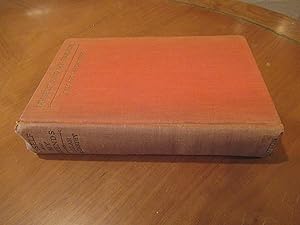
Myself And My Friends, With An Aside By Bernard Shaw
Language: English
Published by E. P. Dutton, New York City Ny, 1933
Seller: Arroyo Seco Books, Pasadena, Member IOBA, Pasadena, CA, U.S.A.
Association Member: IOBA
Seller rating 4 out of 5 stars

First Edition
Hardcover. Condition: Very Good. Color Frontispiece By Edmund Dulac; Photographs (illustrator). First American Edition. Xii, 320 Pp. Orange Cloth, Gilt. First American Printing, With 1933 Date On Title Page. Light Usage, Spine A Little Faded. Portrait And Front Flap Of Dust Jacket Attached To Front Free Endpaper. No Marks.
-
![Seller image for Windmills and Watermills in Hampshire. Part II [in] Poceedings of the Hampshire Field Club and Archaeological Society. A SCARCE SURVIVAL for sale by Island Books](https://pictures.abebooks.com/inventory/md/md30872714827.jpg)
Windmills and Watermills in Hampshire. Part II [in] Poceedings of the Hampshire Field Club and Archaeological Society. A SCARCE SURVIVAL
Published by Hampshire Field Club, [Winchester],, 1960
Seller: Island Books, Thakeham, West Sussex, United Kingdom
Seller rating 4 out of 5 stars
First Edition
US$ 21.77
US$ 30.64 shipping
Ships from United Kingdom to U.S.A.Quantity: 1 available
Add to basket8vo., First Edition, with illustrations and maps; printed wappers, wire-stitched as issued, covers lightly age-worn else a good, clean copy. Proceedings of the Hampshire Field Club, Vol. XXI. Part III. SCARCE.
-

[Lillah McCarthy [Lady Keeble], actress.] Typescript, with a few autograph emendations, of commencement of a radio talk [given in Argentina?], telling stories about George Moore and George Bernard Shaw from her autobiography 'Myself and My Friends'.
Published by After the publication of her autobiography in Argentina?, 1933
Seller: Richard M. Ford Ltd, London, United Kingdom
Seller rating 5 out of 5 stars

Manuscript / Paper Collectible
US$ 108.83
US$ 5.94 shipping
Ships from United Kingdom to U.S.A.Quantity: 1 available
Add to basketCarbon typescript. 4pp, 4to. Paginated 1-4. In fair condition, aged and worn, with chipping to edges. The text concerns George Moore and Bernard Shaw, but the introduction suggests that this is the start of a longer piece: 'I will give Mr. Mead, who has done such fine work and who has been so energetic in developing the work of the Associacion de Cultura Inglesa, the full particulars of the E. V. S. A., [i.e. English Verse Speaking Association] and I hope that you will all become Members.' | Mr. Mead has asked me to include in my Radio Programme today, a few short notes from my book entitled "Myself and My Friends" [published in London in 1933] And as my "Friends" include such Poets as John Masefield, W. B. Yeats, Thomas Hardy, and brilliant Dramatists as George Bernard Shaw, Sir James Barrie, and great Novelists as John Galsworthy, H. G. Wells, and even that great explorer Nansen, I feld that could not refuse Mr. Mead's request.' At this point, in McCarthy's autograph: 'The first words of my book are:'. The next paragraph is a transcription of the start of the book. It is followed by loose transcriptions and paraphrases of stories from the book, occasionally lightly reworked with linking passages, comprising reminiscences of her early acquaintance with 'George Moore, the great Irish Novelist, and George Bernard Shaw, the great Irish dramatist'. Both men were present during her first success, in an amateur production of 'Macbeth'. Moore, 'the first to hold out his hand', invites her to his house to discuss a play of his; her father will only allow her to talk to him on the doorstep. Shaw sees her performance from the front row, as drama critic for the Sunday Review. He invites her to play the female lead in 'Man and Superman': 'The romantic dramas in which I had played for 10 years were passing out of fashion, and Bernard Shaw and Sir James Barrie were the two pioneers who restored the English theatre to its right place in national life, and when I played "Ann Whitefield" in "Man and Superman", this new woman made a new woman of me.' The last page ends: 'Shaw was the Perseus who rescued Andromeda from the talons of the dragon!'.
-
[Lillah McCarthy, actress and wife of Harley Granville-Barker, on William Poel and Sir Henry Irving.] Three typescripts, including 'Notes from memory of William Poel' and 'Sir Henry Irving in 1895 from memory by Lillah McCarthy'.
Published by Uniform. Without date or place. But one with reference to Wolfit's 'Lear', 1944
Seller: Richard M. Ford Ltd, London, United Kingdom
Seller rating 5 out of 5 stars
Manuscript / Paper Collectible
US$ 272.06
US$ 5.94 shipping
Ships from United Kingdom to U.S.A.Quantity: 1 available
Add to basketThree typescripts from the papers of Lillah McCarthy (Lady Keeble). The first two both apparently unpublished are full of interest: they gives personal reminiscences of her work with William Poel, the 'pioneer of modern Shakespeare production', whom she considered the greatest influence on her career. She describes Poel's working methods, his lecture style, rehearsals, use of make up, modern influence (with reminiscences about Wolfit and Olivier), and even his death, at which she was present. The second item discusses Irving, with reference to those of his productions which she attended, and a meeting with him. The Poel items are 9 &8pp., the Irving, 4pp. 4toThe three items uniform in layout and paper stock, each printed on rectos and paginated, and each with the leaves stapled together at one corner. The three in good condition, lightly aged. All three items are scarce: no copies are listed on OCLC WorldCat, and the only copy of Item One traced is noted in Claris Glick, 'William Poel: His Theories and Influence' (1964), as at the 'Royal Shakespeare Library' (now part of the Birmingham Shakespeare Library?). ONE: 'NOTES FROM MEMORY OF WILLIAM POEL. | by Lillah McCarthy. (Lady Keeble).' 9pp, 4to. Begins: 'WILLIAM POEL 1895. | Director, Lecturer and Teacher of the Shakespeare Reading Society which still exists. | Founder, Director and Producer of the Elizabethan Stage Society.' Poel was, McCarthy begins, 'pre-eminently a keen Elizabethan scholar: his special subject: Shakespeare. His ambition was to produce Shakespeare's plays as they were produced and acted in Shakespeare's time, with the Apron Stage and the set scene. But as actresses were and had been very popular William Poel had no need to resort only to boy actors as in Shakespeare's day. Delivery of the verse, rapid and clear: perfect diction, rhythm, voice strong and resonant. | Gestures to be employed sparingly, only when really necessary to the action of play, but then strong and definite.' There follows a section on 'Make Up', with descriptions of that used for Lady Macbeth, Viola and Olivia. Of Lady Macbeth she writes: 'The hair or wig no matter what colour was needed for the part. The forehead must be built up high and broad. Hair dressed high, well back from the ears, swept high from the forehead and up from the neck.' Sections follow on 'Carriage Style' and 'Costumes'. She next turns to Poel's activities around the time when she became a member of the Shakespeare Reading Society in 1895. During weekly lectures Poel 'would stand at his desk on the platform and declare in emphatic tones his determination to get a public together that could appreciate Shakespeare for the genius as a playwright. | There was nothing academic about Poel's way of lecturing. He spoke excitedly, passionately and often violently.' She recalls how she took the part of Romeo in one of Poel's public readings: 'We the actors used to sit in a semi-circle in the way that the Theatre Francaise Presented Moliere, each of us standing up when our turn came. Though we knew our parts by heart; Poel saw to that we had to have the book in our hands because it was a "reading".' A page and a half are devoted to Poel's 'Rehearsals', during which he was 'ruthless': 'He rehearsed each of us one at a time. We were made to repeat after him our lines until we had got the rhythm and then the right expression of the passion or the tenderness or other essential of the part which the character demanded.' She performed three Shakespeare parts under Poel's direction, and 'also played the leading part in his production of Swinburne's LOCRINE. He also produced THE BACCHAE in which I played DIONYSUS.' She recalls how the Greek scholar Gilbert Murray, whose translation was used, was present at rehearsals. Returning to Shakespeare, she gives numerous examples of how 'Poel insisted on the YOUTH of Shakespeare's leading characters': 'Youth was exuberant in Shakespeare and old age only a dim background.' She states that.


