Order Total (1 Item Items):
Shipping Destination:

Ströber Eva (21 results)
Skip to main search results
Search filters
Product Type
- All Product Types
- Books (21)
- Magazines & Periodicals (No further results match this refinement)
- Comics (No further results match this refinement)
- Sheet Music (No further results match this refinement)
- Art, Prints & Posters (No further results match this refinement)
- Photographs (No further results match this refinement)
- Maps (No further results match this refinement)
- Manuscripts & Paper Collectibles (No further results match this refinement)
Condition Learn more
- New (5)
- As New, Fine or Near Fine (5)
- Very Good or Good (7)
- Fair or Poor (No further results match this refinement)
- As Described (4)
Binding
Collectible Attributes
- First Edition (8)
- Signed (No further results match this refinement)
- Dust Jacket (7)
- Seller-Supplied Images (12)
- Not Print on Demand (21)
Language (3)
Free Shipping
- Free Shipping to U.S.A. (No further results match this refinement)
Seller Location
Seller Rating
-

Broschürt. Obr., nicht paginiet, in gutem Zustand, [SAP30]., Deutsch 400g.
-

OSTASIATIKA
Language: German
Published by Herzog Anton urlich-Museum, Braunschweig, 2002
ISBN 10: 3922279546 ISBN 13: 9783922279549
US$ 13.81
US$ 18.34 shipping
Ships from United Kingdom to U.S.A.Quantity: 1 available
Add to basketHARD BACK. Condition: As New. Dust Jacket Condition: As New. 388pp. Colour & b&w illustrations throughout. Catalogue of 793 items of Chinese and Japanese decorative arts. German text. Heavy item, please ask for a quote for postage.
-

Die Porzellansammlung zu Dresden: China - Japan - Meissen (Meisterwerke /Masterpieces)
Seller: Buchhandlung & Antiquariat Rother, Dresden, SA, Germany
Seller rating 5 out of 5 stars

First Edition
Hardcover. Condition: Neu. 1. Auflage. Versand kostenfrei! Bezahlung per Banküberweisung möglich.
-
QUELLEN. DAS WASSER IN DER KUNST OSTASIENS.
Published by Hamburg, 1992., 1992
Seller: Ethnographic Art Books, Leiden, ZH, Netherlands
Seller rating 4 out of 5 stars

272 pp.; 199 illus., mostly in colour, glossary, chronology, index, biblio. 9 essays. Exh. cat. from the Museum für Kunst und Gewerbe, Hamburg on the theme of 'water' in the Arts of East-Asia. German text. Hamburg, 1992. Pbk. KEYWORDS: 024 Japan - General & Ainu 069 China.
-
The Dresden Porcelain Collection: China, Japan, Meissen (Masterpieces)
Language: English
Published by Deutscher Kunstverlag, 2007
ISBN 10: 3422066551 ISBN 13: 9783422066557
Seller: JERO BOOKS AND TEMPLET CO., SANTA MONICA, CA, U.S.A.
Seller rating 5 out of 5 stars
First Edition
US$ 175.00 50% offUS$ 87.50
US$ 5.50 shipping
Ships within U.S.A.Quantity: 1 available
Add to basketPaperback. Condition: Very Good. 1st Edition. First Edition (2007.) 4to paperback with 140 pages. The book is in very good condition very slight shelf wear. Interior is clean and tight. Profusely illustrated. Pictures available upon request. "Detailing a selection of outstanding masterpieces, this catalog provides an overview of the Dresden Porcelain Collection. very good clear colour plates of the fabulous work of Meissen with some close-up studies included which is always appreciated in the study of porcelain." Blue spine/White text. #034911 Size: 4to. Ceramic Art /Sculpture/Dresden.
-

La Maladie de Porcelaine . East Asian Porcelain From The Collection of Augustus the Strong
Language: English
Published by Germany: Edition Leipzig, 2001
ISBN 10: 3361005302 ISBN 13: 9783361005303
US$ 87.69
US$ 18.34 shipping
Ships from United Kingdom to U.S.A.Quantity: 1 available
Add to basketHardcover. Condition: Very Good. Dust Jacket Condition: Very Good. 224pp. 100 pieces are illustrated with colour plates and fully catalogued.
-
La Maladie de Porcelaine . East Asian Porcelain From The Collection of Augustus the Strong
Language: English
Published by Germany: Edition Leipzig, 2001
ISBN 10: 3361005302 ISBN 13: 9783361005303
US$ 87.69
US$ 18.34 shipping
Ships from United Kingdom to U.S.A.Quantity: 1 available
Add to basketHardcover. Condition: Very Good. Dust Jacket Condition: Very Good. 224pp. 100 pieces are illustrated with colour plates and fully catalogued.
-
La Maladie de Porcelaine . . Ostasiatishes Porzellan aus der Sammlung Augusts des Starken / East Asian Porcelain from the Collection of Augustus the Strong
Language: English
Published by Edition Leipzig, Germany, 2001
ISBN 10: 3361005302 ISBN 13: 9783361005303
First Edition
US$ 89.76
US$ 26.81 shipping
Ships from United Kingdom to U.S.A.Quantity: 1 available
Add to basketHardcover. Condition: Very good Plus. Dust Jacket Condition: Very Good -. 1st Edition. 2001. 224pp. Colour frontispiece. Colour images throughout. "Augustus the Strong, Elector of Saxony and King of Poland (1670-1733), whose passion for collecting created the basis of Dresden's Art Collections, had a particular fondness for porcelain. It is to his "maladie de porcelaine", as he himself dubbed his "porcelain addiction", that Dresden owes its unique collection of East Asian porcelain from the 17th and early 18th centuries. In the collection today there are still more than 10,000 of the more than 24,000 pieces of Chinese and Japanese porcelain that the King originally acquired for the sumptuous decoration of the "Japanische Palais" to be transformed into a porcelain palace. The documentation of items of porcelain in the surviving inventories of 1721 and 1779 is also of particular historical significance. . With 100 masterpieces, this book shows the outstanding artistic quality and wide range of the Dresden collection of East Asian porcelain, including Chinese blue and white and porcelain of the "famille verte" and of the "famille rose", early Japanese blue and white porcelain and Kakiemon- and Imari-style por-celain. . The importance of East Asian porcelain in Dresden lies not only in the unique size and quality of the collec-tion. It also inspired Johann Friedrich Böttger's reinvention of porcelain, under the auspices of Augustus the Strong, in 1709, and also inspired the forms and decorative patterns of 18th-century Meissen porce-lain. . In this catalogue numerous pieces are presented for the first time". Unclipped jacket closed tear to the spine. Other wise has shelf wear to edges. Book in excellent condition. No inscriptions. PLEASE NOTE: Heavy book so a little extra may be needed for shipping to non-UK customers.
-
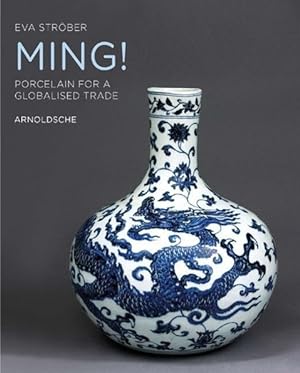
Condition: New. Presenting the unique collection of the Keramiekmuseum Princessehof this publication reveals the history of Ming porcelain that was created both for the imperial court and for a globalised market.Die Publikation enthuellt den Mythos Ming am Beispiel von .
-
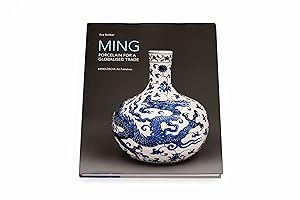
MING: Porcelain for a Globalised Trade
Language: English
Published by Arnoldsche Art Publishers, 2013
ISBN 10: 389790389X ISBN 13: 9783897903890
First Edition
Hardcover. Condition: Fine. Dust Jacket Included. 1st Edition. English text.; Hardcover (with dust jacket); 24.6 x 29.5 cm; 1.8 Kg; 240 pages with colour illustrations throughout, with captions in English.; New with signs of handling, namely same marks on the dust jacket and hardcover cloth. The dust jacket is now protected with a clearcover.; With around 120 items from the rich and unique collection of the Princessehof National Museum of Ceramics in Leeuwarden, The Netherlands, this publication unveils the myth of glorious Ming porcelain, presenting numerous pieces in both their historical and cultural contexts: finest porcelain not only for the imperial court but also for a globalised market - for both the South East Asian archipelago and for the West, the Netherlands of the Golden Age.
-

Ming! | Porcelain for a Glocalised Trade
Language: English
Published by Arnoldsche Verlagsanstalt, 2013
ISBN 10: 389790389X ISBN 13: 9783897903890
Buch. Condition: Neu. Ming! | Porcelain for a Glocalised Trade | Eva Ströber | Buch | 240 S. | Englisch | 2013 | Arnoldsche Verlagsanstalt | EAN 9783897903890 | Verantwortliche Person für die EU: arnoldsche Art Publishers, Olgastr. 137, 70180 Stuttgart, art[at]arnoldsche[dot]com | Anbieter: preigu.
-
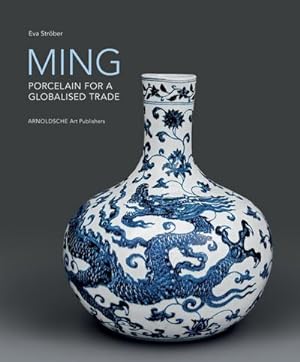
Buch. Condition: Neu. Neuware - Die rund 300 Jahre währende Epoche der Ming-Dynastie (1368-1644) gilt als eine der glanzvollsten Zeiten in der chinesischen Geschichte insbesondere wenn es um Porzellan geht. Ming steht für feinstes, kostbarstes Porzellan, das auf Auktionen regelmäßig astronomische Preise erzielt. Und die Ming-Vase ist ein populäres Klischee selbst für diejenigen, die nicht mit der Geschichte chinesischer Keramik vertraut sind.Die Publikation ergründet den Mythos Ming am Beispiel der international bedeutenden Sammlung chinesischer Keramik des niederländischen Museums Princessehof in Leeuwarden. Dazu zählen spektakuläre Stücke höchster Qualität, die exklusiv für den chinesischen Kaiserhof gefertigt wurden. Der reiche und vielfältige Bestand chinesischer Exportkeramik für den südostasiatischen Markt, vorwiegend aus der ehemals holländischen Kolonie Indonesien, wird hier erstmals im Zusammenhang vorgestellt. Mit Gründung der Niederländischen Ostindien-Kompanie VOC1602 wurde schließlich auch der europäische Markt für Ming-Porzellan erschlossen. Besonders das blau-weiße Kraak-Porzellan gehörte als exotisches Luxusgut zur Ausstattung reicher Haushalte und ist aus holländischen Stillleben der Zeit nicht wegzudenken.Die Sammlung an Ming-Porzellanen des Museums Princessehof ist in ihrer Vielschichtigkeit einmalig. Sie umfasst das ganze Spektrum von kaiserlichen Gefäßen über sog. Martaban, große Vorratstöpfe, die in Indonesien auch als Statussymbole galten, zu Kraak-Porzellanen. Eindrucksvolle Beispiele von Exportporzellan für Europa wurden auch aus den Ladungen zweier Schiffswracke, der Witte Leeuw (gesunken 1613) und der Hatcher Cargo (gesunken 1643), geborgen.
-
The Dresden Porcelain Collection: China - Japan - Meissen
Language: English
Published by Staatliche Kunstsammlungen Dresden, 2006
ISBN 10: 3422066551 ISBN 13: 9783422066557
First Edition
Soft cover. Condition: Good. No Jacket. 1st Edition. English text; Paperback; 25 x 28.5 cm; 0.8 kg; 140 pages with colour iillustrations throughout.; Used with signs of wear on the exterior and interior. The exterior shows edge wear, with the edges slightly turning inwards, scuffs and scratches on the front cover, spine and back cover. Interior with minor sings of wear.; The Dresden Porcelain Collection is one of the most comprehensive and important ceramic collections in the world. It was founded in 1715 by the highly enthusiastic collector Augustus the Strong, who wished to have his treasures displayed in a specially converted porcelain palace. Today, the sheer splendour of the incomparably precious porcelain from China, Japan and Meissen can be experienced against the historic back- drop of the Zwinger. This book presents outstanding masterpieces from the collection, which comprises roughly 20,000 pieces: chinese porcelain of the Kangxi era (1662-1722) and Japanese porcelain of the 17th and early 18th century, decorated in Imari- and Kakiemon style, and porcelain from the contemporary manufactory in Meissen, which belonged to Augustus the Strong.
-
Symbols on Chinese Porcelain: 10000 Times Happiness
Language: English
Published by Arnoldsche Art Publishers, 2011
ISBN 10: 3897903504 ISBN 13: 9783897903500
First Edition
Hardcover. Condition: Good. Dust Jacket Included. 1st Edition. English text; Hardcover (wit dust jacket); 24 x 29 cm; 1.5 Kg; 240 pages with 175 colour illustrations.; Used with signs of wear on the exterior and interior. The dust jacket shows minor edge wear, scuffs and scratches on the front cover, spine and back cover. The interior is in very good condition, except for the bottom of all pages, which show some wrinkling. This appears to be either a printing issue or the result of exposure to humidity or water.; Catalogue from the exhibition 10000 X Happiness. Auspicious Motifs on Chinese Porcelain held at Keramiekmuseum Princessehof, Leeuwarden. Netherlands, from April 29th to October 30th, 2011.; The decorative details on Chinese porcelain are admired especially for their striking beauty, but the symbolic language hidden within them is less well-known in the West. From the very beginning until today Chinese culture has encompassed an enormous wealth of symbolic motifs, not only as ceramic decorations but also in painting, on textiles and varnished objects. Motifs bringing good luck like colours and numbers, mythical beings, animals and plants represent the striving for cosmic harmony, health and beauty, a long life, wealth, a happy marriage and numerous male descendents. In the 'reading' of the corresponding meaning there is a pro-cess of interaction between the viewer and the object. The intellectual playfulness and the pleasure of deciphering are traditionally an important element of the appreciation of art in China. This publication shows around 80 masterpieces spanning 1000 years. They belong to the internationally significant collection of Chinese ceramics at the Keramiekmuseum Princessehof, the Dutch National Museum of Ceramics. The 'hidden' meanings of these objects' symbols have been explained and interpreted for the first time. An indispensable reference book that not only presents the most important and interesting Chinese porcelain objects from the Princessehof collection, but also constitutes a 'handbook' of Chinese symbols and visual imagery. What is the meaning of Yin and Yang, dragons, the phoenix and the Peaches of Immortality? Why is the lotus a symbol of Buddhism and a couple of mandarin ducks a wish for a happy marriage? What is the meaning of bamboo, pine and plum, the 'Three Friends of Winter'? This publication reveals the secrets of the symbols of good luck and the visual imagery of Chinese decorative elements by means of around 80 masterpieces of Chinese porcelain spanning 1000 years.
-

Quellen. Das Wasser in der Kunst Ostasiens.
Language: German
Published by Hamburg. Museum für Kunst und Gewerbe., 1992
Broschiert Broschiert. Condition: Sehr gut. 1. Auflage, 3000 Exemplare,. Mit zahlreichen Abbildungen, 272 Seiten, Zust: Gutes Exemplar. Der Katalog erschien anlässlich der gleichnamigen Ausstellung im Museum für Kunst und Gewerbe in Hamburg, 19.6. bis 16.8.1992, und im Museum für Ostasiatische Kunst Köln, 11.9. bis 22.11.1992. Schneller Versand und persönlicher Service - jedes Buch händisch geprüft und beschrieben - aus unserem Familienbetrieb seit über 25 Jahren. Eine Rechnung mit ausgewiesener Mehrwertsteuer liegt jeder unserer Lieferungen bei. Wir versenden mit der deutschen Post. Sprache: Deutsch Gewicht in Gramm: 1110.
-

"La maladie de porcelaine ." : ostasiatisches Porzellan aus der Sammlung Augusts des Starken. Hrsg. von den Staatlichen Kunstsammlungen Dresden, Porzellansammlung. Übertr. ins Engl.: Ulrich Boltz.
Seller: Fundus-Online GbR Borkert Schwarz Zerfaß, Berlin, Germany
Seller rating 5 out of 5 stars
First Edition
Condition: Sehr gut. 1. Aufl. 224 S. Gutes Exemplar. - Text dt. und engl. - Das Sammeln und die Zurschaustellung ostasiatischen Porzellans gehörten an den europäischen Höfen des Barock zu den Aufgaben und Freuden der Repräsentation des Herrschers. Wann bei August dem Starken diese Sammeltätigkeit begann, lässt sich nicht genau klären. Der Besitz chinesischen Porzellans ist bereits für das Jahr 1709 dokumentiert. Auf einem Lieferschein ist vermerkt, dass Johann Friedrich Böttger (1682-1719), vom König mit der Nacherfindung des "weißen Goldes" beauftragt, auf "allergn. mündliche ordre" vom König den Befehl erhielt, aus der "Geh(eimen) Verwahrung" acht Porzellane zu entnehmen, darunter neben chinesischen oder japanischen Blau-Weiß-Porzellanen eine "Frau ganz Weiß, etwas groß", wobei es sich um eine Figur aus Dehua-Porzellan handelte, deren Ausformungen in Steinzeug und Porzellan noch heute in der Porzellansammlung erhalten sind. Systematische Sammeltätigkeit entfaltete August der Starke wohl erst um 1715. Sie mündete in den Plan der Umgestaltung des 1717 erworbenen Holländischen Palais zu einem "Porzellanschloss", in dem ostasiatisches Porzellan zusammen mit den Erzeugnissen der 1710 gegründeten Porzellanmanufaktur Meissen präsentiert werden sollte. Erhaltene Beschreibungen der Einrichtung des 1722 "Japanisches Palais" benannten Schlosses am Elbufer vermitteln eine Vorstellung von der Pracht der im "indianischen" Stil nicht nur mit fernöstlichen Porzellanen, sondern auch mit Lackmöbeln, Wandbespannungen und Specksteinschnitzereien ausgestatteten Räume, in denen jeweils ein Farbton die Raumwirkung dominierte. 1727 ließ der König einen Teil der Bestände in das Residenzschloss bringen, um im "Turmzimmer" ein intimes Porzellankabinett einzurichten, welches bis zum Zweiten Weltkrieg bestand. Vor der Vollendung des Japanischen Palais 1733 starb der König. Seine Nachfolger teilten nicht sein leidenschaftliches Interesse an ostasiatischem Porzellan, obgleich noch weitere Erwerbungen getätigt wurden. Die "Porcelaine Vorräthe" verschwanden im Keller des Japanischen Palais, ab 1876 dann in der ehemaligen königlichen Gemäldegalerie, dem Johanneum. Der größte Teil der weitgehend ausgelagerten Porzellanbestände überlebte die Zerstörungen des Zweiten Weltkrieges und wurde als Kriegsbeute in die Sowjetunion verbracht, von wo er 1958 zurückkehrte. Im Jahre 1962 erfolgte die Einrichtung der Porzellansammlung im Zwinger. - August der Starke, Kurfürst von Sachsen und König von Polen (1670-1733), auf dessen Sammelleidenschaft die Schätze der Dresdner Kunstsammlungen zurückgehen, besaß eine besondere Liebe zum Porzellan. Seiner »maladie de porcelaine«, wie er selbst seine »Porzellan-Krankheit« bezeichnete, verdankt Dresden die einzigartige Sammlung ostasiatischer Porzellane des 17. und frühen 18. Jahrhunderts. Von den mehr als 24 000 chinesischen und japanischen Porzellanen, die der König zur prachtvollen Ausschmückung des zu einem Porzellanschloss umgestalteten »Japanischen Palais« erworben hatte, befinden sich noch über 10 000 in der Sammlung. Von besonderer historischer Bedeutung ist dabei auch die Dokumentation der Porzellane durch die erhaltenen Inventare von 1721 und 1779. Mit 100 Meisterwerken präsentiert dieser Band die herausragende künstlerische Qualität sowie das weite Spektrum der königlichen Sammlung ostasiatischer Porzellane, darunter chinesisches Blau-Weiß und Porzellane der »famille verte« und »famille rose«, frühe japanische Blau-Weiß-Porzellane sowie Porzellane im Kakiemon- und Imari-Stil. Die Bedeutung der ostasiatischen Porzellane in Dresden besteht nicht nur in ihrer einzigartigen Quantität und Qualität. Die Sammlung inspirierte auch die von August dem Starken geförderte Nacherfindung des Porzellans durch Johann Friedrich Böttger im Jahre 1709 sowie Formen und Dekore des Meissener Porzellans im 18. Jahrhundert. Zahlreiche Stücke werden in diesem Katalog erstmals vorgestellt. ISBN 3361005302 Sprache: Deutsch Gewicht in Gramm: 2500 Mit zahlr. auch farb. Abb. Gebundene Ausgabe mit Schutzumschlag.
-
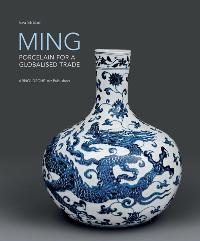
Ming. Porcelain for a globalised trade
Published by Arnoldsche, Stoccarda, 2014
Seller: Merigo Art Books, Manerba del Garda, BS, Italy
Seller rating 5 out of 5 stars
cm 24x29 pag. 240 ill. 180 col Inglese.
-
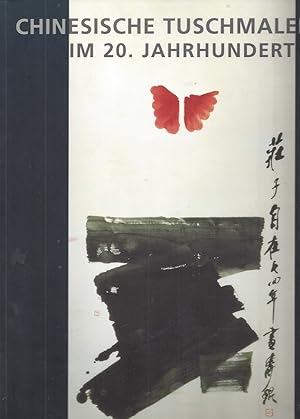
CHINESISCHE TUSCHMALEREI IM 20. JAHRHUNDERT / CHINESE INK PAINTING IN THE 20TH CENTURY - museum für Ostasiatische Kunst Köln 19.10.1996 - 15.01.1997
Published by Köln: Museum für Ostasiatische Kunst Köln, 1996, 1996
Seller: °ART...on paper - 20th Century Art Books, Lugano, Switzerland
Association Member: ILAB
Seller rating 5 out of 5 stars
First Edition
Soft cover. Condition: Very Good. 1st Edition. 4° -144pp - Color & B/w reproductions. Exhibition Catalog: Chinese Ink Painting in the 20th Century. First edition, text in German language. Original boards. In Very good condition.
-

Hardcover/Hardback. Condition: New. Als nieuw. Ongelezen. Hardcover met stofomslag. Rijkelijk geà llustreerd. Groot en zwaar boek. Sneetje in rug omslag.
-
"La maladie de porcelaine."Ostasiatisches Porzellan aus der Sammlung Augusts des Starken.East Asian Porcelaine from the Collection of Augustus the Strong.
Language: German
Published by Berlin,Edition Leipzig,, 2001
224 Seiten mit 100 farbigen Abbildungen. Einwandfreier Band.-Standardwerk. Sprache: Deutsch Gewicht in Gramm: 1600 4°,fester Originaleinband mit Schutzumschlag.
-

Quellen: Das Wasser in der Kunst Ostasiens.
Published by Hamburg: Museum fur Kunst und Gewerbe, 1997
Gr.4°. Condition: Sehr gut. Exlibris. Weist nur geringe Stand-/Lagerspuren auf. Sehr schönes, innen wie außen sauberes Exemplar. 272 Deutsch 1300g.