Order Total (1 Item Items):
Shipping Destination:

Translator Sir Roger Lestrange (5 results)
Skip to main search results
Search filters
Product Type
- All Product Types
- Books (5)
- Magazines & Periodicals (No further results match this refinement)
- Comics (No further results match this refinement)
- Sheet Music (No further results match this refinement)
- Art, Prints & Posters (No further results match this refinement)
- Photographs (No further results match this refinement)
- Maps (No further results match this refinement)
- Manuscripts & Paper Collectibles (No further results match this refinement)
Condition Learn more
- New (2)
- As New, Fine or Near Fine (No further results match this refinement)
- Very Good or Good (No further results match this refinement)
- Fair or Poor (2)
- As Described (1)
Binding
- All Bindings
- Hardcover (5)
- Softcover (No further results match this refinement)
Collectible Attributes
- First Edition (No further results match this refinement)
- Signed (No further results match this refinement)
- Dust Jacket (1)
- Seller-Supplied Images (2)
- Not Print on Demand (5)
Language (2)
Price
- Any Price
- Under US$ 25 (No further results match this refinement)
- US$ 25 to US$ 50 (No further results match this refinement)
- Over US$ 50
Free Shipping
- Free Shipping to U.S.A. (No further results match this refinement)
Seller Location
Seller Rating
-

Hardcover. Condition: New. In shrink wrap. Looks like an interesting title!
-
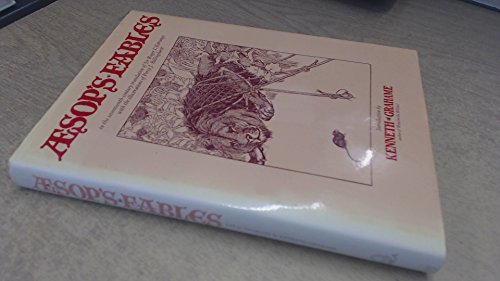
A Hundred Fables of Aesop; From the English Version of Sir Roger L'Estrange
Language: English
Published by Godfrey Cave Associates Ltd / Omega Books Ltd, 1984
ISBN 10: 1850070458 ISBN 13: 9781850070450
Hardcover. Condition: New. In shrink wrap. Looks like an interesting title!
-
The Visions of Dom Francisco de Quevedo Villegas, Knight of the Order of St James
Published by Richard Sare, 1715
US$ 61.82
US$ 12.00 shipping
Ships from United Kingdom to U.S.A.Quantity: 1 available
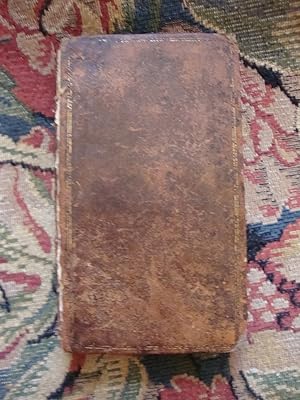
Add to basketHardcover. Condition: Fair. No Jacket. 5th or later Edition. Eleventh edition 12mo, fair to good. Full leather , gilt on morocco, raised bands to spine, Abraded wear. small losses to spine end, front hinge virtually detached fep detached, back hinge cracked, binding else sound, small marks to title page, , the odd spot, else good page condition. At the back a list of other books published by R Sare.
-

The Visions of Don Francisco De Quevedo Villegas, Knight of the Order of St. James
Published by Printed by W. B. for Richard Sare at Gray's-Inn-Gate in Holborn, London, 1708
Seller: ERIC CHAIM KLINE, BOOKSELLER (ABAA ILAB), Santa Monica, CA, U.S.A.
Seller rating 3 out of 5 stars

Hardcover. Condition: fair. Tenth Corrected. 8vo. 282 + 2 pp. of advertisements. Leather boards with decorative etching and raised bands on spine. Francisco Gómez de Quevedo y Santibáñez Villegas (1580 - 1645) poet and master satirist of Spain's Golden Age, who, as a virtuoso of language, is unequaled in Spanish literature. -(Encyclopedia Britanica Online). He was born in Madrid and his political vocation as well as colorful life contributed to the forming of his complex and contrasting personality. His poetry reflects the most spiritual tendencies along with the most base and crude feelings. Jokes appear alongside more serious attitudes, and moral philosophy alongside the most ingenious vulgarity. Orphaned by the age of six, he was able to attend the Imperial School run by the Jesuits in Madrid. He then attended university at Alcalá de Henares from 1596 to 1600. In 1601, Quevedo, as a member of the Spanish Royal Court, moved to Valladolid, where the Court had been transferred by the King's minister, the Duke of Lerma. There he studied theology, a subject that will be a lifelong interest, and on which in later life he will compose the treatise "Providencia de Dios" (God's Providence), against atheism. He was also a political moralist. His works included comedies, satires, poetry and novels. Much of his work is related to religion, or at least had religion or metaphysical overtones, probably because his education in theology, logic, metaphysics, and physics. A polyglot, among the many languages he could speak were Greek, Latin, Hebrew, French, Italian, and English (aside from Spanish, of course). A fair amount of scuffing to boards due to age, front board is detached but present. Lovely decorative endpapers. Binding in poor condition, interior in good - very good condition.
-
The Fables of Aesop.
Publication Date: 1926
Seller: Henry Sotheran Ltd, London, United Kingdom
Association Member: ABA ILAB PBFA
Seller rating 5 out of 5 stars

US$ 1,202.13
US$ 53.35 shipping
Ships from United Kingdom to U.S.A.Quantity: 1 available
Add to basketWaltham Saint Lawrence, Berkshire: The Golden Cockerel Press. 1926. Large 8vo. Cream-backed brown publisher's boards lettered in gilt to spine, in typographic dust-jacket; with 11 wood engravings by Celia M. Fiennes; pp. [8], iii-v, [1], 94, [6]; almost entirely uncut, spine tips lightly bumped, previous bookseller sticker "Paul Elder & Co, San Francisco" to rear paste-down, bookplate of Alma Ruth Lavenson to the front paste-down (see below); a near-fine copy; the jacket is lightly spotted, browned along spine and to folds, chipped to extremities with some closed tears along spine; good but seldom found.Limited edition, number 268 of 350 copies, of L'Estrange's translation of the Fables, rare in dust-jacket.L'Estrange first published his version of the fables in 1692, and it is now regarded as one of the most popular English translations. Commissioned by a group of booksellers, his edition appeared two years after Locke had recommended Aesop as an ideal first reading book for children. As Muir notes, it was "the best and largest collection of fables in English, and he had children especially in mind when making his compilation". L'Estrange's Aesop is, in fact, "an assemblage of fables and facetiae from a variety of sources, ancient and modern, the second volume being wholly un-Aesopian. The trenchant reflections added to the individual fables possess a strong political animus and were to draw severe criticism from the later Whig fabulist Samuel Croxall; but all L'Estrange's translations have some degree of political colouring" (DNB).The simplistic yet highly effective wood engravings are by Celia M. Fiennes, a direct descendant of the seventeenth-century travel writer Celia Fiennes. She was an accomplished printmaker and illustrator - in the same year as this publication, she produced twelve wood engravings for the Cresset Press edition of Matthew Stevenson's 1661 work The Twelve Moneths.Provenance: From the library of the American photographer Alma Ruth Lavenson (1897-1989). Lavenson was particularly prolific in the 1920s and 30s and was influenced by Pictorialism; she worked alongside photographers such as Ansel Adams, Imogen Cunningham, and Edward Weston, and developed friendships with these artists.Chanticleer 45. See Muir, English Children's Books, 1600 to 1900.