

Order Total (1 Item Items):
Shipping Destination:

Waldie David (5 results)
Skip to main search results
Search filters
Product Type
- All Product Types
- Books (5)
- Magazines & Periodicals (No further results match this refinement)
- Comics (No further results match this refinement)
- Sheet Music (No further results match this refinement)
- Art, Prints & Posters (No further results match this refinement)
- Photographs (No further results match this refinement)
- Maps (No further results match this refinement)
- Manuscripts & Paper Collectibles (No further results match this refinement)
Condition Learn more
- New (1)
- As New, Fine or Near Fine (No further results match this refinement)
- Very Good or Good (3)
- Fair or Poor (No further results match this refinement)
- As Described (1)
Binding
Collectible Attributes
- First Edition (2)
- Signed (1)
- Dust Jacket (No further results match this refinement)
- Seller-Supplied Images (2)
- Not Print on Demand (5)
Language (2)
Free Shipping
- Free Shipping to U.S.A. (No further results match this refinement)
Seller Location
Seller Rating
-
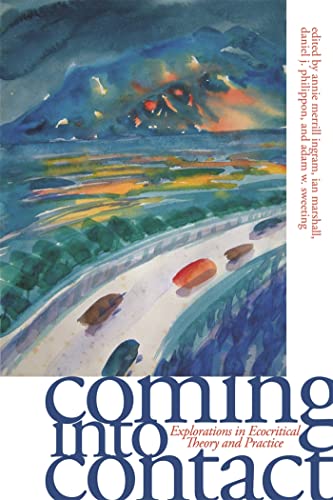
Coming into Contact: Explorations in Ecocritical Theory and Practice
Language: English
Published by University of Georgia Press, 2007
ISBN 10: 0820328863 ISBN 13: 9780820328867
Seller: Amazing Books Pittsburgh, Pittsburgh, PA, U.S.A.
Seller rating 5 out of 5 stars

Paperback. Condition: Very Good. Clean, sturdy copy with might shelf wear to cover and a very small coffee stain on the fore edge of the pages. Pages look like new.
-
Journal of a Voyage from England to Calcutta by the Overland Route
Language: English
Published by Linlithgow Heritage Trust, Linlithgow, 2013
Seller: B. B. Scott, Fine Books (PBFA), London, UK, United Kingdom
Association Member: PBFA
Seller rating 5 out of 5 stars
First Edition Signed
US$ 16.44
US$ 44.22 shipping
Ships from United Kingdom to U.S.A.Quantity: 1 available
Add to basketSoft cover. Condition: Very Good. 1st Edition. First edition. Colour illustrations. 8vo. Publisher's laminated pictorial wrappers, a little general wear, still very good, inscribed "best wishes" from the editor upon the title page; David Waldie LRCS (1813-1889) was a chemist whose foresight and ingenuity, alongside the famous surgeon Sir James Young Simpson (1811-1870), introduced chloroform as an anaesthetic to medicine. This is the account of his long journey to Calcutta in 1853 to take up a position there with the chemical manufacturing company Malcolm & Co. vi, 196pp. Signed by Author(s).
-
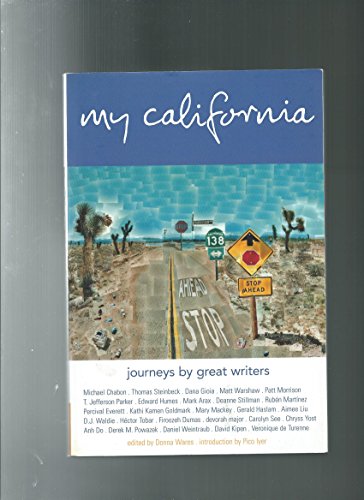
paperback. Condition: New. In shrink wrap. Looks like an interesting title!
-

Hardcover. Condition: Very Good+. 1st Edition. A series of essays by noted authors, poets, historians and artists. Text and illustrations clean and unmarked with no rips or creases. Binding tight. White cloth boards with gilt stamped titles are clean and sturdy. Quick, secure shipping with free delivery confirmation from Los Angeles bookstore. Photos available upon request.
-
Two photographs : a studio portrait and a carte-de-visite. CABINET PORTRAIT : Image size - c.14.5 x 10 cms. It has been trimmed top and bottom thus losing a sliver of the photograph at the top [not affecting the image] and most of the photographer's imprint at the bottom. Enough remains of the latter to enable the identification of either JOHN or FRANK PELHAM MOFFAT, 125 Princes Street, Edinburgh, who were working there from 1873-1926 [John] and 1875-1888 & 1895-1912 [Frank]. It is a fine image in excellent condition. CARTE-DE-VISITE : Image size - c.7.5 x 5.5 cms. The photographer is P[ETER]. DEVINE, 101b Princes Street, Edinburgh, working there 1861-1877. Devine's imprint is on the reverse of the carte; there is also an early signature, '
Seller: Patrick Pollak Rare Books ABA ILAB, SOUTH BRENT, DEVON, United Kingdom
Seller rating 3 out of 5 stars

US$ 1,095.92
US$ 33.25 shipping
Ships from United Kingdom to U.S.A.Quantity: 1 available
Add to basketTOGETHER WITH : WALDIE, David. Journal of a Voyage from England to Calcutta by the Overland Route. Edited with notes by ALAN G. YOUNG. Linlithgow Heritage Trust. 2013. pp. vi, 196. 18 full page coloured illustrations and a few text figures. Pictorial paper wrappers, very good copy. *DAVID WALDIE, 1813-1889, born in Linlithgow, died in Kolkata [Calcutta]. He studied medicine at Edinburgh, qualifying in 1831 when he returned to Linlithgow, practising as surgeon and apothecary. In 1839 or 1840 he gave up medicine and moved to Liverpool, where he took the post of Chemist to the Apothecaries' Company of Liverpool. Waldie came across chloroform in its then known form, 'chloric ether', first introduced into Britain, in Liverpool, from America in 1838-39. The make-up of the ether appeared to Waldie to be inconsistent and he therefore developed the process of purifying and standardising chloroform. He was thus familiar and knowledgeable about its properties and on a return to Scotland, and in a meeting and discussion with James Young Simpson in 1847, he was able to recommend chloroform as an anaesthetic. Simpson was very favourably impressed, experimented with it on himself, family and friends immediately and began regular use thereafter in managing pain in childbirth. In that year, 1847, Simpson published his 'Account of a new anaesthetic agent as a substitute for sulphuric ether in surgery and midwifery', Edinburgh, 1847. He acknowledged Waldie's introduction to him in a footnote but from then on, Waldie and his family and friends, always felt that he had not been sufficiently recognised for his part in the introduction of this novel agent into anaesthetics. He elaborated this opinion in his pamphlet of 1870 - 'The true story of the introduction of chloroform into anaesthetics'. Inevitably, this became and remains a controversial issue - for example, Duncum in her 'Development of Inhalation Anaesthesia', pp. 166-178, gives an extensive account of what happened and notes that John Snow in 1858, stated 'Mr Waldie of Liverpool, had a greater share in the introduction of chloroform than Dr. Jackson had in the introduction of ether.'. She writes that even if Simpson had not been particularly generous with his thanks, others had given Waldie credit and speculates that as Waldie had moved to India in 1858, he had been out of touch with the literature. As contra to this, the paper by RAY DEFALQUE and AMOS WRIGHT in Anesthesiology 2011, 114, makes a case for Waldie's role to be less than often quoted [see 'The Discovery of Chloroform : Has David Waldie's role been exaggerated?']. Nonetheless, Waldie was and remains a central figure in this major historical development and images of him are very scarce. Duncum illustrates a commemorative plaque but doesn't record its location. There are no portraits of him in the London National Portrait Gallery, nor in the Scottish National Portrait Gallery. The Liverpool Medical Institution has his archive and lists photographs among the contents, though there is no indication as to what these are. His more solid legacy, however, remains in India to this day - he had emigrated to India to take up a post as Chemist for a chemical works, Malcolm & Co, of Calcutta. Around 1860 he established his own chemical works at Barnagore, Calcutta and in 1874 the company (D. Waldie & Co) was relocated to Kasipur, West Bengal. It specialised in the production of pigments, especially lead oxides and after various amalgamations is still in operation today.


![Seller image for Two photographs : a studio portrait and a carte-de-visite. CABINET PORTRAIT : Image size - c.14.5 x 10 cms. It has been trimmed top and bottom thus losing a sliver of the photograph at the top [not affecting the image] and most of the photographer's imprint at the bottom. Enough remains of the latter to enable the identification of either JOHN or FRANK PELHAM MOFFAT, 125 Princes Street, Edinburgh, who were working there from 1873-1926 [John] and 1875-1888 & 1895-1912 [Frank]. It is a fine image in excellent condition. CARTE-DE-VISITE : Image size - c.7.5 x 5.5 cms. The photographer is P[ETER]. DEVINE, 101b Princes Street, Edinburgh, working there 1861-1877. Devine's imprint is on the reverse of the carte; there is also an early signature, ' for sale by Patrick Pollak Rare Books ABA ILAB](https://pictures.abebooks.com/inventory/md/md30926955369.jpg)
