Order Total (1 Item Items):
Shipping Destination:

Walker Engravers (26 results)
Skip to main search results
Search filters
Product Type
- All Product Types
- Books (13)
- Magazines & Periodicals (No further results match this refinement)
- Comics (No further results match this refinement)
- Sheet Music (No further results match this refinement)
- Art, Prints & Posters (11)
- Photographs (No further results match this refinement)
- Maps (2)
- Manuscripts & Paper Collectibles (No further results match this refinement)
Condition Learn more
- New (2)
- As New, Fine or Near Fine (No further results match this refinement)
- Very Good or Good (15)
- Fair or Poor (1)
- As Described (8)
Binding
Collectible Attributes
- First Edition (3)
- Signed (No further results match this refinement)
- Dust Jacket (No further results match this refinement)
- Seller-Supplied Images (24)
- Not Print on Demand (24)
Language (2)
Free Shipping
Seller Location
Seller Rating
-

Monmouthshire
Language: English
Published by Samuel Lewis, London, 1837
Seller: Philip Gibbons Books, Newcastle Emlyn, United Kingdom
Seller rating 5 out of 5 stars

Map
US$ 13.73
US$ 48.23 shipping
Ships from United Kingdom to U.S.A.Quantity: 1 available
Add to basketNo binding. Condition: Very Good. Antiquarian map: image (plate size): 18cm wide by 24 cm high; sheet size: 21cm by 29cm, steel engraving with original outline hand-colouring. Very Good, unmarked. Originally from Lewis's "Topographical Dictionary". Pictures show this actual map. UK orders are post-free. Sent flat in a card-backed envelope.
-

Description of a Natural Arch, at Methop Fell, in Westmoreland; Kendal Castle, in Westmoreland [The Antiquities of England & Wales]
Published by [Alex Hogg], [London], 1786
Seller: Robert Wright, trading as 'The Bookman', Norwich, United Kingdom
Seller rating 5 out of 5 stars
First Edition
US$ 16.56
US$ 44.21 shipping
Ships from United Kingdom to U.S.A.Quantity: 1 available
Add to basketUnbound. Condition: Very Good. No Jacket. Walker/Lowry (engravers) (illustrator). [First Edition, c.1786]. Original engraved plates (complete with relevant separate pages of descriptive text) taken from disbound/incomplete copy (pub. c.1786) of Boswell's 'Antiquities of England & Wales'. One leaf with two prints to recto, depicting: 'View of a Natural Arch in a Rock, at High Methop [Medip] in Westmoreland'/'View of Kendal Castle, in Westmoreland'. Both prints clean/fresh. Unmounted. VG PRICE INCLUDES UK POSTAGE & PACKING. Size: Each approx. 180mm x 100mm. Print.
-
Alexander Walker Macklin Portrait, Steel Engraving, with Facsimile Signature
Language: English
Art / Print / Poster
US$ 81.55 40% offUS$ 48.93
US$ 7.50 shipping
Ships within U.S.A.Quantity: 1 available
Add to basketNo Binding. Condition: Good. Homer & Lee, NY, Engravers (illustrator). Circa 1870s, sized about 8 x 10.5 inches, engraved by Homer & Lee, NY. Overall sharp and bright, with minor soiling at upper margin. Suitable for framing.
-
South America: Sheet 1: Ecuador, Granada, Venezuela, and Parts of Brazil and Guayana
Published by Edward Stanford, 1844
US$ 68.99
US$ 18.22 shipping
Ships from United Kingdom to U.S.A.Quantity: 1 available
Add to basketCondition: Fair. This is ex-library and may have the usual library/used-book markings inside. In fair condition, suitable as a study copy. Likely dated 1844. Monochrome. Approx 30 x 43.5cm. Scale in Spanish Leagues 26.2 -One Degree. And English miles 68.75 One degree. Map has been neatly cut into 9 equal sections and backed onto cloth so it may be folded easily. Some general grubbiness. There are approx. twenty small red pen underlinings of place names on map. A couple of corners are slighty worn. On reverse side of two panels blue board has been secured, and labelled with black writing within a white sticker. Small pencil marking on back of map which is also grubby. Please note the Image in this listing is a stock photo and may not match the covers of the actual item,100grams, ISBN:
-

India VII.
Published by Society for the Diffusion of Useful Knowledge; Baldwin & Cradock., London., 1832
Seller: Asia Bookroom ANZAAB/ILAB, Canberra, ACT, Australia
Association Member: ANZAAB ILAB
Seller rating 5 out of 5 stars
Handcoloured map, 28.5 x 39 cms (including platemark); 34 x 41 cms (sheet), relief throughout shown by hachures, publisher's or binder's numeric stamp (102), the margins a little browned and chipped, but in very good condition. This sheet maps a sweeping, wild, and politically fragmented area of North-Eastern and Central-Eastern India. It captures the dense, rugged interiors of Allahabad, Bahar (Bihar), Gangpoor, Sumbhulpoor, and Ruttunpoor. The sheet explicitly delineates the territories under direct East India Company British administration from those of the sovereign regional native rulers, specifically marking out the lands of the Rajah of Berar, the Rajah of Rewah, and the Bundelcund (Bundelkhand). The maritime port city of Balasore sits near the lower right-hand margin where the land meets the Bay of Bengal.
-

(TRAVELLING MAP OF) ENGLAND AND WALES.
Published by Charles Knight & Co. for the Society of the Diffusion of Useful Knowledge, 1848
Seller: Francis Edwards ABA ILAB, Hay on Wye, United Kingdom
Association Member: ABA ILAB PBFA
Seller rating 5 out of 5 stars
US$ 91.07
US$ 29.47 shipping
Ships from United Kingdom to U.S.A.Quantity: 1 available
Add to basketCorrected Ed. 31 x 37 inches. Linen backed folding map hand coloured in outline, dec. e.ps., folding into gilt lettered textured brown cloth boards, some scratching and sl. bubbling, rebacked in black cloth. With the signature of Flo. Fitzwygram Cap. Inniskilling Dragoons 1853. Lieutenant-General Sir Frederick Wellington John Fitzwygram, 4th Baronet DL JP (18231904) British Army cavalry officer, expert on horses and Conservative politician. A cavalry officer who served with the 6th (Inniskilling) Dragoons in the Crimean War. He subsequently commanded the Cavalry Brigade at Aldershot. US$88.
-

Portrait of Margaret Ollphant (Scottish novelist, 1828-1897).
Published by [London: William Blackwood & Sons, circa 1899]., 1899
Seller: Wittenborn Art Books, San Francisco, CA, U.S.A.
Seller rating 5 out of 5 stars
Art / Print / Poster
Condition: Good. Mezzotint? 19 x 12.5 cm. (sheet). Facsimile signature below image. Very Good. Light water staining in left sheet margin.
-

India IV.
Published by Society for the Diffusion of Useful Knowledge; Baldwin & Cradock., London., 1832
Seller: Asia Bookroom ANZAAB/ILAB, Canberra, ACT, Australia
Association Member: ANZAAB ILAB
Seller rating 5 out of 5 stars
Handcoloured map, 29.5 x 39 cms (including platemark); 34.5 x 42 cms (sheet), relief throughout shown by hachures, publisher's or binder's stamp (99), the margins a little browned and chipped, but in very good condition. An attractive map showing Central and Eastern India, including Hyderabad, Berear and the Northern Circars. This long coastal strip along the Bay of Bengal (modern-day Andhra Pradesh and Odisha) is marked as a critical British presidency asset. The map shows its major maritime ports, like Masulipatnam and Visakhapatnam, which acted as vital economic gatekeepers connecting Central India's interior to ocean trade lines. As the official hydrographers to the East India Company, John and Charles Walker packed their maps with technical markers intended to educate the British public.
-
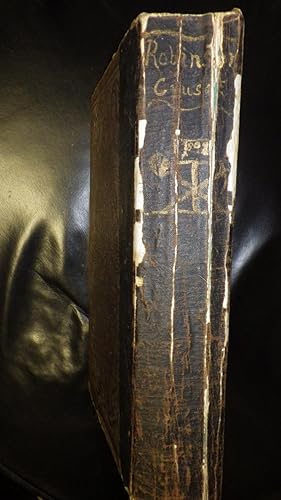
THE LIFE & ADVENTURES OF ROBINSON CRUSOE. With an Autobiographical Memoir of the Author & a Life of Alexander Selkirk, By Whose Residence on the Island of Juan Fernandez the Work Was Suggested ( Journeymen Printers Edition)
Published by Philadelphia Journeymen Printers Union, 1852, 1852
Seller: Bluff Park Rare Books, LONG BEACH, CA, U.S.A.
Association Member: IOBA
Seller rating 4 out of 5 stars

First Edition
Hardcover. Condition: Good. No Jacket. 1st Edition. Hard Cover. No Jacket. First Thus. HB NODJ ISSUED, 1852, 1st Edition THUS, Copyright pg Followed by Advertisement dated 1852, Brown cloth embossed cover with Gilt Illustration of Crusoe, VG-/GOOD, NOJACKET, AS-IS, Cover has chips tears Extremities & along Spine pieces missing, chips & Crease Marks & Tape Residue from Repair Cover at Spine, Interior some rub, FoXing Stains, Wear, LIGHT Wrinkling some pgs, couple lightly Loose pg, few pencil marks, O/W Nice Tight, 464 pgs, Title page & copyright page Dates Match of 1850. NO ADS in Back. Light Chipping Edges outer spine cvr & wrinkling Tears Spine, . Engravers Clarkson, HINCKLEY, Clarkson, Lawrie, Baker , Walsh & Waitt, Frontispiece by Taverner.
-
An Account of the Pelew Islands, Situated in the Western Part of the Pacific Ocean. Composed From the Journals and Communications of Captain Henry Wilson, and Some of His Officers, Who, in August 1783, were There Shipwrecked, in The Antelope, a Packet Belonging to the Honourable East India Company.
Published by Printed for G. Nichol, Bookseller to His Majesty, Pall-Mall, London, 1788
Seller: Dark and Stormy Night Books, Newburyport, MA, U.S.A.
Seller rating 5 out of 5 stars
First Edition
Hard Cover. Condition: Very Good. Arthur William Devis; Georgiana Keate; J. Platt; John Russell; T. Malton; J. Wedgebrough; Robert White; H. Wilson, jr. Plus engravers H. Kingsbury; Thomas Landseer; T. Medland; W. & J. Walker (illustrator). First Edition. First edition. Hard cover, 4to, in original unsigned tree calf fine binding, the spine rebacked, with 5 raised bands. The second compartment bears a red morocco label with gilt title: WILSON/AN ACCOUNT/ OF THE /PELEW ISLANDS." Bands are double ruled in gilt, with remnants of gilt rolled to board edges. Cream endpapers, letterpress-printed upon mould made paper. Stiple-engraved frontispiece portrait engraving of Capt. Henry Wilson (1740-1810) with 2 engraved fold-outs (one map, one landscape elevation), and additional 15 engraved full page plates; i.e.17 illustrations, as called for in the First Edition. With twenty-seven chapters, Directions to Binders, Dictionary of the Pelew Language and errata page. Title page with one illegible owner signature in old ink, with another below in the name of TH-- TWYSDEN. Engraved armorial bookplate of Viscount Falmouth. (see below).*CONDITION: Very Good. Professionally rebacked, but now featuring some superficial scuffs to the spine, some heavy scratches to the rear board. Light wear to finish and edges with some later color correction. Corners repaired, and rubbed. Both hinges with old paper repairs. Front hinge having about a two inch rend at center of same. Inside, earlier quires with some toning, odd spots of fox or soiling. Offset from only a couple of the engravings upon text. Map with mild fold creasing, small polish offset. One small paper repair at fold on foldout landscape. COLLATION:[2] pp.,[i]-xxvii [xxviii is Direction to binders], [1] - 378pp. [379 pp. eratta].**SUBJECT: The British and Chinese crew aboard the East India Company's packet ship Antelope comes to harm in July, 1783 as their ship is blown off course in a gale off of Macau, stranding them upon the coral banks of a hitherto unexplored group of South Pacific (now Micronesian) islands between Guam and the Phillipines. The Captain, Henry Wilson, and crew pull off a remarkable feat of salvaging the remains of the ship to build a sloop, enabling the crew to set sail via Canton to England after only four months on Oroolong, the island gifted them by the Pelau King Abba Thulle. Compiler George Keate uses journals, interviews and the log to tell the human story of an unplanned yet remarkably fruitful voyage of exploration and anthropological discovery. The Pelew (Pelau, or Belau) kingdom of the chief Abba Thulle extends generous hospitality and friendship to the travelers, inviting mutual respect and kindness. In return, the British aid them in medical matters and several battles against rival islanders. They are gifted various Pelauan "ornaments"( which make up some of the illustrations) as they set off four months later to return to England, also bringing with them the King's nephew, Prince Lee Boo, who lives for a time with Mr. Keate and his family. Keate wrote a second title about Lee Boo's time in England, and his daughter Caroline provides a portrait from memory used here, when Lee Boo died from smallpox in Dec., 1784. **ILLUSTRATIONS: Arthur William Devis (1762-1822 ) shipped out as the official East India Company Artist in 1782, and by 1783 was aboard the shipwrecked "Antelope" in Palau. Trained as an academic painter and portraitist, he exhibited regularly at the Royal Academy and other galleries. The British Museum has several of his original portrait drawings from the voyage which appear in the book, including that of the Prince Lee Boo (Lebu) and his father, Arra Kook (Arra Kooger), as well as a portrait of a Chinese lady drawn after the crew regrouped in Macau and Canton in 1784. (British Museum online). Luckily, there were numerous artistically-inclined sketchers on this voyage, including the Captain himself, making possible a thoroughly fascinating pictorial record of the events, cultural history and people. The brother of artist Edwin Landseer, the engraver Thomas Landseer was also employed on this work, as prepared back in London. BIBLIOGRAPHERS cite five editions by 1804, including a pirated Irish edition and one in French; it has been an enduringly popular narative, variously abridged and translated into many languages in the ensuing years, due to the particularly well-told tale on a very human scale. **PROVENANCE: Viscount Falmouth, Mereworth Castle, Kent (engraved bookplate). This stunning early eighteenth-century Palladian home, designed by Scottish architect Colen Campbell, appeared in film as the residence of Agent 007, in the 1967 Sean Connery/ James Bond film, "Casino Royale," immortalized from the 1953 Ian Fleming novel. The book is presumed to have belonged to the 3rd Viscount Falmouth, George Evelyn Boscawen, (d.1808) whose family crest upon the bookplate features distinctive heraldry of lions rampant with the tail of a fish. (His father, the 2nd Viscount Falmouth, Hugh Boscawen, (d. 1782) was a naval Admiral. Also, THOMAS TWYSDEN, (d. 1801) whose name appears signed in old ink to the title page, also had a distinguished and lengthy naval career, entering service in 1781 as Fourth Lieut. of the 74-gun ship of the line, The Defense, in 1793. REFS: BDNB. J.-Ch. Brunet, "Manuel du Libraire et de L'Amateur de Livres." Vol.III, (Paris: Libraire de Firmin Didot Frères, Fils et Co., 1862) No. [21153], p. 647. J.R. Abbey, "Travel in Aquatint and Lithography 1770-1860 (Stoors-Mansfield, CT: M. Martino Publisher, 1995), note to No. 546. Cotton and Fawcett, "East Indiamen" (London: Batchworth Press, 1949), p. 138. Three Decks' dot org. (4.7 lbs.). Book.
-
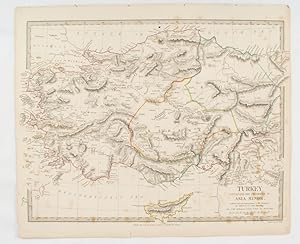
Turkey containing the provinces in Asia Minor.
Published by Society for the Diffusion of Useful Knowledge. Baldwin & Cradock., London., 1830
Seller: Asia Bookroom ANZAAB/ILAB, Canberra, ACT, Australia
Association Member: ANZAAB ILAB
Seller rating 5 out of 5 stars
Engraved map wth outline hand colour, 29.7 x 42 cm, relief shown in hachures, key to abbreviations, including "Ancient Ruins", the west and east extremities attactively engraved to burst through the border, original folds, map with occasional spotting, more pronounced at the lower corner, edges a little ragged, small chip to the inner margin (no loss to the map), manuscript pagination in the lower corner, but in good condition.
-

Bokhara, Afghanistan, Beloochistan, &c.
Published by (Society for the Diffusion of Useful Knowledge); Charles Knight, London., 1852
Seller: Asia Bookroom ANZAAB/ILAB, Canberra, ACT, Australia
Association Member: ANZAAB ILAB
Seller rating 5 out of 5 stars
Engraved map, 39 x 30.5 cms; 41 x 34 cms (sheet), relief throughout shown by hachures, publisher's or binder's numeric stamp (94A), the margins a little browned and chipped with loss to the two keys at the inner edge marking Indian and Persian distances but the map in very good condition. A highly detailed example of political and military cartography from the height of the Victorian era, capturing the Central Asian frontier at the dawn of the "Great Game". The map covers the expanse of Central Asia, stretching from the deserts of modern-day Uzbekistan and Turkmenistan down through Afghanistan and Pakistan to the Arabian Sea. It maps out the Emirate of Bukhara in the north and the Desert of Khiva. It explicitly references the "Nomadic Tribes of Turkomans" roaming the steppes. Afghanistan is centred on the map, and displays the fractured geography of the Afghan kingdom. It details the treacherous mountain passes of the Hindu Kush, alongside the major strategic cities of Kabul, Kandahar, and Herat. Beloochistan (Balochistan) & Sinde (Sindh)anchor the southern third of the sheet, it routes down toward the coastline, showing the vast desert paths, tribal domains, and the mouth of the Indus River.
-

Firth of Forth. St. Abbs Head to the Forth Bridge.
Published by LondonThe Admiralty., 1921
Seller: Robert Frew Ltd. ABA ILAB, London, United Kingdom
Association Member: ABA ILAB PBFA
Seller rating 5 out of 5 stars
Map
US$ 137.98
US$ 13.40 shipping
Ships from United Kingdom to U.S.A.Quantity: 1 available
Add to basket63.5 x 111.5 cm. Uncoloured, with principal points (light houses, etc) highighted in orange. Large folding sheet chart of the Firth of Forth. Title in red ink on verso. Some offsetting. Ink stamp to lower right corner.
-
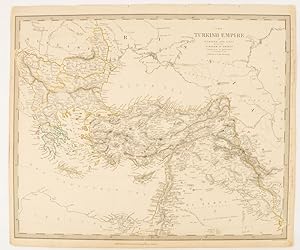
The Turkish Empire in Europe and Asia with the Kingdom of Greece.
Published by Charles Knight & Co. [circa1840s.], London., 1840
Seller: Asia Bookroom ANZAAB/ILAB, Canberra, ACT, Australia
Association Member: ANZAAB ILAB
Seller rating 5 out of 5 stars
Lithographed map with original outline hand-colour, 31.9 x 39.1 cm, small marginal tears neatly repaired with archival material, but no loss, small surface abrasion affecting the border at the foot, edgewear and browning, inked pagination in an early hand, but in very good condition. A handsome map with fine topographical engraving, also showing the borders with Hungary, Russia and Persia.
-

India XII. Panjab with Part of Afghanistan, Kashmeer, Sinde &c. &c.
Published by Society for the Diffusion of Useful Knowledge, London., 1839
Seller: Asia Bookroom ANZAAB/ILAB, Canberra, ACT, Australia
Association Member: ANZAAB ILAB
Seller rating 5 out of 5 stars
A pair of engraved maps, 39.1 x 41.6 cm, 41.1 x 34.5 cms (sheet), sealed edge tears to the right outer margins on each sheet (without loss), the left margins have been re-enforced with washi, some age-toning, but both maps in very good condition. Highly detailed regional maps of the Northwest Frontier. Map 107 details the Five Rivers of the Punjab, Sindh, and Kashmir and Map 107 A is specialized supplemental sheet, broadening the scope to map out the rugged mountain passes, military routes, and tribal territories of Afghanistan stretching toward Kabul and Kandahar, part of a regional survey published by SDUK. Strategically important maps published at the outbreak of the First Anglo-Afghan War and in the wake of regional border struggles marking the Great Game.
-

The River Euphrates from Abu' Saide to Werdi.From The Expedition for the Survey of the Euphrates and Tigris, 1836-1840. First edition of the map.
Published by [London]: Colonel Chesney, 1849
Seller: Wittenborn Art Books, San Francisco, CA, U.S.A.
Seller rating 5 out of 5 stars
Art / Print / Poster
Condition: Good. Original engraving. Map IV of XII. 50 x 62 x cm. Folding. Marginal tears.The 12 maps were printed separately by the firm of J. & C. Walker, who was the official printer for the British Admiralty and the East India Company. They were published by Colonel Chesney himself in 1849. They were more commonly issued along with Chesney's text volumes, "The Expedition for The Survey of The Rivers Euphrates and Tigris, Carried on by Order of The British Gov. , "published by Longman, Brown, Green, and Longmans, London, 1850.OCLC Number / Unique Identifier:316378697 for the complete set.The Euphrates expedition of 1836 was lead by the British army officer Colonel Francis Rawson Chesney. The main objective was to establish a route "between the Mediterranean Sea and His Majesty's possessions in the East Indies by means of a steam communication of the river Euphrates". Finding a shorter route to India was the hot topic of the time. The East India Company sought a suitable solution to cut down the travel time between England and India. Chesney was involved in initial surveys in Egypt and the Middle East in the late 1820s where he investigated the possibility of passage to India via the Red Sea. In 1829 he submitted a report advocating the construction of the Suez Canal. He also brought to attention the feasibility of steam communication with India through the Euphrates. The king William IV himself expressed a desire that the route by the Euphrates to India should be put to a practical test.In late 1834 when Chesney received funds for the expedition he assembled a capable group of naval and military officers including the explorer Henry Blosse Lynch of the Indian Navy and a geologist William Francis Ainsworth, president of the Royal Physical Society of Edinburgh. He also selected workmen from the Royal Artillery, Royal Sappers and Miners qualified in steam machinery, surveying and drawing. Chesney returned to England in September 1832 after surveying the lower Euphrates by raft and was convinced that the river was navigable, providing a swift route to India. He also believed a British presence in Mesopotamia would discourage Russian encroachment. Chesney had a well-publicised interview with William IV in April 1833, who became an avid supporter of the Euphrates scheme. Petitioning led to the nomination of a select committee which in June 1834 supported an exploratory expedition with the backing of £20,000. Chesney was given the temporary rank of Colonel and lead fourteen officers and thirty-nine men on the mission.On 10th February 1835 they sailed for Syria. The two steamships, 'Euphrates' and 'Tigris', had to be tugged in sections over fifty miles of difficult terrain, the Arab tribes along the route were hostile and many of the men, including Chesney, suffered from malaria. On 21st May 1836 a sudden storm hit and the 'Tigris' was wrecked with the loss of twenty lives. . Chesney managed, with the remaining boat, to explore and chart the Euphrates, the Tigris and the Karum rivers. This exploration ended in India and he returned to London in August 1837. This accomplishment won him the admiration of geographers and he was awarded the Geographical Society's gold medal. .After preparing an account of the expedition, Chesney returned to regimental duty in 1841 and by 1843 had risen in rank being appointed Commandant of Hong Kong. In 1847 Chesney returned to England; his last military appointment was as Colonel Commandant of the Cork district, after which he retired to his home at Pacolet, near Kilkeel, county Down, Ireland in 1852.Expertise by Elvire POULAIN &Anne Sophie JONCOUX-PILORGE, Paris.
-

The River Tigris from Nineveh to Kalah Sherakat and from Kalah Sherakat to Samarra. From The Expedition for the Survey of the Euphrates and Tigris, 1836-1840. First edition of the map.
Published by [London]: Colonel Chesney, 1849
Seller: Wittenborn Art Books, San Francisco, CA, U.S.A.
Seller rating 5 out of 5 stars
Art / Print / Poster
Condition: Good. Original engraving. Map VI of XII. 61x 50cm. Folding Marginal tears.The 12 maps were printed separately by the firm of J. & C. Walker, who was the official printer for the British Admiralty and the East India Company. They were published by Colonel Chesney himself in 1849. They were more commonly issued along with Chesney's text volumes, "The Expedition for The Survey of The Rivers Euphrates and Tigris, Carried on by Order of The British Gov." published by ongman, Brown, Green, and Longmans, London, 1850.OCLC Number / Unique Identifier:316378697 for the complete set.The Euphrates expedition of 1836 was lead by the British army officer Colonel Francis Rawson Chesney. The main objective was to establish a route "between the Mediterranean Sea and His Majesty's possessions in the East Indies by means of a steam communication of the river Euphrates". Finding a shorter route to India was the hot topic of the time. The East India Company sought a suitable solution to cut down the travel time between England and India. Chesney was involved in initial surveys in Egypt and the Middle East in the late 1820s where he investigated the possibility of passage to India via the Red Sea. In 1829 he submitted a report advocating the construction of the Suez Canal. He also brought to attention the feasibility of steam communication with India through the Euphrates. The king William IV himself expressed a desire that the route by the Euphrates to India should be put to a practical test. In late 1834 when Chesney received funds for the expedition he assembled a capable group of naval and military officers including the explorer Henry Blosse Lynch of the Indian Navy and a geologist William Francis Ainsworth, president of the Royal Physical Society of Edinburgh. He also selected workmen from the Royal Artillery, Royal Sappers and Miners qualified in steam machinery, surveying and drawing. Chesney returned to England in September 1832 after surveying the lower Euphrates by raft and was convinced that the river was navigable, providing a swift route to India. He also believed a British presence in Mesopotamia would discourage Russian encroachment. Chesney had a well-publicised interview with William IV in April 1833, who became an avid supporter of the Euphrates scheme. Petitioning led to the nomination of a select committee which in June 1834 supported an exploratory expedition with the backing of £20,000. Chesney was given the temporary rank of Colonel and lead fourteen officers and thirty-nine men on the mission.On 10th February 1835 they sailed for Syria. The two steamships, 'Euphrates' and 'Tigris', had to be tugged in sections over fifty miles of difficult terrain, the Arab tribes along the route were hostile and many of the men, including Chesney, suffered from malaria. On 21st May 1836 a sudden storm hit and the 'Tigris' was wrecked with the loss of twenty lives. Chesney managed, with the remaining boat, to explore and chart the Euphrates, the Tigris and the Karum rivers. This exploration ended in India and he returned to London in August 1837. This accomplishment won him the admiration of geographers and he was awarded the Geographical Society's gold medal. .After preparing an account of the expedition, Chesney returned to regimental duty in 1841 and by 1843 had risen in rank being appointed Commandant of Hong Kong. In 1847 Chesney returned to England; his last military appointment was as Colonel Commandant of the Cork district, after which he retired to his home at Pacolet, near Kilkeel, county Down, Ireland in 1852.Expertise by Elvire POULAIN &Anne Sophie JONCOUX-PILORGE, Paris.
-

The River Euphrates from Ummu-L-Huntah to Ku'rnah with the River Tigris from Serut Castle to Kurnah and the Shatt el 'Arabfrom Kurnah Basrah. From The Expedition for the Survey of the Euphrates and Tigris, 1836-1840. First edition of the map.
Published by [London]: Colonel Chesney, 1849
Seller: Wittenborn Art Books, San Francisco, CA, U.S.A.
Seller rating 5 out of 5 stars
Art / Print / Poster
Condition: Good. Original engraving. Map X of XII. 77 x 49.5cm. Folding. Marginal tears and stains in top margin.The 12 maps were printed separately by the firm of J. & C. Walker, who was the official printer for the British Admiralty and the East India Company . They were published by Colonel Chesney himself in 1849. They were more commonly issued along with Chesney's text volumes, "The Expedition for The Survey of The Rivers Euphrates and Tigris, Carried on by Order of The British Gov." published by ongman, Brown, Green, and Longmans, London, 1850.OCLC Number / Unique Identifier:316378697 for the complete set.The Euphrates expedition of 1836 was lead by the British army officer Colonel Francis Rawson Chesney. The main objective was to establish a route "between the Mediterranean Sea and His Majesty's possessions in the East Indies by means of a steam communication of the river Euphrates". Finding a shorter route to India was the hot topic of the time. The East India Company sought a suitable solution to cut down the travel time between England and India. Chesney was involved in initial surveys in Egypt and the Middle East in the late 1820s where he investigated the possibility of passage to India via the Red Sea. In 1829 he submitted a report advocating the construction of the Suez Canal. He also brought to attention the feasibility of steam communication with India through the Euphrates. The king William IV himself expressed a desire that the route by the Euphrates to India should be put to a practical test. In late 1834 when Chesney received funds for the expedition he assembled a capable group of naval and military officers including the explorer Henry Blosse Lynch of the Indian Navy and a geologist William Francis Ainsworth, president of the Royal Physical Society of Edinburgh. He also selected workmen from the Royal Artillery, Royal Sappers and Miners qualified in steam machinery, surveying and drawing. Chesney returned to England in September 1832 after surveying the lower Euphrates by raft and was convinced that the river was navigable, providing a swift route to India. He also believed a British presence in Mesopotamia would discourage Russian encroachment. Chesney had a well-publicised interview with William IV in April 1833, who became an avid supporter of the Euphrates scheme. Petitioning led to the nomination of a select committee which in June 1834 supported an exploratory expedition with the backing of £20,000. Chesney was given the temporary rank of Colonel and lead fourteen officers and thirty-nine men on the mission.On 10th February 1835 they sailed for Syria. The two steamships, 'Euphrates' and 'Tigris', had to be tugged in sections over fifty miles of difficult terrain, the Arab tribes along the route were hostile and many of the men, including Chesney, suffered from malaria. On 21st May 1836 a sudden storm hit and the 'Tigris' was wrecked with the loss of twenty lives. Chesney managed, with the remaining boat, to explore and chart the Euphrates, the Tigris and the Karum rivers. This exploration ended in India and he returned to London in August 1837. This accomplishment won him the admiration of geographers and he was awarded the Geographical Society's gold medal. .After preparing an account of the expedition, Chesney returned to regimental duty in 1841 and by 1843 had risen in rank being appointed Commandant of Hong Kong. In 1847 Chesney returned to England; his last military appointment was as Colonel Commandant of the Cork district, after which he retired to his home at Pacolet, near Kilkeel, county Down, Ireland in 1852.Expertise by Elvire POULAIN &Anne Sophie JONCOUX-PILORGE, Paris.
-

The River Euphrates from Hit to the Kuthah River and the River Tigris from Samarra to the Abu Hitti Canal from Samarra toDokhala and from Dokhala to the Abu Hitti Canal. From The Expedition for the Survey of the Euphrates and Tigris, 1836-1840. First edition of the map.
Published by [London]: Colonel Chesney, 1849
Seller: Wittenborn Art Books, San Francisco, CA, U.S.A.
Seller rating 5 out of 5 stars
Art / Print / Poster
Condition: Good. Original engraving. Map VII of XII. 50 x 62.5cm. Folding. Marginal tears.The 12 maps were printed separately by the firm of J. & C. Walker, who was the official printer for the British Admiralty and the East India Company . They were published by Colonel Chesney himself in 1849. They were more commonly issued along with Chesney's text volumes, "The Expedition for The Survey of The Rivers Euphrates and Tigris, Carried on by Order of The British Gov." published by ongman, Brown, Green, and Longmans, London, 1850.OCLC Number / Unique Identifier:316378697 for the complete set.The Euphrates expedition of 1836 was lead by the British army officer Colonel Francis Rawson Chesney. The main objective was to establish a route "between the Mediterranean Sea and His Majesty's possessions in the East Indies by means of a steam communication of the river Euphrates". Finding a shorter route to India was the hot topic of the time. The East India Company sought a suitable solution to cut down the travel time between England and India. Chesney was involved in initial surveys in Egypt and the Middle East in the late 1820s where he investigated the possibility of passage to India via the Red Sea. In 1829 he submitted a report advocating the construction of the Suez Canal. He also brought to attention the feasibility of steam communication with India through the Euphrates. The king William IV himself expressed a desire that the route by the Euphrates to India should be put to a practical test. In late 1834 when Chesney received funds for the expedition he assembled a capable group of naval and military officers including the explorer Henry Blosse Lynch of the Indian Navy and a geologist William Francis Ainsworth, president of the Royal Physical Society of Edinburgh. He also selected workmen from the Royal Artillery, Royal Sappers and Miners qualified in steam machinery, surveying and drawing. Chesney returned to England in September 1832 after surveying the lower Euphrates by raft and was convinced that the river was navigable, providing a swift route to India. He also believed a British presence in Mesopotamia would discourage Russian encroachment. Chesney had a well-publicised interview with William IV in April 1833, who became an avid supporter of the Euphrates scheme. Petitioning led to the nomination of a select committee which in June 1834 supported an exploratory expedition with the backing of £20,000. Chesney was given the temporary rank of Colonel and lead fourteen officers and thirty-nine men on the mission.On 10th February 1835 they sailed for Syria. The two steamships, 'Euphrates' and 'Tigris', had to be tugged in sections over fifty miles of difficult terrain, the Arab tribes along the route were hostile and many of the men, including Chesney, suffered from malaria. On 21st May 1836 a sudden storm hit and the 'Tigris' was wrecked with the loss of twenty lives. Chesney managed, with the remaining boat, to explore and chart the Euphrates, the Tigris and the Karum rivers. This exploration ended in India and he returned to London in August 1837. This accomplishment won him the admiration of geographers and he was awarded the Geographical Society's gold medal. .After preparing an account of the expedition, Chesney returned to regimental duty in 1841 and by 1843 had risen in rank being appointed Commandant of Hong Kong. In 1847 Chesney returned to England; his last military appointment was as Colonel Commandant of the Cork district, after which he retired to his home at Pacolet, near Kilkeel, county Down, Ireland in 1852.Expertise by Elvire POULAIN &Anne Sophie JONCOUX-PILORGE, Paris.
-

The River Euphrates from Werdi to Hit. From The Expedition for the Survey of the Euphrates and Tigris, 1836-1840. First edition of the map.
Published by [London]: Colonel Chesney, 1849
Seller: Wittenborn Art Books, San Francisco, CA, U.S.A.
Seller rating 5 out of 5 stars
Art / Print / Poster
Condition: Good. Original engraving. Map V of XII. 50.5 x 60cm. Folding. Marginal tears.The 12 maps were printed separately by the firm of J. & C. Walker, who was the official printer for the British Admiralty and the East India Company. They were published by Colonel Chesney himself in 1849. They were more commonly issued along with Chesney's text volumes, "The Expedition for The Survey of The Rivers Euphrates and Tigris, Carried on by Order of The British Gov." published by ongman, Brown, Green, and Longmans, London, 1850.OCLC Number / Unique Identifier:316378697 for the complete set.The Euphrates expedition of 1836 was lead by the British army officer Colonel Francis Rawson Chesney. The main objective was to establish a route "between the Mediterranean Sea and His Majesty's possessions in the East Indies by means of a steam communication of the river Euphrates". Finding a shorter route to India was the hot topic of the time. The East India Company sought a suitable solution to cut down the travel time between England and India. Chesney was involved in initial surveys in Egypt and the Middle East in the late 1820s where he investigated the possibility of passage to India via the Red Sea. In 1829 he submitted a report advocating the construction of the Suez Canal. He also brought to attention the feasibility of steam communication with India through the Euphrates. The king William IV himself expressed a desire that the route by the Euphrates to India should be put to a practical test. In late 1834 when Chesney received funds for the expedition he assembled a capable group of naval and military officers including the explorer Henry Blosse Lynch of the Indian Navy and a geologist William Francis Ainsworth, president of the Royal Physical Society of Edinburgh. He also selected workmen from the Royal Artillery, Royal Sappers and Miners qualified in steam machinery, surveying and drawing. Chesney returned to England in September 1832 after surveying the lower Euphrates by raft and was convinced that the river was navigable, providing a swift route to India. He also believed a British presence in Mesopotamia would discourage Russian encroachment. Chesney had a well-publicised interview with William IV in April 1833, who became an avid supporter of the Euphrates scheme. Petitioning led to the nomination of a select committee which in June 1834 supported an exploratory expedition with the backing of £20,000. Chesney was given the temporary rank of Colonel and lead fourteen officers and thirty-nine men on the mission.On 10th February 1835 they sailed for Syria. The two steamships, 'Euphrates' and 'Tigris', had to be tugged in sections over fifty miles of difficult terrain, the Arab tribes along the route were hostile and many of the men, including Chesney, suffered from malaria. On 21st May 1836 a sudden storm hit and the 'Tigris' was wrecked with the loss of twenty lives. Chesney managed, with the remaining boat, to explore and chart the Euphrates, the Tigris and the Karum rivers. This exploration ended in India and he returned to London in August 1837. This accomplishment won him the admiration of geographers and he was awarded the Geographical Society's gold medal. .After preparing an account of the expedition, Chesney returned to regimental duty in 1841 and by 1843 had risen in rank being appointed Commandant of Hong Kong. In 1847 Chesney returned to England; his last military appointment was as Colonel Commandant of the Cork district, after which he retired to his home at Pacolet, near Kilkeel, county Down, Ireland in 1852.Expertise by Elvire POULAIN &Anne Sophie JONCOUX-PILORGE, Paris.
-

The River Euphrates from Kal 'At En Nejm to Abu' Saide. From The Expedition for the Survey of the Euphrates and Tigris, 1836-1840. First edition of the map.
Published by [London]: Colonel Chesney, 1849
Seller: Wittenborn Art Books, San Francisco, CA, U.S.A.
Seller rating 5 out of 5 stars
Art / Print / Poster
Condition: Good. Original engraving. Map III of XII. 50 x 62cm. Marginal tears.The 12 maps were printed separately by the firm of J. & C. Walker, who was the official printer for the British Admiralty and the East India Company . They were published by Colonel Chesney himself in 1849. They were more commonly issued along with Chesney's text volumes, "The Expedition for The Survey of The Rivers Euphrates and Tigris, Carried on by Order of The British Gov." published by ongman, Brown, Green, and Longmans, London, 1850.OCLC Number / Unique Identifier:316378697;.The Euphrates expedition of 1836 was lead by the British army officer Colonel Francis Rawson Chesney. The main objective was to establish a route "between the Mediterranean Sea and His Majesty's possessions in the East Indies by means of a steam communication of the river Euphrates". Finding a shorter route to India was the hot topic of the time. The East India Company sought a suitable solution to cut down the travel time between England and India. Chesney was involved in initial surveys in Egypt and the Middle East in the late 1820s where he investigated the possibility of passage to India via the Red Sea. In 1829 he submitted a report advocating the construction of the Suez Canal. He also brought to attention the feasibility of steam communication with India through the Euphrates. The king William IV himself expressed a desire that the route by the Euphrates to India should be put to a practical test.In late 1834 when Chesney received funds for the expedition he assembled a capable group of naval and military officers including the explorer Henry Blosse Lynch of the Indian Navy and a geologist William Francis Ainsworth, president of the Royal Physical Society of Edinburgh. He also selected workmen from the Royal Artillery, Royal Sappers and Miners qualified in steam machinery, surveying and drawing. Chesney returned to England in September 1832 after surveying the lower Euphrates by raft and was convinced that the river was navigable, providing a swift route to India. He also believed a British presence in Mesopotamia would discourage Russian encroachment. Chesney had a well-publicised interview with William IV in April 1833, who became an avid supporter of the Euphrates scheme. Petitioning led to the nomination of a select committee which in June 1834 supported an exploratory expedition with the backing of £20,000. Chesney was given the temporary rank of Colonel and lead fourteen officers and thirty-nine men on the mission.On 10th February 1835 they sailed for Syria. The two steamships, 'Euphrates' and 'Tigris', had to be tugged in sections over fifty miles of difficult terrain, the Arab tribes along the route were hostile and many of the men, including Chesney, suffered from malaria. On 21st May 1836 a sudden storm hit and the 'Tigris' was wrecked with the loss of twenty lives. Chesney managed, with the remaining boat, to explore and chart the Euphrates, the Tigris and the Karum rivers. This exploration ended in India and he returned to London in August 1837. This accomplishment won him the admiration of geographers and he was awarded the Geographical Society's gold medal. .After preparing an account of the expedition, Chesney returned to regimental duty in 1841 and by 1843 had risen in rank being appointed Commandant of Hong Kong. In 1847 Chesney returned to England; his last military appointment was as Colonel Commandant of the Cork district, after which he retired to his home at Pacolet, near Kilkeel, county Down, Ireland in 1852.Expertise by Elvire POULAIN &Anne Sophie JONCOUX-PILORGE, Paris.
-

The Shatt el 'Arab from Basrah to the Bar of the River Euphrates and the River Karu'n.From Salmanah Isle to Mohommerah with Bah-A- Mishir.From The Expedition for the Survey of the Euphrates and Tigris, 1836-1840. First edition of the map.
Published by [London]: Colonel Chesney, 1849
Seller: Wittenborn Art Books, San Francisco, CA, U.S.A.
Seller rating 5 out of 5 stars
Art / Print / Poster
Condition: Good. Original engraving. Map XII of XII. 49.8 x 63 cm. Folding. Marginal tears and stains in top margin.The 12 maps were printed separately by the firm of J. & C. Walker, who was the official printer for the British Admiralty and the East India Company . They were published by Colonel Chesney himself in 1849. They were more commonly issued along with Chesney's text volumes, "The Expedition for The Survey of The Rivers Euphrates and Tigris, Carried on by Order of The British Gov." published by ongman, Brown, Green, and Longmans, London, 1850.OCLC Number / Unique Identifier:316378697 for the complete set.The Euphrates expedition of 1836 was lead by the British army officer Colonel Francis Rawson Chesney. The main objective was to establish a route "between the Mediterranean Sea and His Majesty's possessions in the East Indies by means of a steam communication of the river Euphrates". Finding a shorter route to India was the hot topic of the time. The East India Company sought a suitable solution to cut down the travel time between England and India. Chesney was involved in initial surveys in Egypt and the Middle East in the late 1820s where he investigated the possibility of passage to India via the Red Sea. In 1829 he submitted a report advocating the construction of the Suez Canal. He also brought to attention the feasibility of steam communication with India through the Euphrates. The king William IV himself expressed a desire that the route by the Euphrates to India should be put to a practical test. In late 1834 when Chesney received funds for the expedition he assembled a capable group of naval and military officers including the explorer Henry Blosse Lynch of the Indian Navy and a geologist William Francis Ainsworth, president of the Royal Physical Society of Edinburgh. He also selected workmen from the Royal Artillery, Royal Sappers and Miners qualified in steam machinery, surveying and drawing. Chesney returned to England in September 1832 after surveying the lower Euphrates by raft and was convinced that the river was navigable, providing a swift route to India. He also believed a British presence in Mesopotamia would discourage Russian encroachment. Chesney had a well-publicised interview with William IV in April 1833, who became an avid supporter of the Euphrates scheme. Petitioning led to the nomination of a select committee which in June 1834 supported an exploratory expedition with the backing of £20,000. Chesney was given the temporary rank of Colonel and lead fourteen officers and thirty-nine men on the mission.On 10th February 1835 they sailed for Syria. The two steamships, 'Euphrates' and 'Tigris', had to be tugged in sections over fifty miles of difficult terrain, the Arab tribes along the route were hostile and many of the men, including Chesney, suffered from malaria. On 21st May 1836 a sudden storm hit and the 'Tigris' was wrecked with the loss of twenty lives. Chesney managed, with the remaining boat, to explore and chart the Euphrates, the Tigris and the Karum rivers. This exploration ended in India and he returned to London in August 1837. This accomplishment won him the admiration of geographers and he was awarded the Geographical Society's gold medal. .After preparing an account of the expedition, Chesney returned to regimental duty in 1841 and by 1843 had risen in rank being appointed Commandant of Hong Kong. In 1847 Chesney returned to England; his last military appointment was as Colonel Commandant of the Cork district, after which he retired to his home at Pacolet, near Kilkeel, county Down, Ireland in 1852.Expertise by Elvire POULAIN &Anne Sophie JONCOUX-PILORGE, Paris.
-

The River Euphrates from the Kuthah River to El Wuja Island and Village also the River Tigris from the Abu Hitti Canal to JudifahIsland. From The Expedition for the Survey of the Euphrates and Tigris, 1836-1840. First edition of the map.
Published by [London]: Colonel Chesney, 1849
Seller: Wittenborn Art Books, San Francisco, CA, U.S.A.
Seller rating 5 out of 5 stars
Art / Print / Poster
Condition: Good. Original engraving. Map VIII of XII. 63 x 50.5cm. Folding. Marginal tears.The 12 maps were printed separately by the firm of J. & C. Walker, who was the official printer for the British Admiralty and the East India Company . They were published by Colonel Chesney himself in 1849. They were more commonly issued along with Chesney's text volumes, "The Expedition for The Survey of The Rivers Euphrates and Tigris, Carried on by Order of The British Gov." published by ongman, Brown, Green, and Longmans, London, 1850.OCLC Number / Unique Identifier:316378697 for the complete set.The Euphrates expedition of 1836 was lead by the British army officer Colonel Francis Rawson Chesney. The main objective was to establish a route "between the Mediterranean Sea and His Majesty's possessions in the East Indies by means of a steam communication of the river Euphrates". Finding a shorter route to India was the hot topic of the time. The East India Company sought a suitable solution to cut down the travel time between England and India. Chesney was involved in initial surveys in Egypt and the Middle East in the late 1820s where he investigated the possibility of passage to India via the Red Sea. In 1829 he submitted a report advocating the construction of the Suez Canal. He also brought to attention the feasibility of steam communication with India through the Euphrates. The king William IV himself expressed a desire that the route by the Euphrates to India should be put to a practical test. In late 1834 when Chesney received funds for the expedition he assembled a capable group of naval and military officers including the explorer Henry Blosse Lynch of the Indian Navy and a geologist William Francis Ainsworth, president of the Royal Physical Society of Edinburgh. He also selected workmen from the Royal Artillery, Royal Sappers and Miners qualified in steam machinery, surveying and drawing. Chesney returned to England in September 1832 after surveying the lower Euphrates by raft and was convinced that the river was navigable, providing a swift route to India. He also believed a British presence in Mesopotamia would discourage Russian encroachment. Chesney had a well-publicised interview with William IV in April 1833, who became an avid supporter of the Euphrates scheme. Petitioning led to the nomination of a select committee which in June 1834 supported an exploratory expedition with the backing of £20,000. Chesney was given the temporary rank of Colonel and lead fourteen officers and thirty-nine men on the mission.On 10th February 1835 they sailed for Syria. The two steamships, 'Euphrates' and 'Tigris', had to be tugged in sections over fifty miles of difficult terrain, the Arab tribes along the route were hostile and many of the men, including Chesney, suffered from malaria. On 21st May 1836 a sudden storm hit and the 'Tigris' was wrecked with the loss of twenty lives. Chesney managed, with the remaining boat, to explore and chart the Euphrates, the Tigris and the Karum rivers. This exploration ended in India and he returned to London in August 1837. This accomplishment won him the admiration of geographers and he was awarded the Geographical Society's gold medal. .After preparing an account of the expedition, Chesney returned to regimental duty in 1841 and by 1843 had risen in rank being appointed Commandant of Hong Kong. In 1847 Chesney returned to England; his last military appointment was as Colonel Commandant of the Cork district, after which he retired to his home at Pacolet, near Kilkeel, county Down, Ireland in 1852.Expertise by Elvire POULAIN &Anne Sophie JONCOUX-PILORGE, Paris.
-

The River Karun from Shuster to Salmanah Island from Shuster to Band-i-kir. - and from Band-i-kir to Salmanah Island and the Dorak Canal.From The Expedition for the Survey of the Euphrates and Tigris, 1836-1840. First edition of the map.
Published by [London]: Colonel Chesney, 1849
Seller: Wittenborn Art Books, San Francisco, CA, U.S.A.
Seller rating 5 out of 5 stars
Art / Print / Poster
Condition: Good. Original engraving. Map XI of XII. 64 x 50.5cm. Folding. Marginal tears and stains in top margin.The 12 maps were printed separately by the firm of J. & C. Walker, who was the official printer for the British Admiralty and the East India Company . They were published by Colonel Chesney himself in 1849. They were more commonly issued along with Chesney's text volumes, "The Expedition for The Survey of The Rivers Euphrates and Tigris, Carried on by Order of The British Gov." published by ongman, Brown, Green, and Longmans, London, 1850.OCLC Number / Unique Identifier:316378697 for the complete set.The Euphrates expedition of 1836 was lead by the British army officer Colonel Francis Rawson Chesney. The main objective was to establish a route "between the Mediterranean Sea and His Majesty's possessions in the East Indies by means of a steam communication of the river Euphrates". Finding a shorter route to India was the hot topic of the time. The East India Company sought a suitable solution to cut down the travel time between England and India. Chesney was involved in initial surveys in Egypt and the Middle East in the late 1820s where he investigated the possibility of passage to India via the Red Sea. In 1829 he submitted a report advocating the construction of the Suez Canal. He also brought to attention the feasibility of steam communication with India through the Euphrates. The king William IV himself expressed a desire that the route by the Euphrates to India should be put to a practical test. In late 1834 when Chesney received funds for the expedition he assembled a capable group of naval and military officers including the explorer Henry Blosse Lynch of the Indian Navy and a geologist William Francis Ainsworth, president of the Royal Physical Society of Edinburgh. He also selected workmen from the Royal Artillery, Royal Sappers and Miners qualified in steam machinery, surveying and drawing. Chesney returned to England in September 1832 after surveying the lower Euphrates by raft and was convinced that the river was navigable, providing a swift route to India. He also believed a British presence in Mesopotamia would discourage Russian encroachment. Chesney had a well-publicised interview with William IV in April 1833, who became an avid supporter of the Euphrates scheme. Petitioning led to the nomination of a select committee which in June 1834 supported an exploratory expedition with the backing of £20,000. Chesney was given the temporary rank of Colonel and lead fourteen officers and thirty-nine men on the mission.On 10th February 1835 they sailed for Syria. The two steamships, 'Euphrates' and 'Tigris', had to be tugged in sections over fifty miles of difficult terrain, the Arab tribes along the route were hostile and many of the men, including Chesney, suffered from malaria. On 21st May 1836 a sudden storm hit and the 'Tigris' was wrecked with the loss of twenty lives. Chesney managed, with the remaining boat, to explore and chart the Euphrates, the Tigris and the Karum rivers. This exploration ended in India and he returned to London in August 1837. This accomplishment won him the admiration of geographers and he was awarded the Geographical Society's gold medal. .After preparing an account of the expedition, Chesney returned to regimental duty in 1841 and by 1843 had risen in rank being appointed Commandant of Hong Kong. In 1847 Chesney returned to England; his last military appointment was as Colonel Commandant of the Cork district, after which he retired to his home at Pacolet, near Kilkeel, county Down, Ireland in 1852.Expertise by Elvire POULAIN &Anne Sophie JONCOUX-PILORGE, Paris.
-
![Seller image for The British dominions in North America; or, A topographical and statistical description of the provinces of Lower and Upper Canada, New Brunswick, Nova Scotia, the islands of Newfoundland, Prince Edward and Cape Breton : including considerations on land-granting and emigration : to which are annexed, statistical tables and tables of distances, &c. : in two volumes Volume 2 1832 [LeatherBound] for sale by True World of Books](https://pictures.abebooks.com/inventory/md/md31533868778.jpg)
LeatherBound. Condition: New. BOOKS ARE EXEMPT FROM IMPORT DUTIES AND TARIFFS; NO EXTRA CHARGES APPLY. LeatherBound edition. Condition: New. Reprinted from 1832 edition. Leather Binding on Spine and Corners with Golden leaf printing on spine. NO changes have been made to the original text. This is NOT a retyped or an ocr'd reprint. Illustrations, Index, if any, are included in black and white. Each page is checked manually before printing. Pages: 344 As this print on demand book is reprinted from a very old book, there could be some missing or flawed pages, but we always try to make the book as complete as possible. Fold-outs, if any, are not part of the book. If the original book was published in multiple volumes then this reprint is of only one volume, not the whole set. Sewing binding for longer life, where the book block is actually sewn (smythe sewn/section sewn) with thread before binding which results in a more durable type of binding. Pages: 344 Volume 2 Language: English.
-
![Seller image for The British dominions in North America; or, A topographical and statistical description of the provinces of Lower and Upper Canada, New Brunswick, Nova Scotia, the islands of Newfoundland, Prince Edward and Cape Breton : including considerations on land-granting and emigration : to which are annexed, statistical tables and tables of distances, &c. : in two volumes Volume 1 1832 [LeatherBound] for sale by True World of Books](https://pictures.abebooks.com/inventory/md/md31533873338.jpg)
LeatherBound. Condition: New. BOOKS ARE EXEMPT FROM IMPORT DUTIES AND TARIFFS; NO EXTRA CHARGES APPLY. LeatherBound edition. Condition: New. Reprinted from 1832 edition. Leather Binding on Spine and Corners with Golden leaf printing on spine. NO changes have been made to the original text. This is NOT a retyped or an ocr'd reprint. Illustrations, Index, if any, are included in black and white. Each page is checked manually before printing. Pages: 578 As this print on demand book is reprinted from a very old book, there could be some missing or flawed pages, but we always try to make the book as complete as possible. Fold-outs, if any, are not part of the book. If the original book was published in multiple volumes then this reprint is of only one volume, not the whole set. Sewing binding for longer life, where the book block is actually sewn (smythe sewn/section sewn) with thread before binding which results in a more durable type of binding. Pages: 578 Volume 1 Language: English.