Order Total (1 Item Items):
Shipping Destination:

Yellow Dog (5 results)
Skip to main search results
Search filters
Product Type
- All Product Types
- Books (4)
- Magazines & Periodicals (No further results match this refinement)
- Comics (1)
- Sheet Music (No further results match this refinement)
- Art, Prints & Posters (No further results match this refinement)
- Photographs (No further results match this refinement)
- Maps (No further results match this refinement)
- Manuscripts & Paper Collectibles (No further results match this refinement)
Condition Learn more
- New (No further results match this refinement)
- As New, Fine or Near Fine (No further results match this refinement)
- Very Good or Good (2)
- Fair or Poor (No further results match this refinement)
- As Described (3)
Binding
- All Bindings
- Hardcover (1)
- Softcover (No further results match this refinement)
Collectible Attributes
- First Edition (2)
- Signed (No further results match this refinement)
- Dust Jacket (No further results match this refinement)
- Seller-Supplied Images (5)
- Not Print on Demand (5)
Language (1)
Free Shipping
- Free Shipping to U.S.A. (No further results match this refinement)
Seller Location
Seller Rating
-

Yellow Dog Comics No. 24
Published by Print Mint, Berkeley, CA, 1973
Seller: S. Howlett-West Books (Member ABAA), Modesto, CA, U.S.A.
Seller rating 5 out of 5 stars

Comic First Edition
Comic. Condition: Very Good. 1st Edition; 1st Printing. B&W Illustrations; This is a First printing with the .50 cent price on the front cover. This is a larger than trade sized comic with Illustrated covers and a stapled spine. The comic is in Very Good condition and was issued without a dust jacket. The spine ends and corners of the book covers have some light bumping and rubbing. There are several small spots of foxing to the bottom front cover of the comic. The rear cover has several light creases and spots of foxing and ground-in dirt. The text pages are generally clean and bright, though there is some light generalized toning throughout.
-
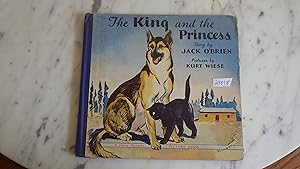
THE KING & PRINCESS, by Jack O'Brien, Illustrated BEAUTIFULLY by Kurt Wiese. 1ST EDITION 1940, STORY PARADE PICTURE BOOK, KING THE DOG Lay Stretched in warm sun on the East Side of Cabin. AT TIMES HE MOANED & HIS LEGS JERKED. AS HE DREAMED OF RABBITS RACING THRU TALL GRASS.
Published by GROSSET & DUNLAP STORY PARADE PICTURE BOOK, 1940
Seller: Bluff Park Rare Books, LONG BEACH, CA, U.S.A.
Association Member: IOBA
Seller rating 4 out of 5 stars

First Edition
Hardcover. Condition: Good. No Jacket. 1st Edition. HARDBACK NODUSTJACKET. 1940 ON TITLE PG, 1ST EDITION, 1ST PRINTING, VG- CONDITION, AS-IS, PICTORIAL COLOR CVR OF DOG & CAT HAS THIN EDGE STAINS WITH BLUE CLOTH SPINE & TINY CHIPS EXTREMITIES CVR, 28 pages long. The book measures 9 1/4 inches by 10 inches and weights 9 ounces before postal packaging. It has a MENDED rips and 2 pages - the second to last back BLANK paper has a missing section. All pages ,28 pages long. The book measures 9 1/4 inches by 10 inches and weights 9 ounces before postal packaging. Binding is in good + condition. Front and back covers show wear at the corners. There are no marks within.PRINCESS, THE BLACK CAT, EYED HIM From The Corner, Then Hobbled Over , Squatted Down & Then Playfully Whacked the King on the Nose With Her Wooden Leg. He Awoke Violently , Sat Up, seeing who Had Annoyed Him, Yawned & Stretched Out Again, Princess, the Cat, Curled Up Between Dog's Paws. Up in the Big Timber country of Northwest, Dad Wilson & His Son, Bob Built & Maintained a Hunting Lodge. BOTH OF THEM WERE 1ST CLASS WOODSMEN. Their Cabin was Located in What is Perhaps the finest hunting & fishing Country in Whole U.S. & MEN FROM ALL OVER THE COUNTRY USED TO GO UP THERE FOR THEIR VACATIONS. 1 Rai.
-

Vol. I, n°1 à vol. II, n° 11 & 12. Réimpression de la tête de série, 10 fasc, deux double.
Published by [Print Mint, Berkeley], 1973
Seller: Librairie de l'Avenue - Henri Veyrier, Saint-Ouen, FR, France
Seller rating 5 out of 5 stars
10 fascicules, non coupés. : Les 12 premiers numéros de Yellow Dog réimprimés en 1973 pour le cinquième anniversaire et vendus ensemble enveloppe d'origine défectueuse avec surcharges. Le premier numéro sort en mai 1968 : 8 pages. Les numéros 2 à 8 en ont 16, les 9 et 10 en ont 32 et 44.
-
Robert Crumb Underground Comix Archive Yellow Dog , Vol. 1 Archive, 1968
Publication Date: 1968
Seller: Max Rambod Inc, Woodland Hills, CA, U.S.A.
Association Member: ABAA ILAB PADA
Seller rating 5 out of 5 stars
[Counterculture Comix] [Robert Crumb] The Yellow Dog, the landmark underground comic newspaper that helped launch the comix movement of the late 1960s. Published in Berkeley, California by The Print Mint, May to July 1968. Four issues (Vol. 1, No. 1, 2, 3, 4, 5), 8 to 16 pages each, measuring 17" x 11". These early issues feature prominent contributions by Robert Crumb, Joel Beck, S. Clay Wilson, Rick Griffin, Gilbert Shelton, Victor Moscoso, and John Thompson. A foundational run of one of the most influential counterculture comic papers of the era, notable for its raw satire, sexual frankness, and political subversion. [1] Crumb, R. et al. Yellow Dog, Vol. 1, No. 1. Berkeley: The Print Mint, May 1968. The debut issue of Yellow Dog opens with Crumb's drawing of the namesake character and features a full-page comic titled "Mr. Natural's School of Wisdom." Crumb's comic skewers capitalist values, with Mr. Natural instructing: "What this country needs is a good five-cent hamburger." Other contributors include John Thompson and Joel Beck, offering grotesque and psychedelic visuals alongside stories of political cynicism. [2] Crumb, R. et al. Yellow Dog, Vol. 1, No. 2. Berkeley: The Print Mint, June 1968. Featuring an iconic Crumb cover of a beast devouring a cartoon man, the second issue includes work by Moscoso, Griffin, and Crumb. Crumb's strips reflect on alienation and absurdity, including his famed anthropomorphic creatures entangled in philosophical despair. A faux ad for "Popsicles" by Crumb mocks consumerism and sexploitation with his signature irreverence. [3] Crumb, R. et al. Yellow Dog, Vol. 1, No. 3. Berkeley: The Print Mint, June 1968. Cover parodies the Iwo Jima flag-raising with underground cartoonists raising a flag that reads "We Quit." Satirical strips criticize war, conformity, and generational divides. "The Great Generation Gap" by Andy Martin and "The Universal Increadable Generation Gap Story" by Joel Beck parody intergenerational political tensions, while Crumb's characters express neuroses through surrealist slapstick. [4] Crumb, R. et al. Yellow Dog, Vol. 1, No. 4. Berkeley: The Print Mint, July 1968. Cover by Crumb features Jesus wired to a control panel, a scathing image targeting organized religion and technocratic power. Interior pages include Crumb's "Snappy Bits and Krazy Kraks," in which talking animals debate sexual repression, drug use, and metaphysical confusion. John Thompson and S. Clay Wilson contribute densely packed psychedelic panels with a blend of grotesquerie and manic humor. [5] Crumb, R. et al. Yellow Dog, Vol. 1, No. 5. Berkeley: The Print Mint, July 1968. Features Crumb's "Little Girl" strip. Also includes his one-panel absurdist collage "Boxes and Boxes and Boxes," and the chaotic jam strip "Crumbs," where suburban surrealism meets satirical nihilism. Other contributions include Jim Osborne's hyper-detailed "Okay Mr. K," a densely rendered LSD freak-out sequence, and anti-authoritarian satire from S. Clay Wilson. An exceptionally provocative issue pushing the visual and moral boundaries of the comix form. Folded newspaper-style format. Light edge wear, some toning and minor creases at corners. Small closed tear to cover of issue #1. Overall very good condition. An essential primary source from the birth of underground comix, where countercultural satire met sexual revolution and anti-authoritarian dissent in visual form.
-
Landmark Underground Comix Archive, Yellow Dog Featuring Robert Crumb, Vol. 1. No 1,2,3,5, 6
Publication Date: 1968
Seller: Max Rambod Inc, Woodland Hills, CA, U.S.A.
Association Member: ABAA ILAB PADA
Seller rating 5 out of 5 stars
[Counterculture Comix] [Robert Crumb] Archive of Yellow Dog Underground Comic Newspaper, Vol. 1, Nos. 1, 2, 3, 5, and 6. Berkeley, CA: The Print Mint, 1968. Five issues (Vol. 1, No. 1, 2, 3, 5, 6), A substantial archive of five early issues from the first volume of Yellow Dog, one of the foundational publications of the underground comix movement. Published by the legendary Print Mint in Berkeley in 1968, Yellow Dog served as an anarchic forum for radical satire, drug-fueled surrealism, and sexual and political taboo-busting art. It was the first underground comix tabloid to combine the sensibilities of psychedelic poster art, post-Beat existentialism, and antiwar protest with the iconoclastic energy of newspaper comics. This lot includes contributions from key figures in the movement such as Robert Crumb, S. Clay Wilson, Joel Beck, Victor Moscoso, John Thompson, and Gilbert Shelton-many of whom would later contribute to Zap Comix and other landmarks of the genre. measuring 17" x 11" and 8 to 16 pages each. This archive includes: [1] Crumb, R. et al. Yellow Dog, Vol. 1, No. 1 (May 1968): The debut issue introduces the title's namesake mutt, drawn by Crumb, and includes his full-page satire "Mr. Natural's School of Wisdom." A historic piece of early comix featuring crude visual gags, anti-establishment mockery, and spiritual pastiche. Other contributions by John Thompson and Joel Beck feature dense, scratchy linework with themes of repression and absurdity. [2] Crumb, R. et al. Yellow Dog, Vol. 1, No. 2 (June 1968): Notable for Crumb's "Hey Kids, Eat Popsicles!" ad parody, which grotesquely mocks consumer culture and postwar suburban innocence. Also includes gags involving sexuality and violence, and early expressions of the era's "let it all hang out" visual aesthetic. Features a Maoist quotation panel, echoing the period's New Left fascination with global revolution. [3] Crumb, R. et al. Yellow Dog, Vol. 1, No. 3 (June 1968): Cover spoofing the Iwo Jima flag-raising with a satirical underground cartoonist flag. Highlights include Andy Martin's "The Great Generation Gap" and S. Clay Wilson's brutally raw cartoons of sexual and racial confrontation, including a Black child urging an elder hippie to assault a cop. Dark, chaotic, and explosively political. [4] Crumb, R. et al. Yellow Dog, Vol. 1, No. 5 (July 1968): Features Crumb's "Crumbs" strips and several surrealist tableaus. Includes a brutal parody of Nixon as a hairy grotesque, an elephant-riding caricature of conservative politics by Martin, and antiwar satire from Ron Cobb. Covers increasingly reflect anger at American imperialism and moral hypocrisy. [5] Crumb, R. et al. Yellow Dog, Vol. 1, No. 6 (July 1968): Front and back covers include contributions from Crumb and Martin; Crumb's strip "Crumbs" continues inside with scatological absurdities and hippie critique. Gilbert Shelton contributes theater-style spoof strips, while S. Clay Wilson's "The Hatchet Maniac" shows Benjamin Franklin as a serial killer, a vision of colonial madness echoing the Vietnam-era cultural breakdown. Light even toning throughout; a few issues with minor edgewear or corner folds, typical of newsprint of the era. Pages supple and complete. Very good overall. A rare early grouping of Yellow Dog from the moment when underground comix exploded into the national counterculture consciousness. These issues crystallize the aesthetic and political insurgency of 1968, combining drug-era grotesquerie, antiwar fury, racial confrontation, and sexual provocation in one of the movement's most historically significant and visually unrestrained formats.