Synopsis
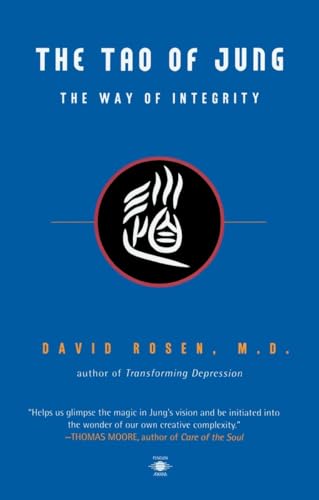
This startling new interpretation of Jung's life and psychology is based on the insight that he was essentially a Taoist. Drawing on Jung's own letters, aphorisms, and other writings, David Rosen examines six crises in Jung's personal development, from childhood revelations and youthful rebellions to his break with Freud and his later work with the I Ching. Rosen discovers many parallels between Jung's natural world of the psyche and that of Taoist philosophy: the integration of opposites; the Great Mother as the origin of all things; the I Ching and synchronicity; the Way of Integrity and individuation; and the need to release the ego and surrender to the Self or Tao.As an increasing number of people turn to Eastern philosophy as a means of handling the many stresses of an increasingly confounding world, this illuminating introduction to both Taoism and Jungian thought provides a valuable spiritual resource for contemporary followers of the Path.
"synopsis" may belong to another edition of this title.
About the Author
David H. Rosen, M.D., holds the only American full professorship in Jungian psychology, at Texas A&M University.
From Publishers Weekly
Jungian concepts such as archetypes and the collective unconscious have become part of our culture's worldview, just as have some principles of Asian philosophies. So the insights in this book combining the two can be expected to intrigue many of today's readers. Indeed, psychoanalyst Rosen's (Transforming Depression) brief analysis of Jung's life in terms of Taoist principles is more an inspirational work than a biography. Jung became fascinated by Chinese religion and philosophy later in life, he explains. Rosen attempts to illuminate Jung's psychic development in terms of the Chinese concept of crisis, expressed by the pictographs for danger and opportunity. Jung's crisis, in Rosen's view, consisted of his break with Freud, with the pre-Freud and Freudian years represented by danger, the post-break years by opportunity. The text here consists mainly of biographical anecdotes juxtaposed with quotes from the Taoist masters Chuang-tzu and Lao-tzu and selections from the I Ching, some of which are more relevant than others. Rosen's approach works best for Jung's years at Bollinger, where the middle-aged and then the older Jung expressed his deepest understandings in stone carvings as well as in words. At Bollinger, Jung, already steeped in ancient lore, lived the life of a Taoist sage as he "integrated yin and yang forces and became a modest person in harmony with nature."
Copyright 1996 Reed Business Information, Inc.
"About this title" may belong to another edition of this title.
Other Popular Editions of the Same Title

Search results for The Tao of Jung: The Way of Integrity (Compass)

Stock Image
The Tao of Jung: The Way of Integrity (Compass)
Seller: ThriftBooks-Atlanta, AUSTELL, GA, U.S.A.
Seller rating 5 out of 5 stars

Paperback. Condition: Fair. No Jacket. Readable copy. Pages may have considerable notes/highlighting. ~ ThriftBooks: Read More, Spend Less. Seller Inventory # G0140195025I5N00
Stock Image
The Tao of Jung: The Way of Integrity (Compass)
Seller: ThriftBooks-Atlanta, AUSTELL, GA, U.S.A.
Seller rating 5 out of 5 stars
Paperback. Condition: Good. No Jacket. Pages can have notes/highlighting. Spine may show signs of wear. ~ ThriftBooks: Read More, Spend Less. Seller Inventory # G0140195025I3N00
Stock Image
The Tao of Jung: The Way of Integrity (Compass)
Seller: HPB-Diamond, Dallas, TX, U.S.A.
Seller rating 5 out of 5 stars
Paperback. Condition: Very Good. Connecting readers with great books since 1972! Used books may not include companion materials, and may have some shelf wear or limited writing. We ship orders daily and Customer Service is our top priority! Seller Inventory # S_447366524
Stock Image
The Tao of Jung: The Way of Integrity (Compass)
Seller: HPB-Ruby, Dallas, TX, U.S.A.
Seller rating 5 out of 5 stars
Paperback. Condition: Very Good. Connecting readers with great books since 1972! Used books may not include companion materials, and may have some shelf wear or limited writing. We ship orders daily and Customer Service is our top priority! Seller Inventory # S_450574564
Seller Image
The Tao of Jung: The Way of Integrity (Arkana S.)
Seller: WeBuyBooks, Rossendale, LANCS, United Kingdom
Seller rating 5 out of 5 stars
Condition: Good. Most items will be dispatched the same or the next working day. A copy that has been read but remains in clean condition. All of the pages are intact and the cover is intact and the spine may show signs of wear. The book may have minor markings which are not specifically mentioned. Seller Inventory # rev2927139297
Buy Used
US$ 4.40
Shipping:
US$ 6.54
From United Kingdom to U.S.A.
Quantity: 1 available
Stock Image
The Tao of Jung: The Way of Integrity (Arkana S.)
Seller: WorldofBooks, Goring-By-Sea, WS, United Kingdom
Seller rating 5 out of 5 stars
Paperback. Condition: Fair. A readable copy of the book which may include some defects such as highlighting and notes. Cover and pages may be creased and show discolouration. Seller Inventory # GOR002388415
Buy Used
US$ 3.84
Shipping:
US$ 7.47
From United Kingdom to U.S.A.
Quantity: 1 available
Stock Image
The Tao of Jung: The Way of Integrity (Arkana S.)
Seller: WorldofBooks, Goring-By-Sea, WS, United Kingdom
Seller rating 5 out of 5 stars
Paperback. Condition: Very Good. The book has been read, but is in excellent condition. Pages are intact and not marred by notes or highlighting. The spine remains undamaged. Seller Inventory # GOR003819701
Buy Used
US$ 3.84
Shipping:
US$ 7.47
From United Kingdom to U.S.A.
Quantity: 1 available
Stock Image
The Tao of Jung : The Way of Integrity
Published by
Penguin Publishing Group, 1997
ISBN 10: 0140195025
ISBN 13: 9780140195026
Used
Softcover
Seller: Better World Books Ltd, Dunfermline, United Kingdom
Seller rating 5 out of 5 stars
Condition: Good. Ships from the UK. Former library book; may include library markings. Used book that is in clean, average condition without any missing pages. Seller Inventory # 37619822-75
Buy Used
US$ 6.63
Shipping:
US$ 10.68
From United Kingdom to U.S.A.
Quantity: 1 available
Stock Image
The Tao of Jung: The Way of Integrity (Compass)
Seller: Toscana Books, AUSTIN, TX, U.S.A.
Seller rating 5 out of 5 stars
Paperback. Condition: new. Excellent Condition.Excels in customer satisfaction, prompt replies, and quality checks. Seller Inventory # Scanned0140195025
Stock Image
The Tao of Jung: The Way of Integrity (Compass)
Seller: BennettBooksLtd, San Diego, NV, U.S.A.
Seller rating 5 out of 5 stars
paperback. Condition: New. In shrink wrap. Looks like an interesting title! Seller Inventory # Q-0140195025