

Order Total (1 Item Items):
Shipping Destination:

Erasmus Desiderius Thomas (65 results)
Skip to main search results
Search filters
Product Type
- All Product Types
- Books (65)
- Magazines & Periodicals (No further results match this refinement)
- Comics (No further results match this refinement)
- Sheet Music (No further results match this refinement)
- Art, Prints & Posters (No further results match this refinement)
- Photographs (No further results match this refinement)
- Maps (No further results match this refinement)
- Manuscripts & Paper Collectibles (No further results match this refinement)
Condition Learn more
- New (49)
- As New, Fine or Near Fine (3)
- Very Good or Good (6)
- Fair or Poor (No further results match this refinement)
- As Described (7)
Binding
Collectible Attributes
- First Edition (4)
- Signed (No further results match this refinement)
- Dust Jacket (No further results match this refinement)
- Seller-Supplied Images (42)
- Not Print on Demand (25)
Language (3)
Free Shipping
Seller Location
Seller Rating
-

Condition: very_good. Book is in very good condition and may include minimal underlining highlighting. The book can also include "From the library of" labels. May not contain miscellaneous items toys, dvds, etc. . We offer 100% money back guarantee and 24 7 customer service.
-

Condition: very_good. Fast Free Shipping â" Very Good condition book with a firm cover and clean pages. Shows normal use and some light wear or limited notes markings. A solid, nice copy to enjoy.
-

Condition: good. Book shows general signs of use and handling. May have light wear on the cover or edges and minimal writing or highlighting. Binding remains tight, and pages are clean and readable.
-

German Humanism and Reformation:
Language: English
Published by Continuum, New York, New York, 1982
ISBN 10: 0826402615 ISBN 13: 9780826402615
Seller: Andover Books and Antiquities, Andover, MA, U.S.A.
Seller rating 3 out of 5 stars

Softcover. Softcover. LCC: 827278.
-
![Stock image for The praise of folie = Moriae encomium 1557 [Hardcover] for sale by Majestic Books](https://pictures.abebooks.com/isbn/9789394110823-us-300.jpg)
The praise of folie = Moriae encomium 1557 [Hardcover]
Published by Facsimile Publisher
ISBN 10: 9394110828 ISBN 13: 9789394110823
Condition: New. pp. 163.
-
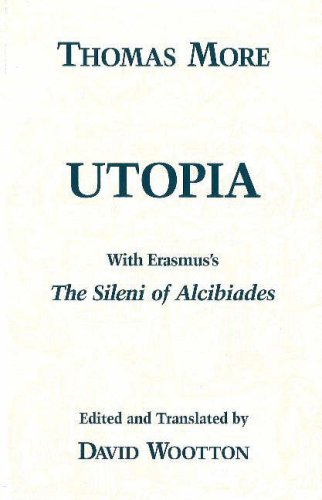
Utopia : With Erasmus's the Sileni of Alcibiades
Language: English
Published by Hackett Publishing Company, Inc., 1999
ISBN 10: 0872203778 ISBN 13: 9780872203778
Condition: New.
-
Utopia : With Erasmus's the Sileni of Alcibiades
Language: English
Published by Hackett Publishing Company, Inc., 1999
ISBN 10: 0872203778 ISBN 13: 9780872203778
Condition: As New. Unread book in perfect condition.
-

Paperback. Condition: new. New Copy. Customer Service Guaranteed.
-
The praise of folie = Moriae encomium 1557 [Hardcover]
Published by Facsimile Publisher
ISBN 10: 9394110828 ISBN 13: 9789394110823
Condition: New. pp. 163.
-

De Contemptu Mundi (1488?) A Facsimile Reproduction of the Berthelet Edition of 1533
Published by Scholars' Facsimiles & reprints, Gainesville Florida, 1967
Seller: Alexander's Books, Royal Leamington Spa, United Kingdom
Seller rating 5 out of 5 stars

First Edition
US$ 27.71
US$ 13.45 shipping
Ships from United Kingdom to U.S.A.Quantity: 1 available
Add to basketHardback. Condition: Very Good. No Jacket. 1st Edition. First edition first printing thus octavo hardback xliv + 178 pages Very Good condition No inscriptions.
-
Utopia : With Erasmus's the Sileni of Alcibiades
Language: English
Published by Hackett Publishing Company, Inc., 1999
ISBN 10: 0872203778 ISBN 13: 9780872203778
Seller: GreatBookPricesUK, Woodford Green, United Kingdom
Seller rating 5 out of 5 stars
US$ 34.92
US$ 20.17 shipping
Ships from United Kingdom to U.S.A.Quantity: 4 available
Add to basketCondition: New.
-

Culture and Belief in Europe, 1450-1600: An Anthology of Sources
Language: English
Published by Basil Blackwell, in association with the Open University, Oxford, England / Cambridge, Massachusetts, 1990
ISBN 10: 0631169911 ISBN 13: 9780631169918
Seller: Andover Books and Antiquities, Andover, MA, U.S.A.
Seller rating 4 out of 5 stars

Softcover. Softcover. LCC: 8915089.
-
Utopia : With Erasmus's the Sileni of Alcibiades
Language: English
Published by Hackett Publishing Company, Inc., 1999
ISBN 10: 0872203778 ISBN 13: 9780872203778
Seller: GreatBookPricesUK, Woodford Green, United Kingdom
Seller rating 5 out of 5 stars
US$ 39.62
US$ 20.17 shipping
Ships from United Kingdom to U.S.A.Quantity: 4 available
Add to basketCondition: As New. Unread book in perfect condition.
-

Pleasant Dialogues and Dramma's (German Edition)
Seller: Ria Christie Collections, Uxbridge, United Kingdom
Seller rating 5 out of 5 stars
US$ 32.58
US$ 16.11 shipping
Ships from United Kingdom to U.S.A.Quantity: Over 20 available
Add to basketCondition: New. In.
-

Gebunden. Condition: New.
-

Pleasant Dialogues and Dramma's (German Edition)
Seller: Ria Christie Collections, Uxbridge, United Kingdom
Seller rating 5 out of 5 stars
US$ 43.74
US$ 16.11 shipping
Ships from United Kingdom to U.S.A.Quantity: Over 20 available
Add to basketCondition: New. In.
-
THE PRAISE OF FOLIE.
Published by The Early English Text Society/ The Oxford University Press,, London & New York,, 1970
Seller: Burwood Books, Wickham Market, United Kingdom
Association Member: PBFA
Seller rating 5 out of 5 stars
First Edition
US$ 41.56
US$ 30.26 shipping
Ships from United Kingdom to U.S.A.Quantity: 1 available
Add to basketHardcover. Condition: Very Good. First Edition. Hardback. 8vo. pp li, 225. Original publisherÕs brown cloth, lettered gilt on spine and on front cover. Early English Text Society.no,257 About fine in glassine wrapper. Excellent condition.
-

Buch. Condition: Neu. Neuware.
-
Morias Enkomion. Stultitiae laudatio. Editio castigatissima. Herausgegeben von Anne-Gabriel Meunier de Querlon/De optimo reipublicae statu, deque nova insula Utopia, libri duo: autore Thoma Moro, Angliae Cancellario. Opus fincere expressum ex antiquioribus & melioris notae editionibus collatis: Cura & Studio A.G.M.Q
Published by Apud Barbou, London and Paris, 1777
Seller: Sanctuary Books, A.B.A.A., New York, NY, U.S.A.
Seller rating 5 out of 5 stars
Hardcover. Condition: Near Fine. 16 mo. Contemporary mottled calf; a.e.g. Engraved frontis. Two volumes in one. pp. 169 and 204. A lovely copy in an exceptionally well preserved binding. Housed in a handsome burgundy clamshell box. Formerly in the Thomas More Collection of the College of New Rochelle Library.
-
MORE, Sir Thomas. De optimo reip. statu deque nova insula Utopia . Epigrammata [with:] DESIDERIUS ERASMUS. Epigrammata.
Published by Basel, Johann Froben March 1518, Basel, 1518
Seller: MEDA RIQUIER RARE BOOKS LTD, London, United Kingdom
Seller rating 4 out of 5 stars
US$ 59,757.58
US$ 5.51 shipping
Ships from United Kingdom to U.S.A.Quantity: 1 available
Add to basketCondition: Buono (Good). Quarto (213 x 155 mm.), three parts in one volume. Roman, Greek and 'Utopian' types. Woodcut historiated border to title of each part and to preface, the first by Ambrosius Holbein, the others by Hans Holbein, full- page woodcut of Utopia and half-page woodcut of Clement, Hythlodaye, More and Gillies, by Ambrosius Holbein, a different woodcut printer's device at end of each part, woodcut historiated initials by A. and H. Holbein. A very fine copy in nineteenth century red crushed morocco by Francis Bedford, spine gilt in compartments with gilt title, gilt edges; from the library of Cardiff Castle (ex libris) and Livio Ambrogio (ex libris).The important third edition of Utopia with the author's revisions, including the first edition of More's Epigrammata, not present in the first 1516 Louvain publication by Peter Gillies and the following Parisian reprint by Gourmont in 1517. This early edition of More's Epigrammata includes verses that were removed from following printings, particularly those pertaining to Germain de Brie (c. 1490-1538). This is the first edition printed by Johann Froben, which was followed by an identical issue in November/December of the same year. Froben's editions have been described as ?'the most complete and most correct published in [More's] lifetime'' (Fairfax Murray, p. 494). This revised impression was arranged by Erasmus and it also contains his own Epigrammata, originally printed in Paris in 1506 in conjunction with the fourth edition of his Adagia.The title page is contained within a woodcut border showing Lucretia and Sextus Tarquinius, with additional separate title pages for each of the three works, as well as printers' devices. These works are often found separate, however it is rare to find them together as published. Utopia's architectural border is populated by Cherubs and signed by Hans Holbein. More's Epigrammata is set within a border also signed by Hans Holbein, the lower part occupied by scenes of the life of Gaius Mucius Cordus. The border for Erasmus' Epigrammata depicts St. John the Baptist and Salome. Utopia opens with a full-page woodcut map of the island, executed by Ambrose Holbein, depicting Raphael Hythlodaeus on the bottom left corner pointing towards it while speaking to More and Gillis. The opposite leaf contains the Utopian alphabet and several verses. An additional woodcut vignette is included at the beginning of the first section, showing Clement, More, Hythlodaeus, and Gillies.More's Utopia is presented as a imaginary dialogue between the author and the fictitious traveller Raphael Hythlodaeus, allegedly part of Amerigo Vespucci's crew. The first part is reserved for Hythlodaeus' critiques of European societies, particularly their greed, corruption, and inequality, blaming private property, harsh punishments, and class oppression. Conversely, the second part describes the island of Utopia that houses a society organized around communal property and rational governance. Utopians work only six hours a day, share resources, are not bound by materialism and practice religious tolerance. Their simple laws and elected leadership ensure fairness, while war and overpopulation are avoided, and slavery serves as punishment for criminals and prisoners of war. While on the surface Utopia appears idyllic, the work is infused with irony, leaving the reader to question whether such a society is attainable or a critique of human nature. "Utopia is not, as often imagined, More's ideal state: it exemplifies only the virtues of wisdom, fortitude, temperance and justice. It reflects the moral poverty of the states which More knew [?] But an ideal state is what it has come to mean [?] Utopia has become a fairy-tale.More, who was knighted in 1521, was later Speaker of the House of Commons, High Steward of Cambridge University, and Lord Chancellor. In 1535 he was executed for high treason. He is a saint to the Catholic, and a predecessor of Marx to the Communist. His manifesto is and will be. Book.
-
![Seller image for In Praise of Folie: Moriae Encomium. A book made in latine by the great clerke Erasmus Roterodame. Enlightened by Sir Thomas Chaloner, knight. [In Praise of Folly]. for sale by Raptis Rare Books](https://pictures.abebooks.com/inventory/md/md31405716629.jpg)
In Praise of Folie: Moriae Encomium. A book made in latine by the great clerke Erasmus Roterodame. Enlightened by Sir Thomas Chaloner, knight. [In Praise of Folly].
Published by Thomas Berthelet, London, 1549
First Edition
First edition in English of one of the most notable and popular works of the Renaissance which played an important role in the beginnings of the Protestant Reformation and swiftly brought its author international fame. First printing with 'latine' and the printer's initials 'TB.' to the title page. Octavo, bound in full crushed levant morocco by Sangorski and Sutcliffe, gilt titles and elaborate gilt tooling to the spine in six compartments within raised gilt bands, triple gilt ruling to the front and rear panels, gilt turn-ins and inner dentelles, all edges gilt, wide woodcut border to the title page signed TB., woodcut printer's device to the final page. In near fine condition. Early ownership name to the title page and light marginalia. Small leather bookplate of Francis Kettaneh affixed to the verso of the front free endpaper. Exceptionally rare with only two other examples traced at auction in the last 100 years. This famous satire was first conceived on the road from Italy to England, composed in the house of Erasmus's friend (and the dedicatee) Thomas More, and then first printed under the Latin title Moriae encomium in Paris in 1511. Begun as a paradoxical joke between the two men, who had been translating the ancient humorist Lucian together, The Praise of Folly is a remarkable work, by turns sharp and gentleâ"but always playfulâ"in its learned treatment of the follies of the world and vision of a humanist life. âThe Praise of Folly was written when Erasmus was staying in the house of Thomas More in the winter of 1509â"10. Its title is a delicate and complimentary play on the name of his host: its subject matter is a brilliant, biting satire on the folly to be found in all walks of life. The book stemmed from the decision which Erasmus had taken when he left Rome to come to England, that no form of preferment could be obtained at the sacrifice of his freedom to read, think and write what he liked ⦠The work was first secretly printed in Paris, and, as in other cases, its immediate success safeguarded him from the consequences of his audacity ⦠Whenever tyranny or absolute power threatened, The Praise of Folly was re-read and reprinted. It is a sign of what was in the air that Milton found it in every hand at Cambridge in 1628. His inherent scepticism has led people to call Erasmus the father of 18th century rationalism, but his rationalist attitude is that of perfect common sense, to which tyranny and fanaticism were alike abhorrentâ (PMM). Upon its initial publication in Paris in 1511, Moriae Encomium was hugely popular, to Erasmus' astonishment and sometimes his dismay. Even Erasmus' close friends had been initially skeptical and warned him of possible dangers to himself from thus attacking the established religion. Even Pope Leo X and Cardinal Cisneros are said to have found it amusing. Before Erasmus' death it had already passed into numerous editions and had been translated into Czech, French, and German. An English edition soon followed translated by English poet and diplomat Sir Thomas Chaloner who was renowned among Elizabethans for his Latin verses and pastoral poems, three volumes of which were printed during his lifetime by Thomas Berthelet, the kingâs printer who had published three translations of works by Erasmus in the 1520s.
-
De optimo Reipublicae statu, deque nova insula Utopia, libri duo. [and], Moriae Enkomion: Stultitiae laudatio
Published by Barbou, London and Paris, 1777
Seller: Hordern House Rare Books, Potts Point, NSW, Australia
Association Member: ANZAAB ILAB
Seller rating 4 out of 5 stars
Duodecimo, with a frontispiece to the first work; contemporary dark green morocco, sides bordered and spine panelled in gilt, all edges gilt. The beautifully-printed Barbou edition of Utopia bound, as often, with the matching edition of Erasmus' Praise of Folly. The friendship between Sir Thomas More (1478-1535) and Erasmus (1469-1536) was one of the great scholarly alliances. More's Utopia (1516) was a revolutionary work of philosophy which inaugurated the entire tradition of the modern imaginary voyage, but it was also a book to which a small coterie of his greatest friends contributed, particularly including Erasmus. More also played an important part, in turn, in the writing of Erasmus' Moriae Enkomion - the 'praise of folly' but also a pun on the 'praise of More' - which is said to have been written whilst they were staying at More's London house. It was first published in 1511. This Barbou edition of both works is particularly attractive. The Barbou family was in business from the early sixteenth-century through to the beginning of the twentieth, and was known in the later 1700s for their superb editions of the Latin and Greek classics (not unlike a French Baskerville). . Joints chafed and head of spine slightly chipped.
-

Condition: New. Print on Demand pp. 444.
-
![Seller image for Incomparabilis doctrine, trium item linguarum peritissimi viri D. Erasmi Rotherodami, in sanctissimorum martirum Rofensis Episcopi, ac Thomae Mori, iam pridem in anglia pro Christiana veritate constater defensa, innocenter passorum, Heroicum Carmen tam elegans quam lectu dignissimum 1536 [Leather Bound] for sale by True World of Books](https://pictures.abebooks.com/inventory/md/md31619122329.jpg)
LeatherBound. Condition: NEW. LeatherBound edition. Condition: New. Reprinted from 1536 edition. Leather Binding on Spine and Corners with Golden leaf printing on spine. Bound in genuine leather with Satin ribbon page markers and Spine with raised gilt bands. A perfect gift for your loved ones. NO changes have been made to the original text. This is NOT a retyped or an ocr'd reprint. Illustrations, Index, if any, are included in black and white. Each page is checked manually before printing. As this print on demand book is reprinted from a very old book, there could be some missing or flawed pages, but we always try to make the book as complete as possible. Fold-outs, if any, are not part of the book. If the original book was published in multiple volumes then this reprint is of only one volume, not the whole set. Sewing binding for longer life, where the book block is actually sewn (smythe sewn/section sewn) with thread before binding which results in a more durable type of binding. Pages: 22.
-
![Seller image for The praise of folie = Moriae encomium 1557 [LeatherBound] for sale by True World of Books](https://pictures.abebooks.com/inventory/md/md31533038380.jpg)
The praise of folie = Moriae encomium 1557 [LeatherBound]
Publication Date: 2025
LeatherBound. Condition: New. BOOKS ARE EXEMPT FROM IMPORT DUTIES AND TARIFFS; NO EXTRA CHARGES APPLY. LeatherBound edition. Condition: New. Reprinted from 1557 edition. Leather Binding on Spine and Corners with Golden leaf printing on spine. NO changes have been made to the original text. This is NOT a retyped or an ocr'd reprint. Illustrations, Index, if any, are included in black and white. Each page is checked manually before printing. Pages: 170 As this print on demand book is reprinted from a very old book, there could be some missing or flawed pages, but we always try to make the book as complete as possible. Fold-outs, if any, are not part of the book. If the original book was published in multiple volumes then this reprint is of only one volume, not the whole set. Sewing binding for longer life, where the book block is actually sewn (smythe sewn/section sewn) with thread before binding which results in a more durable type of binding. Pages: 170 Language: English.
-
MORIAS ENCOMION: STULTITIAE LAUDATIO. Desiderii Erasmi Declamatio: Editio catigatissima. Denuo Recognovit A.G.M.Q. -Assieme a: DE OPTIMO REIPUBLICAE STATU, deque nova insula UTOPIA, Libri Duo: Autore Thoma Moro, Angliae Cancellario. Opus sincere expressum ex antiquioribus & melioris notae Editionibus collatis: cura & studio A.G.M.Q.
Published by Barbou, Londini & venit Pairiis, 1777
Seller: Libreria BACBUC - Studio bibliografico, Roma, RM, Italy
Seller rating 5 out of 5 stars
Due opere riunite in un volume in 12mo (9x16 cm) di XVI-169 con antiporta incisa da Gravelot, "La pazzia regina del mondo"; e XXVII-204 pagine per l'Utopia. In lingua latina. La sigla AGMQ del curatore sta per Anne-Gabriel Meusnier de Querlon (1702-1780). Legatura coeva in tutta pelle marmorizzata (con difetti), dorso liscio ornato e dorato, cornice dorata ai piatti; tagli dorati: la legatura ha spellature agli angoli e mancano le due cuffie. Ottimo l'interno di questa pregiata edizione parigina, stampata con l'indicazione London per evitare problemi con la censura.
-
Epistolarum D. Erasmi Roterodami libri xxxi. Et P. Melancthonis libri iv Quibus adjiciuntur Th. Mori & Lud. Vivis epistolae. Vnà cum indicibus locupletissimis
Published by M. Flesher & R. Young . Sumptibus Adriani Vlacq, London, 1642
Seller: Rulon-Miller Books (ABAA / ILAB), St. Paul, MN, U.S.A.
Association Member: ABAA ILAB RMABA
Seller rating 5 out of 5 stars
First Edition
First Edition. First edition of this collection of the letters of Erasmus, the most complete that had been compiled to date, and the first printed in England; folio, 2 volumes in 1, as issued; pp. [36], 2146 columns, pp. [37]; pp. [12], 968 columns, 116 columns, pp. [10]; both titles printed in red and black; text largely in double column; engraved frontispiece portrait of Erasmus after William Marshall, woodcut initials; full contemporary calf, black morocco label on spine; joints cracked, cords holding; frontispiece with light spotting in the margins; a good copy, and while the joints are cracked, the sewing structure is quite sound. An imperfect copy, lacking 3K2 and 3K5 in the first part, and B1 and B6 in the second part - almost certainly binder's errors. Engraved armorial bookplate of Prince Augustus Frederick, Duke of Sussex (1773-1843). "Epistolarum Philippi Melancthonis" (Wing M1635A) has separate dated title page, pagination and register, and the "Auctarium epistolarum ex Thoma Moro" (caption title) has separate pagination and register. Includes a Life of Erasmus and selected letters of Erasmus' correspondents, the reformer Philip Melancthon, Thomas More, and the Spanish humanist, Juan Luis Vives. There were four editions of Erasmus' letters published in Basel between 1521 and 1541 (each larger than the previous), and no other collected edition until this London edition of 1642. This edition, though not always accurate by modern standards, represents a remarkable achievement in English scholarship. The editors made an exhaustive search through continental libraries for original, unpublished letters as well as those which had already found their way into print. A number of the letters here have since perished, and this collection preserved the most authoritative text of Erasmus' letters until the definitive edition of the Epistolae appeared in Oxford in 12 volumes, 1908-58. Wing E3201 and M1635A. ESTC R218212.
-
Morias Encomion [graece] / Moriae Encomomium / Stultitiae laudatio . Desiderii Erasmi Declamatio: Editio catigatissima. Denuo Recognovit A.G.M.Q. [i.e. A.-G. Meusnier de Querlon] Angebunden: De Optimo Reipublicae Statu Deque Nova Insula Utopia, Libri Duo: Autore Thoma Moro, Angliae Cancellario. Opus fincere expressum ex antiquioribus & meioris notae Editionibus collatis: cura & studio A.G.M.Q.
Published by Londini & venit Pairiis, apud Barbou via Mathurinensium, 1777
Seller: Antiquariat Michael Solder, Münster, NRW, Germany
Seller rating 5 out of 5 stars
Condition: Gut. Zwei Bände in einem Band. [gestochenes allegorisches Frontispiz, Titelblatt mit gestochener Vignette] xvj, 169 S.; [1 Bl.] xxvij, 204 S. Ebert I, 6880; Brunet II, 142; Graesse II, 495; Van der Haeghen I. 127; Lewine 170; Bibl. Erasmiana 111; "Nouvelle éditionn, donée par A.-G. Meusnier de Querlon. Le texte a été divisé en paragraphes numérotés. Les notes, très brèves, ont été tirées de l'édition de Patin, 1678." Sehr dekroatives und liebevoll gestaltetes Duodez-Bändchen, in der gelobten Doppel-Edition Querlons. Aus dem Besitz des englischen gelehrten und Buchsammlers John Sparrow, mit dessen Besitzvermerk und dem ExLibris von Francis Law Letham. Das Frontispiz rückseitig minimal gebräunt, sonst außergewöhnlich schönes und dekoratives Bändchen. la Gewicht in Gramm: 550 Duodez, fein genarbter, ziegelroter, datierter (1779) Ganzmaroquineinband mit goldgeprägtem Wappensupralibros auf beiden Deckeln, dezenten goldgeprägten Verzierungen und Filetten auf Deckel Rücken Steh- und Innenkanten und Ganzgoldschnitt. (Rücken etwas aufgehellt).
-
PAP. Condition: New. New Book. Shipped from UK. THIS BOOK IS PRINTED ON DEMAND. Established seller since 2000.
-
![Seller image for The arte of rhetorique : for the use of all soche as are studious of eloquence 1562 [LeatherBound] for sale by True World of Books](https://pictures.abebooks.com/inventory/md/md31534658188.jpg)
LeatherBound. Condition: New. BOOKS ARE EXEMPT FROM IMPORT DUTIES AND TARIFFS; NO EXTRA CHARGES APPLY. LeatherBound edition. Condition: New. Reprinted from 1562 edition. Leather Binding on Spine and Corners with Golden leaf printing on spine. NO changes have been made to the original text. This is NOT a retyped or an ocr'd reprint. Illustrations, Index, if any, are included in black and white. Each page is checked manually before printing. Pages: 268 As this print on demand book is reprinted from a very old book, there could be some missing or flawed pages, but we always try to make the book as complete as possible. Fold-outs, if any, are not part of the book. If the original book was published in multiple volumes then this reprint is of only one volume, not the whole set. Sewing binding for longer life, where the book block is actually sewn (smythe sewn/section sewn) with thread before binding which results in a more durable type of binding. Pages: 268 Language: English.


![Seller image for MORE, Sir Thomas. De optimo reip. statu deque nova insula Utopia . Epigrammata [with:] DESIDERIUS ERASMUS. Epigrammata. for sale by MEDA RIQUIER RARE BOOKS LTD](https://pictures.abebooks.com/inventory/md/md32181127053.jpg)
![Seller image for De optimo Reipublicae statu, deque nova insula Utopia, libri duo. [and], Moriae Enkomion: Stultitiae laudatio for sale by Hordern House Rare Books](https://pictures.abebooks.com/inventory/md/md13245438814.jpg)

![Seller image for Morias Encomion [graece] / Moriae Encomomium / Stultitiae laudatio . Desiderii Erasmi Declamatio: Editio catigatissima. Denuo Recognovit A.G.M.Q. [i.e. A.-G. Meusnier de Querlon] Angebunden: De Optimo Reipublicae Statu Deque Nova Insula Utopia, Libri Duo: Autore Thoma Moro, Angliae Cancellario. Opus fincere expressum ex antiquioribus & meioris notae Editionibus collatis: cura & studio A.G.M.Q. for sale by Antiquariat Michael Solder](https://pictures.abebooks.com/inventory/md/md14463674972.jpg)