Order Total (1 Item Items):
Shipping Destination:

Ewen Whitaker (31 results)
Skip to main search results
Search filters
Product Type
- All Product Types
- Books (31)
- Magazines & Periodicals (No further results match this refinement)
- Comics (No further results match this refinement)
- Sheet Music (No further results match this refinement)
- Art, Prints & Posters (No further results match this refinement)
- Photographs (No further results match this refinement)
- Maps (No further results match this refinement)
- Manuscripts & Paper Collectibles (No further results match this refinement)
Condition Learn more
- New (18)
- As New, Fine or Near Fine (3)
- Very Good or Good (6)
- Fair or Poor (No further results match this refinement)
- As Described (4)
Binding
Collectible Attributes
- First Edition (4)
- Signed (No further results match this refinement)
- Dust Jacket (1)
- Seller-Supplied Images (11)
- Not Print on Demand (22)
Language (2)
Free Shipping
Seller Location
Seller Rating
-

MAPPING AND NAMING THE MOON: A HISTORY OF LUNAR CARTOGRAPHY AND NOMENCLATURE
Language: English
Published by Cambridge University Press, Cambridge, 2003
ISBN 10: 0521544149 ISBN 13: 9780521544146
Seller: Second Story Books, ABAA, Rockville, MD, U.S.A.
Seller rating 4 out of 5 stars

First Edition
Softcover. First Paperback Edition. Octavo, 242 pages. In Good condition. Gray spine with white and black text. Covers have bending to front cover, bending to corners, and staining to rear cover. Textblock has damp staining to fore edge. Shelved ND-E. 1378121. FP New Rockville Stock.
-

Mapping and Naming the Moon: A History of Lunar Cartography and Nomenclature
Language: English
Published by Cambridge University Press, 1999
ISBN 10: 0521622484 ISBN 13: 9780521622486
hardcover. Condition: Very Good. Connecting readers with great books since 1972! Used books may not include companion materials, and may have some shelf wear or limited writing. We ship orders daily and Customer Service is our top priority!
-

Mapping and Naming the Moon : A History of Lunar Cartography and Nomenclature
Language: English
Published by Cambridge University Press, 2003
ISBN 10: 0521544149 ISBN 13: 9780521544146
Condition: New.
-
Mapping and Naming the Moon: A History of Lunar Cartography and Nomenclature (Volume 0)
Language: English
Published by Cambridge University Press, 2003
ISBN 10: 0521544149 ISBN 13: 9780521544146
Condition: New.
-

Mapping and Naming the Moon : A History of Lunar Cartography and Nomenclature
Language: English
Published by Cambridge University Press, 2003
ISBN 10: 0521544149 ISBN 13: 9780521544146
Condition: As New. Unread book in perfect condition.
-
Mapping and Naming the Moon: A History of Lunar Cartography and Nomenclature
Language: English
Published by Cambridge University Press, Cambridge, 1999
ISBN 10: 0521622484 ISBN 13: 9780521622486
First Edition
Hardcover. Condition: Fine. Dust Jacket Condition: Fine. 1st Edition.
-
Mapping and Naming the Moon: A History of Lunar Cartography and Nomenclature (Volume 0)
Language: English
Published by Cambridge University Press, 2003
ISBN 10: 0521544149 ISBN 13: 9780521544146
Seller: Ria Christie Collections, Uxbridge, United Kingdom
Seller rating 5 out of 5 stars

US$ 88.84
US$ 16.12 shipping
Ships from United Kingdom to U.S.A.Quantity: Over 20 available
Add to basketCondition: New. In.
-
Mapping and Naming the Moon : A History of Lunar Cartography and Nomenclature
Language: English
Published by Cambridge University Press, 2003
ISBN 10: 0521544149 ISBN 13: 9780521544146
Seller: GreatBookPricesUK, Woodford Green, United Kingdom
Seller rating 5 out of 5 stars
US$ 88.83
US$ 20.18 shipping
Ships from United Kingdom to U.S.A.Quantity: Over 20 available
Add to basketCondition: New.
-
Mapping and Naming the Moon: A History of Lunar Cartography and Nomenclature
Language: English
Published by Cambridge University Press, 2008
ISBN 10: 0521544149 ISBN 13: 9780521544146
Seller: Kennys Bookshop and Art Galleries Ltd., Galway, GY, Ireland
Seller rating 5 out of 5 stars
US$ 103.87
US$ 12.22 shipping
Ships from Ireland to U.S.A.Quantity: Over 20 available
Add to basketCondition: New. Historical maps and rare photographs illustrate four centuries of mapping the Moon. Num Pages: 264 pages, 158 b/w illus. BIC Classification: PGS. Category: (G) General (US: Trade); (P) Professional & Vocational. Dimension: 246 x 189 x 12. Weight in Grams: 510. . 2008. Revised ed. paperback. . . . .
-

Mapping and Naming the Moon : A History of Lunar Cartography and Nomenclature
Language: English
Published by Cambridge University Press, 2003
ISBN 10: 0521544149 ISBN 13: 9780521544146
Seller: GreatBookPricesUK, Woodford Green, United Kingdom
Seller rating 5 out of 5 stars
US$ 97.48
US$ 20.18 shipping
Ships from United Kingdom to U.S.A.Quantity: Over 20 available
Add to basketCondition: As New. Unread book in perfect condition.
-
Mapping and Naming the Moon
Language: English
Published by Cambridge University Press CUP, 2003
ISBN 10: 0521544149 ISBN 13: 9780521544146
Condition: New. pp. 264.
-
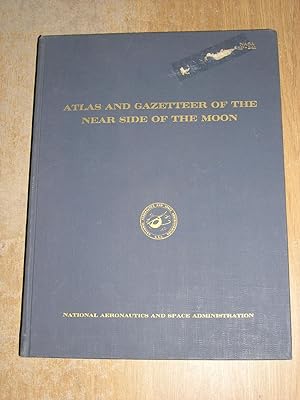
Atlas and Gazetteer of the Near Side of the Moon
Language: English
Published by Scientific and Technical Information Office, National Aeronautics and Space Administration, Washington, D.C., 1971
First Edition
Hardcover. Condition: Very Good. No Jacket. 1st Edition. NASA publication SP-241, "Prepared by the Mapping Sciences Laboratory, NASA Manned Spacecraft Center." Plentifully illustrated with B&W photographic maps of the moon. Gilt titles to spine and front board legible though considerably dulled; there is some modest surface scuffing to the dark blue cloth. Book will close its own text block; no internal markings. Originally priced at $15. Totals 538 pp. including Gazetteer, index and notes. This large quarto weighs six pounds, Priority mail will cost extra; overseas shipping would be likely to cost $75. The book itself here reduced from $830. As with all our items priced higher than $90, this item will be shipped "signature required.".
-
Mapping and Naming the Moon: A History of Lunar Cartography and Nomenclature
Language: English
Published by Cambridge University Press, 2003
ISBN 10: 0521544149 ISBN 13: 9780521544146
Condition: New. Historical maps and rare photographs illustrate four centuries of mapping the Moon. Num Pages: 264 pages, 158 b/w illus. BIC Classification: PGS. Category: (G) General (US: Trade); (P) Professional & Vocational. Dimension: 246 x 189 x 12. Weight in Grams: 510. . 2008. Revised ed. paperback. . . . . Books ship from the US and Ireland.
-
US$ 124.39
US$ 13.45 shipping
Ships from United Kingdom to U.S.A.Quantity: 2 available
Add to basketPaperback. Condition: Brand New. 262 pages. 9.75x7.50x0.75 inches. In Stock.
-

Mapping and Naming the Moon : A History of Lunar Cartography and Nomenclature
Language: English
Published by Cambridge University Press, 2003
ISBN 10: 0521544149 ISBN 13: 9780521544146
Taschenbuch. Condition: Neu. Druck auf Anfrage Neuware - Printed after ordering - Almost thirty years after the Apollo missions, 'Tranquillity Base,' 'Hadley Rille,' or 'Taurus-Littrow' are names still resonant with the enormous achievements represented by the lunar landings. But how did these places get their names Who named Copernicus crater Where did all those names on lunar maps come from, and what stimulated their selection Ewen Whitaker traces the origins and evolution of the present-day systems for naming lunar features such as craters, mountains, valleys and dark spots. The connections between the prehistoric and historic names, and today's gazetteer are clearly described. Beautiful lunar maps spanning four centuries of progress wonderfully illustrate the unfolding of our ability to map the Moon. Rare, early photographs add to the sense of history. Comprehensive appendices and the bibliography make this delightful book a work of lasting reference and scholarship.
-

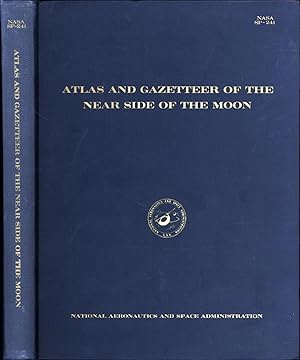
Atlas and Gazetteer of the Near Side of the Moon
Language: English
Published by NASA, Washington D. C., 1971
Hardcover. Condition: Very Good. First Editiion.
-

Atlas and gazetteer of the near side of the moon (NASA SP-241)
Language: English
Published by Washington, NASA, 1971
Seller: Antiquariat Biebusch, Lilienthal, Germany
Association Member: GIAQ
Seller rating 5 out of 5 stars
Leinen. Condition: Gut. (3), 538 S., 36x28cm Zustand: blaugrauer Leineneinband, gering berieben, sonst sehr gut --- Inhalt: englischer Text, Mondatlas Kat2024-KK Sprache: Englisch Gewicht in Gramm: 3000.
-
Hardcover. Condition: Very Good. book has light wear to corners, ends of spine, and edges, moderate shelf wear/toning to cover, light foxing to textblock, otherwise in solid clean shape.
-
ORTHOGRAPHIC ATLAS OF THE MOON Supplement Number One to the Photographic Lunar Atlas Edition A Showing the Standard Orthographic Coordinate Grid Part 1 Central Area [&] Part 2 Limb Area
Published by University of Arizona Press, 1960 [&] 1961, 1961
Seller: Rothwell & Dunworth (ABA, ILAB), Dulverton, United Kingdom
Seller rating 5 out of 5 stars
First Edition
US$ 277.17
US$ 16.82 shipping
Ships from United Kingdom to U.S.A.Quantity: 1 available
Add to basket1st edn. 2 vols in 1. Oblong Folio (18½ x 22¾ ins). Original screw post bound gilt lettered red cloth (upper board a little bowed, bumped at tail of spine and corners - otherwise VG). Unpaginated, illus with coloured maps and b&w plates (front and rear paste-downs worn at edges and faint spotting on prelims; no inscriptions).
-
Atlas and Gazetteer of the Near Side of the Moon
Published by National Aeronautics and Space Administration, Washington, DC, 1971
Seller: Ground Zero Books, Ltd., Silver Spring, MD, U.S.A.
Seller rating 5 out of 5 stars
Hardcover. v, 538 p. 36 cm. Illustrations. Lunar Nomenclature. References. Indexes. NASA SP-241. Introduction by Anthony J. Calio, Director of Science and Applications, NASA Manned Spacecraft Center. This work was prepared by the Mapping Science Laboratory of the NASA Manned Spacecraft Center. To provide an easy method of locating lunar features in the atlas, the names have been annotated on the photographs, which are accompanied by locational data regarding the named features. Good. No dust jacket. Ex-library. Usual library markings. Cover has some wear and soiling. Large format, hinges somewhat shaken.
-
US$ 554.27
US$ 24.26 shipping
Ships from United Kingdom to U.S.A.Quantity: 1 available
Add to basketHardcover. Condition: Very Good. No Jacket. Some light wear to covers and spine, mainly edges and corners, Remains of a label on top right corner of cover, Corners a little bumped, Internally in good condition, pages crisp and clear. 27.5 cm x 35.5 cm. The Price includes postage and packing to a UK Mainland address, due to the weight (3.1kg) there will be additional charges to everywhere else, please ask for a quote.
-
![Seller image for [Whitaker, Ewen Adar] (1922-2016). Historically Significant Collection of ca. 409 Original Gelatin Silver Photographs of the Moon (Views from Space, Closer Images of the Lunar Surface and Craters), Taken by Several NASA Spacecrafts - Ranger VII (1964), Surveyor I (1965), Ranger VIII ad IX (1965), Lunar Orbiter III and IV (1967), and by Apollo 15 Mission (1971). Ca. 1960s - 1970s. for sale by Globus Rare Books & Archives](https://pictures.abebooks.com/inventory/md/md32140022985.jpg)
[Whitaker, Ewen Adar] (1922-2016). Historically Significant Collection of ca. 409 Original Gelatin Silver Photographs of the Moon (Views from Space, Closer Images of the Lunar Surface and Craters), Taken by Several NASA Spacecrafts - Ranger VII (1964), Surveyor I (1965), Ranger VIII ad IX (1965), Lunar Orbiter III and IV (1967), and by Apollo 15 Mission (1971). Ca. 1960s - 1970s.
Publication Date: 1960
Seller: Globus Rare Books & Archives, San Francisco, CA, U.S.A.
Seller rating 5 out of 5 stars
None. Condition: None. Ca. 409 loose gelatin silver photos (including over eighty duplicates), mostly ca. 20,5x25 cm (8x10 in) (with narrow or wide margins); seventeen larger images are from ca. 21,5x27,5 cm (8 ½ x 11 in) to ca. 23,5x28 cm (11 x 9 ¼ in); ca. 58 smaller photos from ca. 20,5x20,5 cm (8x8 in) to ca. 7x7,5 cm (2 ¾ x 2 ¾ in). Twenty photos with ink-stamped credentials of NASA Washington, D.C. and Langley research centres, dating the images from August 28, 1964 to June 2, 1967. Three images with ink stamps "Lunar and Planetary Laboratory, University of Arizona, Tuscon" on verso; one - with an ink stamp "Jan. 13, 1959" on verso. One photo with an ink stamp "Cambridge Research Center, L.G. Hanscom Field, Bedford, Mass." and pencil note "Dr. G.P. Kuiper, Yerkes Observatory, Williams Bay, Wisc." on verso. Seven photos with E.A. Whitaker's handwritten initials or full name on verso or recto. Over forty photos with attached plastic sheets with manuscript numbers or trajectories on rectos, most also with manuscript pencil notes on verso. About twenty photos with ink or pencil captions or notes on recto or verso; over fifty photos with ink or pencil markings or notes on recto or verso. Fourteen photos with period ink captions on paper labels mounted on the top margins. Over twenty photos with numbers or markings in negative. Several photos with creases or tears on the margins, over a dozen with glue residue on verso, but overall a very good collection of important photos. Historically significant extensive collection of ca. 409 original gelatin silver lunar photos from the estate of an outstanding selenographer (geographer of the lunar surface) and lunar cartographer Ewen Whitaker, who co-founded the Lunar and Planetary Laboratory at the University of Arizona (1960), co-authored multiple Moon atlases and helped NASA to select a landing site for the Apollo 12 mission in November 1969. "Over his career, Whitaker quite possibly developed the best knowledge of the geography, or selenography, of the lunar surface of anyone alive" ( see more ). The photos, taken by several NASA spacecrafts, date back to the 1960s-1970s and were apparently used by Whitaker during his work at the University of Arizona's Lunar and Planetary Laboratory (LPL). Seven images bear his handwritten initials or full name on verso or recto; one image has the handwritten name of the Laboratory's Director, Gerard Peter Kuiper (1905-1973). Twenty-four photos have ink stamps of NASA research centres, the University of Arizona's Lunar and Planetary Laboratory, and Air Force Cambridge Research Labs at Hanscom Field (Bedford, Mass.). The images include views of the Moon taken from space and during the spacecrafts' approach, with a series of photos of the lunar surface, documenting the track of the spacecrafts. Among the identified general views are photos of the northeastern quadrant of the Moon's nearside with Mare Serenitatis, Mare Tranquillitatis, Mare Crisium and Mare Fecunditatis; Mare Orientale; Mare Imbrium and Copernicus crater. The photos with the official stamps of NASA research centre in Washington, D.C. include six images, taken by the Ranger VII spacecraft on July 31, 1964 (southern lunar highlands near crater Tycho); seven photos transmitted by Surveyor I spacecraft on June 2, 1966 (lunar surface and the spacecraft itself); and two photos taken by the Lunar Orbiter III on February 20 and 22, 1967. Four photos with the stamp of NASA's Washington, D.C. centre and one photo with the stamp of NASA's Langley centre are the images taken by the Lunar Orbiter IV in May-June 1967 (Mare Orientale, Mare Veris and Rock Mountains; Moon's North Pole; Inghirami crater; Moon's South Pole). Forty-five photos with attached plastic sheets document the track of the Ranger VII spacecraft on July 31, 1964 (the photos' numbers, date and time are visible on the lower margin). Three plastic sheets have handwritten numbers, apparently indicating lunar craters; most plastic sheets have green and red lines, possibly outlining the spacecraft's trajectory. Three more images were also taken by the Ranger VII. A series of about seventy photos show the lunar surface taken by the Ranger VIII spacecraft on February 20, 1965, including craters Ritter and Sabine in the Mare Tranquilitatis area and Delambre, Theo Junior and Theon Senior craters southwest of Mare Tranquilitatis. Images of this area also show the Sinus Medii lunar plain with several craters (Hipparchus, Horrocks, Halley, Hind, Lade, Godin, and others). Three images relate to the space voyage of Ranger IX on March 24, 1965 to the Alphonsus crater; one of the photos shows Ptolemaeus, Alphonsus and Albategnius craters. There is also an image of the Schröter's Valley taken by the Apollo 15 mission (July 26 - August 7, 1971). Overall an interesting extensive collection of original photos of the Moon, taken during the active phase of the 20th century Space Race. Excerpts from the NASA ink captions: "This is one of 4,316 lunar photographs returned by NASA's Ranger VII spacecraft, which impacted on the lunar surface at 9:25 am., EDT on July 31, 1964." "Wide-angle photograph of cratered lunar surface southwest of spacecraft at low Sun illumination." "Wide-angle photograph of footpad 2. Note the displaced material that covers the lunar surface beyond the footpad, and the ray extending to the left from the footpad." "This photograph was taken by the Lunar Orbiter III of secondary site 20 in its mission to photograph potential manned landing sites on the Moon <?> The area is an oblique view looking north of an area of Hortensius domes?" "Tenth lunar surface picture taken by Surveyor I spacecraft on June 2, 1966, shows a moon rock six inches high and twelve inches long. <?> Surveyor I, America's first lunar soft-landing spacecraft, touched down on the moon at 11:17 p.m., Pacific Daylight Time, June 1, 1966." "This segment of the first telephoto picture taken by the camera of NASA's Lunar Orbiter IV spacecr.
-
Mapping and Naming the Moon (Paperback)
Language: English
Published by Cambridge University Press, Cambridge, 2003
ISBN 10: 0521544149 ISBN 13: 9780521544146
Paperback. Condition: new. Paperback. Almost 30 years after the Apollo missions, 'Tranquillity Base', 'Hadley Rille', or 'Taurus-Littrow' are names still resonant with the enormous achievements represented by the lunar landings. But how did these places get their names? Who named Copernicus Crater? Where did all those names on lunar maps come from, and what stimulated their selection? Ewen Whitaker traces the origins and evolution of the present-day systems for naming lunar features, such as craters, mountains, valleys and dark spots. The connections between the prehistoric and historic names, and today's gazetteer are clearly described. Beautiful lunar maps spanning four centuries of progress wonderfully illustrate the unfolding of our ability to map the Moon. Rare, early, photographs add to the sense of history. Comprehensive appendices and the bibliography make this delightful book a work of lasting reference and scholarship. With its historical maps and rare early photographs, this is for everyone interested in the Moon. Observers will appreciate this account of mapping and nomenclature. Appendices and bibliography provide a launch pad for those who wish to learn more. This item is printed on demand. Shipping may be from multiple locations in the US or from the UK, depending on stock availability.
-
US$ 86.26
US$ 13.45 shipping
Ships from United Kingdom to U.S.A.Quantity: 1 available
Add to basketPaperback. Condition: Brand New. 262 pages. 9.75x7.50x0.75 inches. In Stock. This item is printed on demand.
-
Mapping and Naming the Moon: A History of Lunar Cartography and Nomenclature
Language: English
Published by Cambridge University Press, 2003
ISBN 10: 0521544149 ISBN 13: 9780521544146
Seller: THE SAINT BOOKSTORE, Southport, United Kingdom
Seller rating 5 out of 5 stars
US$ 93.16
US$ 21.33 shipping
Ships from United Kingdom to U.S.A.Quantity: Over 20 available
Add to basketPaperback / softback. Condition: New. This item is printed on demand. New copy - Usually dispatched within 5-9 working days.
-
Mapping and Naming the Moon
Language: English
Published by Cambridge University Press, 2003
ISBN 10: 0521544149 ISBN 13: 9780521544146
US$ 120.67
US$ 8.75 shipping
Ships from United Kingdom to U.S.A.Quantity: 4 available
Add to basketCondition: New. Print on Demand pp. 264 50:B&W 7.44 x 9.69 in or 246 x 189 mm (Crown 4vo) Perfect Bound on White w/Gloss Lam.
-
Mapping and Naming the Moon
Language: English
Published by Cambridge University Press, 2003
ISBN 10: 0521544149 ISBN 13: 9780521544146
Condition: New. PRINT ON DEMAND pp. 264.
-
Mapping and Naming the Moon: A History of Lunar Cartography and Nomenclature (Paperback)
Language: English
Published by Cambridge University Press, Cambridge, 2003
ISBN 10: 0521544149 ISBN 13: 9780521544146
US$ 96.30
US$ 49.78 shipping
Ships from United Kingdom to U.S.A.Quantity: 1 available
Add to basketPaperback. Condition: new. Paperback. Almost 30 years after the Apollo missions, 'Tranquillity Base', 'Hadley Rille', or 'Taurus-Littrow' are names still resonant with the enormous achievements represented by the lunar landings. But how did these places get their names? Who named Copernicus Crater? Where did all those names on lunar maps come from, and what stimulated their selection? Ewen Whitaker traces the origins and evolution of the present-day systems for naming lunar features, such as craters, mountains, valleys and dark spots. The connections between the prehistoric and historic names, and today's gazetteer are clearly described. Beautiful lunar maps spanning four centuries of progress wonderfully illustrate the unfolding of our ability to map the Moon. Rare, early, photographs add to the sense of history. Comprehensive appendices and the bibliography make this delightful book a work of lasting reference and scholarship. Almost thirty years after the Apollo missions, "Tranquillity Base," "Hadley Rille," or "Taurus-Littrow" are names still resonant with the enormous achievements represented by the lunar landings. But how did these places get their names? Who named Copernicus crater? Where did all those names on lunar maps come from, and what stimulated their selection? Ewen Whitaker traces the origins and evolution of the present-day systems for naming lunar features such as craters, mountains, valleys and dark spots. The connections between the prehistoric and historic names, and today's gazetteer are clearly described. Beautiful lunar maps spanning four centuries of progress wonderfully illustrate the unfolding of our ability to map the Moon. Rare, early photographs add to the sense of history. Comprehensive appendices and the bibliography make this delightful book a work of lasting reference and scholarship. This item is printed on demand. Shipping may be from our UK warehouse or from our Australian or US warehouses, depending on stock availability.
-

Mapping and Naming the Moon
Language: English
Published by Cambridge University Press, 2003
ISBN 10: 0521544149 ISBN 13: 9780521544146
Condition: New. Dieser Artikel ist ein Print on Demand Artikel und wird nach Ihrer Bestellung fuer Sie gedruckt. With its wonderful historical maps and rare early photographs, this book is a treat for everyone interested in the Moon. Observers of the Moon will appreciate this unique account of mapping and nomenclature. Excellent appendices and bibliography provide a .
-
Mapping and Naming the Moon (Paperback)
Language: English
Published by Cambridge University Press, Cambridge, 2003
ISBN 10: 0521544149 ISBN 13: 9780521544146
Paperback. Condition: new. Paperback. Almost 30 years after the Apollo missions, 'Tranquillity Base', 'Hadley Rille', or 'Taurus-Littrow' are names still resonant with the enormous achievements represented by the lunar landings. But how did these places get their names? Who named Copernicus Crater? Where did all those names on lunar maps come from, and what stimulated their selection? Ewen Whitaker traces the origins and evolution of the present-day systems for naming lunar features, such as craters, mountains, valleys and dark spots. The connections between the prehistoric and historic names, and today's gazetteer are clearly described. Beautiful lunar maps spanning four centuries of progress wonderfully illustrate the unfolding of our ability to map the Moon. Rare, early, photographs add to the sense of history. Comprehensive appendices and the bibliography make this delightful book a work of lasting reference and scholarship. With its historical maps and rare early photographs, this is for everyone interested in the Moon. Observers will appreciate this account of mapping and nomenclature. Appendices and bibliography provide a launch pad for those who wish to learn more. This item is printed on demand. Shipping may be from our Sydney, NSW warehouse or from our UK or US warehouse, depending on stock availability.



![Seller image for ORTHOGRAPHIC ATLAS OF THE MOON Supplement Number One to the Photographic Lunar Atlas Edition A Showing the Standard Orthographic Coordinate Grid Part 1 Central Area [&] Part 2 Limb Area for sale by Rothwell & Dunworth (ABA, ILAB)](https://pictures.abebooks.com/inventory/md/md32250171080.jpg)