Order Total (1 Item Items):
Shipping Destination:

Marieschi (34 results)
Author:
marieschi
Refine with Advanced Search
Skip to main search results
Search filters
Product Type
- All Product Types
- Books (16)
- Magazines & Periodicals (No further results match this refinement)
- Comics (No further results match this refinement)
- Sheet Music (No further results match this refinement)
- Art, Prints & Posters (14)
- Photographs (No further results match this refinement)
- Maps (4)
- Manuscripts & Paper Collectibles (No further results match this refinement)
Condition Learn more
- New (No further results match this refinement)
- As New, Fine or Near Fine (6)
- Very Good or Good (6)
- Fair or Poor (No further results match this refinement)
- As Described (22)
Binding
Collectible Attributes
- First Edition (No further results match this refinement)
- Signed (1)
- Dust Jacket (1)
- Seller-Supplied Images (29)
- Not Print on Demand (34)
Language (3)
Free Shipping
- Free Shipping to U.S.A. (No further results match this refinement)
Seller Location
Seller Rating
-

Tempo veneziano
Published by Italsider s.d., Genova
Seller: Di Mano in Mano Soc. Coop, Cambiago, MI, Italy
Seller rating 5 out of 5 stars

Cartonato con sovracoperta. Testi di Diego Valeri, fotografie di Gianni Berengo Gardin, stampe di Michele Marieschi.Presenti numerose fotografie a colori e in b/n f.t. Numero di tavole: 0 pp.115 altezza 0 larghezza 0 Esemplare in buone condizioni.Sovraccoperta con tracce di polvere e segni di usura ai bordi e agli angoli. Dorso con scolorimento e piccola mancanza al bordo superiore.Pagine leggermente ingiallite.Testo in Lingua Italiana.
-

Michele Marieschi (1710-1743)
Published by Galleria Lorenzelli, Bergamo, 1966
Seller: Di Mano in Mano Soc. Coop, Cambiago, MI, Italy
Seller rating 5 out of 5 stars
Brossura. La mostra è posta sotto l'egida del giornale di Bergamo.Con numerose illustrazioni b/n e a colori. Numero di tavole: pp.s.n. altezza 0 larghezza 0 Esemplare in buone condizioni.Lievi segni di usura, ingiallimento e macchie di polvere alla copertina.Lievissime tracce di polvere e ingiallimento ai tagli.Lieve ingiallimento alle pagine.
-

Michele Marieschi (1710-1743)
Published by Galleria Lorenzelli, Bergamo, 1966
Seller: Di Mano in Mano Soc. Coop, Cambiago, MI, Italy
Seller rating 5 out of 5 stars
Brossura. La mostra è posta sotto l'egida del giornale di Bergamo.Con numerose illustrazioni b/n e a colori.Testo in Lingua Italiana e Inglese. Numero di tavole: pp.s.n. altezza 0 larghezza 0 Esemplare in buone condizioni.Copertina con ingiallimento e macchie di polvere.Pagine ingiallite ai bordi.Testo in Lingua Italiana e Inglese.
-
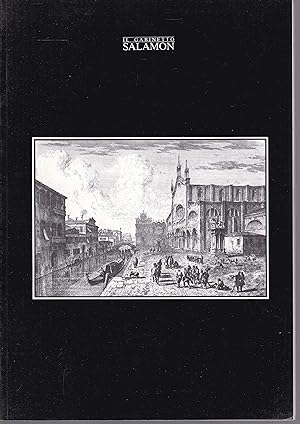
Il Gabinetto Salamon. Cat. n. 101. Michele Marieschi
Published by Il Gabinetto Salamon, Milano, 1988
Seller: Graphem. Kunst- und Buchantiquariat, Berlin, Germany
Seller rating 4 out of 5 stars

4°, Brosch., ohne Paginierung - Ex Libris. Gutes Exemplar. Buch.
-

Tempo veneziano
Published by Italsider, Genova, 1973
Seller: Libreria antiquaria Atlantis (ALAI-ILAB), Torino, TO, Italy
Seller rating 3 out of 5 stars

In 4°, pp. 115. Tela editoriale con sovracoperta figurata. Manca la custodia in cartoncino. Copia in perfetto stato.
-

Tempo veneziano.
Publication Date: 1973
Seller: Libreria Piani, Monte San Pietro, BO, Italy
Seller rating 5 out of 5 stars
Milano, Pizzi (per Italsider, 1973), folio, legatura editoriale con sovraccopertina illustrata colori, pp. 115 completamente illustrato con cofanetto.
-

Meraviglie di Venezia a cura di Rodolfo Pallucchini, introduzione di Guido Piovene
Published by Edizioni Il Polifilo, Milano, 1964
Seller: BACCHETTA GIORGIO - ALFEA RARE BOOKS, Milano, MI, Italy
Seller rating 4 out of 5 stars
Volume: 1 47.5x33 cm., 49, [3] pp., XXI tavv. a doppia pagina ripiegate f.t. riproducenti incisioni di Carlevarijs, Marieschi, Canaletto, Visentini, Brustolon, Valesi, legatura edit. in cartonato rigido, titoli al dorso, cofanetto in cartonato rigido, buon esemplare Edizione di mille esemplari composta a mano e impressa da Luigi Maestri, tavole riprodotte da Annibale Belli e stampate da L'Industriale Grafica, carta appositamente fabbricata dalla Cartiera Ventura.
-
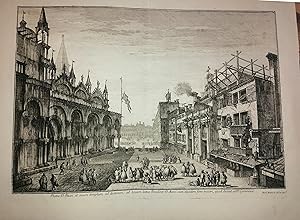
Magnificentiores selectioresque Urbis Venetiarum prospectus [Views of Venice].1741.
Published by VeniceVenduntur in vico Sancti Juliani dicto la Merceria apud Josephum Wagner Venetiis c., 1770
Seller: Robert Frew Ltd. ABA ILAB, London, United Kingdom
Association Member: ABA ILAB PBFA
Seller rating 5 out of 5 stars
US$ 10,301.41
US$ 13.34 shipping
Ships from United Kingdom to U.S.A.Quantity: 1 available
Add to basketLarge oblong folio (45 x 63 cm), contemporary dark brown morocco backed marbled boards, original gilt decorated red label to upper cover. Engraved title, 8 (of 21) full page engraved plates, numbered 1 to 9. Binding rubbed, fine impressions of the engravings with good margins on watermarked laid paper. Third issue of this celebrated series of views, indicated by the publisher's imprint to the title page, and showing evidence of Wagner's re-burnishing of the plates.
-
Condition: en bon état. PARIS CHEREAU 1790 une vue d'optique en couleurs, GRAVÉE A L'EAU-FORTE ET AQUARELLE SUR PAPIER DE FORMAT: 51,5 x 35 cm., 1790 Paris Chez J. Chereau Editeur, en bon état Les vues d'optiques sont un type particulier d'estampes populaires publiées en Europe au XVIIIe siècle. Ces estampes étaient une forme de divertissement destinée à être vue à travers des appareils appelés « machines optiques », « optiques », « zograscopes ». Ces estampes étaient exposées par des forains ambulants dans les rues de toute l'Europe et étaient également collectionnées par les professionnels et les classes supérieures qui possédaient des machines optiques chez eux. Il y avait une grande curiosité pour l'apparence des villes européennes non visitées et des lieux exotiques aux confins du globe, et ces estampes étaient l'un des seuls moyens pour le grand public d'avoir un aperçu du monde. Les machines optiques utilisées pour ces gravures étaient équipées d'une lentille qui améliorait pour les spectateurs le grossissement et la perception de la profondeur tridimensionnelle des scènes représentées. Un miroir était souvent utilisé pour que les gravures en perspective puissent être vues à plat, et dans ces cas, les images étaient vues à l'envers. Il n'est donc pas rare que les scènes représentées soient dessinées à l'envers, et il y a souvent aussi un titre imprimé à l'envers en haut, permettant aux spectateurs de le lire rapidement. Il y avait généralement un texte supplémentaire au bas des gravures, souvent en plusieurs langues, qui pouvait être lu par l'opérateur de l'optique au bénéfice de son public . rare gravure . en bon état (good condition).
-
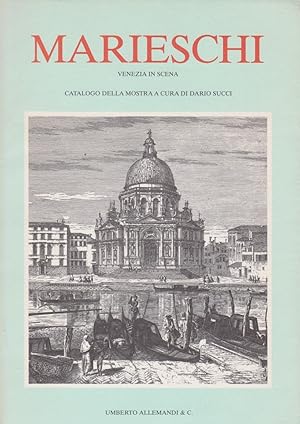
Michel Marieschi : Venezia in scena / Galleria Lorenzelli, Aprile Maggio 1987 : catalogo della mostra, a cura di Dario Succi
Language: Italian
Published by Torino : Umberto Allemandi, 1987,, 1987
ISBN 10: 8842200832 ISBN 13: 9788842200833
kart. Condition: Gut. it. 106 S. : Ill., 31 cm In Italian language. Illustrated softcover. Boards slightly rubbed or bumped, otherwise in clean condition and well preserved. Institutional signature stamp on the verso of title. + + + Illustrierte englische Broschur. Einband tls. leicht berieben oder geringf. bestoßen, sonst sauber und gepflegt.Institut. Signatur-Stempel m. Löschvermerk verso Titel. 8842200832 Werktäglicher Versand. Jede Lieferung m. ordentl. Rechnung und ausgew. MwSt. Der Versand erfolgt als Büchersendung / Einschreiben mit der Deutschen Post bzw. als Päckchen / Paket mit DHL. Die Lieferzeit ist abhängig von der Versandart und beträgt innerhalb Deutschlands 3-5 Tage, in der EU 5 - 12 Tage. KEIN Versand an Packstationen. Körperschaften und juristische Personen werden auf Wunsch per offener Rechnung beliefert. ***ATTENTION U.S. CUSTOMERS: Due to the new tariffs, we are unable to ship packages to the USA at this time. Thank you for understanding.*** Sprache: Italienisch Gewicht in Gramm: 550.
-

Condition: Buone. italiano Condizioni dell'esterno: Buone Condizioni dell'interno: Buone.
-
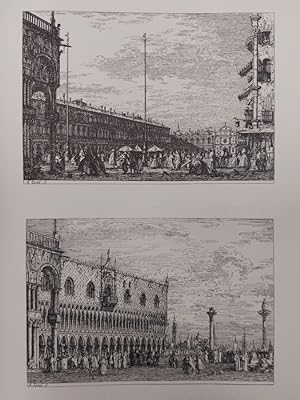
Meraviglie di Venezia.
Published by Milano, Il Polifilo, 1964
Seller: Gabriele Maspero Libri Antichi, Como, CO, Italy
Seller rating 4 out of 5 stars
Condition: Ottimo. In-folio atlantico (cm. 47,5), legatura editoriale in cartonato rigido in blu acciaio con titolo in blu notte al dorso; pp. 49 [3] su carta appositamente fabbricata dalla cartiera Ventura, in barbe, in ottimo stato; 21 tavole fuori testo a doppia pagina ripiegate su cui sono riprodotte incisioni degli artisti Carlevarijs, Marieschi, Canaletto, Visentini, Brustolon e Valesi. A cura di Rodolfo Pallucchini, introduzione di Guido Piovene. Edizione di mille esemplari composta a mano e impressa da Luigi Maestri, tavole riprodotte da Annibale Belli e stampate da L'Industriale Grafica. In ottimo stato, conservato in custodia editoriale cartonata blu, tracce d'usura alla sola fascetta illustrata in nero. (SM5).
-
Meraviglie di Venezia a cura di Rodolfo Pallucchini, introduzione di Guido Piovene.
Published by Milano, Edizioni Il Polifilo (1964)., 1964
Seller: Treptower Buecherkabinett Inh. Schultz Volha, Berlin, Germany
Seller rating 5 out of 5 stars
45 Seiten, 21 Tafeln. Reproduktion im Originalformat von Radierungen von Luca Carlevarijs, Antonio Marieschi, Canaletto, Antonio Visentini, Giambattista Brustolon und Dionigi Valesi.- Guter Zustand OKam Sprache: Deutsch Gewicht in Gramm: 2000 Fol. OHalbleinen mit Rückentitel im Schuber (leicht berieben).
-

Condition: Buone. MICHELE MARIESCHI L'0PERA COMPLETA MONDADORI 1988In 4°, legatura editoriale, copertina telata con illustrazione applicata, sovracoperrtina in acetato trasparente.In ottime condizioni.
-
A View of the Bridge Rialto at Venice; with the Delpheno Palace on the Right Hand, and the Winte Wharf on the Left.
Published by Robert Sayer, London, England
Seller: Barry Cassidy Rare Books, Sacramento, CA, U.S.A.
Seller rating 5 out of 5 stars
Art / Print / Poster
No Binding. Condition: Collectible-Very Good. A beautiful, original hand-colored copperplate engraving that shows a view of the Rialto Bridge, Wine Wharf, and Delpheno Palace in Venice, Italy. People are shown on various boats and gondolas, and a few can be seen in the buildings and walkways along the canal. The Rialto Bridge is the oldest of four bridges spanning the Grand Canal. It was originally built as a pontoon bridge, has undergone several reconstructions, and is now a major tourist attraction. No date, circa 1760. Paper measures 16" x 11 1/4"; printed area measures 16" x 10." This print is also a "vue d'optique," which were very popular in the latter half of the eighteenth century and first half of the nineteenth century. Vue d'optique prints emphasized perspective in their compositions and produced an illusion of depth when viewed through a zograscope. Below the printed area is the title and the following information: "M. Marieschi del.t" [the artist] and "London, Printed for Rob.t Sayer Maps and Printseller, at the Golden Buck near Serjeants Inn, Fleet Street" [the publisher]. Michele (or Michiel) Marieschi (1710-1744) was an Italian engraver and painter. He was based in Venice and is well-known for his vedute (realistic city views) and capricci (fantastical architectural landscapes). Robert Sayer (1725-1794) was a leading publisher and printseller based in London, England. Print is very clean and intact with vibrant colors. Very minimal age-toning and thin masking tape on three of the edges on the back of the print. Very small pin-sized or thumbtack-sized hole in the lower-left corner.
-
A View of the Church & Place of ye Minor conventional Monks at Venice as far as ye Way that leads to St. Rock's Church with St Anthony's School on ye Right & that of ye Passion on ye left. [Scarce Hand Coloured Print]
Published by London: Printed for & Sold by J Boydell Engraver and R Sayer Map and Printseller opposite., 1750
Seller: Louis88Books (Members of the PBFA), Andover, United Kingdom
Association Member: PBFA
Seller rating 5 out of 5 stars
Art / Print / Poster
US$ 480.73
US$ 38.67 shipping
Ships from United Kingdom to U.S.A.Quantity: 1 available
Add to basketNo Binding. Condition: Good. London: Printed for & Sold by J Boydell Engraver and R Sayer Map and Printseller opposite, 1750, First Edition. A very scarce hand coloured print, 'Mich'l Marieschi delin.' to the bottom left of the print, T Bowles Sculp. to the right. Tanned and marked with closed tears at the margins and Sellotape to the rear. Approximately 21 inches wide, by 14 ¼ inches tall to the whole including the margins (53cm by 36cm). Approximately 16 ¾ by 10 ½ inches to the edge of the image including the text (42cm by 27cm). Condition Report See above and photos. Publisher: see above. Publication Date: 1750 Binding: Hardback.
-
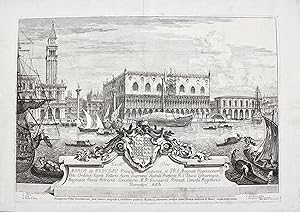
Prospectus urbis Venetiarum, prae caeteris magnifica, exhibens publica AedificiaÖ
Published by Venezia, 1741
Seller: libreria antiquaria perini Sas di Perini, Verona, VR, Italy
Seller rating 5 out of 5 stars
Art / Print / Poster
Incisione su rame in acquaforte e bulino, fine impressione eseguita su carta vergata priva di filigrana, nel I stato su IV, privo dellíaggiunta del numero 2 in basso a sinistra; mm 330x470, su foglio mm 395x555, tracce della piega centrale. Alcuni strappetti marginali restaurati e tracce di pieghe nel margine in alto. Tratto da ìMagnificentiores selectioresque Urbis Venetiarum prospectus quos olim Michael marieschi Venetus Pictor, et Architectus in plerisque tabulis depinxitî Foglio di dedica a Marc-Antoine de Beauveau, nobile lorenese, eseguita probabilmente nel 1741. raffigurante una meravigliosa veduta dal centro del bacino di San Marco verso la piazza, con la Libreria del Sansovino in primo piano a sinistra e il Palazzo Ducale a destra. Marieschi pubblicÚ la serie di vedute nel 1741 traendole dai propri dipinti: egli supera il rigore e la rigidit? di Carlevarijs e dona plasticit? alle architetture della citt?, meritando un posto di primíordine fra gli incisori del periodo. Succi, La Serenissima nello specchio di rame, pag. 240, Marieschi 9 Nr.cat: Cod 4533.
-
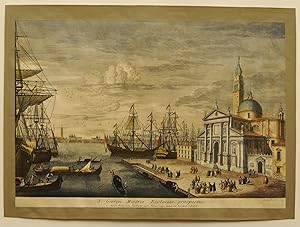
S. Georgii Majoris Ecclesiae prospectus. (Prospetto della Chiesa di San Giorgio Maggiore)
Published by Venezia: apud Ludovicum Furlanetto supra Pontem vulgo dictum dei Baretteri C. P. E . S., 1763
Art / Print / Poster
Acquaforte e bulino, 319 x 458 mm, alla battuta. Foglio di 355 x 490 mm. Stato I/IV. Carta vergata grossa, filigrana stelle a 6 punte. Bella coloritura probabilmente coeva. Proveniente da: "Prospectum aedium, viarumque insigniorum urbis venetiarum". Restauro ai margini laterali e superiore. Succi "La Serenissima nello Specchio di rame" p. 871 (n 7).Etching and burin, 319 x 458 mm, on the beat. Sheet of 355 x 490 mm. Status I / IV. Coarse laid paper, 6-pointed star watermark. Beautiful coloring probably coeval. From: "Prospectum aedium, viarumque insigniorum urbis venetiarum". Restoration of the lateral and upper margins. Succi "The Serenissima in the Copper Mirror" p. 871 (n 7). 18mo Secolo.
-
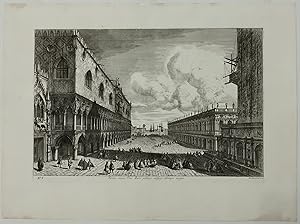
La Piazzetta. Forum minus Divi Marci publicijs aedificijs utrinque insigne
Published by Michele Marieschi 1741
Art / Print / Poster
Acquaforte di mm 310 x 470, su fglio di 430 x 595 mm.Vergata grossa. Filigrana con scudo e monogramma GF e 3 lune. Vergata grossa. II/IV stato. Titolo centrato sul margine inferiore, Mich. Marieschi del.t et inci.t sull'angolo destro, N°8 sull'angolo sinistro.Provenienza: "Magnificentiores selectioresque urbis Venetiarum prospectus, quos olim Michael Marieschi venetus pictor, et architectus in plerisque tabulis depinxit . Vendutur in vico Sancti Lucae apud eundem Auctorem Venetijs 1741 (ma 1742). Riporta Dario Succi nel volume "La Serenissima nello specchio di rame" : "La rigidità della prospettiva a linee convergenti verso il fondo e il deciso gioco chiaroscurale di questa incisione, databile attorno al 1738, si attenuano nella delicata evocazione del bacino di San Marco, affollato di imbarcazioni. Non sono noti dipinti corrispondenti". Michele Marieschi (1710-1743) figlio di un mediocre pittore, studiò con passione architettura e si staccò presto dal padre. Tornato in patria dalla Germania nel 1735, dipinse belle vedute di Venezia. Nel 1741 (o 1742) diede alle stampe la raccolta di 21 acquaforti tratte dalle sue tele. Le incisioni di Marieschi rendono meglio delle sue pitture quel mondo scenografico e teatrale che la Venezia quotidiana offriva all'occhio dell'osservatore. Succi 1987, 5 I/IV, Montecuccoli degli Erri, Pedrocco 1999, 5 I/IV, Mary Pittaluga 1952, pag.35 e seg. 18mo secolo.
-
La Piazzetta di San Basso. Platea D: Bassi et suum templum ad dexteram; ad laevam latus Basilicae D: Marci cum eiusdem foro maiori, quod desinit ad D: Giminiani
Published by Michele Marieschi 1741
Art / Print / Poster
Acquaforte di mm 310 x 420, su foglio di 430 x 495 mm.Vergata grossa. Filigrana con scudo e monogramma GF e 3 lune. Vergata grossa. I/IV stato. Titolo centrato sul margine inferiore, Mich. Marieschi del.t et inci.t, senza numero. Provenienza: "Magnificentiores selectioresque urbis Venetiarum prospectus, quos olim Michael Marieschi venetus pictor, et architectus in plerisque tabulis depinxit . Vendutur in vico Sancti Lucae apud eundem Auctorem Venetijs 1741 (ma 1742). Riporta Dario Succi a proposito di questa incisione :"L'acquaforte, databile al 1738, evidenzia la complessità del procedimento tecnico con ripetute morsure utilizzato dall'incisore: la cuspide del Campanile di San Marco e le due ali delle Procuratie, raccordate dalla Chiesa di San Giminiano, sono rese con segni leggeri per l'impiego di una vernice di copertura che ha impedito di mordere il rame con l'intensità dei primi piani." Succi 1987, 5 I/IV, Montecuccoli degli Erri, Pedrocco 1999, 5 I/IV, Mary Pittaluga 1952, pag.35 e seg. Michele Marieschi (1710-1743) figlio di un mediocre pittore, studiò con passione architettura e si staccò presto dal padre. Tornato in patria dalla Germania nel 1735, dipinse belle vedute di Venezia. Nel 1741 (o 1742) diede alle stampe la raccolta di 21 acquaforti tratte dalle sue tele. Le incisioni di Marieschi rendono meglio delle sue pitture quel mondo scenografico e teatrale che la Venezia quotidiana offriva all'occhio dell'osservatore. Succi 1987, 5 I/IV, Montecuccoli degli Erri, Pedrocco 1999, 5 I/IV, Mary Pittaluga 1952, p. 35.Etching 310 x 420 mm, on a 430 x 495 mm sheet. Filigree with shield and GF monogram and 3 moons. Coarse rod. I/IV state. Title centered on the lower margin, Mich. Marieschi del.t et inci.t, without number. Provenance: "Magnificentiores selectioresque urbis Venetiarum prospectus, quos olim Michael Marieschi venetus pictor, et architectus in plerisque tabulis depinxit . Vendutur in vico Sancti Lucae apud eundem Auctorem Venetijs 1741 (but 1742). Dario Succi reports about this engraving: "The etching, datable to 1738, highlights the complexity of the technical procedure with repeated etching used by the engraver: the cusp of the Campanile of San Marco and the two wings of the Procuratie, connected by the Church of San Giminiano, are rendered with light signs due to the use of a covering varnish that prevented the copper from biting with the intensity of the close-ups. Michele Marieschi (1710-1743), son of a mediocre painter, studied with passion for architecture and soon broke away from his father. Returning home from Germany in 1735, he painted beautiful views of Venice. l 1741 (or 1742) he published the collection of 21 etchings taken from his canvases. Marieschi's engravings make the scenographic and theatrical world that daily Venice offered to the observer's eye better than his paintings. Succi 1987, 5 I/IV, Montecuccoli degli Erri, Pedrocco 1999, 5 I/IV, Mary Pittaluga 1952, p. 35. 18mo secolo.
-
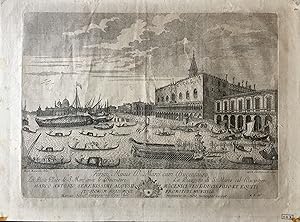
Forum Minus D. Marci cum Bucentauro. La Petit Place de S. Marc avec le Bucentore. La Piazzetta di S. Marco col Bucintoro
Published by 1740ca, 1740
Seller: LUX IN ART di Ermanno Bertelli, Bologna, BO, Italy
Seller rating 5 out of 5 stars
Map
Condition: discreta. Incisione in rame all'acquaforte e bulino b/n. La piazzetta di San Marco col Bucintoro Da Michele Marieschi. Esemplare a pieno margine con bella inchiostratura. Formato: 235x325mm.
-

Campo San Rocco. Aedis Divi Rocchi facies rudis adhuc ex cocto latere, nec sectis marmoribus obducta: ad laevam magnum sodalitium eidem Sancto dicatum, et studio Sebastiani Serlij constructum
Published by Venezia: Michele Marieschi, 1741
Art / Print / Poster
Acquaforte di mm 297 x 467. Vergata grossa. Filigrana non rilevata. Titolo centrato sul margine inferiore, "Mich. Marieschi del.t et inci.t" sull'angolo destro del cartiglio. Primo stato, unico coevo. Provenienza: "Magnificentiores selectioresque urbis Venetiarum prospectus, quos olim Michael Marieschi venetus pictor, et architectus in plerisque tabulis depinxit". "Vendutur in vico Sancti Lucae apud eundem Auctorem Venetijs" 1741 (ma 1742).Brevi margini. Riporta Dario Succi nel catalogo della Mostra tenutasi a Bergamo dal titolo "Marieschi Venezia in scena": "L'acquaforte rappresenta il campo di S. Rocco nel giorno della relativa festività (16 Agosto): in tale ricorrenza fin XVII secolo veniva allestita una mostra di opere d'arte all'aperto, appendendo sugli edifici circostanti dipinti di autori antichi e contemporanei. La proposta di Marieschi per la facciata della chiesa di S. Rocco, all'epoca in fase di ristrutturazione, appare molto estrosa e in linea con lo spiccato gusto scenografico dell'artista. I lavori per la facciata definitiva della chiesa si protrassero dal 1765 al 1769 sotto la direzione di Bernardino Maccaruzzi, il cui progetto è appunto visibile nel terzo stato della stampa". In questo foglio la facciata appare perciò come Marieschi pensava erroneamente sarebbe stata realizzata. Michele Marieschi (1710 - 1743) figlio di un mediocre pittore, studiò con passione architettura e si staccò presto dal padre. Tornato in patria dalla Germania nel 1735, dipinse belle vedute di Venezia. Nel 1741 (o 1742) diede alle stampe la raccolta di 21 acquaforti tratte dalle sue tele. Le incisioni di Marieschi rendono meglio delle sue pitture quel mondo scenografico e teatrale che la Venezia quotidiana offriva all'occhio dell'osservatore. Succi 1987, 10 I/IV, Montecuccoli degli Erri, Pedrocco 1999, 16 I/IV, Mary Pittaluga 1952, pag.35 e seg. Etching of 297 x 467 mm. Large stripe. Watermark not detected. Title centered on the lower margin, "Mich. Marieschi del.t et inci.t" on the right corner of the cartouche. First state, only coeval. Provenance: "Magnificentiores selectioresque urbis Venetiarum prospectus, quos olim Michael Marieschi venetus pictor, et architectus in plerisque tabulis depinxit" . "Vendutur in vico Sancti Lucae apud eundem Auctorem Venetijs" 1741 (but 1742). Short margins. Dario Succi reports in the catalog of the exhibition held in Bergamo entitled "Marieschi Venezia on stage": "The etching represents the Campo di S. Rocco on the day of the relative festivity (August 16): in this recurrence since the seventeenth century an exhibition was set up of works of art outdoors, hanging paintings by ancient and contemporary authors on the surrounding buildings. Marieschi's proposal for the facade of the church of S. the artist's strong scenographic taste. The works for the final facade of the church lasted from 1765 to 1769 under the direction of Bernardino Maccaruzzi, whose project is precisely visible in the third state of the press ". In this sheet the facade therefore appears as Marieschi mistakenly thought it would be built. Michele Marieschi (1710 - 1743) son of a mediocre painter, he studied architecture with passion and soon broke away from his father. Returning to his homeland from Germany in 1735, he painted beautiful views of Venice. In 1741 (or 1742) he published the collection of 21 etchings taken from his canvases. Marieschi's engravings make the scenographic and theatrical world that daily Venice offered to the observer's eye better than his paintings. Succi 1987, 10 I / IV, Montecuccoli degli Erri, Pedrocco 1999, 16 I / IV, Mary Pittaluga 1952, page 35 et seq. 18mo secolo.
-
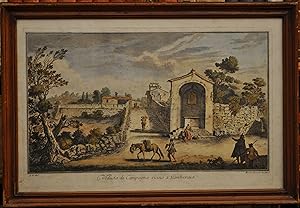
Veduta di campagna vicino a Gamberaia
Published by Firenze: appresso Giuseppe Allegrini stampatore in rame, 1744
Art / Print / Poster
Acquaforte. mm 309 x 487. Mason, 75. Stato I/II. In basso al centro: "Veduta di campagna vicino a Gamberaia". A sinistra "G. Z. del", a destra "Michele Marieschi scol. Vene.". Acquarellatura d'epoca. Proveniente da "Vedute delle ville e d'altri luoghi della Toscana incise su disegni dello Zocchi per conto del Marchese Gerini e pubblicate a Firenze fra il 1744 ed il 1757. Bevilacqua, 46. 18mo secolo.
-
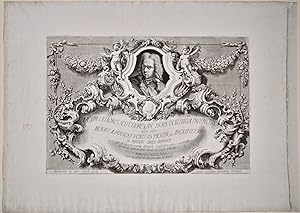
Magnificentiores Selectioresque Urbis Venetiarum Prospectus, Frontespizio
Published by apud eumdem Auctorem Venetijs, 1741
Art / Print / Poster
No Binding. Condition: Near Fine. Etching with engraved portrait, image 325 × 479 mm (to framing lines), plate 330 × 485 mm, the full sheet 498 x 697 mm (with 27 mm additional folded self-stub for binding), on laid paper with watermark (on left framing line at center, as viewed through verso) the letter F with an indistinct letter C to its right, obscured by the image. An early definitive first state impression, in fine condition, without foxing or soiling (saving one slight splotch in the left margin and slight darkening along the left edge of the sheet) and with only a vestige of the original drying fold in the center of the sheet. Title-plate to the series, festooned with garlands, Marieschi's portrait head within an elaborate rococo frame supporting putti holding a painter's brushes and palette and an architect's triangle, the title lettered below in a cartouche bordered with elaborate rococo motifs: MAGNIFICENTIORES SELECTIORESQUE URBIS VENETIARUM PROSPECTUS / quos olim / MICHAEL MARIESCHI VENETUS PICTOR, ET ARCHITECTUS / IN PLERISQUE TABULIS DEPINXIT. / nunc uero ab ipsomet acurate delineante, incidente, tijspisque mandante, / iterum in sexdeum æreis tabulis in lucem æduntur / VENETIJS MDCCXLI / cum Excellmi: Senatus permissu ac priuil: Along the bottom of the plate the lettering continues: Venduntur in uico Sancti Lucæ / apud eumdem Auctorem Venetijs. Other than the portrait, this title-plate was designed and etched by Marieschi himself ("vero ab ipsomet acurate delineante, incidente"). The engraved portrait was drawn by Angelo Trevisani and engraved by Carlo Orsolini (lettered in the frame: "Anzolo Trivisan Deliniaui. / Carlo Orsolini scupis."). The series of 22 plates, comprising the title-plate, a dedication plate and 20 views of Venice (4 etched after Marieschi's death), has been most recently catalogued by Federico Montecuccoli degli Erri and Filippo Pedrocco, Michele Marieschi: La vita, l ambiente, l opera (Milan: Bocca Editori, 1999), nos. 1 (this plate) through 22. Montecuccoli degli Erri grades the first state impressions of the present plate by the progressive wear in the ruled guide lines for the lettering at the bottom of the plate and a progressive weakness in the cross-hatching in the tip of the upper right corner of the image. He considers that examples of this plate with manuscript corrections to the lettering are "rara prova anteriore al 1o stato." Such examples include those held by Achenbach Foundation for the Graphic Arts (1963.30.36267) and Bibliothèque nationale de France ("BnF") (département Estampes et photographie, PET FOL-VF-81, a Royal volume). In both these examples the guide lines are continuously visible across all the letters, and the cross-hatched lines in the upper-right corner show only the hint of beginning weakness. By comparison, the guide lines in the present example print more intermittently and less clearly, and the weakness in the cross-hatching at upper right has spread downward adjacent the top part of the garland and a bit outward across the top as well. That said, the comparison of the quality of printing in the present example and these other two is telling. The very soft modeling in the portrait head is closely comparable among the three. The soft shading in the cheeks, for example, is subtly better in the Achenbach Foundation example than the BnF example, and in turn the BnF example subtly exceeds the present example in the same regard. The differences, nevertheless, between the present example and the BnF example are so subtle as not to be immediately significant. Further, the clarity of the printing of the putti adjacent the portrait in the present and BnF examples appears quite equal. Thus the present example, probably printed by 1744 after Marieschi's death in 1743, may be graded a superb early impression, a fair match for any other definitive first state impression, such as, for example, the superb stand-alone impression also held by BnF (SNR-3 [Marieschi, Michele]).
-
Piazza S. Marco dalla Torre dell'Orologio
Published by Venezia: presso l'Autore, 1741
Art / Print / Poster
Acquaforte di 315 x 463 mm su fogliodi 430 x 590 mm. Vergata grossa. Filigrana "tre lune" e contromarca "lettere GF entro stemma". II/IV. " Forum maius et Basilica D. Marci, cum insula procul S. Georgij maioris et aedes D: Marci Procuratorum, vulgo novae ad dexteram : omnia ab Horologio prospecta"A destra, sotto il titolo, sul margine inferiore, "Mich. Marieschi del.t et inci.t". A sinistra a fianco del titolo N.°3. Provenienza: "Magnificentiores selectioresque urbis Venetiarum prospectus, quos olim Michael Marieschi venetus pictor, et architectus in plerisque tabulis depinxit". "Vendutur in vico Sancti Lucae apud eundem Auctorem Venetijs" 1741 (ma 1742). Succi "La Serenissima nello specchio di rame": "L'incisione, databile al 1739-40, corrisponde, con alcune varianti, ad un dipinto che fu esposto nel 1966 alla Galleria Lorenzelli di Bergamo. Altre versioni: National Gallery, Dublino." Questa straordinaria incisione offre, oltre alla magnificenza delle architetture, una pittoresca raffigurazione della Processione dalla Basilica. Succi n 16, 1987. Michele Marieschi (1710 - 1743) figlio di un mediocre pittore, studiò con passione architettura e si staccò presto dal padre. Tornato in patria dalla Germania nel 1735, dipinse belle vedute di Venezia. Nel 1741 (o 1742) diede alle stampe la raccolta di 21 acquaforti tratte dalle sue tele. Le incisioni di Marieschi rendono meglio delle sue pitture quel mondo scenografico e teatrale che la Venezia quotidiana offriva all'occhio dell'osservatore. Succi 1987, 21 I/IV, Montecuccoli degli Erri, Pedrocco 1999, 20 I/IV, Mary Pittaluga 1952, pag.35 e seg. (EN) Etching 315 x 463 mm. Sheet 59 x 43 cm. Coarse rod. "Three crescent" watermark and "letters GF within coat of arms" countermark. II / IV. "Forum maius et Basilica D. Marci, cum insula procul S. Georgij maioris et aedes D: Marci Procuratorum, vulgo novae ad dexteram: omnia ab Horologio prospecta" On the right, under the title, on the lower margin, "Mich. Marieschi del. t et inci.t ". On the left next to the title No. 3. Provenance: "Magnificentiores selectioresque urbis Venetiarum prospectus, quos olim Michael Marieschi venetus pictor, et architectus in plerisque tabulis depinxit" . "Vendutur in vico Sancti Lucae apud eundem Auctorem Venetijs" 1741 (but 1742). Succi "The Serenissima in the copper mirror": "The engraving, datable to 1739-40, corresponds, with some variations, to a painting that was exhibited in 1966 at the Galleria Lorenzelli in Bergamo. Other versions: National Gallery, Dublin." This extraordinary engraving offers, in addition to the magnificence of the architecture, a picturesque depiction of the Procession from the Basilica. Succi n 16, 1987. Michele Marieschi (1710 - 1743) son of a mediocre painter, he studied architecture with passion and soon broke away from his father. Returning to his homeland from Germany in 1735, he painted beautiful views of Venice. In 1741 (or 1742) he published the collection of 21 etchings taken from his canvases. Marieschi's engravings make the scenographic and theatrical world that daily Venice offered to the observer's eye better than his paintings. Succi 1987, 21 I / IV, Montecuccoli degli Erri, Pedrocco 1999, 20 I / IV, Mary Pittaluga 1952, page 35 et seq. 18mo secolo.
-
Forum Maius D. Marci aliter prospectum cum eiusdem Basilica in estrema parte, nec non cum aedibus D. Marci Procuratorum ad dexteram, vulgo novis, et alteris veteribus ad levam.
Published by Venezia,, 1770
Seller: libreria antiquaria perini Sas di Perini, Verona, VR, Italy
Seller rating 5 out of 5 stars
Art / Print / Poster
Incisione in rame in acquaforte e bulino, 300x450, III stato su IV. Veduta della piazza San Marco in ottimo stato di conservazione con buoni margini. Marieschi pubblicÚ la serie di vedute nel 1741 traendole dai propri dipinti: egli supera il rigore e la rigidit? di Carlevarijs e dona plasticit? alle architteture della citt?, meritando un posto di prim'ordine fra gli incisori del periodo.
-

Le Grand Canal de Venise ayant a droite le Couvent de St. Claire et l\'Eglife des Carmes-dechaus, et a Gauche (Venice)
Published by Paris, 1740
Seller: Alexandre Antique Prints, Maps & Books, Toronto, ON, Canada
Seller rating 4 out of 5 stars
Art / Print / Poster
Condition: Very Good. Image Size : 286x460 (mm), 11.25x18.125 (Inches), Platemark Size : 315x480 (mm), 12.375x18.875 (Inches), Paper Size : 340x490 (mm), 13.375x19.25 (Inches), Original Hand Coloring, Copper Engraving.
-
A View of the Bridge Rialto at Venice, with the Delpheno Palace on the Right Hand, and the Wine Wharf on the left.
Seller: Rob Kok Old Books & Prints, Loosdrecht, NH, Netherlands
Seller rating 4 out of 5 stars
London, John Bowles, circa 1760. 19,5 x 37,5 cm. Handcoloured copper plate. [172675].
-

La piazzetta
Seller: Il Bulino Antiche Stampe srl, Milano, MI, Italy
Seller rating 1 out of 5 stars

Art / Print / Poster
senza rilegatura. Condition: ottimo. Acquaforte e bulino misure: foglio mm 397 x 545; lastra mm 313 × 467 Pittore e incisore di vedute e di capricci, ricercato e apprezzato in vita al pari di Canaletto. Si è dedicato all'incisione in età avanzata per eguagliare l'opera del collega/rivale che veniva diffusa attraverso le riproduzione a stampa di Lovisa e Visentini. Ha raffigurato con un segno brillante e personale la città di Venezia nei suoi angoli più caratteristici. Le sue incisioni sono particolarmente apprezzate per l'intenso chiaroscuro e per i gustosi episodi macchiettisitici che le animano. La lastra appartiene alla serie di vedute nota come Magnificentiores Selectioresque Urbis venetiarum prospectus, pubblicata dall'autore nel 1742 a Venezia presso la calcografia Wagner. La serie, aumentata nel numero di tavole e ripresa nei chiaroscuri, ebbe altre successive edizioni. Impressione eccellente, neri intensi, tratto deciso. Forti giochi chiaroscurali evidenziano le architetture. Ampi margini oltre la battuta del rame. Ottimo stato di conservazione. Intitolata alla base "Forum minum Divi Marci." e firmata in lastra a destra "Mich.l Marieschi del.t et inc.t" Stato: I/III, prima dell'aggiunta del numero "8" e di un'ulteriore rilavorazione della lastra. Bibliografia: Montecuccoli degli Erri Pedrocco, Michele Moreschi, La vita, l'ambiente e le opere, 1999.
-

Cortile interno del Palazzo Ducale
Seller: Il Bulino Antiche Stampe srl, Milano, MI, Italy
Seller rating 1 out of 5 stars
Art / Print / Poster
senza rilegatura. Condition: ottimo. Acquaforte e bulino misure: foglio mm 362 x 550; lastra mm 306 × 439 Pittore e incisore di vedute e di capricci, ricercato e apprezzato in vita al pari di Canaletto. Si è dedicato all'incisione in età avanzata per eguagliare l'opera del collega/rivale che veniva diffusa attraverso le riproduzione a stampa di Lovisa e Visentini. Ha raffigurato con un segno brillante e personale la città di Venezia nei suoi angoli più caratteristici. Le sue incisioni sono particolarmente apprezzate per l'intenso chiaroscuro e per i gustosi episodi macchiettisitici che le animano. La lastra appartiene alla serie di vedute nota come Magnificentiores Selectioresque Urbis venetiarum prospectus, pubblicata dall'autore nel 1742 a Venezia presso la calcografia Wagner. La serie, aumentata nel numero di tavole e ripresa nei chiaroscuri, ebbe altre successive edizioni. Impressione eccellente, dai neri intensi. Giochi chiaroscurali esaltano le architetture descritte minuziosamente e delineano le figure collocate nella piazza. Stampata entro il 1742. Ampi margini regolari. Intitolata in lastra e firmata in basso a destra: "Mich.l Marieschi del.t et inc.t" Stato: I/III, prima dell'aggiunta del numero "5" e di alcune rielaborazioni sulla lastra. Bibliografia: Succi, 1983, p 244; Succi,1987, 15; Montecuccoli degli Erri Pedrocco, Michele Moreschi, La vita, l'ambiente e le opere, 1999, pag.165.


![Seller image for Magnificentiores selectioresque Urbis Venetiarum prospectus [Views of Venice].1741. for sale by Robert Frew Ltd. ABA ILAB](https://pictures.abebooks.com/inventory/md/md31730306032.jpg)

![Seller image for A View of the Church & Place of ye Minor conventional Monks at Venice as far as ye Way that leads to St. Rock's Church with St Anthony's School on ye Right & that of ye Passion on ye left. [Scarce Hand Coloured Print] for sale by Louis88Books (Members of the PBFA)](https://pictures.abebooks.com/inventory/md/md31326096002.jpg)