Order Total (1 Item Items):
Shipping Destination:

Pierre Ramee Ramus (21 results)
Skip to main search results
Search filters
Product Type
- All Product Types
- Books (21)
- Magazines & Periodicals (No further results match this refinement)
- Comics (No further results match this refinement)
- Sheet Music (No further results match this refinement)
- Art, Prints & Posters (No further results match this refinement)
- Photographs (No further results match this refinement)
- Maps (No further results match this refinement)
- Manuscripts & Paper Collectibles (No further results match this refinement)
Condition Learn more
- New (4)
- As New, Fine or Near Fine (2)
- Very Good or Good (2)
- Fair or Poor (No further results match this refinement)
- As Described (13)
Binding
Collectible Attributes
- First Edition (1)
- Signed (1)
- Dust Jacket (No further results match this refinement)
- Seller-Supplied Images (17)
- Not Print on Demand (18)
Language (4)
Free Shipping
Seller Location
Seller Rating
-

RAMUS (PIERRE DE LA RAMÉE) SA VIE, SES ÉCRITS, ET SES OPINIONS
Published by Wm. C. Brown Reprint Library n.d., Dubuque, IA
Seller: Oak Knoll Books, ABAA, ILAB, NEW CASTLE, DE, U.S.A.
Association Member: ABAA ILAB MBS
Seller rating 5 out of 5 stars

cloth. Ramée, Pierre de la (Ramus (illustrator). 8vo. cloth. 480. Reprint of the original (Paris 1855). Ramus was a 16th century French humanist and logician who converted to Protestantism, then killed in the St. Bartholomew"s Day massacre of 1572, Preface. Includes excerpts from his works, a bibliography, and table of contents.
-
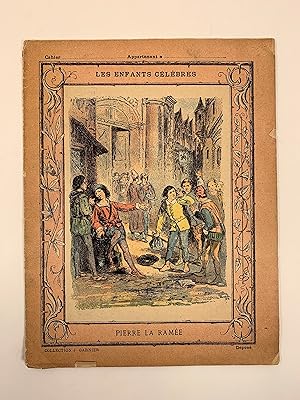
Les Enfants Celebres
Published by (A. Herment) circa 1900, (Paris), 1900
Seller: Old New York Book Shop, ABAA, Atlanta, GA, U.S.A.
Seller rating 5 out of 5 stars
Original wraps. Condition: Very good. Octavo, approx 20 blank leaves, childhood workbook , coupleof closed tears.
-
Gravure sur acier issue des Galeries historiques de Versailles : Pierre de la Ramée dit Ramus
Published by Diagraphe et pantographe Gavard
Seller: Librairie Lis Tes Ratures, Nantes, France
Association Member: ILAB
Seller rating 4 out of 5 stars

Paris, 1838-1849, Tirage sur beau papier vélin, format de la feuille : 45 x 32 cm. Gravure sur acier. Timbre à sec du ministère de la guerre. Pierre de La Ramée1 latinisé en Petrus Ramus (vers 1515 - 26 août 1572) est un logicien et philosophe français converti au calvinisme qui fut assassiné durant les massacres de la Saint-Barthélemy.
-

Gramere (1562). Grammaire (1572). Dialectique (1555). Reimpression de l'éditions de Paris.
Language: French
Published by Genève, Slatkine, 1972
Seller: Antiquariat An der Vikarie, Grafschaft-Leimersdorf, Germany
Association Member: GIAQ
Seller rating 5 out of 5 stars
126, 211, 140 pp., ex-library copy with label on spine and stamps, binding slightly rubbed, else good and clean, text in French, Sprache: Französisch Gewicht in Gramm: 900 original hardcover (no dust jacket),
-

Dialektik 1572 mit Begleittexten. Zusammengesellt, übersetzt mit einer Einleitung und Anmerkungen versehen von Hans Günter Zekl.
Published by Würzburg, Königshausen und Neumann, 2011., 2011
Gr- 8°. 447 SS., mit einigen Abbildungen Original-Broschur Dialectica in deutscher Übersetzung. - Sauber und gut erhalten.
-
Hardcover. Condition: VG-. FRENCH text. Reprint of 1555 edition. 168 pages in very good, clean condition. Pages are yellowed. Light foxing on the fore-edges. Previous owners name and address on the ffep. Beige cloth. Beige label with black titles on the spine. Titles slightly faded. Light foxing and yellowing on the covers. Scarce book. VG-. Book.
-

Scholarum mathematicarum libri unus et triginta.
Published by Hildesheim, Zürich und New York, Georg Olms Verlag., 2008
ISBN 10: 3487135159 ISBN 13: 9783487135151
Seller: Antiquariat Rainer Schlicht, Berlin, Germany
Association Member: GIAQ ILAB VDA
Seller rating 5 out of 5 stars
Ca. 22 x 16 cm. 10 Blätter, 320 Seiten, mit graphischen Darstellungen. Blauer Original-Leinenband. Nachdruck der Ausgabe Basel, 1569. Die fehlerhafte Paginierung des Originals wurde beibehalten. Stempel "Archivstück" auf vorderem fliegenden Vorsatz. Schönes Exemplar.
-
P. Rami Scholae in Tres Primas Liberales Artes: Videlicet 1. Grammatica; 2 Rhetorica, Quae Olim Quaestiones Brutinae; 3 Dialectica, Quae Olim Animadversiones in Organum Aristotelis.
Published by Minerva G. M. B. H., Frankfurt am Main, 1965
Seller: Bryn Mawr Bookstore, Cambridge, MA, U.S.A.
Association Member: SNEAB
Seller rating 5 out of 5 stars
Cloth. Condition: Near Fine. No Jacket. Small, thick octavo. Pp. 258 [22], 166 [16] 604 [17]. Divided into three books. Facsimile of Three books on medieval philosophy published in 1581, 1593, and 1593, the first being on Grammar, the second on Rhetoric, and the third on Dialectic. Edited by Joannes Piscator of Strasbourg. Petrus Ramus, a French Humanist, and a Protestant convert, died in the St. Bartholemew's Massacre in 1572. Except for fading to cloth covers, a fine copy.
-

Condition: NUOVO. Hildesheim, Georg Olms Verlag cm.18x27,5, pp.XVI,1166 (16), legatura ed.in tutta tela, titoli in oro al piatto ant.e dorso. Ristampa dell'ediz.di Basel,1569. With an introduction by von W.J.Ong.
-
Liber de militia C.Julii Caesaris, cum praefatione Joannis Thomae Freigii.
Published by Frankfurt, heirs of Andreas Wechel, 1584., 1584
Seller: Bernard Quaritch Ltd ABA ILAB, London, United Kingdom
Association Member: ABA ILAB PBFA
Seller rating 5 out of 5 stars
US$ 623.66
US$ 43.06 shipping
Ships from United Kingdom to U.S.A.Quantity: 1 available
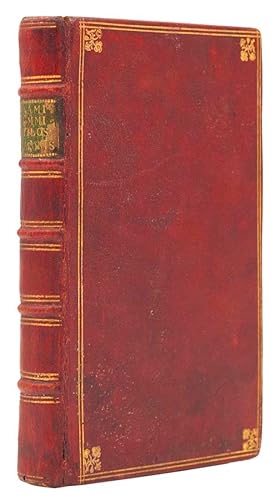
Add to basket8vo, pp.222, [2]; woodcut printer's devices to title and final page, woodcut initials and head-piece; trimmed close at head in places, occasionally touching running titles, very subtle repair to inner blank margin of title, the odd spot, but an attractive copy; in eighteenth-century German or Austrian red morocco gilt, gilt green paper lettering-piece to spine, edges paste-decorated in blue, marbled endpapers, green ribbon place-marker; deleted eighteenth-century ownership inscription to title, a few annotations and underlinings to the first few pages, shelfmarks to front free endpapers, early twentieth-century bookplate to upper pastedown of Burg Kreuzenstein, Austria, engraved by Alfred Cossmann.An attractively bound copy of Ramus's uncommon treatise on Caesar's military tactics, with unusual edge decoration. The humanist Petrus Ramus (15151572) published widely on classical history and grammar while teaching at the Collège de France. He was briefly forced from his post after converting to Calvinism in 1562, and was killed during the St Bartholomew's Day massacres. His De militia Caesaris was reprinted several times after its first appearance in 1559 and posthumously promoted, as here, by Ramus's follower Johann Thomas Freige (or Frei, 15431583). VD16 L-526.
-
![Seller image for P. Rami, Regii eloquentiae et philosophiae professoris, Animadversionum Aristotelicarum libri XX [Aristotelicae animadversiones] [unito a: Quod sit] for sale by Libreria Antiquaria Pontremoli SRL](https://pictures.abebooks.com/inventory/md/md30282245732.jpg)
P. Rami, Regii eloquentiae et philosophiae professoris, Animadversionum Aristotelicarum libri XX [Aristotelicae animadversiones] [unito a: Quod sit]
Published by apud Andream Wechelum sub Pegaso, in vico Bellovaco,, 1556
Seller: Libreria Antiquaria Pontremoli SRL, Milano, MI, Italy
Seller rating 5 out of 5 stars
First Edition
Parisiis, apud Andream Wechelum sub Pegaso, in vico Bellovaco, 1556, Prima edizione del «Quod sit». Usuali segni del tempo, nel complesso bell'esemplare con margini ampi. Le «Aristotelicae animadversiones» furono pubblicate a Parigi per la prima volta nel 1543: lo scalpore fu grande date le posizioni fortemente antiaristoteliche e antiscolastiche di Ramo, che «si era [.] proposto di riformare l'intero corpo delle dottrine dialettiche, seguendo Agricola nella particolare accentuazione del primato dell'inventio e nella richiesta di nuovi criteri di semplicità, brevità ed efficacia didattica». Ben presto arrivò la condanna e l'interdizione all'insegnamento. Dopo alcuni anni, nel 1551, il filosofo riuscì però ad ottenere una cattedra universitaria e nel 1561 si convertì al protestantesimo. Dopo alcuni periodi trascorsi in Germania e Svizzera in cerca di riparo, tornò a Parigi e qui morì nella celebre quanto sanguinosa strage della notte di San Bartolomeo (23-24 agosto 1572), durante la quale i cattolici francesi uccisero migliaia di ugonotti. I venti libri delle «Animadversiones» sono suddivisi in tre sezioni differenti, ciascuno con proprio frontespizio e propria paginazione. Nello specifico, nell'esemplare proposto: libri I-VIII, apud Andream Wechelum, Parisiis, 1556; libri IX-X, apud Andream Wechelum, Parisiis, 1560; libri XI-XX, apud Andream Wechelum, Parisiis, 1556. In fine è unita, dello stesso Ramo, la prima edizione del «Quod sit unica doctrinae instituendae methodus, locus e IX Animadversionum P. Rami», Parisiis, apud Andream Wechelum, 1557, altro tassello fondamentale del suo pensiero sul "metodo": di grande rarità, non se ne riscontra nessuna copia in Iccu. 4 voll. in uno, legatura coeva in piena pergamena floscia con titoli manoscritti al dorso, pp. [16] 328; [16] 271 [1] bianca; 141 [3] con marca tipografica; 22 [1] bianca Prima edizione del «Quod sit». Usuali segni del tempo, nel complesso bell'esemplare con margini ampi. legatura coeva in piena pergamena floscia con titoli manoscritti al dorso,
-
![Seller image for P. Rami Rudimenta grammaticae Latinae 1560 [LeatherBound] for sale by True World of Books](https://pictures.abebooks.com/inventory/md/md31617464077.jpg)
P. Rami Rudimenta grammaticae Latinae 1560 [LeatherBound]
Publication Date: 2025
LeatherBound. Condition: New. BOOKS ARE EXEMPT FROM IMPORT DUTIES AND TARIFFS; NO EXTRA CHARGES APPLY. LeatherBound edition. Condition: New. Reprinted from 1560 edition. Leather Binding on Spine and Corners with Golden leaf printing on spine. Bound in genuine leather with Satin ribbon page markers and Spine with raised gilt bands. A perfect gift for your loved ones. Pages: 53 NO changes have been made to the original text. This is NOT a retyped or an ocr'd reprint. Illustrations, Index, if any, are included in black and white. Each page is checked manually before printing. As this print on demand book is reprinted from a very old book, there could be some missing or flawed pages, but we always try to make the book as complete as possible. Fold-outs, if any, are not part of the book. If the original book was published in multiple volumes then this reprint is of only one volume, not the whole set. Sewing binding for longer life, where the book block is actually sewn (smythe sewn/section sewn) with thread before binding which results in a more durable type of binding. Pages: 53.
-
P. Rami, regii eloquentiae et philosophiae professoris, Animaduersionum Aristotelicarum libri xx. nunc demum ab authore recogniti & aucti: ad Carolvm Lotharingvm cardinalem. (1556). [Relié avec :] P. Rami, Regii Eloqventiae et philosophiae professoris, Animaduersionum Aristotelicarum liber ix. & x. in posteriora Analytica: Ad Carolvm Lotharingum cardinalem. (1560). [Relié avec :] P. Rami, regii eloquentiae et philosophiae professoris, Animaduersionum Aristotelicarum libri octo in totidem Aristotelis topica,. (1556).
Language: Latin
Published by Andream Wechelum, 1556
Seller: Librairie les mains dans les poches, Tourbes, France
Seller rating 5 out of 5 stars
Couverture rigide. Condition: Très bon. 3 livres en un volume in-12 de (16)-328, (16)-271 et 141 pp.; plein velin, titre manuscrit au dos (reliure XVIIIe siècle). Bel exemplaire.
-
Untertitel: Beigebunden Ramus, P; Untergebiet: Philosophie Abbildungen: Renaissance-Initialen und Vignetten Zustand: Titelblatt des ersten Bandes fehlt. Teilw. Wasserr. Seiten: II/709/X /IV/263 S. Format: Kl.-8°. Einband: o. Ebd. Gebiet: Alte Drucke.
-
Georgica, P.Rami praelectionibus illustrata, ad Carolum Lotharingum cardinalem.
Published by Paris, André Wechel, 1564., 1564
Seller: Bernard Quaritch Ltd ABA ILAB, London, United Kingdom
Association Member: ABA ILAB PBFA
Seller rating 5 out of 5 stars
US$ 1,316.62
US$ 43.06 shipping
Ships from United Kingdom to U.S.A.Quantity: 1 available
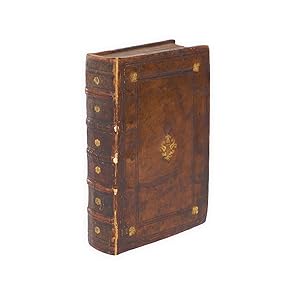
Add to basket[boundwith:]. Bucolica, P.Rami praelectionibus exposita, quibus poetae vita praeposita est, ad Carolum Lotharingum cardinalem, editio secunda. Paris, André Wechel, 1558. Two works in one vol., 8vo, pp.Georgics: [2], '11-367' [i.e.3-359], [1(blank)], Bucolics: 184; woodcut printers device to titles, woodcut initials and headpieces, complete despite erratic pagination; lightly toned, small marginal dampstains to a few leaves, but an attractive copy; in contemporary calf, boards panelled in blind with gilt centre- and corner-pieces; corners and endcaps very skilfully repaired, superficial cracks to upper joint; a single philological marginal annotation (Bucolics p.43) and index note to rear free endpaper in the same hand, nineteenth-century ink stamp 'E.Drouin' to front free endpaper.Second editions of Ramus's extensive commentaries on Virgil's two poems on country life, written in reaction to the dry doctrines of several French schools who based their teaching of nature on Aristotle's Physics. Ramus wanted to keep in contact with the concrete realities of nature and in this spirit composed his commentaries, in which he often refers to Pliny and the Roman agronomers. The two commentaries were first published by Wechel in 1556 and 1555 respectively; a third edition of the Bucolics was issued in 1564. Adams V-548 & V-537; Ong 480 & 474; USTC 198707 & 152391. Language: Latin.
-
Brutinæ Quaestiones, in Oratorem Ciceronis, ad Henricum Valesium Franciæ Regem.
Signed
Parisiis Matthei Davidis [Paris, Mathieu David], 1552. Petit in-8, plein cartonnage vélin à la Bradel, titre doré en long, daté en pied (reliure moderne signée Goy), 126 p., (1) f. blanc [sign. a-h8]. Troisième édition, profondément remaniée par l'auteur, de cette uvre dédiée à Henri II, dont la première édition remonte à 1547. Pierre de La Ramée dit Ramus (1515-1572), né en Picardie, principal de collège et lecteur royal au Collège des professeurs royaux (aujourd'hui Collège de France), fut le promoteur d'un nouvel organon opposé à la logique scolastique. Sa critique publique d'Aristote lui valut, sous François Ier, l'interdiction d'enseigner la philosophie et de publier des textes philosophiques. Converti au protestantisme dans les années 1560, il périt assassiné le troisième jour de la Saint-Barthélemy. Dans les 'Brutinae Quaestiones', d'un ton véhément, il soumet le 'De Oratore' de Cicéron à une critique systématique, imitant la démarche anti-autoritaire de Cicéron lui-même pour mieux dénoncer le manque de méthode et les contradictions du traité, et lui opposer un système dialectique renouvelé. L'ouvrage suscita une vive polémique. L'influence posthume de Ramus s'étendit à l'Europe réformée et à la Nouvelle-Angleterre, où le ramisme, encyclopédisme fondé sur l'unité de la méthode, joua un rôle majeur dans la formation intellectuelle jusqu'au XVIIe siècle. Caractères italiques, lettrines et marque de l'imprimeur gravée au titre. (Meerhoff, "Ramus et Cicéron", R.S.P.T., vol. 70, n° 1, 1986, p. 25-35. Walter J. Ong, 'Ramus and Talon Inventory', n° 57. Van der Poel, "L'attaque de Pierre de la Ramée contre la rhétorique antique. 'Les Brutinae Quaestiones in Oratorem Ciceronis' (1547-1577)", R.S.P.T., 2019/2-3, tome 103, p. 263-284.) Mouillure claire en coin. Très bon exemplaire, frais, grand de marges, bien relié.
-
Dialectica. Audomari Talaei praelectionibus illustrata
Published by Theodorus Baumius, Koln, 1578
Seller: Hugues de Latude, Villefranche de Lauragais, France
Association Member: ILAB
Seller rating 5 out of 5 stars
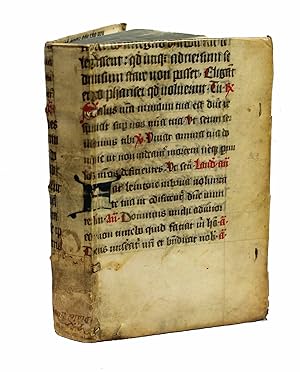
In-8, [153 x 98 mm] de (24), 450, (6) pp. Vélin à rabats. (Reliure ancienne.). Edition avec les commentaire d'Omer Talon (1510-1562), disciple de Ramus et professeur au Collège du Cardinal Lemoine. La première édition a été publiée à Paris en 1543. "C'est dans la Dialectica que se lit l'exposé de la "méthode" ramiste, unique et universelle, présentée par son inventeur non comme un système philosophique, mais comme "un art d'enseigner direct et aisé", éclairé par "la plus haute lumière de la raison", selon une dialectique descendante, inspirée du mythe platonicien de la caverne, même si peu à peu, Aristote y devient plus présent, comme appui d'une construction fondée pourtant sur une rupture avec l'aristotélisme post-médiéval." (A. Coron, En français dans le texte 51). Le protestant Pierre de La Ramée (1515-1572) a été une des victimes de la Saint-Barthélémy. Papier un peu bruni. Intéressante reliure réalisée (au XIXe siècle ou peut-être avant) avec un parchemin manuscrit du début du XVIe, avec de grandes initiales en bleu et rouge. In-8, [153 x 98 mm] de (24), 450, (6) pp. Vélin à rabats. (Reliure ancienne.) - - - - - - - - - - - - - - - - - - - - -.
-
![Seller image for P. Rami. liber de Caesaris militia, ad Carolum Lotharingum Cardinalem 1559 [LeatherBound] for sale by True World of Books](https://pictures.abebooks.com/inventory/md/md31616446613.jpg)
P. Rami. liber de Caesaris militia, ad Carolum Lotharingum Cardinalem 1559 [LeatherBound]
Publication Date: 2025
LeatherBound. Condition: New. BOOKS ARE EXEMPT FROM IMPORT DUTIES AND TARIFFS; NO EXTRA CHARGES APPLY. LeatherBound edition. Condition: New. Reprinted from 1559 edition. Leather Binding on Spine and Corners with Golden leaf printing on spine. Bound in genuine leather with Satin ribbon page markers and Spine with raised gilt bands. A perfect gift for your loved ones. Pages: 241 NO changes have been made to the original text. This is NOT a retyped or an ocr'd reprint. Illustrations, Index, if any, are included in black and white. Each page is checked manually before printing. As this print on demand book is reprinted from a very old book, there could be some missing or flawed pages, but we always try to make the book as complete as possible. Fold-outs, if any, are not part of the book. If the original book was published in multiple volumes then this reprint is of only one volume, not the whole set. Sewing binding for longer life, where the book block is actually sewn (smythe sewn/section sewn) with thread before binding which results in a more durable type of binding. Pages: 241.
-
![Seller image for P. Rami Scholae Grammaticae 1559 [LeatherBound] for sale by True World of Books](https://pictures.abebooks.com/inventory/md/md31617460623.jpg)
P. Rami Scholae Grammaticae 1559 [LeatherBound]
Publication Date: 2025
LeatherBound. Condition: New. BOOKS ARE EXEMPT FROM IMPORT DUTIES AND TARIFFS; NO EXTRA CHARGES APPLY. LeatherBound edition. Condition: New. Reprinted from 1559 edition. Leather Binding on Spine and Corners with Golden leaf printing on spine. Bound in genuine leather with Satin ribbon page markers and Spine with raised gilt bands. A perfect gift for your loved ones. Pages: 347 NO changes have been made to the original text. This is NOT a retyped or an ocr'd reprint. Illustrations, Index, if any, are included in black and white. Each page is checked manually before printing. As this print on demand book is reprinted from a very old book, there could be some missing or flawed pages, but we always try to make the book as complete as possible. Fold-outs, if any, are not part of the book. If the original book was published in multiple volumes then this reprint is of only one volume, not the whole set. Sewing binding for longer life, where the book block is actually sewn (smythe sewn/section sewn) with thread before binding which results in a more durable type of binding. Pages: 347.
-
Arithmeticae libri duo: geometriae septem et viginti. (2 Teile in 1 Bd.).
Language: German
Published by Basel, Eusebius & Nicolaus Episcopius,, 1580
Seller: Matthaeus Truppe Antiquariat, Graz, Austria
Seller rating 5 out of 5 stars
4 Bll., 52, 192 S. mit zahlr. Textholzschnitten. Dritte Ausgabe, erstmals 1569 in Basel erschienen. - Adams R-70. Smith I, 209. VD 16 L 452. - "Petrus Ramus, or Pierre de la Ramée (15151572), French humanist, was born at the village of Cuth in Picardy in 1515, a. member of a noble but impoverished family; his father was a charcoal-burner. Having gained admission, in a menial capacity, to the college of Navarre, he worked with his hands by day and carried on his studies at night. The reaction against scholasticism was still in full tide; it was the transition time between the old and the new, when the eager and forward looking spirits had first of all to do battle with scholastic Aristotelianism. Ramus outdid his predecessors in the impetuosity of his revolt. On the occasion of taking his degree (1536) he actually took as his thesis "Everything that Aristotle taught is false." This tour de force was followed up by the publication in 1543 of Aristotelicae Animadversiones and Dialecticae Partitiones, the former a criticism on the old logic and the latter a new textbook of the science. What are substantially fresh editions of the Partitiones appeared in 1547 as Institutiones Dialecticae, and in 1548 as Scholae Dialecticae; his Dialectique (1555), a French version of his system, is the earliest work on the subject in the French language. Meanwhile Ramus, as graduate of the university, had opened courses of lectures; but his audacities drew upon him the hostility of the conservative party in philosophy and theology. He was accused of undermining the foundations of philosophy and religion, and the matter was brought before the parlement of Paris, and finally before Francis I. By him it was referred to a commission of five, who found Ramus guilty of having "acted rashly, arrogantly and impudently," and interdicted his lectures (1544). He withdrew from Paris, but soon afterwards returned, the decree against him being cancelled through the influence of the cardinal of Lorraine. In 1551 Henry II. appointed him professor of philosophy and eloquence at the Collège de France, where for a considerable time he lectured before audiences numbering as many as 2000. He published fifty works in his lifetime and nine appeared after his death. In 1561, however, the enmity against him was fanned into flame by his adoption of Protestantism. He had to flee from Paris; and, though he found an asylum in the palace of Fontainebleau, his house was pillaged and his library burned in his absence. He resumed his chair after this for a time, but in 1568 the position of affairs was again so threatening that he found it advisable to ask permission to travel. Returning to France he fell a victim to his opponents in the massacre of St Bartholomew (1572)" (Encyclopedia Britannica Online). - Durchgehend etw. gebräunt. Im weißen Rand kleiner Wurmgang bzw. minimaler Duckstck. Teils mit längeren alten hs. Notizen und Anmerkungen sowie Anstreichungen. S. 1 des zweiten Teils mt stärkerer Verschmutzung. Nur wenig fleckig. *** *** Copyright: Matthaeus TRUPPE Buchhandlung & Antiquariat - Stubenberggasse 7 - A-8010 Graz - ++43 (0)316 - 829552 *** *** Sprache: Deutsch Gewicht in Gramm: 0 Gr.-8°. Pgmt. der Zeit (fleckig, und etw. gebräunt, etw. bestoßen).
-

Illustrated, History of Mathematics & Science, Geometry, 1622 | Meetkonst in XXVII boecken vervat. Uit het Latijn in 't Neerduyts overgheset by Dirck Hendrickx Houtman. Oversien (.) door W. Snellium. Amsterdam, W.J. Blaeuw 1622, 4°. (20)+221+(5) pp.
Seller: Antiquariaat Arine van der Steur / ILAB, Den Haag, Netherlands
Seller rating 4 out of 5 stars
US$ 3,665.78
US$ 34.98 shipping
Ships from Netherlands to U.S.A.Quantity: 1 available
Add to basket4°. (20) 221 (5) pp. Full contemporary vellum binding. Illustrated with in-text woodcuts, and title page with a vignette. Binding slightly scuffed; first and last leaves slightly frayed. Minor browning. Small manuscript (ink) corrections on a few pages. Minor worming on a few margins, but not affecting the text. A good copy.A very rare, richly illustrated, important work in the history of science and mathematics in the Netherlands. This volume is the first Dutch-language textbook on geometry. The Dutch astronomer and mathematician Willebrord Snellius (1580-1626)--of Snell's Law on the refraction of light, famously used also by Descartes--assisted in its preparation. Working from the original Latin text of Petrus Ramus' (1515-1572) Geometriae, Snellius augmented, corrected, and annotated a Dutch-language translation by D.H. Houtman, prepared at Snellius' request. The Dutch mathematician also appended to the end his now-famous demonstration on the area of a triangle, considered fundamental to the history of trigonometry and a starting point in basic modern geodesy; it is still known today as the "Snellius problem" (or the "Snellius-Pothenot problem").The volume includes a poemattributed to Joost van den Vondel (1587-1679), the greatest poet and playwright of the Dutch Golden Age, in praise of Snellius.It is accompanied by a long poem called Loff van de Wijs-konst ("In Praise of Mathematics"), attributedto P.S.--almost certainly the Dutch writer and scholar Petrus Scriverius [1576-1660], given the use of his Latin motto,legendo et scribendo, at the close of the poem. The work's dedication was written by Houtman (a pastor at Loosdrecht) to Adriaan Pauw, then-ruler of Heemstede. The preface is by Snellius.B2265 - meetkunst - wiskunde - mathematica - wetenschapsgeschiedenis - zeldzaam rijk geillustreerd werk over de geschiedenis van de wiskunde - geometrie - de wet van Snellius - Vondel - lof der wiskunde De wet van Snellius of brekingswet is een natuurwet uit de optica die aangeeft hoe lichtstralen gebroken worden op de overgang van het ene medium naar het andere, bijvoorbeeld van lucht naar glas waarin het licht zich met verschillende fasesnelheden voortbeweegt.



![Seller image for P. Rami, regii eloquentiae et philosophiae professoris, Animaduersionum Aristotelicarum libri xx. nunc demum ab authore recogniti & aucti: ad Carolvm Lotharingvm cardinalem. (1556). [Relié avec :] P. Rami, Regii Eloqventiae et philosophiae professoris, Animaduersionum Aristotelicarum liber ix. & x. in posteriora Analytica: Ad Carolvm Lotharingum cardinalem. (1560). [Relié avec :] P. Rami, regii eloquentiae et philosophiae professoris, Animaduersionum Aristotelicarum libri octo in totidem Aristotelis topica,. (1556). for sale by Librairie les mains dans les poches](https://pictures.abebooks.com/inventory/md/md21765978374.jpg)